Jan Peppler HOME
Exploring Our Connection to People and Place
Finding Family in Sicily – Part 2
In case you missed the first installment, you can read it here: Finding Family in Sicily – Part 1
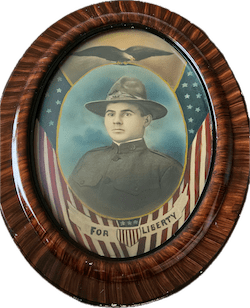
Over 100 years ago, Mary’s grandfather left Piana degli Albanesi for America. He was 19 years old. His oldest brother joined him and, later, his five sisters and their mother. They would all land in Rockport, Illinois but Mary’s father, Antonio, would settle in the Greenbush neighborhood of Madison, Wisconsin. Since Mary’s grandfather wouldn’t talk about what he had left behind, (“There was nothing there for me,” was the most he would say), this was all she knew.
For decades, Mary had dreamed of going to her homeland, the place where her “Nonnie” had left. She couldn’t help hoping that there was still some family in the old country. After Tom and I bought a house in Sicily, her plans began in earnest. Two years later, she and my cousin purchased tickets for their first trip abroad. Mary came in search of her roots. But with only a family name and a few photos, what were the chances she would learn anything?
To make things just a little confusing, the name had changed. Twice. Originally Fabbiano with two “b”s, Mary’s grandfather had dropped one “b” when he came to America. Or was it recorded incorrectly? Chissa! (Who knows?!) But then in WW1, he dropped the “o”. Antonio Fabbianno, a young immigrant from Sicily, had become Antonio Fabian, an American war veteran.
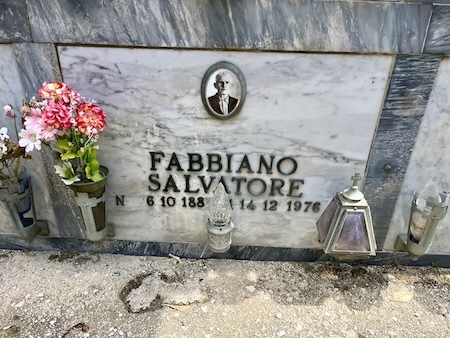
It was May 12, 2025 and we were in the Piana degli Albanesi cemetery.
Salvatore, the grounds keeper, had informed us that he was a Fabbiano. Then he told us to wait as he attended to a funeral. When he returned, he brought along the young funeral director, who, having visited the States himself, spoke some English. The old man who introduced us to Salvatore had left and there was no way we could understand each other without an interpreter.
The six of us walked to the resting place of Salvatore’s mother. We were respectful. Interested. And still we thought, but what about Mary’s family?
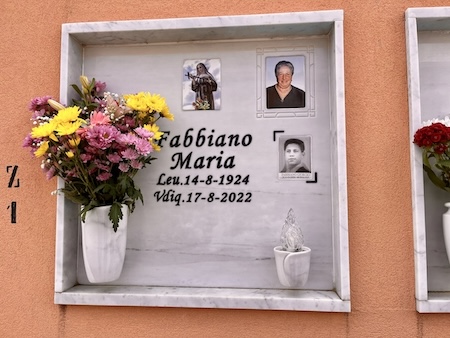
Having not interpreted much, the young man left, and Salvatore called his cousin. Rita had worked for the telecom company for 40 years which meant that she, too, could speak English. Again, we were amazed. At least, I was. Americans tend to expect the world to speak English, but it doesn’t. Especially in Italy. Certainly not those in small towns. But once again, we were lucky. Salvatore’s cousin, Rita, spoke English very well.
Rita asked for the details on Mary’s family. We repeated what we knew: Mary’s grandfather, Antonio, left with a brother to the United States. Then came the five sisters. Then his mother. “Yes, yes,” Rita said, “But what about the brother who was left behind?”
What??
And this is when things escalated quickly. We hung up Salvatore’s phone and called on mine using WhatsApp video. Rita and her husband held up a few photos and Mary held up hers. Gasps, exclamations, excitement. Could it really be true?
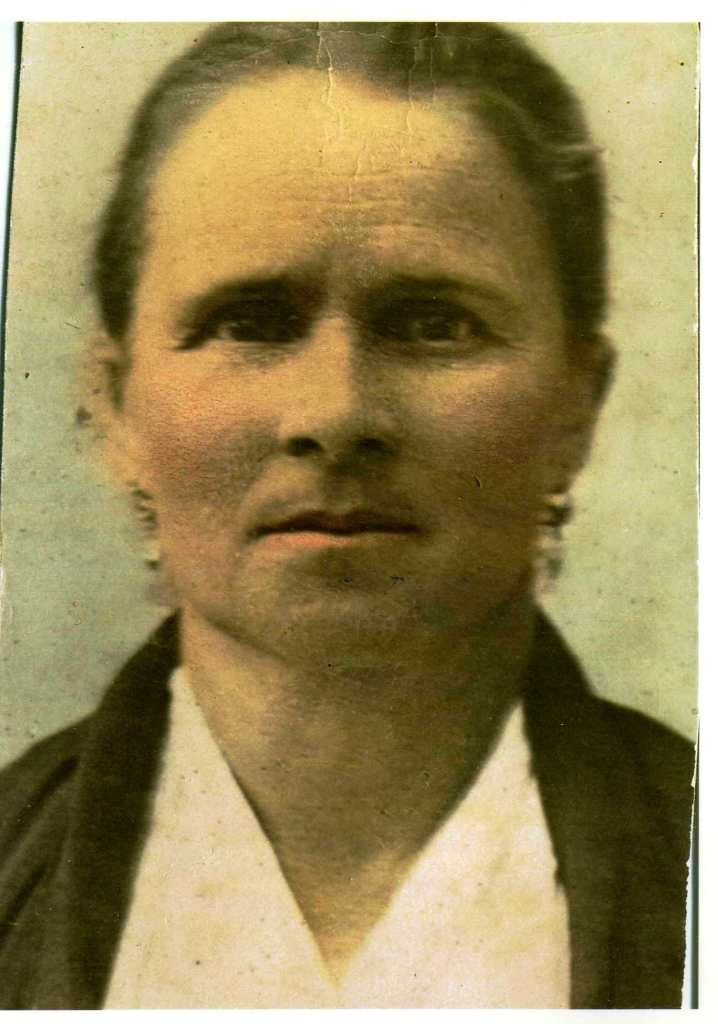
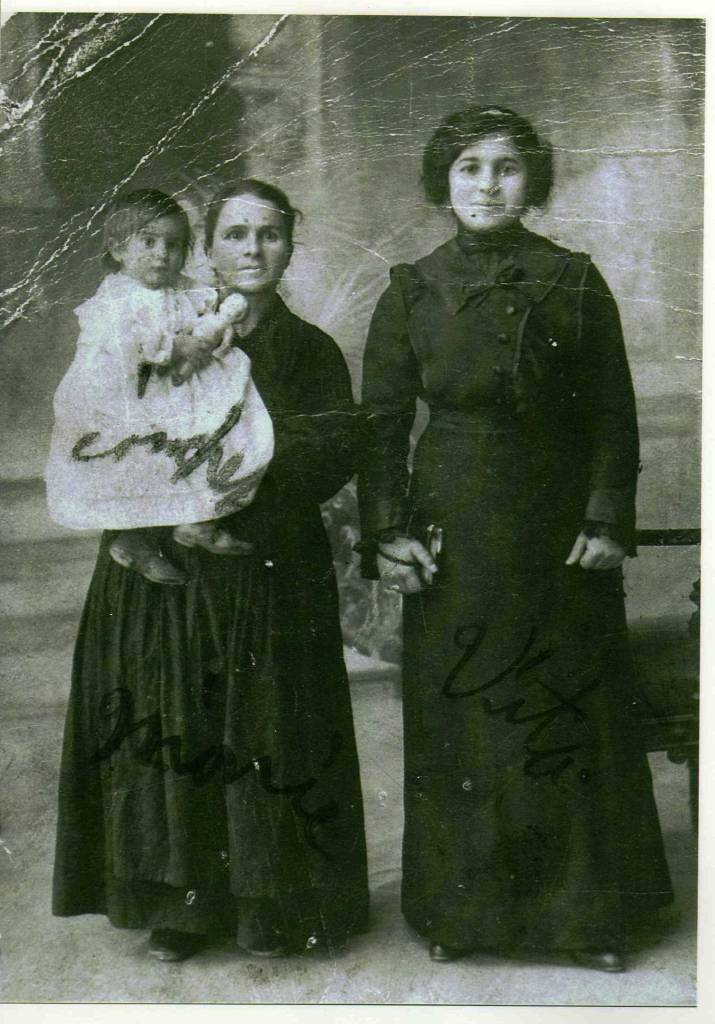
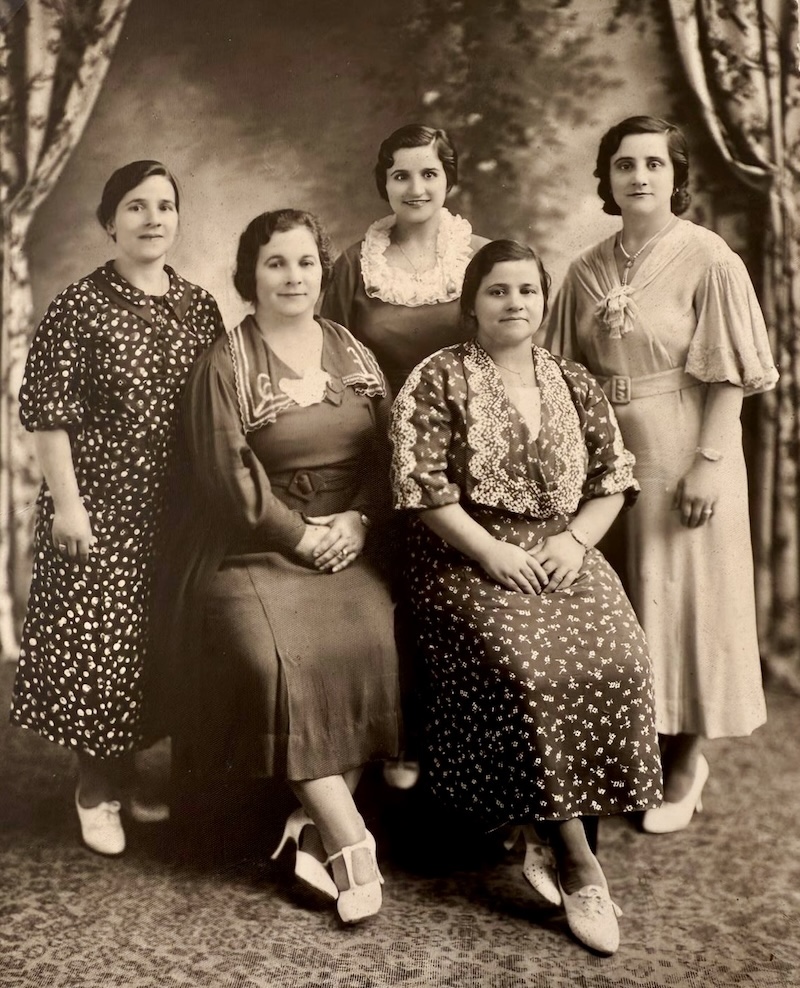
I forget things all the time. Ask me if I’ve seen a movie, read a book, or if I’ve been somewhere and I’m likely to say no. Until days later, after thinking about it for a while, and I remember. When information doesn’t stay front and center, it gets stored deep in the recesses of our minds. It’s the old card catalog system. First you must thumb through file drawers to find the card and then you must find the memory. That’s exactly what happened here. Mary’s grandfather wouldn’t talk about Sicily. There was nothing there for him, he would say, and that was that. Mary’s father followed suit. Details became buried.
But speaking with Rita, everything came rushing back.
Everything Mary knew and shared had been correct. Except one thing: There was one more brother, Salvatore. Salvatore had stayed in Sicily.
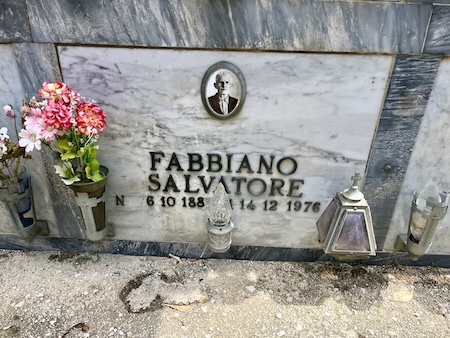
Imagine being Salvatore. His entire family left him and moved across the ocean. Five sisters, two brothers, and his mother. (Their father was already deceased.) Only he remained, the second oldest, the middle son. He was married when everyone else boarded a boat taking them far from Sicily. Of course he would stay. He was responsible for a new family but, naturally, he would have missed all those who had departed.
Imagine being Rita or the younger Salvatore: growing up knowing about family that moved to America. Imagine being a grandchild to the only family member who stayed in their small hometown. Salvatore and his family kept the stories alive, and the hope alive, that one day they would be reconnected.
And now that day had arrived.
This is why Rita was able to access the family photos so quickly. They weren’t buried in a box or hidden. So while she and her cousin Salvatore were surprised, they weren’t as surprised as Mary. In a way, they were prepared. They knew the stories; they had the photos. Mary had none of this. In little more than one hour, Mary had found her family.
This is a miracle.
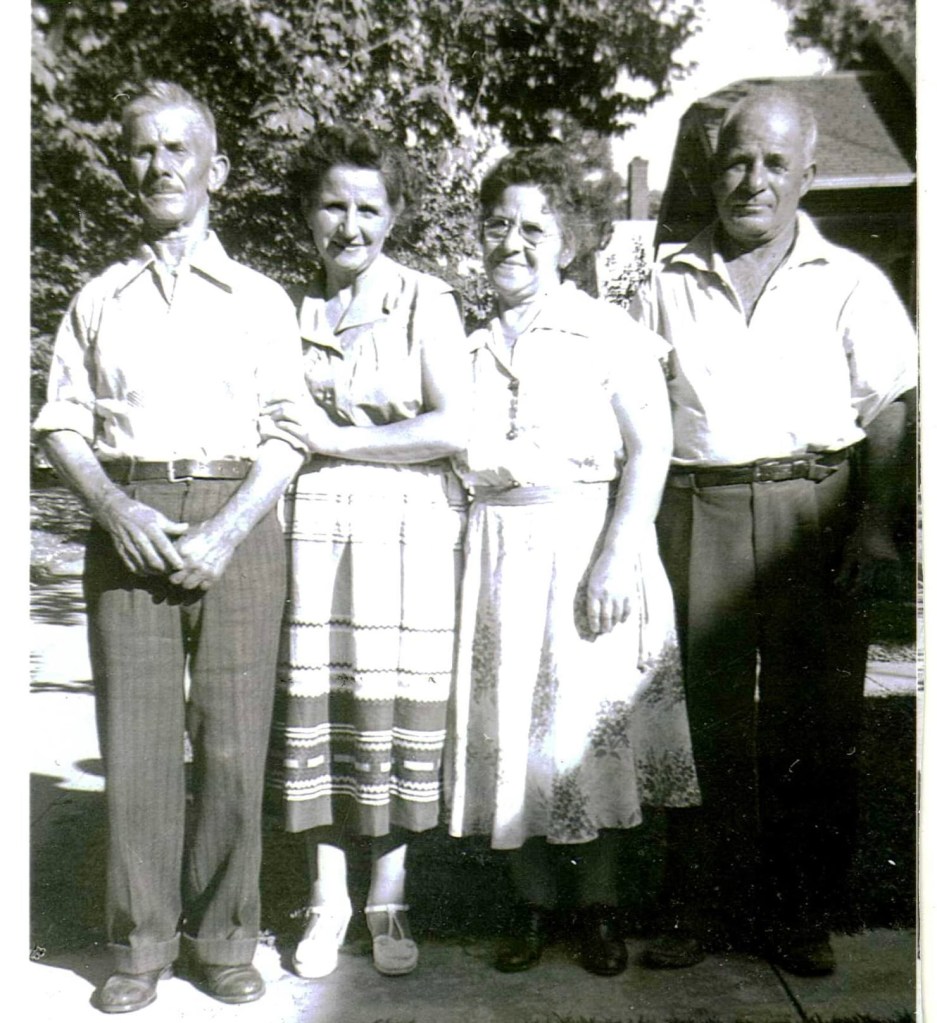
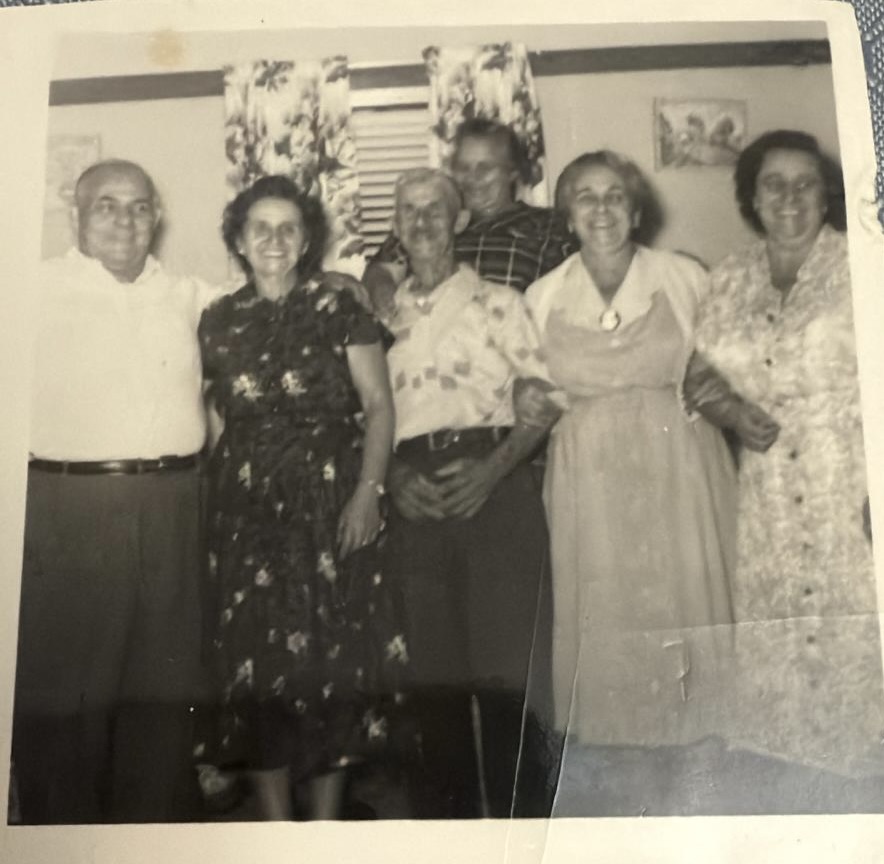
Salvatore Fabbiano was Mary’s great uncle. And that made Salvatore, the cemetery groundskeeper in Piano degli Albanesi, Mary’s second cousin. Rita, also descended from Salvatore, was Mary’s second cousin as well.
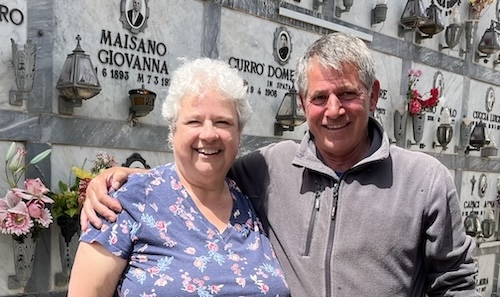
The truth is, we were overwhelmed. At least, we Americans were. It was hard to fathom as it happened so quickly. There were no false hopes, dead ends, or mysteries left to untangle. We drove to the ancestral town of Mary’s grandfather with only a few photos and not much more. We hoped to learn something. To find a grave, make some kind of connection, and leave with a few more pieces to the puzzle.
Instead, we found the puzzle complete.
What to do now? Salvatore was still working. Rita was in Palermo (an hour away) and unable to meet us. How long could we stay on the phone? What more was there to ask? We needed to leave, to sit down, to process. So, we did. We took a photo, exchanged hugs, and left.
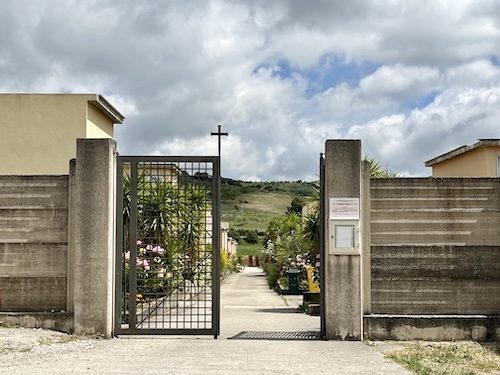
We went into town. We visited the cathedral, then sat down for lunch. Conversation was a bit stunted. The evidence was there but… this was going to take some time.
Only eighty minutes after leaving the cemetery, walking through the historic town center, I heard the shout, “Dove stai camminando?” I turned and there was Salvatore in his car, asking us where we were walking, (essentially what were we doing now)? Given the hour, he certainly was on lunch and likely headed home. If I had responded differently, we probably would have ended up at his house. But in the moment, we were still too dazed by what we had just learned.
When Mary returned to the States, she organized a FaceTime video with her father and Rita.
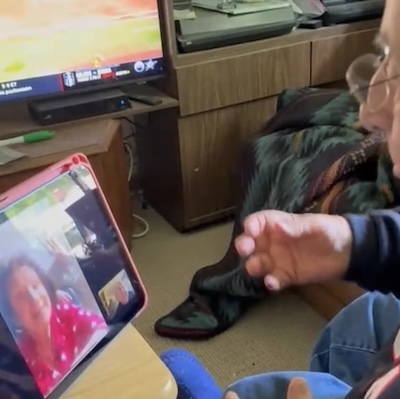
During this conversation, Mary and her father learned that there are still cousins on her grandmother’s side that live in Sicily. But that family and that story will have to wait for another trip and another time.
One miracle, at the moment, is enough.
What do you think? Was this remarkable or not? Have you ever tried to find family in another country? I’d love to hear from you!
For more content and regular posts, please follow me on Substack: FindingHome.Substack.com
The Happiest States in the U.S.
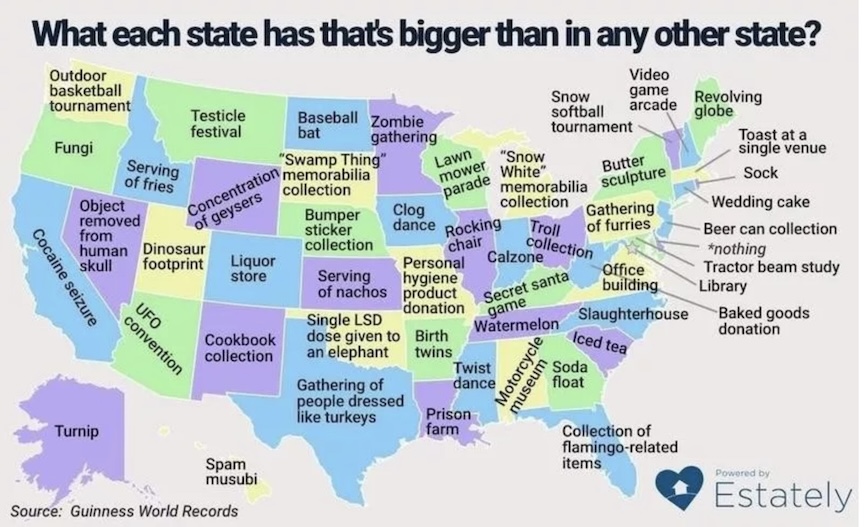
This post is serious. But mixed in with some fun.
Did you know that Texas has the largest gathering of people dressed like turkeys? Larger than any other state. There’s probably a really good chance it’s the largest gathering of turkey drag anywhere IN THE WORLD.
Does dressing like a turkey have anything to do with herpes? No. But I can see where folks might make that connection.
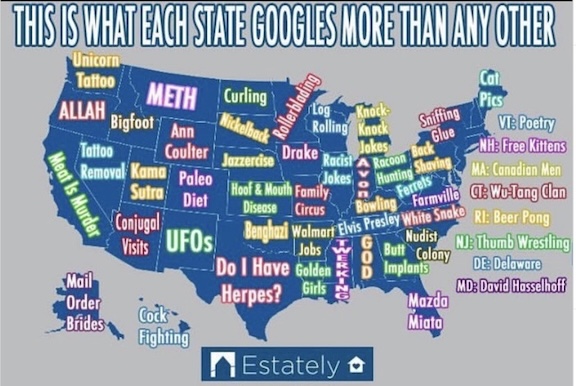
It’s interesting that Montana has the largest Testicle Festival. Interesting as in, other states have one too? Turns out, they do. There’s quite a few, in fact. The one in Montana ended in 2017, after a 35 year run.
Idaho still has one though.
Idaho.
According to this source, Idaho is ranked #10 as the happiest state to live in for 2026.

Since the highest cumulative score for any state is 65.50, Idaho’s 58.31 seems pretty darn good.
Hawaii, Maryland, and Nebraska are listed as the top three happiest states. Any readers live in one of these states and want to weigh in?
Illinois (ranked 22) is higher than Oklahoma (#36) BUT satisfaction with Community and Environment ranks Oklahoma at #3. That makes sense to me because, well, I really miss Tulsa, and a huge part of what I miss are the parks.
On the other end of the spectrum, Illinois’ ranking in the same category is 43. (As in 7th from the worst. You do remember there are only 50 states, right?)
The states with the highest rates of adult depression include Oregon, Vermont, and Maine. I would not have guessed that, would you? YET two states with the highest rate of “adequate” sleep are Oregon and Vermont. Riddle me that.
You might expect to find these states also listed under the highest suicide rates, but they’re not. You know what state is? Idaho. Idaho has the fourth highest number of suicides. Damn.
Moment of seriousness here. This one hits home. A friend told me this has been the case for decades. Another friend told me she is worried about raising her son here because suicide is so common. And every single day I think about a family that I was once quite close to and how the son, at 27 years of age, took his life just before Thanksgiving. It’s heartbreaking.
What really stands out for me is Utah.
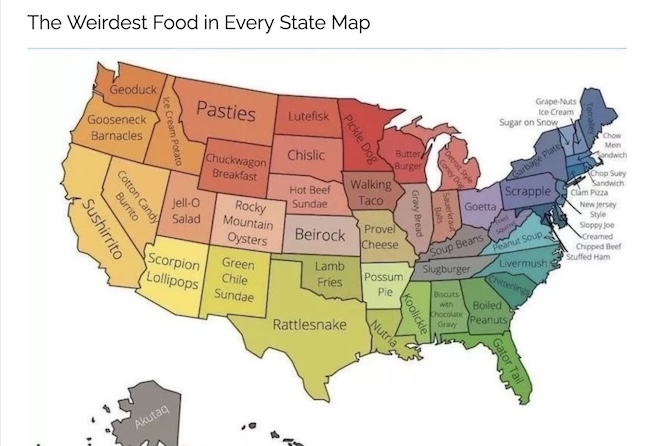
Not because of Jell-O salad (which, honestly, I can’t believe isn’t a Midwest honor). Utah ranks #1 in: work environment (& fewest work hours), community & environment (which includes the highest volunteer rate and the highest sports participation). It also has the lowest divorce rate and is in the top five states for safety. Overall ranking? #6
But then on the other hand, Utah also has the highest rate of porn usage.
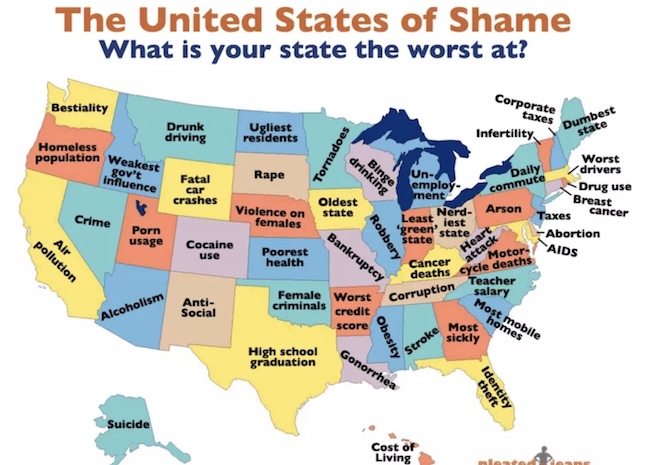
Yes, I’m making light of much of this. I am, but only the maps.
The methodology used for the rankings in the Adam McCann article is incredibly thorough, using 30 metrics on a 100-point scale over three major categories and supported by significant research. The rankings I just shared with you I take very seriously. Though I’m not sure if they truly indicate real life happiness. Even the statistics have too many contradictions.
So, what do you think?
What is your experience of where you live?
How would you rank your state and your town, and on what basis?
I’ll go first: People LOVE Idaho’s outdoor recreation opportunities. It’s an incredibly beautiful state with diverse landscapes. But it doesn’t resonate with me. I can appreciate what the state offers, and I am often in awe of the beauty, but living here does not, in fact, make me happy. I definitely don’t want to live in Chicago again, though I do enjoy visiting. Even Michigan, my birthplace, I only want to visit. Tulsa, Oklahoma, however – still tugs at my heart. The open space and landscape, the rivers and parks. And the people and diversity. I’ll circle back another time to why this is, how childhood experiences imprint on us, and why some places truly feel like home more than others. But for now, let me know what you think of the article’s findings and how their measurements relate to your experience.
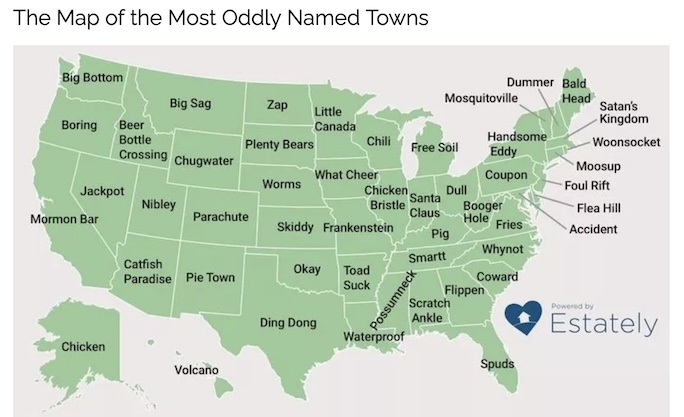
And how come Florida has a town named Spuds but Idaho doesn’t?
For regular posts, please follow me on Substack: FindingHome.Substack.com
Piana degli Albanesi

People often think I’m Italian. I’m not. I appreciate the assumption, however, at least when I’m in Italy. Last fall, when I was visiting the Balestrate Cemetery on All Soul’s Day, an older local woman asked me about my family, assuming some were buried there. I told her about my grandfather, Lino Polo, who had immigrated from Milan as a child. Lino was my grandmother’s second husband, so I have no blood line, but it’s nice to claim him as my Italian connection.
Now, to my delight, I have another one, and this one is Sicilian.
Tom and I returned to Sicily on April 26th. Hoping to finally stay in our house, our first order of business was buying a mattress and a new water heater. Spoiler alert: we did! But I’ll tell you about that later.
The first of May is International Workers’ Day, celebrated around the world in 160 countries. In Italy it’s a big deal, technically known as “La Festa dei Lavoratori” with events and parades happening in many local areas. In the northwest region of Sicily, maybe the most important event happens just forty minutes from Palermo, nestled in the mountains, in Piana degli Albanesi.
The locals call the town Hora e Arbëreshëvet, which means “City of the Albanians”, which makes sense since in 1487, Christian Albanians fleeing the Balkans during the Ottoman Turkish conquest settled here and here they have remained. Outside of the local designation, it existed under different names during the centuries and only assumed its current name in 1941. A few years later, one of the most violent acts in Sicilian politics occurred just outside the town.
On May 1, 1947, hundreds of peasants from Piana degli Albanesi and other neighboring towns gathered at Portella della Ginestra to celebrate workers and listen to speeches, just as they had in previous years. Twelve days earlier, the Communist party had won the regional elections. At 10:15am, just as a Communist leader began his address, bullets from machine guns pierced the crowd. Eleven people were killed, four of them children, and 27 were wounded. While the separatist leader Salvatore Giuliano took responsibility for this massacre, it is now widely believed to have been organized by the Mafia.
Joining others to commemorate this brutal attack seemed like a good way to honor May Day. It also gave us an opportunity to visit the ancestral town of my cousin.
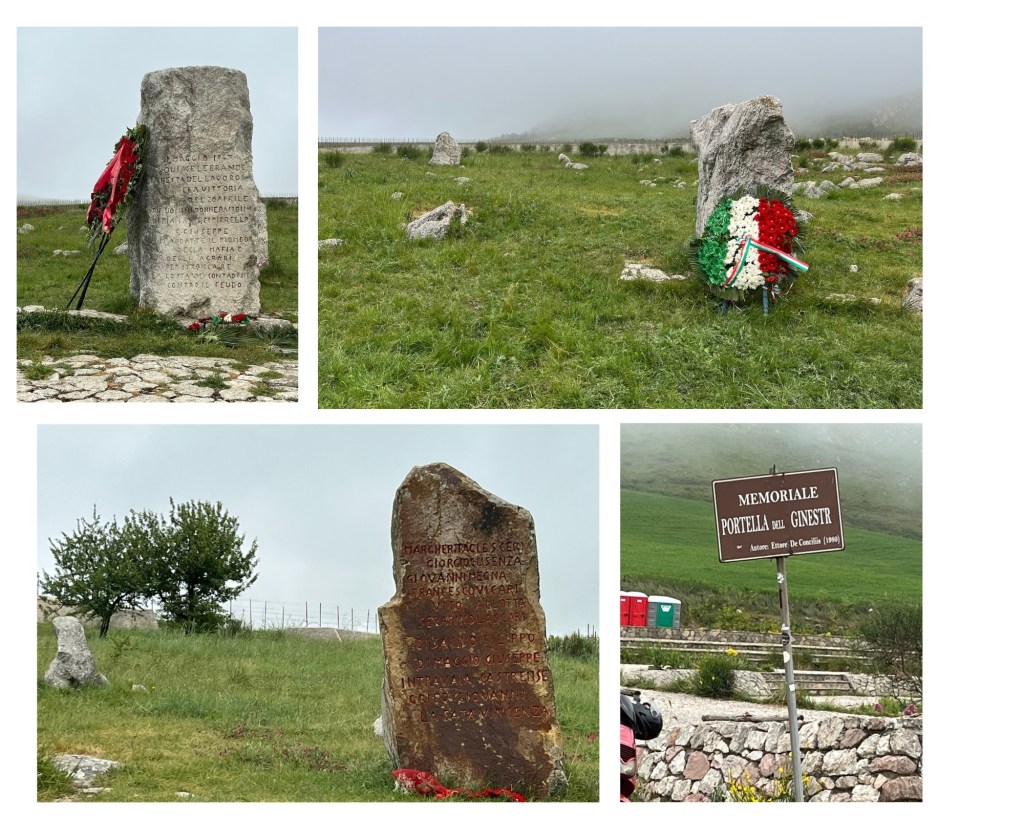
Mary married into our family of German Lutherans almost forty-one years ago. Her maiden name is Fabian but the family name was originally Fabiano. And, in case you haven’t guess yet, they come from Piana degli Albanesi. But that’s not the only connection.
We didn’t make it in time for the memorial gathering or the parade in town, partially because we got a late start and partially because the drive into the mountains was so beautiful. I say this a lot while driving around Sicily and this time I mean it four-fold. Breathtaking.
So, by the time we got to town, it was quiet. It was 1:30pm and, in case you didn’t know this, pretty much everything in Italy closes down between 1:00 and 4:00pm. In this case, it allowed us to wander without noise or fighting crowds. What we saw was absolutely enchanting. There are many alpine elements mixed into the buildings, reminding me of my own German heritage. Now, I know nothing about Albania except that it is situated to the west of Greece, across the Adriatic Sea from Italy. At some point, I’ll find out how the alpine accents worked their way into this village. Maybe you know?

Eventually we stopped for a coffee and cannoli. Sicilian cannoli are the best in the world (Sicilians will tell you it’s due to the southern spring grass and happy goats) and La Casa del Cannolo is said to make the best of the best.

I sent this photo to Mary and she responded immediately. Yes, her family the Fabianos come from Piana degli Albanesi. But even closer to home, it turns out we had just enjoyed a cannolo from her cousin’s shop. Indeed, the Cuccia family is related to her own.
Small world. And while Mary and I may not be related by blood, it’s pretty exciting to have another connection to this island that feels like home.
I hope you’ll watch this video taken on 1 May 2024.
Let’s All Have a Door, Let’s All Have a Roof
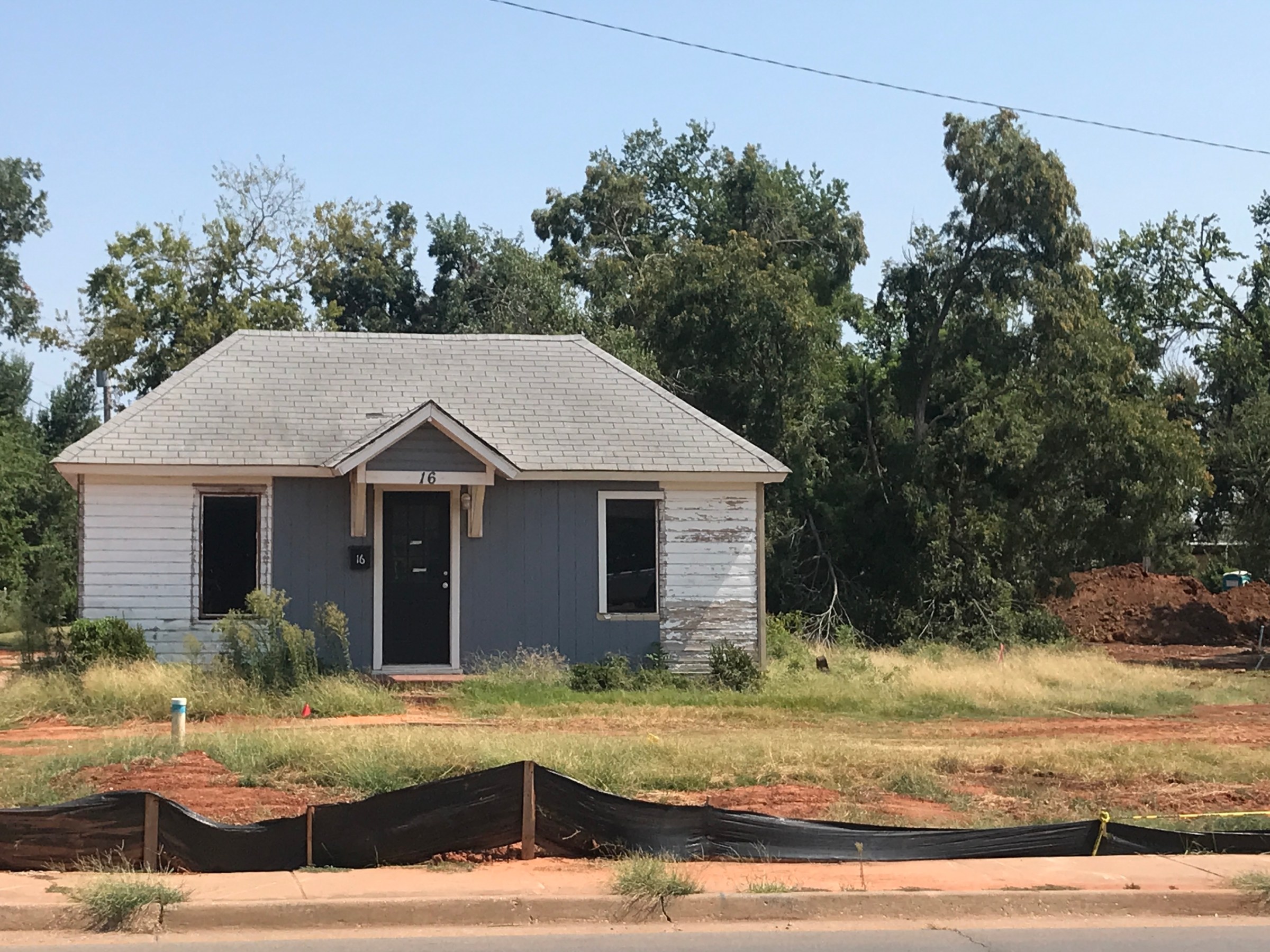
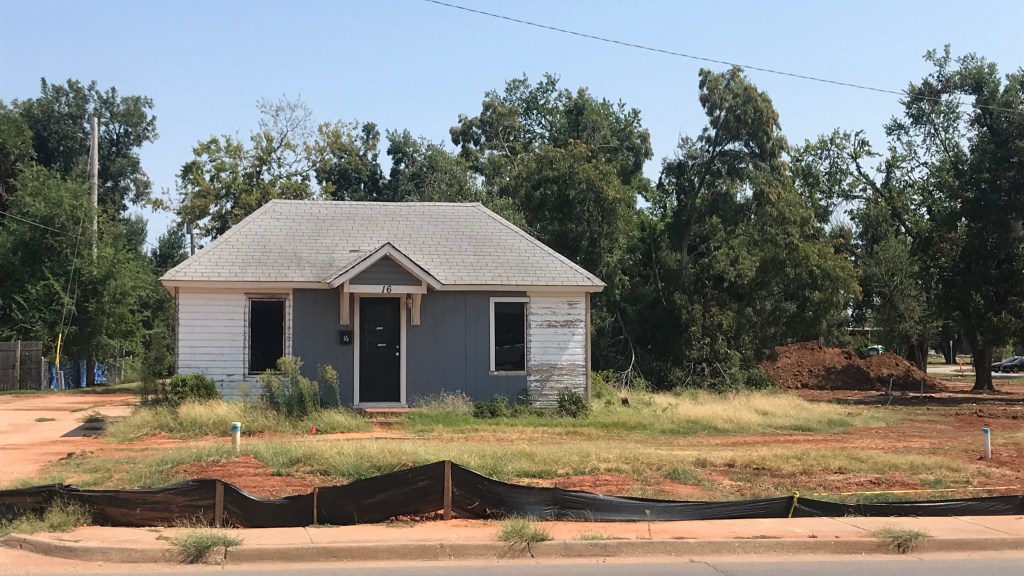
I was 18 years old when I decided to move across the country on my own. And since this meant I would not be attending Northern Illinois University as my parents had hoped, I would not be accepting any money from them. Not that they offered. At least, not then.
It seemed like a crazy idea, sure. My mother was extremely upset, crying at my bedside, pleading with me not to leave. My departure devastated my father as well, but he didn’t show it. If he had, I would have stayed. Instead, all he said was, “If it doesn’t work out, I’ll send you a bus ticket home.”
So I took off for San Francisco with all the money I had saved, including $250 from selling my saxophone, which I went on to regret for the rest of my life. Selling my saxophone, that is, not moving to San Francisco. The latter was the best thing. I thought so then and still do today.
Everyone said I was courageous. It never felt that way to me. After all, if it didn’t work out, I could always go home.
When my father died, I was home. I was back in Chicago, living in his basement, taking care of him for months. I went back to work maybe sooner than I wanted, but I knew I needed my own place. My stepmom would have been happy to have me stay, but she also would have started charging me rent. It was the basement, for heaven’s sake, with no washroom. I was squatting on a camper toilet in the middle of the night, next to the furnace.
When I left my marriage and I took off for Mexico (cliché?), again, I wasn’t afraid. If worse came to worse, I could always go home. And the worse came. Sick with dysentery and a fever of 104°, I managed to fly back to Chicago where my sister picked me up and took me to the hospital. After six hours, my doctor agreed to release me, provided I had somewhere to go and someone to take care of me. Not my sister, she had cats and I’m extremely allergic. Instead, I spent the next four weeks on the futon of the home I had just left. “I thought you might come back,” Jo said, “I just didn’t think it would be so soon.”
When my mother died, twenty years after my dad, I was unexpectedly inconsolable. I sobbed and heaved just as hard as I had two decades earlier. My mother was extraordinary in so many ways and extremely erudite, but it had taken me many years to recognize this. Now, finally on the path to my academic dreams, I was excited to discuss everything with her: all that I was learning and the woman I was becoming. And then, very quickly, she was gone.
I lost her, my mom, my star sign. On top of that, I lost home.
Until that point, I continued to believe that if the very worst happened, I could always go home. Meaning, sleep on my mother’s couch. If you asked me, I’d include my sister’s or brother’s, but they both had cats and the latter had kids. The kids I could live with, the cats I couldn’t.
Realistically, I couldn’t have slept at my mother’s for those last few years. She was in a senior living community. And if something truly tragic had happened to me, I suppose my siblings would have found a way to help. But once my mother was gone, so was my safety net. For the first time in my life, I felt absolutely vulnerable and alone. I still had my family and wonderful friends and even Tom, but now I knew it was all on me.
All my adult life I have often said, “but by the Grace of God, I am not on the streets.” And I’ve meant it. There were times that I rolled coins and sold jewelry. And times that I’ve worked multiple jobs to make ends meet. Other times, I’ve had enough money to be quite comfortable. I’ve had the stability of a good paying position to afford my rent, even a mortgage, as well as vacations and dinners in restaurants. But I’ve always been one disaster away from homelessness. One major illness. One devastating diagnosis. One extreme crisis. In one month or two, maybe three, everything could be gone.
Which is why the cost of housing, particularly long-term rental housing, worries me. And has worried me for years.

When I sold my home in Picabo in 2018 (at a loss, btw), I knew that I would never again be able to rent a place for lower than what my mortgage had been, at least not in the Wood River Valley, and at its highest, my mortgage was $1500 a month. Today, my place would rent for probably $4,000. In general, around here, 3-bedrooms start at $3,000 a month rent and can go as high as $6,000. And we’re not talking about a super nice place in wealthy areas.
Consequently, so many of the “workers” in this area, live somewhere else. I interviewed a family last week where the mother drove four hours a day to work a full-time job in Sun Valley. This isn’t the mass exodus to suburbs that happened a few decades ago. When folks chose a long commute in exchange for bigger homes, better schools, and safer neighborhoods. This is folks having to live far from where they work in order to afford housing. And this, my friends, is not only insane, it is ultimately unsustainable.
Jeremy Ney discusses this in his recent piece, “Why homelessness just hit a 15-year high, rising 12% from last year: Rising rents and low housing inventory spur an unprecedented level of homelessness in America. There are multiple factors that contribute to this crisis.
My personal pet peeve is AirBnb. Don’t get me wrong – ten years ago, even four when I found myself in Italy during the Covid pandemic, I loved this business. I fully support renting an extra room or your entire home when you’re not there, but this business has blossomed far beyond that. Now, properties are regularly purchased purely for vacation rentals. This has reduced the inventory of housing available for local residents. In the Tulsa neighborhood that I just left in September, there were 10 Airbnbs within three blocks of my place that were only available for short-term rental. That’s 10 apartments and homes that I know of that are no longer available for people who live in the city and need housing. The real number, I’m sure, is much higher. And, as we all know, when there is less of something, the demand increases, as does the cost.
So what’s a person to do? Many folks are living in their cars. Now coolly referred to as “vehicle residency,” this trend is on the rise among full-time workers who can no longer afford ongoing increases in rental prices. Joan DeMartin discusses this in “The Latest Trend: Live In Your Car, Parking Lot Provided.” I knew one such woman in Tulsa with a college degree and two jobs. When her roommate brought home a boyfriend who became abusive, she was forced to leave for her own safety. But she had co-signed on a year lease and couldn’t get out of it, so she was legally bound to keep paying for an apartment she couldn’t live in. Instead, she lived out of her car and took showers at the YMCA. There was no family as a safety net, only a mother in another state struggling with mental illness. And after a while, really, how long can you sleep on a friend’s couch?
Only two states—Oregon and California—have statewide rent control laws. Just over 200 local governments in another five states have some form of residential rent control in effect. That’s not enough. We need better laws that protect and assist renters.
Last year in Tulsa, I interviewed an elderly woman who had lived in her apartment for 11 years comfortably, but in the last two years, her rent had been raised twice to a total increase of almost $400. Think about that: $400 increase on an apartment which previously cost her $700! She didn’t know what she was going to do. Her Social Security was barely enough to pay for housing. Where could she find a place that was less expensive? And if she did, how could she afford to move? She would have to leave behind everything.
Housing is a human right. Shelter is a primary need. The United Nations Declaration of Human Rights, written in 1948, states in Article 25:
Everyone has the right to a standard of living adequate for the health and well-being of himself and of his family, including food, clothing, housing and medical care and necessary social services…
There is so much to say about this, but let’s not dive into politics or philosophy. Let’s keep this real. I told you my story. What about yours?
Have you been impacted by the housing shortage?
Have you ever been homeless? Have you lived in your car?
Do you worry about paying your mortgage or rent?
Or maybe you know people in these situations. Tell me. I want to know. We need to talk about this crisis and stop stigmatizing people who can’t afford the cost of housing, which is rising out of control. We can’t keep delegating homelessness to drunks, drug addicts, and the mentally ill – this is insulting and inaccurate. Almost any one of us could be homeless. But, by the grace of God, at this moment, we’re not.

You might be interested in subscribing to The Poverty Trap, a weekly Substack by Joan DeMartin or American Inequality, which uses “data visualizations and mapping to highlight America’s regional divides.”
A Shakespearean Sonnet About Doors by Ian McMillan
It’s not much to ask. Just a door to lock.
A door that won’t break when someone kicks it.
Door with a keyhole. Respond to that knock
Or not. My choice. It’s broke so let’s fix it:
The world, I mean. Not the door. That’s ok.
It’s my door, to my room. Look: here’s the key.
The world, though. That’s different. Somewhere to stay
Is what we all need. Somewhere to be me
And not just someone you blithely ignore
When you see me sleeping on the street.
Let’s begin with this. A door. Just a door
To start with. A door. Food. Then light and heat.
The world must respond to this simple truth:
Let’s all have a door. Let’s all have a roof.
JanPepplerHOME is a reader-supported publication. If you have the means, please consider buying me a cup of coffee. Thank you!
Red Underwear and Southern Greens

I finally found my red underwear. We’re still far from settled in our new home and finding things is a daily challenge. Especially things that aren’t used regularly. Hence the search for red underwear. They’re practical – nothing fancy – but unless you have red pants or are typically feeling pretty saucy, red undergarments are not typically something you wear every day.
But you do on New Year’s Eve. At least, in Italy. In Spain as well. Red symbolizes love, passion, and positive energy and wearing it as your first layer at the very, very, end of the year is believed to bring good luck, prosperity, and success in the coming year. So there you go: a new, fun tradition for you to follow.
Here’s another one: throwing out old stuff. Pots, pans, furniture, clothes, basically anything that is broken, stained, or not working properly – throw it out! Letting go of these things symbolizes letting go of past unhappiness and preparing room for good things to come in the new year. But this is no Marie Kondo decluttering exercise. This is an Italian tradition and in true Italian style, it comes with a passionate twist: throw these things out your window. Any window. Open the window and Throw It Out!
Which is a bit like opening your back door just before midnight to usher out 2023 and then opening your front door when the clock strikes twelve to welcome in 2024. (A reader told me of this ritual, and I think it’s a good one!)
I told Tom I want to celebrate by throwing old things out the window and he is hesitant. If you’ve been reading Finding Home for a while, you know I have thrown out a LOT in the last few years. Which means anything we throw out will be Tom’s. After 29 years living in the same place, there’s quite a bit that is destined for a window toss.
Last year, I shared one of my enduring New Year’s rituals: making a collage. Having moved recently, I don’t have many magazines lying around. But Tom has more than enough in his old house (see paragraph above), so I expect we’ll be doing this on Sunday night.
One of my favorite traditions, however, is making Southern greens and jambalaya. If you’re Southern, you also need the black-eyed peas. But unless I’m hosting a party (as I did for many years on New Year’s Day), I take a pass on the peas. The greens are meant to symbolize paper money and the peas symbolize coins. (Traditionally, you even cook the peas with a dime in the pot.) Eating these foods at the beginning of the year is supposed to bring you wealth and prosperity. At the very least, especially these days, may you always have enough money to eat well through the year.

And the jambalaya, well, that’s the main course and it may just be my tradition. Another symbol of abundance. And spice. Life should always have some spice.

This is my wish for the new year.
Make the most of each day. Be bold. Take risks. Enjoy the little things. Spend time with the people you love. Relax with the same intention as you work. Begin and end each day with gratitude.
When fear threatens to sideline your joy, don’t crouch and tremble. Look it straight in the eye and carry on. Hesitation, doubt, and worries are all fears that keep us from living our best lives. Make 2024 the year you invite fear to sit beside you but you stop giving it the keys to your car.
Rob Brezsny – well, there are so many wonderful things to say about this man. He’s a spiritual scholar and a medium for truth and beauty. He’s also an astrologist who helps conjure positive possibilities through his syndicated column, Free Will Astrology, which can also be found on Substack. What he has to say for Taurus in 2024 is particularly enticing. (I’m not a Taurus but I know a number of folks who are, Tom included.)
“According to tradition in ancient Israel, a Jubilee year happened every half-century. It was a “trumpet blast of liberty,” in the words of the Old Testament book Leviticus. During this grace period, enslaved people were supposed to be freed. Debts were forgiven, taxes canceled, and prisoners released. People were encouraged to work less and engage in more revelry. I boldly proclaim that 2024 should be a Jubilee for you Bulls. To launch the fun, make a list of the alleviations and emancipations you will claim in the months ahead.”
– Rob Brezsny (read more for other signs here at the end of his post)
What rituals will you follow for the end of December and beginning of January that have meaning for you and bring you joy?
Coming up in 2024:
More videos of Sicily. Our continued renovation of the old train stop house, as well as how we came to buy that house, and exploring Castelvetranno and surrounding towns.
More videos of Idaho and our continued renovation of our 1970s house.
A return to the Finding Home Podcast. This podcast was streamed in ten countries in 2023 (down from twenty-five countries in 2022) and I ignored it all year. I thought that simply reading my posts wasn’t enough. You’ve said otherwise and encouraged me to start recording again. I will. I’ll figure out the technology – and – I’ll also start including interviews with people about home. Stay tuned!
Thank you again for your support. To read new posts each week, subscribe to Finding Home on Substack. ❤️ Happy New Year!

Can You See It?
Remodeling a home as a verbal thinker
Our house in Bellevue is going to need some work. Nothing structural, thank goodness. And all things considered (age of the house, having been a rental for twenty years, etc), the work is not really that much. But what we do have to do is more than either of us has ever done. Which is why I keep thinking this is good practice for our Sicily home.
Eventually, I’ll show you before and after photos. For now, I’ll tell you. Because I’m a word person. Which I’ve never really examined until I read Joshua Rothman’s article about different styles of thinking in The New Yorker, 16 Jan 2023 edition.
If I’m honest, I’m unable to grasp the fullness of the article. It’s either above my head or I’m too distracted to give it the focus it deserves, but the basic idea of neurodiversity and different styles of thinking is interesting. As is Temple Grandin, who became well known in the mid ‘90s when she published Thinking in Pictures: My Life with Autism. This memoir recounts her challenges in finding “a way to put her visual and perceptual gifts to use”. In her latest book, Visual Thinking: The Hidden Gifts of Those Who Think in Pictures, Patterns, and Abstractions, she breaks down thought processes into basically three styles. Rothman explains:
“On one end are verbal thinkers, who often solve problems by talking about them in their heads or, more generally, by proceeding in the linear, representational fashion typical of language. … On the other end of the continuum are “object visualizers”: they come to conclusions through the use of concrete, photograph-like mental images. … In between these poles, Grandin writes, is a second group of visual thinkers—“spatial visualizers,” who seem to combine language and image, thinking in terms of visual patterns and abstractions.”
Or put another way: There is thinking in pictures, music and math thinking (spatial visualizers), and verbal logic thinking (most common).
Grandin is a visual thinker. I’m not.
I can’t help wishing I was more visual. Visual thinking sounds light and bright and magical. Like flying instead of walking. Whereas, the way I think can be lumbering, heavy, and downright annoying. Process takes time. Logic is linear. The steps that need to be done are clear to me while the end result is, well, a bit fuzzy, and only gets clearer as I —step by step— get closer to the solution. It’s a long way from instant imaging.
So when it comes to working on our house, I see everything we need to do, but I can’t truly see what it will look like when we’re done. I can only hope it will look the way I want it to feel.
The house is a rectangle with very straight lines. I’ve never lived in a rectangle before. I prefer curves, something more amoebic. Houses rarely have curves but something outside of a box makes a house interesting.

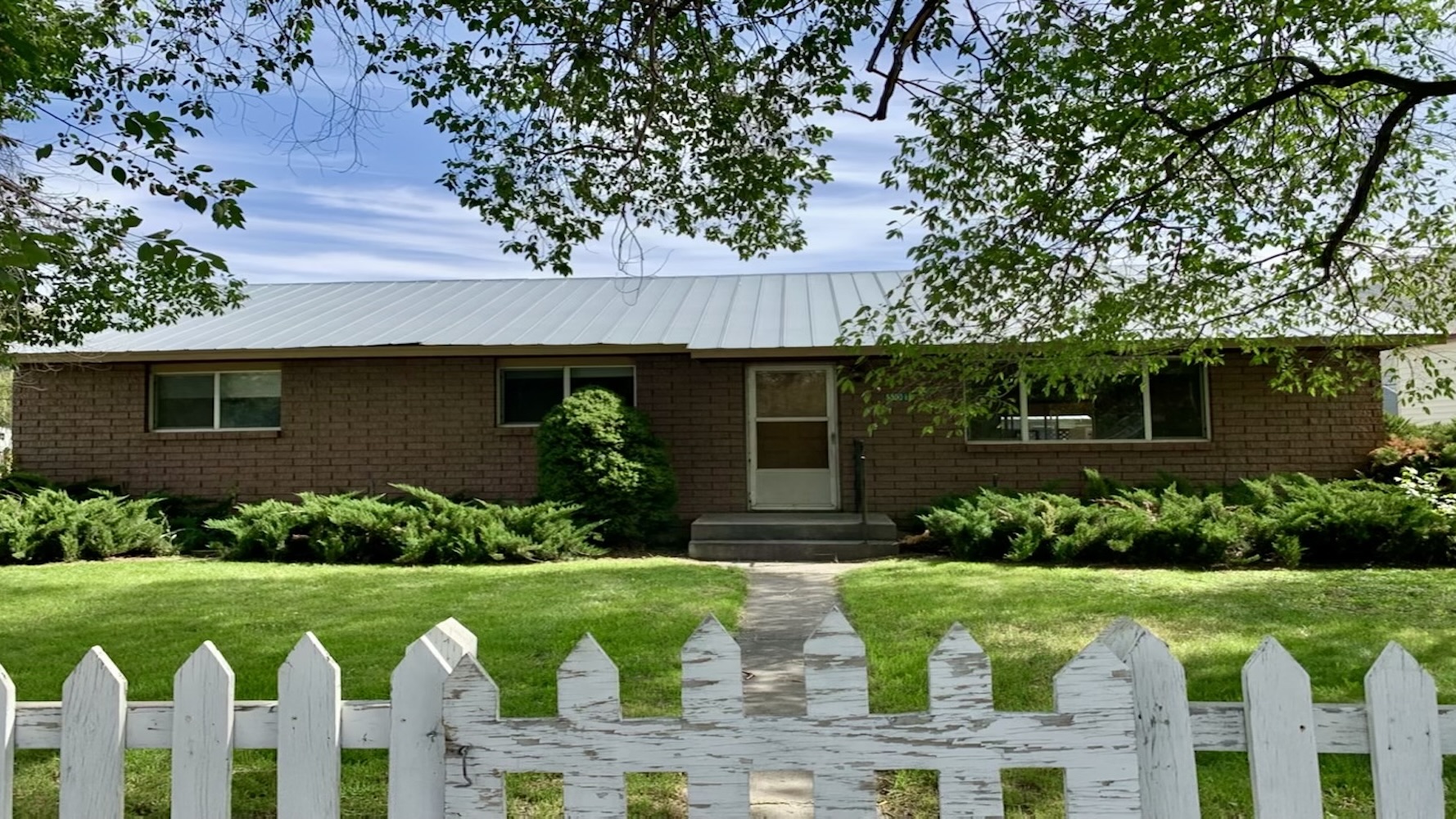
That is not our house. This is our house:

On the south end is the living room and an adjoining wall of cupboards to the east, which are technically the south end of the kitchen except that it’s really the dining area. Another rectangular area, and I have a round oak table. Oblong, if I add two leaves. How will that look? Will it help break up the straight lines or will it feel awkward because the space is really built for a long table with the short end up against the wall and under the window?
I can’t picture it, so I’m relenting and adding photos. Maybe you can help me.
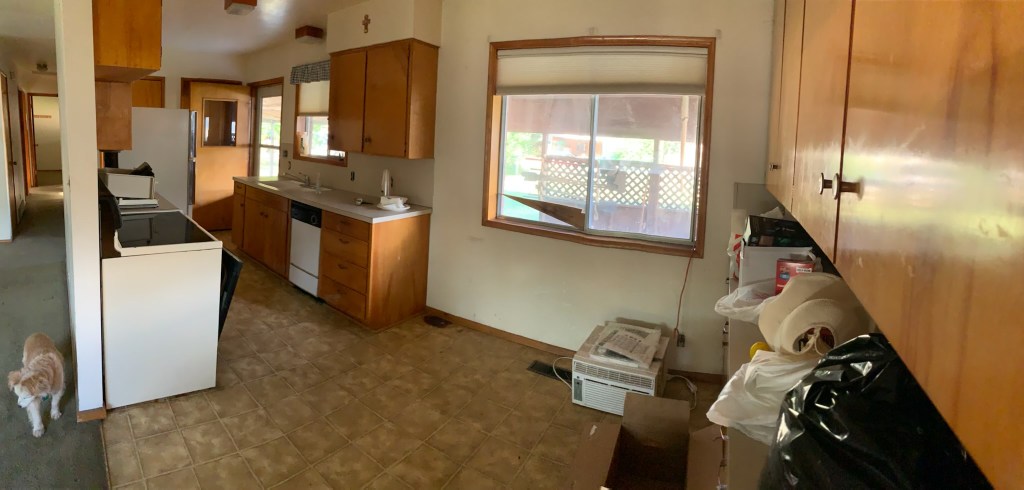
On the east side of the house (outside of the kitchen) is a yard and the backdoor through which, it seems, folks always enter. Personally, I like to enter through a front door. But that only works if you’re parking on the street and historically occupants of this lodging typically park on the side. (No garage and no car port so, yes, snow in the winter is going to be an issue… but I’m leaving that up to Tom.)
In addition to the kitchen and eating area, the east side has a square bedroom at the north end (which will likely become my office and yoga room), a small bathroom, and a laundry area. The west side of the rectangle has the living room and two bedrooms. Can you imagine it? Do you see it in your head or, like me, do you need photos?

The bedrooms, closets, and hallway are just under 800 square feet which, for twenty years, has been covered in carpet. This is our biggest project: pulling up the carpet and installing hardwood laminate. In every room. A huge endeavor, yes, and hey, how hard can it be? According to the countless videos I’ve watched, not too bad. Maybe even easy, once I get the hang of it. Just follow the directions closely, have the right tools, and excellent knee pads. Realistically, I’m starting with our bedroom. I need a comfortable place to retreat to when I’m tired—which could be anytime and not just at the end of the day. Hah! I have never done anything like this. I could be in for a big shock. But without a bit of naivete, nothing would ever get done, right?
Then, of course, there is the painting of every room. Ceilings, walls, and closets. We finally decided on the ceiling color which should work everywhere. Except maybe the kitchen, but the kitchen is the last thing to tackle so I’ll worry about that later. Colors for the rooms will be decided once I’m there. If you’ve painted an interior, you know that the shape of the room, natural and artificial light, and the time of day can dramatically alter what a paint color looks like. Again, because I can’t see it in my head, I need to see it on the walls before I decide.
What we have decided on—and this my friends, is a huge leap of faith—is wallpaper for the north end wall, ten feet wide, of the master bedroom. Yes, wallpaper. Hanging wallpaper used to be a horror but if current reviews and Instagram posts are honest, it should be pretty easy. Bonus: it can even be removed like a breeze, making it a new favorite of renters. We, of course, have no intention of removing it. Instead, the idea is to add some boldness. Not distracting bold, but passionate. Our individual bedrooms have been very neutral for many years. It’s time for a change.

The most immediate project, however, is the bathroom overhaul. The space is only six and a half feet deep and five feet wide—I can’t imagine there is any other layout than the current that will work: 24” vanity, toilet, and tub. Yes, we’re keeping the tub. A warm bath on a cold winter night is too good to pass up. So, new flooring, new vanity, new light, new toilet, new tiles for the shower above the tub, new paint, new hardware. I think I can see it, except that every time I look at tile and then purchase a sample, it isn’t quite right. And we’re not paying $25 a square foot. Heck, we’re not even spending $10 a square foot. The reality of cost always changes the vision a bit.
Alas…
I’ve been thinking this whole time that visual thinking might be superior. At the very least, a very handy ability to have. And maybe that’s in part due to it not being my gift. The grass is greener on the other side. Women with curly hair dream of long, straight locks and women with straight hair long for natural curls.
Maybe you see what I just did (see meaning realize). I worked out the problem with words. Linearly. One thought at a time leading to the conclusion. Because this is the way my mind operates. Neither way is superior, it just is.
I’m designed to wait for the surprise.
That’s the thing about verbal thinking. I don’t see a picture in my head. I can’t see it in advance. No amount of visualization practice is going to get me there. My vision board collages aren’t the final product, they’re only a step towards it.
So while visual thinking may seem like magic to me, and knowing just one step at a time can feel incredibly uncomfortable when a lot is at stake, and “logical” thinking can sometimes feel tedious, pompous, or self-indulgent, I really do love a wrapped gift. Whether it’s something small and silly, or something expensive and grand, the anticipation and effort of unwrapping always make the gift more, it makes it an event.
Not being able to see how the house will look when we’re done is a lot like receiving a gift wrapped in heavy paper, with lots of tape, and plenty of ribbons.
So I’m waiting for the surprise. Can’t wait to see it.

For weekly content, please follow me on Substack! Subscribe to FindingHome.Substack.com. Thanks!
Athena just wanted to be loved
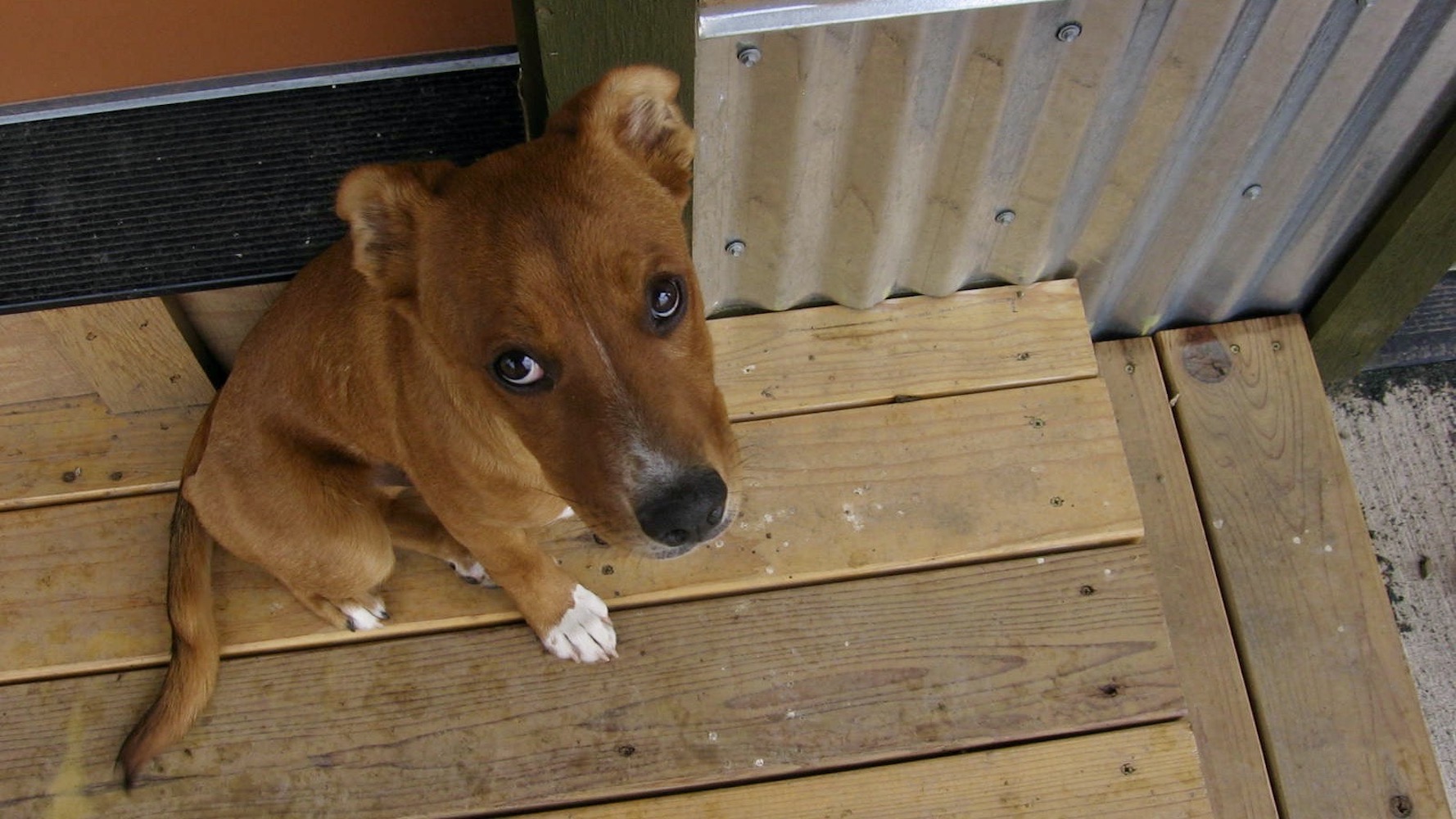
Some dogs want attention. Others need to feel safe. Some need a job. Athena needed love.
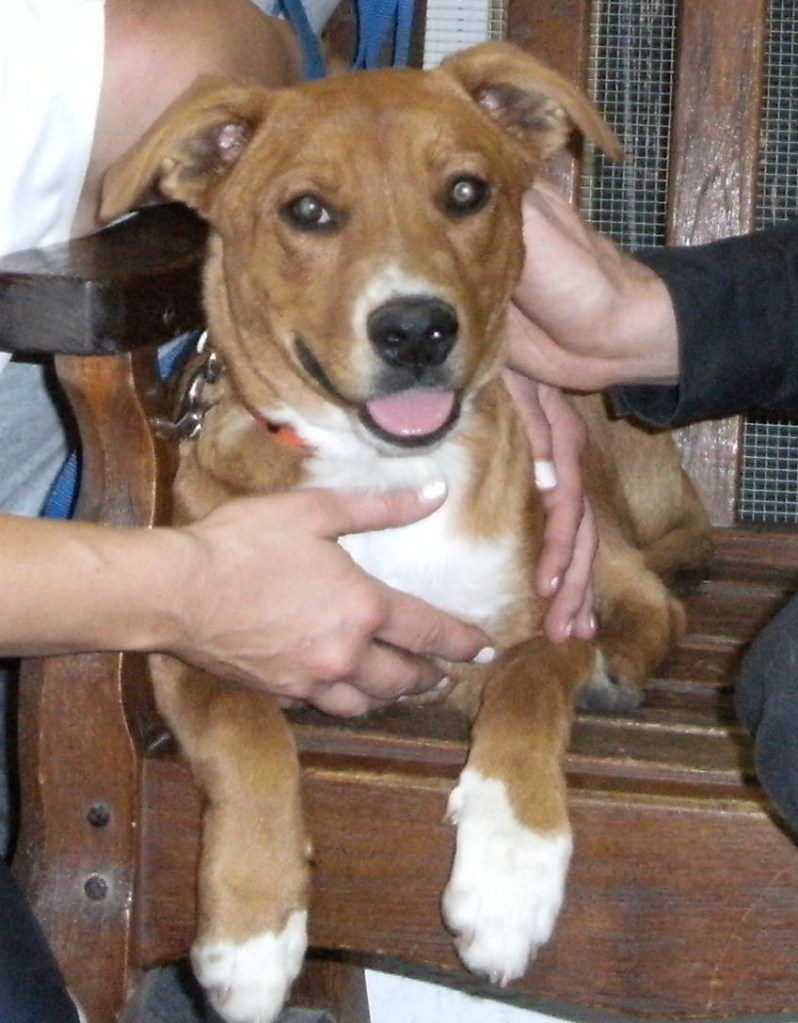
Athena and her brother were surrendered to the local animal shelter at just a few months old. She was an anxious pup so the staff took to having her spend days in the office with them. I didn’t even notice her until I was ready to leave and then she quickly stole my heart. I named her Athena believing that names have power and hoping this one would give her strength and overcome her timidity. I wanted to embolden her, to help her feel strong. To make her wise and help her feel worthy. I’m not sure it ever worked.
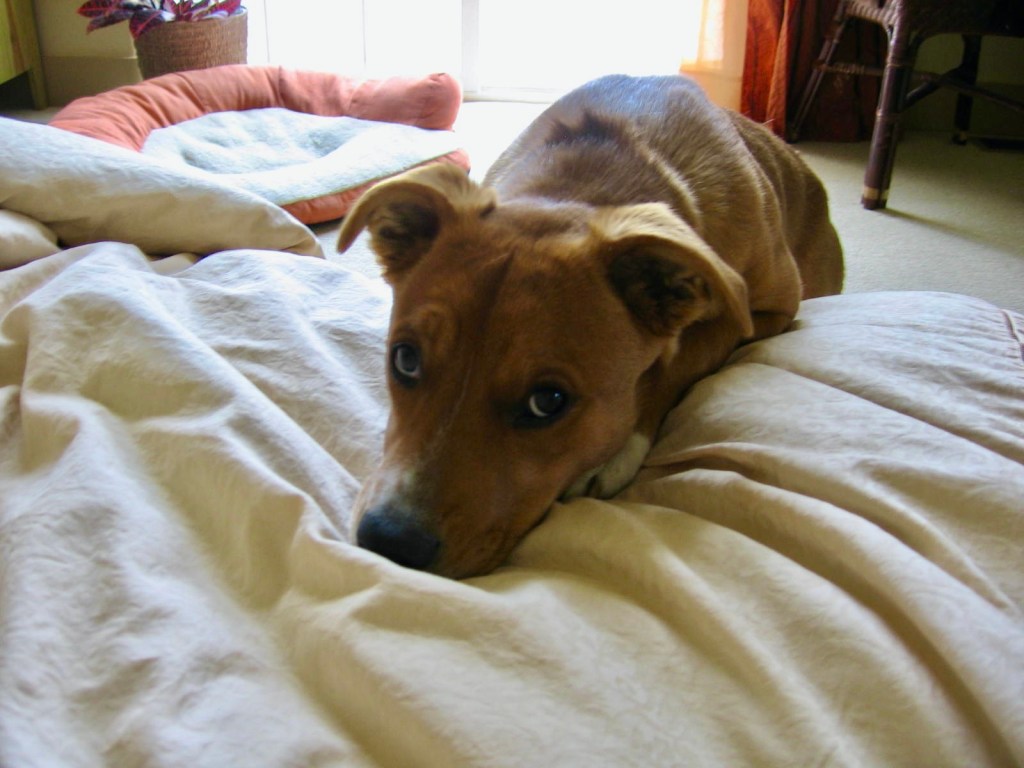
The first few months were challenging. She was still a puppy and some form of abuse must have occurred before me – even if it was passive. Her broken tail was a tell-tale sign, as well as her eyes. My former dog was very independent. Athena was not. Athena needed reassurance. Her anxiety soared if she couldn’t see you. On our first Thanksgiving together, she was crated in another room while the rest of us ate dinner. We could hear a ruckus but thought it best to ignore – kinda like allowing a child to cry themself to sleep. We would never do that again. She literally broke the crate.
So it wasn’t long before I realized she needed a companion and I had a plan. I would take a week off work and we would drive to Omaha, where there was a small dog rescue of mostly females bred in puppy mills. This time around, I wanted a small dog. An older, female dog. Motherly. Athena could pick her out. It was a perfect plan. But then the local shelter called and said they had a dog for me. No, it was not female and, no, it was not older. But it was small and cute and cream-colored. We visited and that was that. They were instantly best friends.

From that point forward, Athena’s life was all about protecting Leo. Not that he really needed protecting, but nonetheless, Athena assumed the role.

Leo is an adorable small dog. The kind that always looks like a puppy, no matter how old he gets. And Athena is a Boxer-Heeler mix. The Boxer in her resembles an American Staffordshire Terrier, which often gets an unfair rap. So it was always Leo that got compliments from friends and strangers, while Athena was largely ignored. In public, that’s one thing, but at home, when Leo was squirming his way into your lap, Athena would look on with her brows furrowed. Athena would never ask for attention, she would allow Leo his spotlight, but she often looked forlorn. Athena just wanted to be loved.
My firstborn. I would whisper this to her, close to her face, as I cuddled her best as she would allow. She wasn’t my first dog, but in a house with Leo, I gave her this honor. She was special. They might be the same age, but she had seniority. Even if she did prefer to squeeze into Leo’s bed.
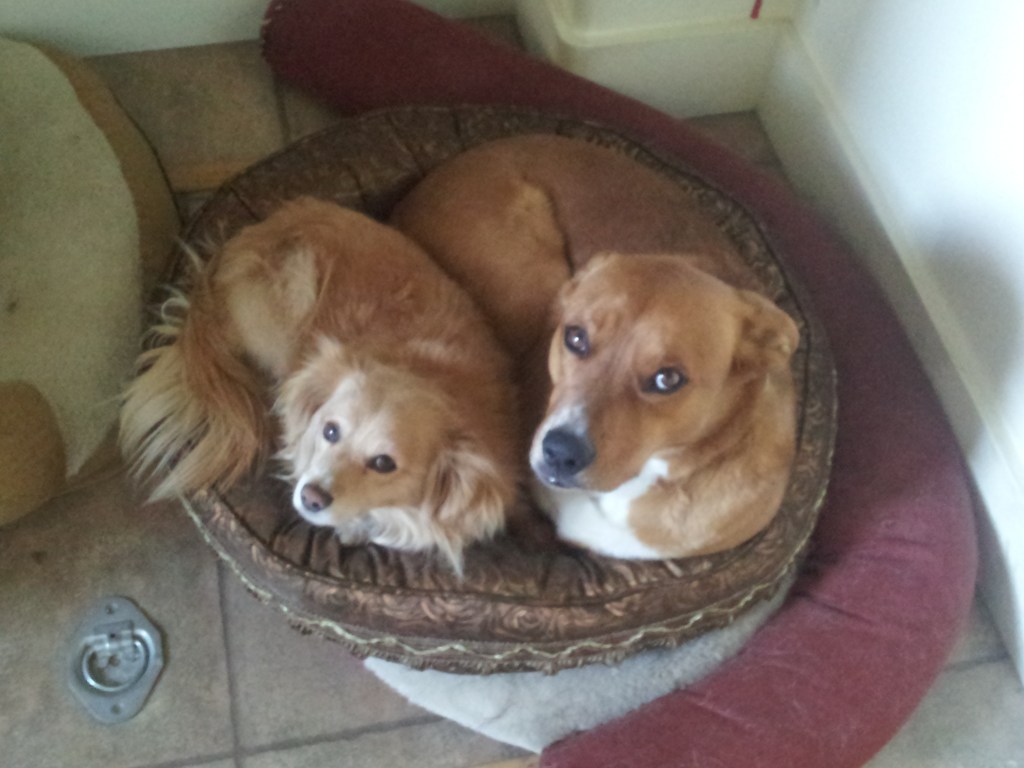
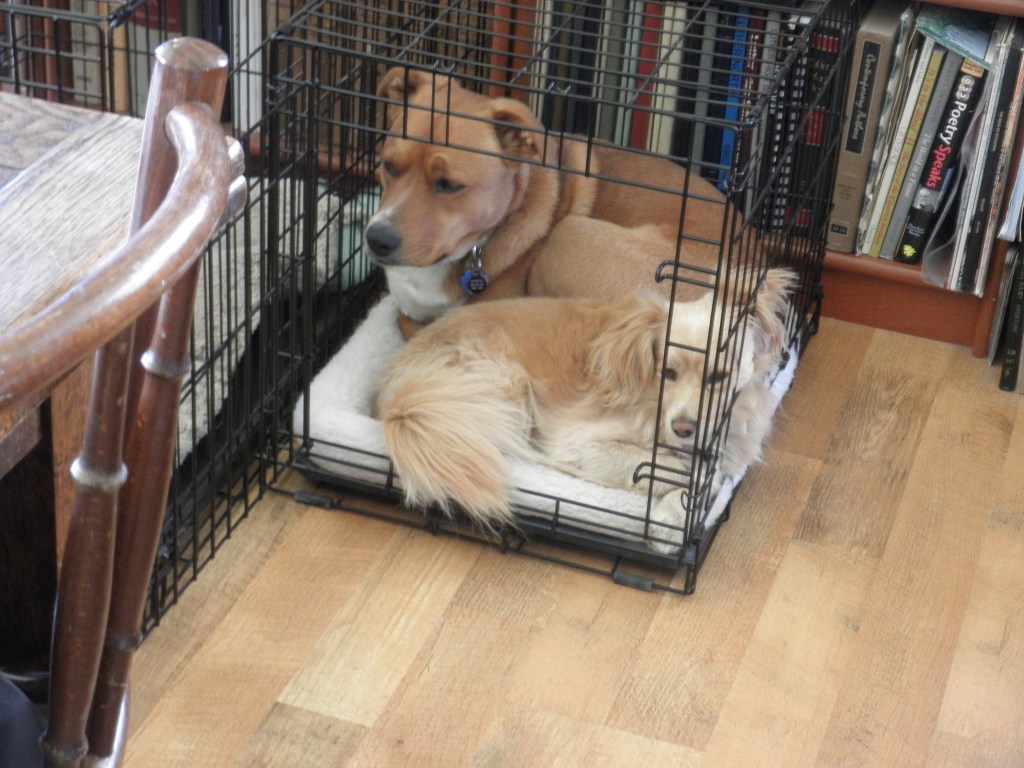
But even with Leo around, she still always wanted to know where you were. On a hike, she would stay close and turn her head back to make sure you were there. Leo could run off and be lost for hours but never Athena. Out they would run through the doggy door and even on a beautiful day, Athena would come back in every few minutes to make sure you hadn’t left.
Then in late 2018, I did leave. Sometimes I think maybe I am a terrible mom. It’s hard to believe that I moved to Oklahoma without them. But the truth is, I allowed them to stay. They were both 10 ½ years old by then. Tom generously offered to drive the U-Haul but when I mentioned the dogs, he was silent. He wanted them in Idaho, with him, in the landscape they had always known. It would have been selfish for me to insist.
But our separation took a toll on me. I missed them terribly. That first year I was so sad without them and, combined with a job that was awful, I cried regularly. I returned for visits but it wasn’t the same. Now they were bonded to Tom in a way they had once been to me. Without them, I felt alone, listless, incomplete. Folks would tell me to adopt another dog and I would bristle. I didn’t need another dog – I already had two. You can’t just replace your kids.
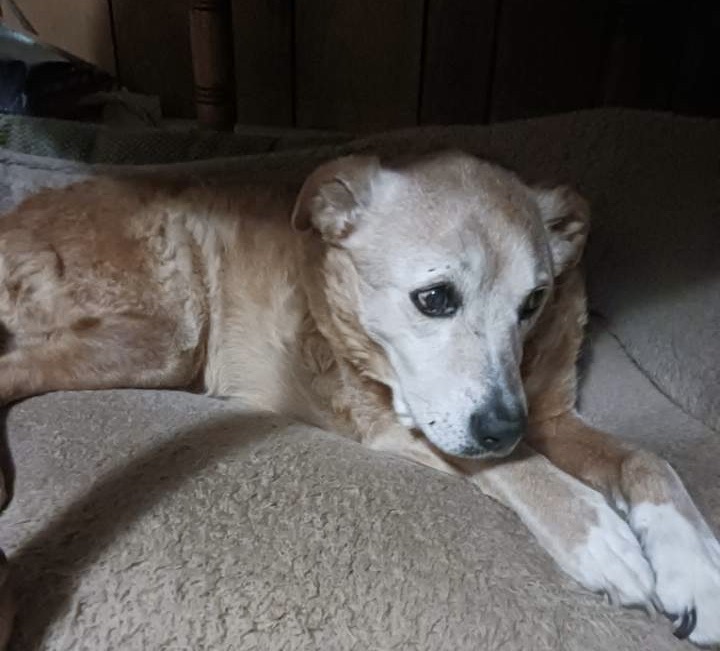
Tom sent photos regularly and my visits continued. The pandemic happened and after four months in Italy, I returned and adopted Mazie within a week. So okay, I finally had another kid. And undoubtedly, Mazie has become my constant companion. Still, Athena and Leo would always be like grown children living away far away from me. Returning to Idaho meant returning home to see them. And in my last few visits, I noticed Athena had become a grand old lady. She limped and moved slowly, but she would still get up to receive attention. She was such a calm and sweet old girl.

We knew her days were numbered but could never expect she would pass while we were away. The news hit us hard. And if I’m honest, the trip was over for me that day. All I wanted was to return home immediately. To fly back to Idaho and comfort Leo. But of course, that wasn’t practical.
It feels like Athena died alone, but that’s not true. Renee, the woman taking care of her and Leo was exceptional. And when she got her to the vet, the vet who had known Athena her entire life – even prior to her adoption with me – I’m told she looked relieved. Dr. Laurie knew we wouldn’t want her to be in pain. The tumor on her liver, which we never knew was there, had burst. Renee held her, stroking her head, and cradling her as she went to sleep.
Athena just wanted to be loved. And even though I wasn’t there to give it to her as she took her last breath, she was very loved indeed.
What Feels Like Home

“Because I was fifteen and generally an idiot, I thought that the feeling of home I was experiencing had to do with the car and where it was parked, instead of attributing it wholly and gratefully to my sister.”
The Dutch House by Ann Patchett
Home is not always a place. Sometimes home is not a house, a neighborhood, a town, or a landscape. Sometimes home is another person.
A friend once told me that she was going home to Florida for vacation. “But wait – you didn’t grow up in Florida, did you?” I asked. “In fact, you’ve never lived in Florida.” She paused. No, she hadn’t. Had she really said she was going home? Yes, I confirmed, still curious. Well, that’s where her mother lives now. She was going to visit her mother. While she hadn’t realized it before, wherever her mother was, was home.
Other times, our life partner is home. Wherever that person is, no matter the chaos, discomfort, or even danger that surrounds you, as long as you’re with that person, you feel safe and grounded. That person is home. This always makes me think of Carole King’s song, Where You Lead, I Will Follow. Or the story of Ruth in the Bible, who tells her mother-in-law, Naomi, that the only home she has now is with her.
“Entreat me not to leave thee, or to return from following after thee: for whither thou goest, I will go; and where thou lodgest, I will lodge: thy people shall be my people, and thy God my God. Where thou diest, will I die; and there will I be buried.”
Ruth 1:16-17 King James Version
Is there someone in your life that feels like home?

I turned off my phone for Christmas. Actually, for forty hours. And it was bliss. This was my present to myself—the very best present I could ask for—a time-out, a day without interruption. I wrote a long letter (by hand) and I read a book. An entire book. I have stacks of books waiting to be read, yet, what I read that day was an impulse from the library: The Dutch House by Ann Patchett. I enjoyed the book. And I really enjoyed my time alone that day. Did it feel like Christmas? No. But it did feel like home.
Whatever you did to celebrate Christmas – did that feel like home?
Sometimes home isn’t a place or traditions or people. Sometimes home is a circumstance, an energy, a feeling.
This year I didn’t do any of the holiday traditions I grew up with. But I did grow up with a lot of quiet. Quiet feels like home.
When I think of home in my early years, I see empty rooms, I feel stillness, I hear nothing. Of course, it wasn’t always quiet or empty or still. Music was a staple in our home. The classical station played softly in the background throughout the day. My mother played piano in the evenings, my sister played guitar, my brother and I practiced our various instruments. There were times our mother would wake us up on Saturdays singing or serenade me at night when I was sick. There was laughter and conversation and games of Monopoly and eventually pinochle. The plop plop of ping pong, and the swish and clatter of air hockey. And my mother’s hair dryer while she watched TV.
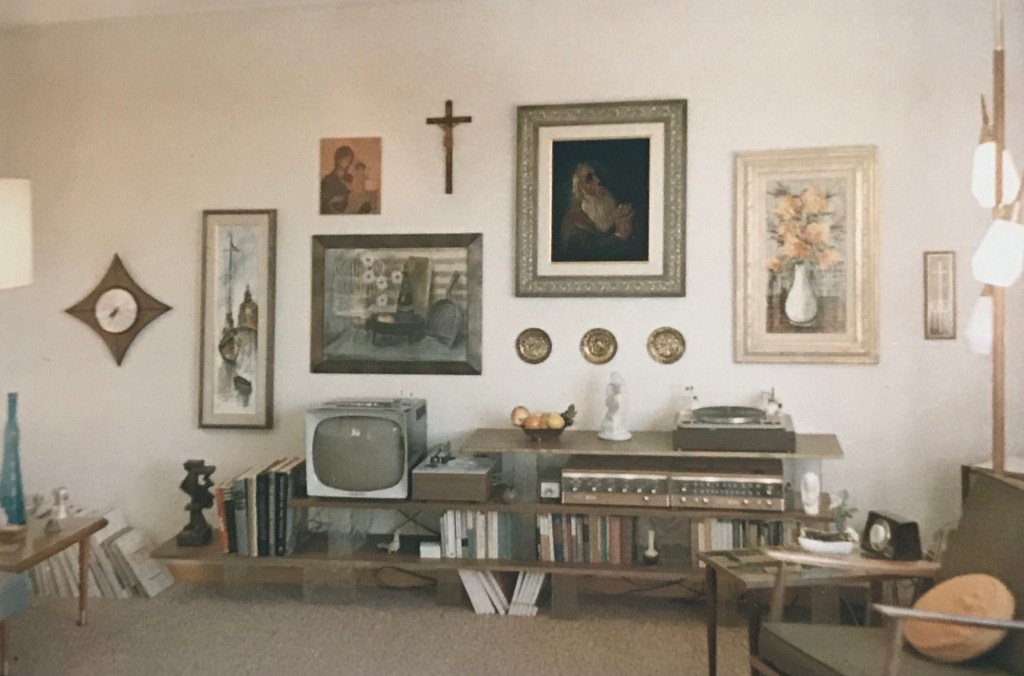
But mostly, there was quiet. Quiet punctuated everything. Looking back, I lived in a sea of stillness. I’m not sure I appreciated it when I was young, but I do now. Quiet is comforting. Quiet feels like home.
What feels like home to you?
I really hope you’ll comment and share. I’m sincerely interested in what feels like home to you.
The Magic and Mystery

The other day on NPR, I heard a Norwegian scientist explain “the physics behind Santa Claus.” He had some pretty interesting answers to the questions children have been asking since St. Nicholas turned into Santa in the early 1800s. You can listen to this fun 5-minute interview or read the transcript here. The explanation for how Santa knows which children are naughty and which children are nice is let’s say… California-worthy.
The naughty and nice thing is a bummer though, if you ask me. Let’s face it, every kid gets presents. Even the bratty ones and the bullies. The only kids that don’t get presents are those from poor families and then it doesn’t matter how good you are: if there’s no money, there’s no presents.
Of course, a long time ago this didn’t matter so much. Before we lost gratitude for the basic necessities of life and began to take these things for granted—shelter and food and clothing—we were tickled to get oranges in our stockings. A moment to rest and enjoy our families was enough. Faith wasn’t about believing as much as it was an overwhelming mystery, and the mystery filled us with awe. Whether that was how a human baby boy could save the world or how a man in a red suit could deliver presents down chimneys all around the world in one night, these winter days were sacred and special. Anything was possible.
This is why we are so enamored with holiday lights. They elicit awe. They twinkle in the darkest time of the year and their sparkling glow touches something primal in our souls: a longing and belief in hope and possibility. Have you ever fallen asleep in front of the Christmas tree, when all the other lights in the house are off? Or sat in stillness surrounded by candles, maybe listening to your favorite holiday music? It’s hard to watch a fire and not be mesmerized. Holiday lights are the same. I have many times immersed myself in tree lights and wept. The connection to something profound, something big and mysterious, essential and amazing, is almost more than I can contain.
In the midst of holiday activities, do you make time for this? Are you able to sit in the stillness and fall into the mystery?
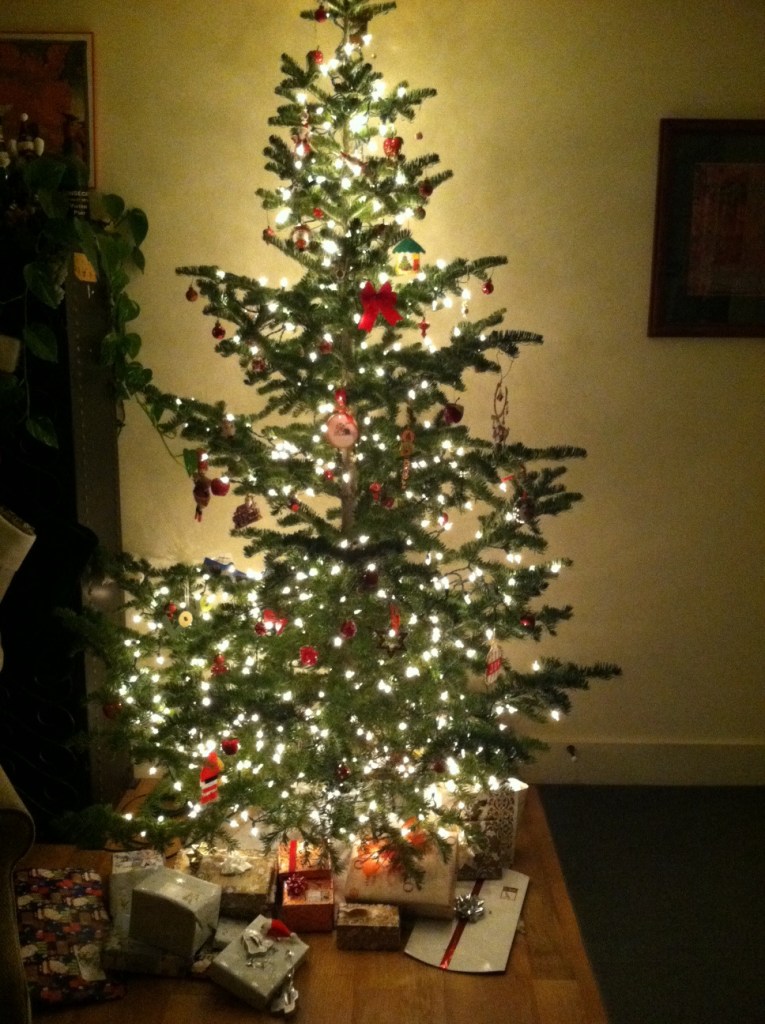
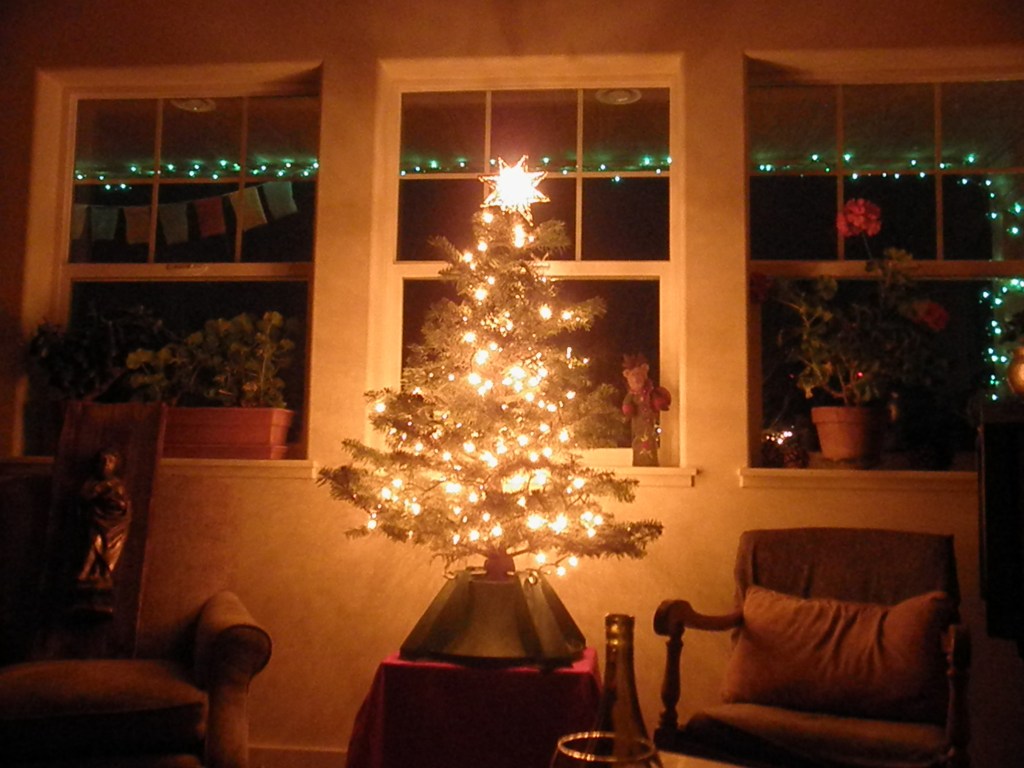
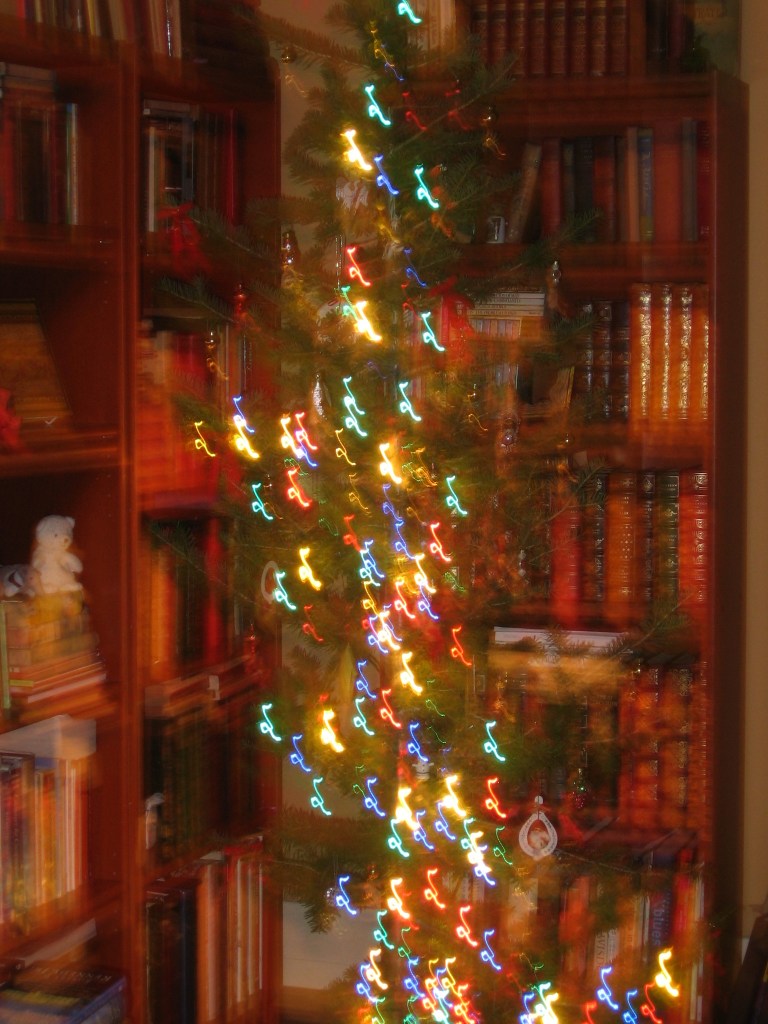
It’s easier for kids. Anything is possible in the mind of a child. With the exception of Susan in Miracle on 34th Street, who has to be taught how to use her imagination, most kids find this easy. Grass can be blue and reindeer can fly. And unicorns can be kept in your backyard.
Did you hear how a young girl asked for permission to keep a unicorn and Animal Care and Control responded? It’s priceless.


Today is the Solstice. My favorite holiday of the year. I wish I wasn’t working. But tonight, I will be still. In my best life, everything stops today. Around the world there is a collective sigh, a pause from the secular insanity, and daily life is suspended until the yule log burns out*. I want to live in a place where this moment is quiet and still, where time is suspended, where trees remain decorated until January 6th and presents are opened on Epiphany.
This year, I’m turning off my phone by 4pm on Christmas Eve. I’m closing my computer and shutting down my modem. Two days of no TV, no internet, no cheerful texts from family and friends. Just books and music and Mazie. Peach pecan crepes for breakfast and a home lit by candles in the evening. This is how I plan to experience the magic and mystery.
All I want for Christmas is peace.
I wish you the same during these holy winter days.



May you have a Happy Hannukah, a Blessed Solstice, a Joyous Soyal, a Merry Christmas, a Fun Boxing Day, a Meaningful Kwanzaa, and a Joyous Epiphany.
* traditionally, the yule log would burn for 12 nights
Sick. At Home.
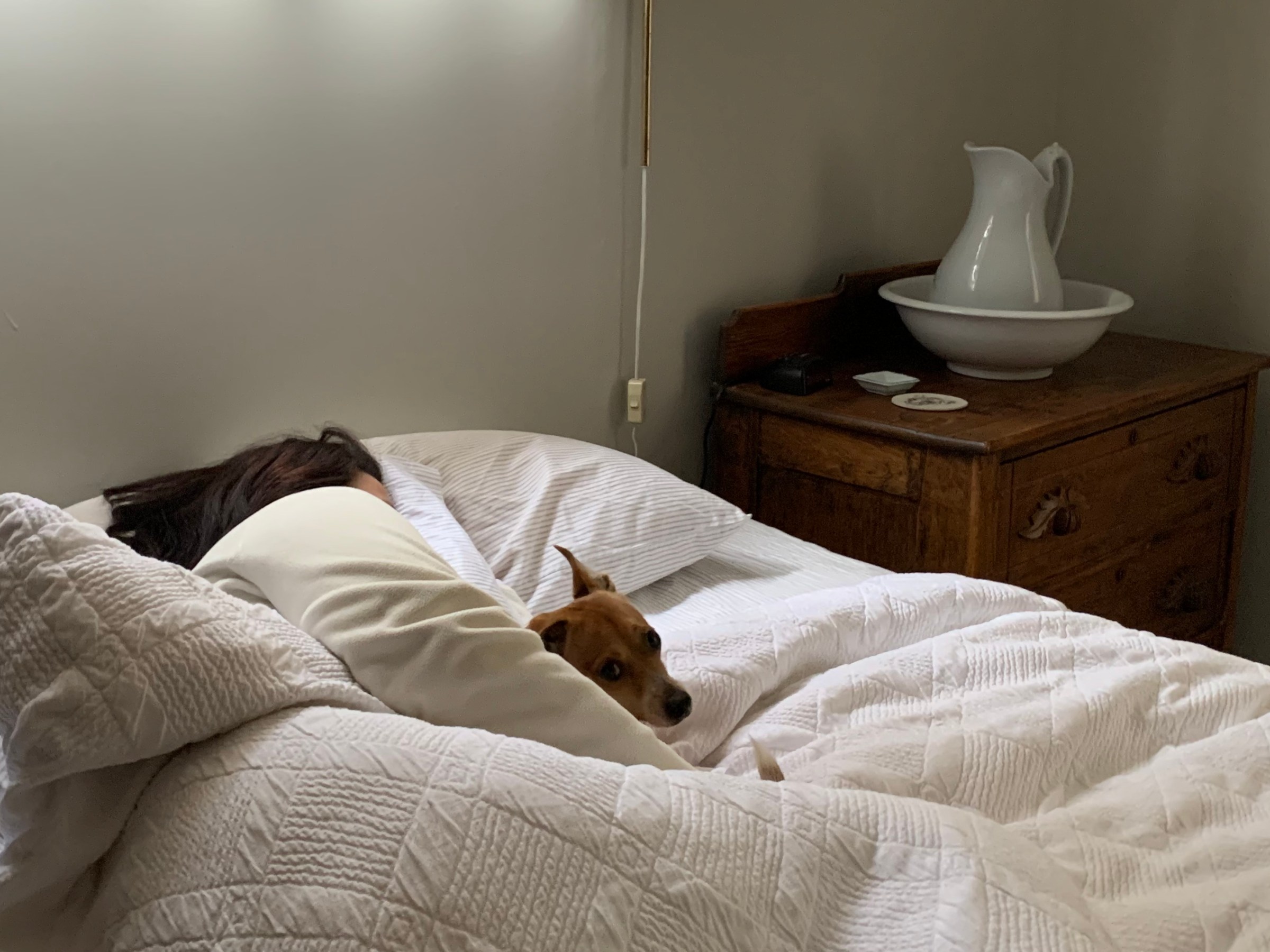
Home is the place where when you’re sick, you’re cared for and you’re comfortable. Well, as comfortable as one can be when sick.
I’m currently in Idaho and I’m wretchedly sick. But I’m home, and I’m with Tom, so being sick is about as good as it can be.
Thanksgiving is Tom’s favorite holiday. And Thanksgiving dinners at his mother’s house are some of my best Thanksgiving memories. This year, the plan was for dinner at his sister’s in Boise, and I couldn’t wait to have a Tom and Jerry again. I even planned to film the delicate process of preparing the Tom and Jerry batter, just to share with y’all. I’m pretty sure most of you have never had a Tom and Jerry, and the first thing that comes to mind are the antics of a mouse and cat. This, however, is a yummy holiday tradition, that dates back to the 1800s. Alas, my long explanation of this favorite winter treat will have to wait for another time.


Mazie and I arrived on Tuesday. On Wednesday, Tom tested positive for Covid. I mean like, drop the fluid in the testing strip and within seconds, both lines are lit up. If strobe lights were an option, they would have been swirling. I, however, tested negative. Twice. Ah, but the third time…

I have had four Covid vaccinations, the most recent booster about five weeks ago, just a few days after my flu shot. In the past, I would rarely get a flu shot. But that changed with the pandemic. I have not been sick in any fashion for three years. No colds, no flu, no Covid. It has been glorious. Three years of health! More than simply a relief, this has felt like a game-changer for me. Far from the reality I’ve known through five decades.
As a kid, I was always sick. Bronchitis, asthma, serious bouts with staph (staphylococcus aureus), and then the common and always frequent flu. In high school, my best friend nicknamed me Sickly, short for Sickly Worm, neither of which caught on, for which I remain grateful.
My memories of being sick could fill a thick volume of parchment. I can tell you about the Swine Flu the year my grandparents died. Or the three-week flu over Christmas and New Year’s when I was in grad school. Or the migraines I would get monthly in my 40’s. Then there was the time I had dysentery in Mexico. Chinese medicine doctors have always told me I have low chi – the life force energy that keeps us healthy and alive. You wouldn’t expect that if you knew me: I appear to have lots of life energy. Only, I don’t. Staying healthy has been a life-long struggle.
Which is why I haven’t minded the isolation imposed since the pandemic began. I would rather be alone (with a dog, of course) than with people and end up sick.
Everything we do is always a calculated risk. I still wear a mask when out shopping or in enclosed places, but I don’t when I’m visiting with friends. My pandemic pod still consists of the same good friends from two years ago. So if I had gotten Covid from one of them, well, it would be worth it. But honestly, I’d be extremely annoyed if I got it somewhere else.
While I’m not happy that Tom got sick, and yes, it’s a bummer to have missed Thanksgiving with the family, and I really hate being sick myself, I have to say all in all I’m grateful. Grateful that we are together and grateful we were at his mom’s. (His mother passed in 2019 but the home is still kept as a short-term rental when not being used by family.) Grateful that I made a huge pot of homemade chicken soup and was able to take care of him before I succumbed myself. Grateful that he was feeling better by the time I felt wretched, when my eyeballs hurt, my toes ached, and everything between ached as well.
The TV isn’t working but we’ve had each other to talk to and amuse. And we have our dogs: Athena and Leo, both 14 and ½ years old and still sweet as ever, and little Mazie who never leaves my side. I’m grateful for big beds in adjoining rooms and warm down comforters. I’m grateful for Claudia who delivered our groceries.
Hopefully, I will be well enough to travel back to Tulsa next week. Although I am 1400 miles from where I currently live, I am home. And being home when you’re sick, is the best place to be.
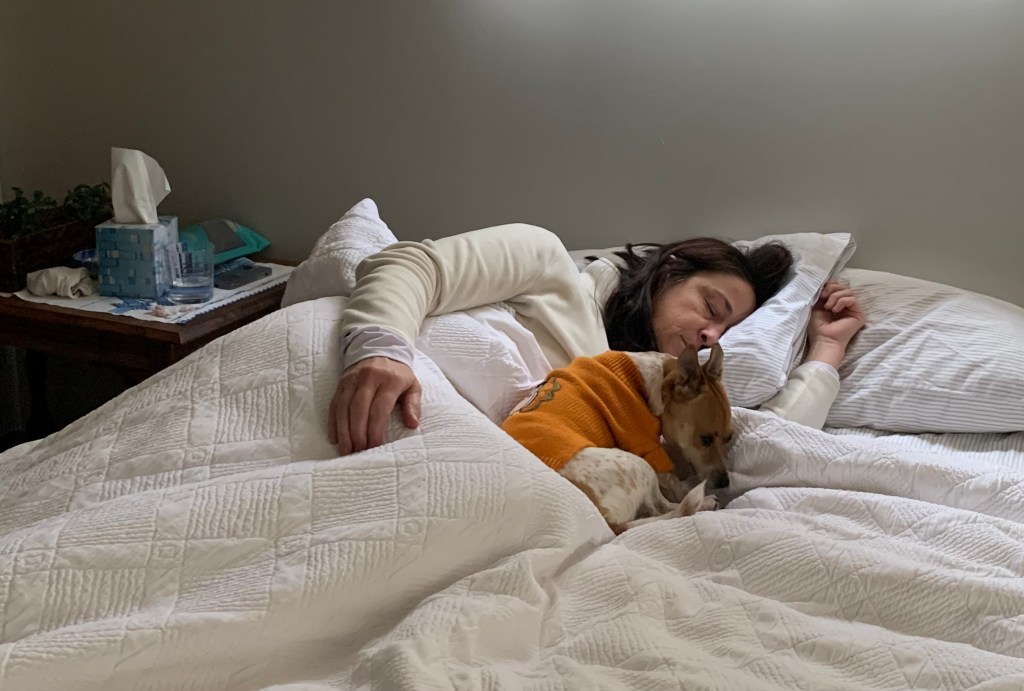
Please friends, get your boosters and wear your masks. Covid is not gone and this winter could be brutal. Stay well.
If you have the means and feel so inclined, buy me a pot of warm tea as I nurse myself back to health. Just a one-time $5 gift. Click here:
Where Do You Go When You Can’t Go Home

When I was young and living 2200 miles away from my family, I always thought that if worse came to worse, I could go home.
My father, in fact, told me as much. “If it doesn’t work out,” he said, “I’ll send you a bus ticket.” A bus ticket? “Yes,” he said. “It will give you time to think. And plane fare is too expensive.”
But it did work out. I moved to San Francisco at age 18, alone, with only two suitcases. I attended City College and worked three jobs to pay rent while living with one or two or more roommates. Then I moved again. And again. I moved for relationships, I moved for school. I moved to escape and I moved to create. I moved to discover.
Friends said I was courageous. It didn’t feel that way to me. I merely felt compelled. Something kept calling me forward. Perhaps it was more emotional than rational. But it was always with the conviction that if worse came to worse, if it didn’t work out, if I failed miserably, I could always go home. To my father. And after he died, to my mother. Even in the last years of her life when she lived in senior housing, when there was clearly no place for me to crash, I still clung to this belief. And then, she, too, was gone. But I have a sister and a brother and even a stepmom. If the very worse happened, surely one of them would take me in, give me shelter, and feed me. Just until I could regroup, get a new job, and start over.
Home is the place where, when you have to go there,
They have to take you in.
– Robert Frost, The Death of the Hired Man
This no longer feels true. Home, as I had always thought of it, no longer exists. My parents are gone and the three family members who remain have no room for me. They love me, certainly, and I love them, and we talk on the phone. But visits are hard to come by, we each have our lives.
Let’s be honest: many marry for this very reason. And it’s a good reason. We all want a home to go back to. A people and place that are waiting for us.
The only thing that pulled me out of a terrible depression a few years ago was recognizing that while I no longer have a home to return to—the home I thought I once had, the home we all dream of, the home of feel-good movies—I do have a few very dear friends who would take me in. If worse came to worse. No questions asked. And that has made all the difference.
But some of us don’t have that.
So what do we do when we can’t go home?
If worse came to worse, where would you go?
Who are the people who would take you in? Who are your homies?

Next week is Thanksgiving. I tend to struggle with this holiday a bit. (If you’re interested, you can read last year’s post here.) This year, Mazie and I will be in Idaho with my adopted family. And this year, I’m thinking about the day a bit differently. I’m not sure how to articulate these thoughts yet, so I leave it at this:
Thank you. I am grateful for you. For each and every one of you reading. And for so many who are not. For everyone whose life I have touched, even when I didn’t realize it, when I was too self-absorbed in thinking I didn’t matter, thank you. You give my life meaning.
BACK HOME by Louis Jenkins
The place I lived as a child, the sharecropper’s farmhouse with its wind-bent mulberry trees and rusted farm machinery has completely vanished. Now there’s nothing but plowed fields for miles in any direction. When I asked around in town no one remembered the family. No way to verify my story. In fact, there’s no evidence that any of what I remember actually happened, or that the people I knew ever existed. There was my uncle Axel, for instance, who spent most of his life moving from one job to another, trying to “find himself.” He should have saved himself the trouble. I moved away from there a long time ago, when I was a young man, and came to the cold spruce forests of the north. The place I thought I was going is imaginary, yet I have lived here most of my life.

If you like this post, consider buying me a cup of coffee! I’d be extremely grateful if you did. And if not, that’s okay too. Thanks for reading!
My Home May Not Be Your Home
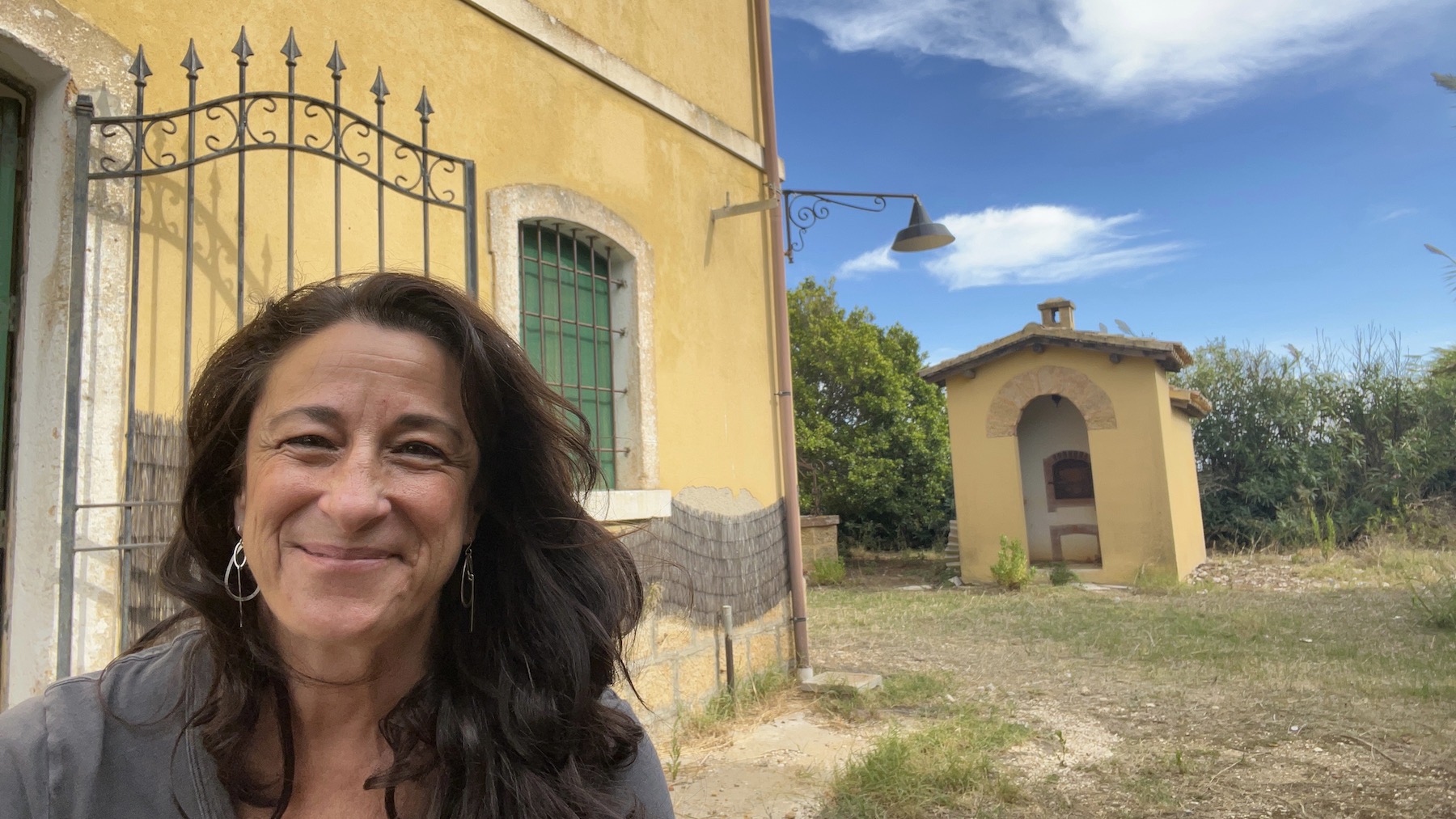
“La mia casa ė la tua casa.” I’ve been saying this quite a bit in the last week. I’m sure you know this phrase in Spanish, mi casa es tu casa: my home is your home. This is the ultimate offer of hospitality, yes? Please, regard my home as your own. Be comfortable here. Come and go as you please. Eat from the fridge. Use whatever you like.
We purchased the old train stop home in Sicily. Yes (YAY!) That’s a bigger story and I have lots to tell you but if you have no idea what I’m talking about, see Purchasing Property in Italy, Part 6. I promise to show you photos and videos soon—this has been a whirlwind two weeks—but first, I need to tell you about Vincenzo, my neighbor, whom everyone calls Enzo.

Enzo lives just down the road, about two hundred meters, what we might call a half block. He can see our house better than we can see his. What everyone can see from the road is his large “Agritourismo” sign. His home, it turns out, is Masseria Anni Trenta – a bed and breakfast that once had a variety of animals on the premises, including a camel, a llama, and an alpaca! His property is lovely, filled with olive and fruit trees, including persimmon, and what can only be described as art: the placement of beautiful things. The room I stayed in this weekend was very comfortable, complete with its own little porch. And bonus: he has a big fluffy white dog named Talco. (Note: In an extremely kind gesture, Enzo has offered me to stay there as much as I like for no cost while I am working on the house. I am also staying gratis at a friend’s home in Balestrate, which is 45 minutes away. Not a long drive but when I’m filthy and sweaty from working, staying with Enzo is truly a gift.)
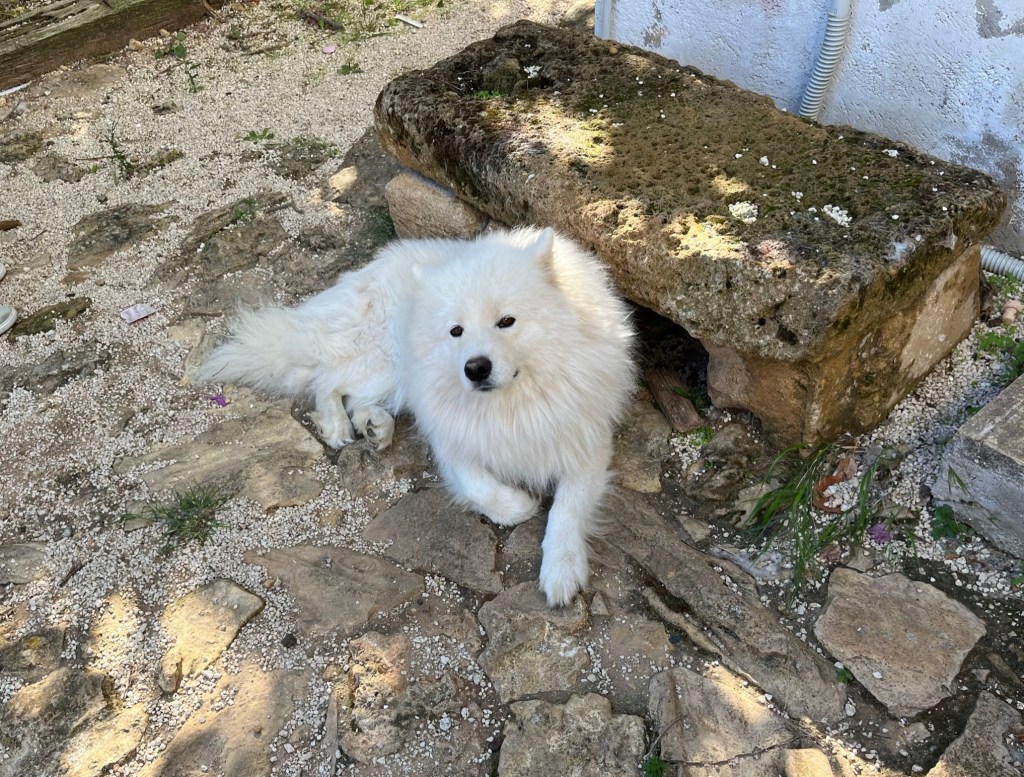
Enzo has lived in Selinunte his whole life and oversaw every aspect of the renovation on the train stop property. He personally chipped away the plaster to reveal the bricks over each window. He stained each door and window. He put in each window screen. He picked out the toilets, bidets, and sinks. He even hand-painted the words “ANTICA FERMATA LATOMIE” on the front, just as they appeared originally. He made sure that every bit of the restoration twenty-one years ago mimics the original property. Over the years, he has cared for our new home, driven by it several times daily, and attended to its every need. This place is his baby.
So, on the same day I received the keys, I asked him to make another set for himself. Please, I said, “La mia casa ė la tua casa.” This made him happy and he assured me he would continue to keep an eye on the property. And, if anything needed to be done, if I gave him the authority, he would do it. Also, he would make sure that we would always pay the Sicilian price, not the American price. That promise became real just the very next day when we realized there was no water, even with the electricity on. The water pump must not be working, someone would have to be called. Of course, I said, please call whomever you think best. And he did. Two days later, a man arrived and determined that the pump needs to be cleaned. Replaced? No, he didn’t think so – just cleaned. And the tank cleaned as well. How much will this cost? One hundred twenty euros, maybe 150. This, my friends, is a relief.

Someday when my Italian is better, I look forward to hearing what Enzo thought of us when we came to view the property before making an offer. I do know I made a good impression when I spoke a little Italian and told him that, while I could learn Italian in the States, I could only learn Sicilian in Sicily. He responded with gusto, “She understands that Sicilian is a language, not a dialect!” But he had no way of knowing for certain if we would love the property as much as he does and if we would strive to maintain its historic look.
Now he has no doubts. Yes, we will keep the yellow exterior. Yes, we will keep the wood stained green. No, we will not replace the floor tiles. But the real test came with the placement of air conditioning units. (In Italy, the a/c unit both cools and heats.) For every inside unit, there is the engine outside. When we were trying to decide where to place the ones in the upstairs rooms, it became obvious that there was no way we could do this without destroying the historic look. And so, before I could even consult with Tom, I said no. We could not put a/c upstairs because it was more important that the house continue to look as it does. And with this one quick and firm decision, Enzo knew we were the right new owners of the home.
“La mia casa ė la tua casa.”
I asked Enzo if he could find someone to replace the screens on the windows, as the current ones had been chewed through by critters. Yes, he said, he would pick up the supplies. Did I want green plastic again or aluminum? While I like the green color, aluminum, I think, is better to keep out the mice and small lizards. Yes, he agreed. When I arrived at the house on Saturday, already two window screens had been replaced. I understood he would buy the supplies, but I did not realize that he, himself, would do the work. Then a window fell apart when I opened it. By the end of the day, he had made it all better.
The men who installed the a/c units on Saturday left a rather large hole on the exterior where the tubing comes through. This is not good, I told the man who sold us the units. This must be fixed. Yes, yes, he said, Enzo will do this. But that’s not fair, I said. Enzo did not make the hole. I was told, “It’s okay, don’t worry.” Indeed, the very next day, Enzo fixed the hole.

When we decided we wanted the property[i], we had no way of knowing that it came with Enzo. Time after time we worried about how we would care for it when we are not there. Whom would we call when things needed to be done? It is too far away from anyone I knew. If there were problems, which of course there would be, what would we do? I fretted over this quite a bit and still, I trusted. This, I was sure—we were both sure—was the right property for us and so we proceeded. Now to discover that Enzo and the home are a package deal, I cannot tell you the depth of my gratitude. Be still and know. It will all work out. It has all worked out. And it will, I believe, continue to work out.
I tell Enzo, “Ora siama una famiglia” (we are family now). “La mia casa ė la tua casa.” He smiles. For a moment, we touch. His arm over my shoulder, my hand on his waist. Together we admire the home we are creating, the home we will share. Okay, not completely, but you know what I mean.
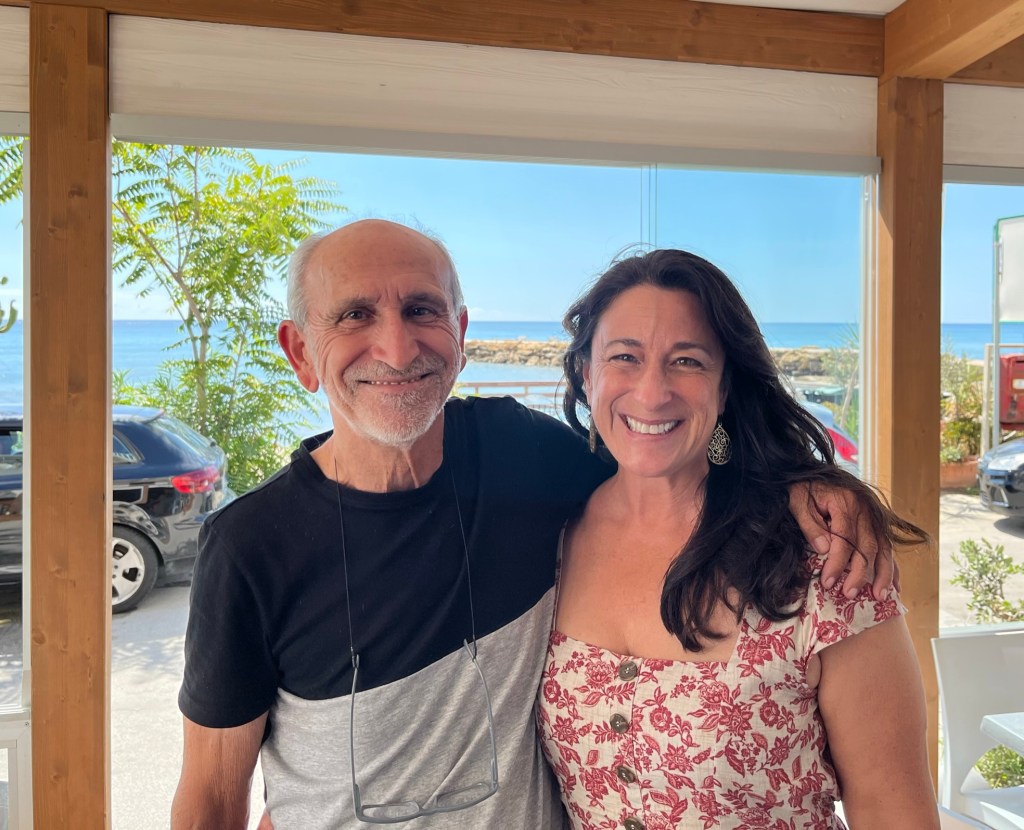
With such good news, why do I title this post, “My Home May Not Be Your Home”?
What feels like home to me may not feel like home to you. And what feels like home to you, may not to me. But, to be at home and to feel at home is a sensation we all understand. Home is universal. The feeling transcends specifics.
– Jan Peppler, PhD
This basic premise is the foundation of my writing and research.
Throughout this months-long process, I have posted six times about the properties we saw, each time asking for your opinion. Your responses have been good and I hope you will continue to share your thoughts. Some comments are clearly concerns based on personal preference.
Regarding this property, the most common concern expressed is the location. It is not inside a town, not walkable to restaurants and stores, and seems quite isolating to many of you. Others worry that because it is historic, the renovations that can be done are limited. Perhaps the windows are too small and I will miss having a view. I appreciate each of these thoughts and have considered them all.
What feels like home to me may not feel like home to you.
My favorite home, the home I loved most in all my years, was the one I owned in Picabo, Idaho. This home reminded me in many ways of the childhood summers I spent on my godmother’s farm in Michigan. I loved being far from town, surrounded by open space, agriculture, and stock animals. In the ten years I lived there, only a handful of times did I consider the distance from town a bummer. Probably three of those times was after a concert in Ketchum (35 miles away), when it was late and I was tired. Maybe another three times when a snowstorm made the roads dangerous, and maybe twice when I had forgotten something important and needed to go back.
The old train stop house is five minutes from Selinunte, which has groceries, restaurants, all necessities, and several beaches. It is twelve minutes from Castelvetrano, a town of maybe 30,000 and the nearest hospital, and one hour from the Palermo airport. From my Picabo home the nearest groceries were twenty-some minutes away (and seventy minutes to Costco and Lowe’s), forty-five minutes from the nearest hospital, and just over two hours to the Boise airport.
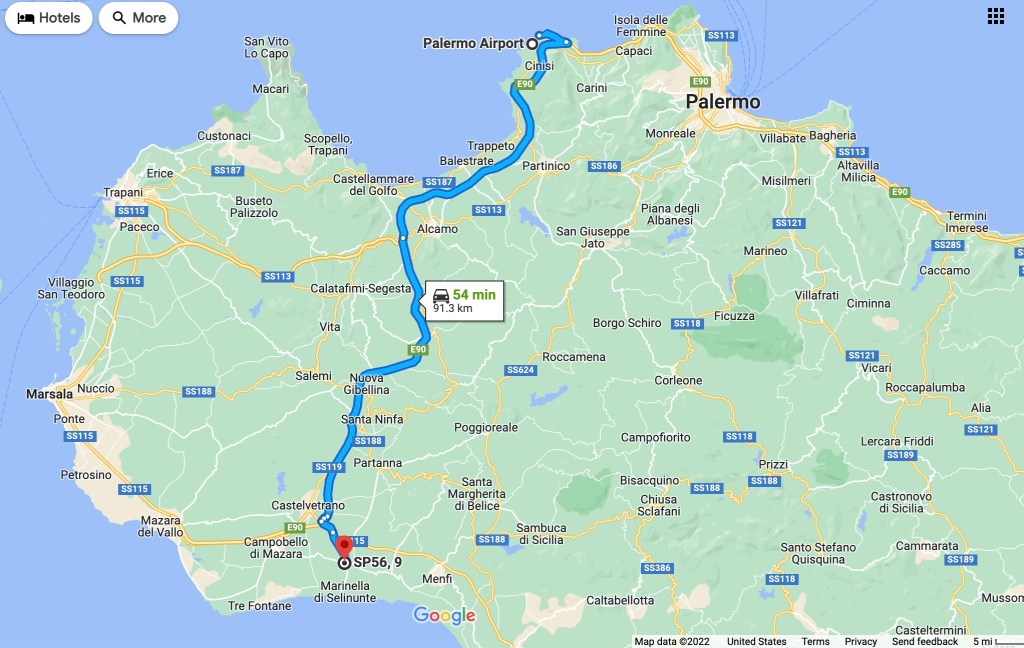
Walkability to restaurants and stores is not an issue for me. Yes, it would be charming to shop daily, strolling to the vegetable stand, bakery, and such. But only once in my adult life have I lived within walking distance to groceries. And the truth is, I rarely eat at restaurants. It is an expense I allow only when I’m socializing with friends. Cooking at home is cheaper, which is okay because I like cooking and I’m a pretty good cook. And so far in Italy, I find friends prefer to eat at home as well. Cooking for friends and family is part of the culture.
The primary reason for not living in town is that I don’t like noise and I don’t like crowds. Living in an Italian village means sharing walls with other homes. It means noise from the street and noise from neighbors. It means tourists, and way too many tourists during the best times of the year. Whereas, living at the train stop house, like in Picabo, means quiet, peace, tranquility. The cars that pass on the road remind me of those that would lull me to sleep in Michigan. The whizzing sound is almost comforting and eventually, I suspect, I won’t even hear it. My nearest neighbor is a three-minute walk away. Close enough when I need him, but not too close.
As for the view, while it might not be what I could have in a hilltop town, I do see olive groves. Dear friends, I’m in Sicily – everywhere I go there is a view!
And finally, the renovation constraints. The historic value, the fact that it was once a train station built during Mussolini’s time and has been restored to look as it did ninety years ago, oh my goodness, this is extraordinary! For us, nothing could be cooler. Fundamental to my love of Italy is how ancient much of it still is: the buildings, the traditions, the people, the history. I gravitate to places, people, and things with stories: that which is weathered and old and repurposed. This, too, goes back to my godmother and other childhood imprints.
The only renovations we want to do are ones that are already allowed with no special approval needed. We can create a stone patio and add a pergola, no problem. We can even put solar panels on the roof, which is amazing to me. As a conservationist, this is something I absolutely want—except that they will cover the gorgeous roof tiles and in general, look ugly. We don’t have to worry about this at the moment, however, because they cost more than we can afford. (Our realtor misled us.)
Finally, the windows: While those on the sides look small, combined with the others, they allow a great deal of light. The kitchen has three, the living room and bedrooms each have two. Additionally, each bathroom has a window and the two small storage closets also each have one, and there is a window at the top of the stairs. So pretty much any time of day, there are windows where the light comes directly through. No other place we saw had this feature. In most Italian homes, at least those in towns, there are windows only on one side, two sides if you’re lucky. Here, there are 13 windows total: six on ground floor and seven upstairs.
Truly, the only thing that weighs on me is whether my little dog Mazie will like it. She, I think, will feel the isolation with no street to view from her sofa perch. But at least there is a large yard. And, perhaps, I will get her a companion. A daily drive to the beach for a stroll in the sand will be good for us both. But remember, it will be quite some time before I can actually live here (more on that later).
In half the time that it has taken us to purchase this house, my brother decided to sell his, have it painted, listed, and sold, bought another and moved in. And this is quite common. A thirty-to-forty-day closing is the norm, whereas ours took over five months.
Am I sure about this? Yes. Absolutely yes. I am ecstatic. The future is always a mystery and I’m not foolish enough to think it will be smooth sailing. But I’m happy. Very, very happy. My home may not be your home but I have no doubt that when I’m done fixing it up, it will feel homey – even to you.

[i] We made the offer back in April – sorry friends, I was keeping you in suspense as we did not know if the sale would go through, and it only just did at the end of September.
Thank you for reading! I’d love to hear what you think. Have you ever lived somewhere that friends and family thought was maybe not such a great place, but you loved it?
 Jan Peppler HOME