Jan Peppler HOME
Exploring Our Connection to People and Place
A Home-cooked Meal

So much of who I am and what I love was shaped by my time on Grama Baird’s farm. Technically no longer hers, by then it was owned and operated by her grandson, Mick, who lived with his family across the field. And technically not my Grama. She was my godmother, 65 years old by the time I was born. But to everyone in Lakeview, MI, she was Grama. And lucky for me, she adopted me and my siblings into the family. All of the Bairds – and there are a lot of them – became my cousins, whom I saw and played with far more than those connected by blood. They are family and Lakeview still feels like home.
Home. The place where we sleep comfortably and where we belong. Home is family. Where we laugh and play. And where we eat.
Home is food. I will always remember the taste of Grama’s fresh raspberry jam, made from her own harvest. The delight of picking berries from the bushes. And buttered toast, particularly when eaten late at night during a commercial break while watching TV. The crunch of the white bread and the messiness of the butter dripping. Waking to the smell of warm cinnamon rolls and slyly stealing a bit more frosting when she wasn’t looking. And enjoying them again in the afternoon, cold, when someone stopped by unexpectedly – because people were always stopping by unannounced to Grama’s house. Kool Aid made in a large pitcher from one small packet and a full cup of sugar, deliberating with the other kids over which flavor to choose that day. Boiled potatoes left from yesterday’s dinner (which is always at noon in the country), butter fried in a cast iron skillet. Sunfish and blue gills fried the same way. Picking seeds out of watermelon and watching Grama salt each piece. A refrigerator stuffed with bowls of food and covered with plates, and plastic Kool Whip containers hiding leftovers. Laughing as we opened one after another trying to find the thing for which we were looking. And the freezer on the porch, long and deep, filled with venison and fish and berries, and Grama, so tiny, using a stool while digging to find a particular treat.
More than the food itself, it is all these memories of how we ate the food. The noontime meals around a large kitchen table: eight, ten, sometimes even twelve of us. Big platters and heavy bowls passed from hands to hands, arms eagerly extending to reach for another roll. All while Grama sat at the head of the table, supervising the chaos and never minding the noise. When she laughed, her whole body would jiggle, and she laughed quite a bit.
This is family. This is home for me. The sharing of food, cooked at home by many hands and enjoyed with abundance.
At eighteen, I moved to San Francisco and found friends with whom to eat. We’d make breakfast together after an all-night party or gather in the evening for dinner, everyone contributing to the feast. Not pot-luck – the food was never made in isolation – but a co-creation, each person bringing something to prepare with extra hands. Again, six, eight, or ten of us crammed into a tiny kitchen, chopping and stirring, talking and tasting and laughing.
I’ve spent my life trying to recapture those feelings. Sometimes more successfully than others. Last night was one of those nights. Last night was a surprise. Last night was a delight. Last night I felt home.
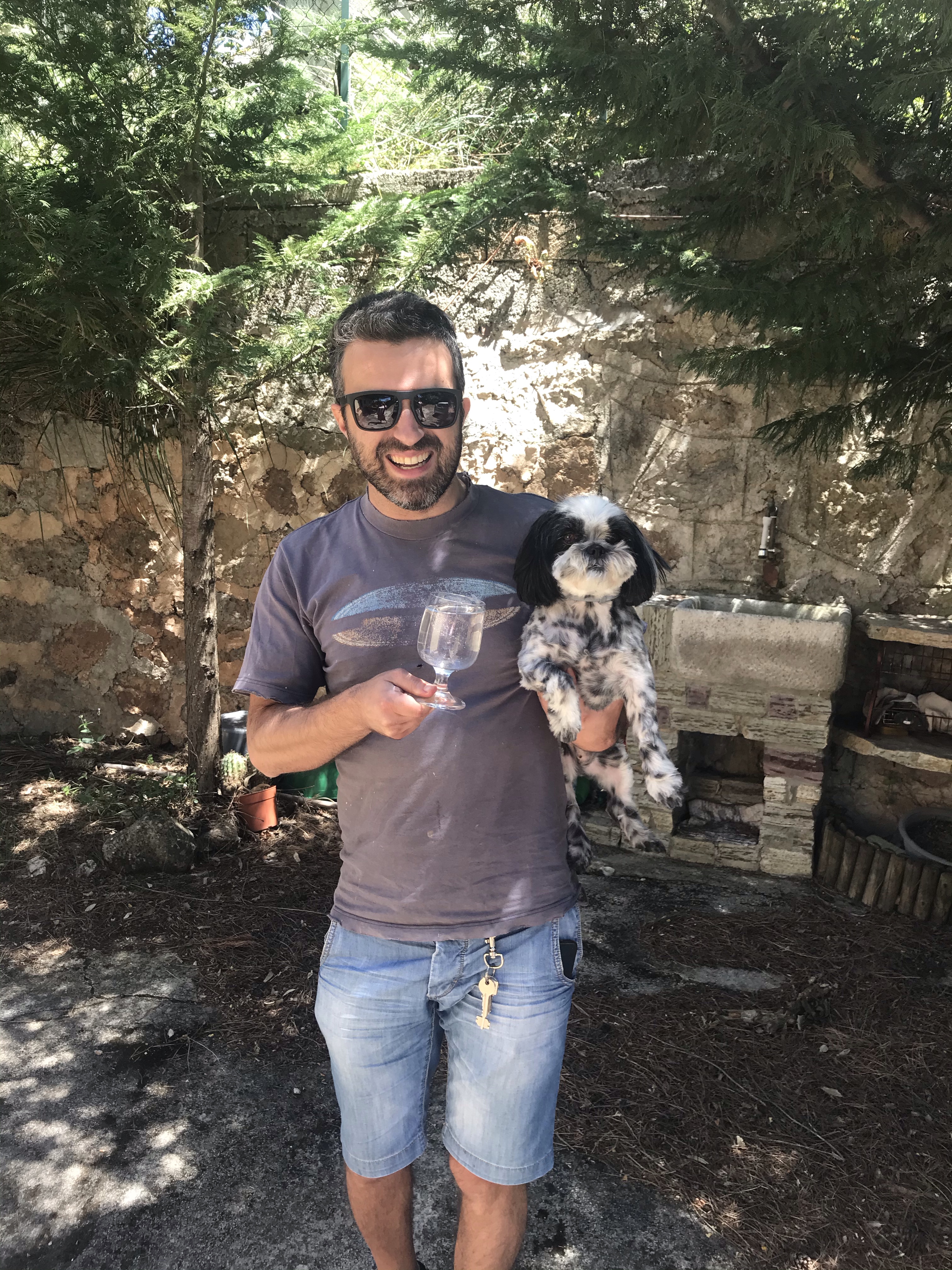
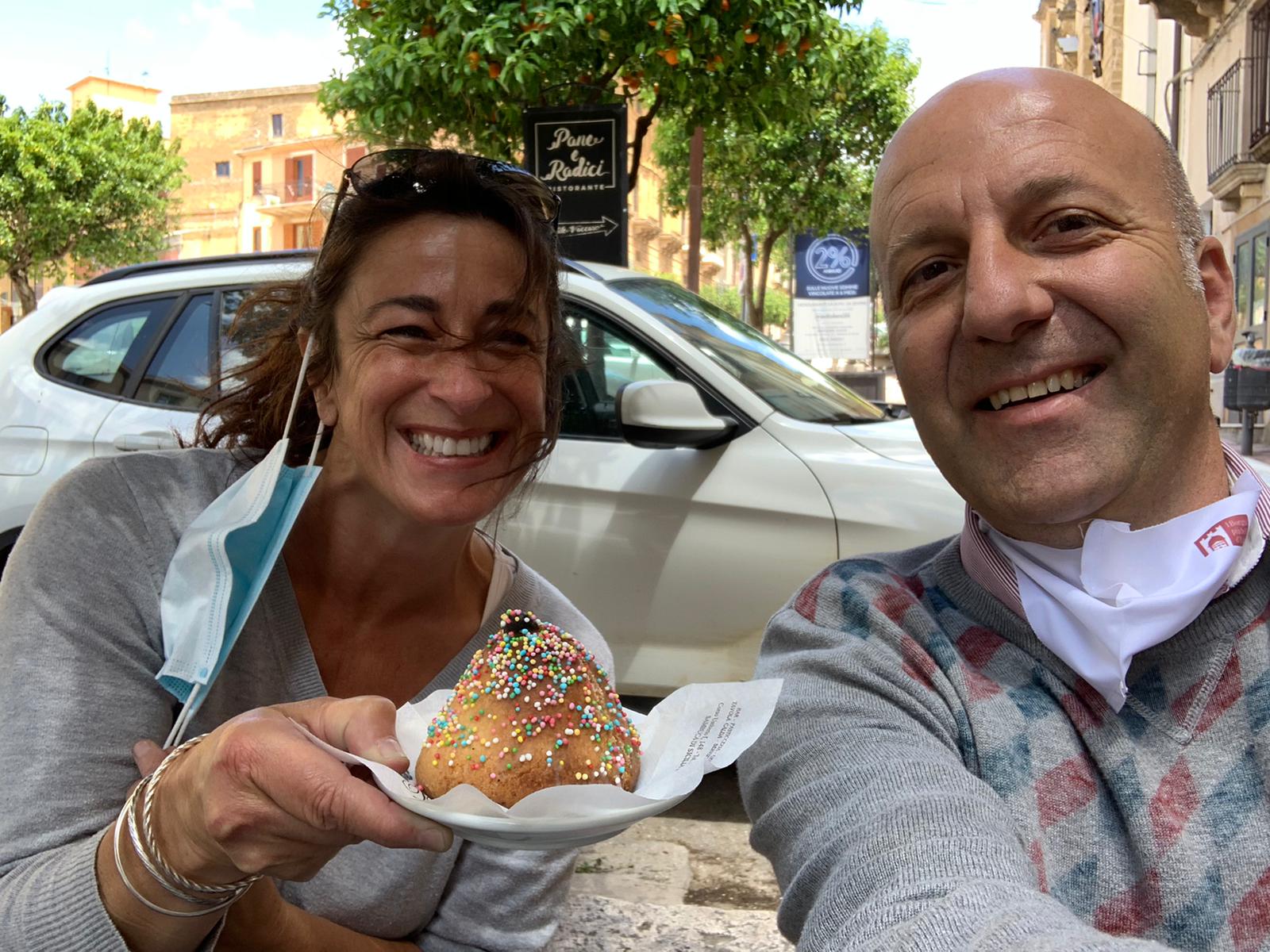
I fell in love with Sambuca di Sicilia from the first moment I saw it, gleaming in the distance on a hill, surrounded by fields of green. Giuseppe Cacioppo, deputy mayor and architect, welcomed me as the town’s first tourist since Covid19. We shared a Minni di Virgini, the town’s famous (and delicious) treat. I spent hours walking alone exploring. Yes, I fell in love. I can’t explain it. Can we ever? There are things I can point to, but overall it’s just a feeling. This town feels right to me. (So much to say about this… see my post titled A Daring Adventure from May 23, 2020 for my first impressions.)
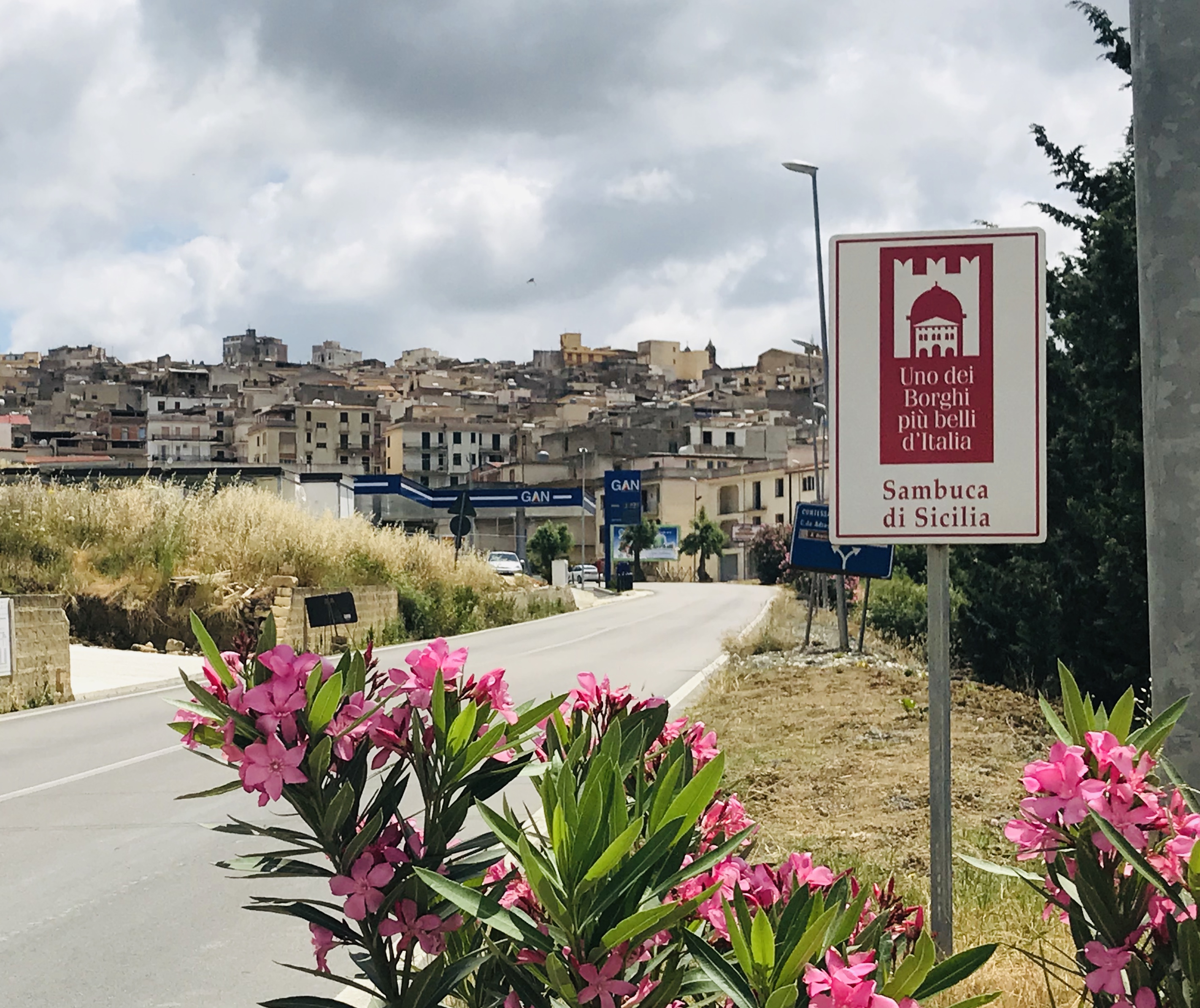
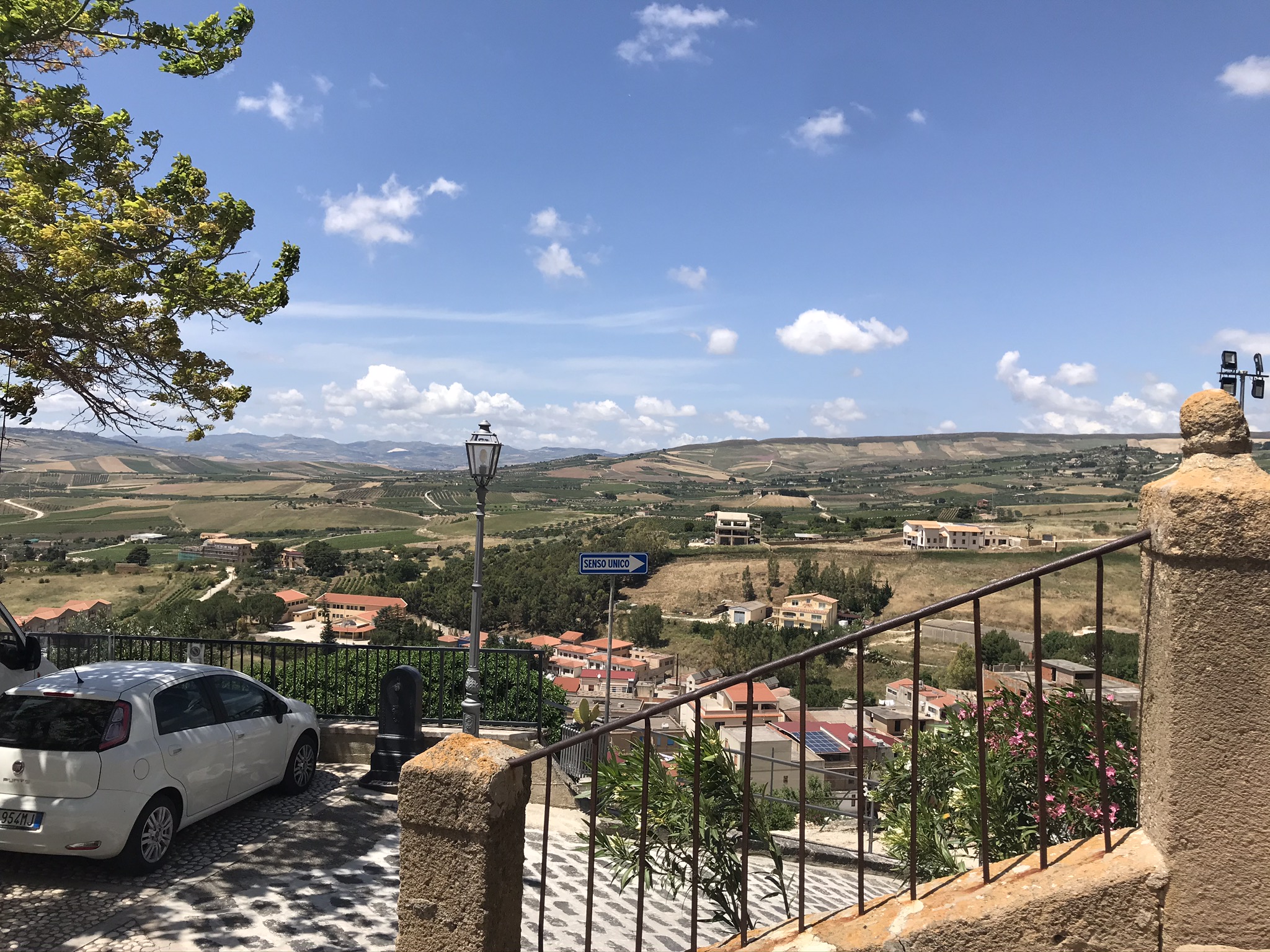
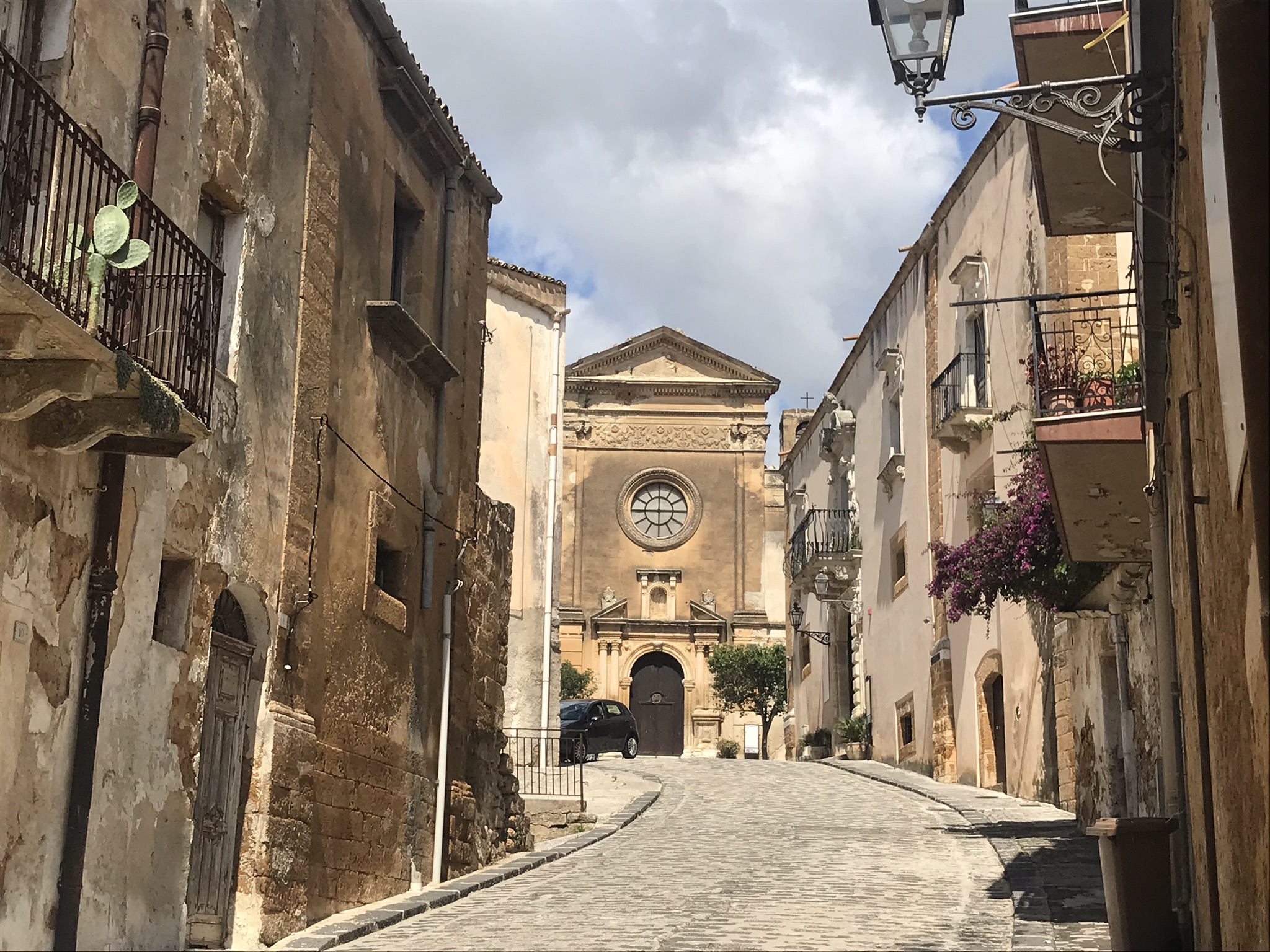
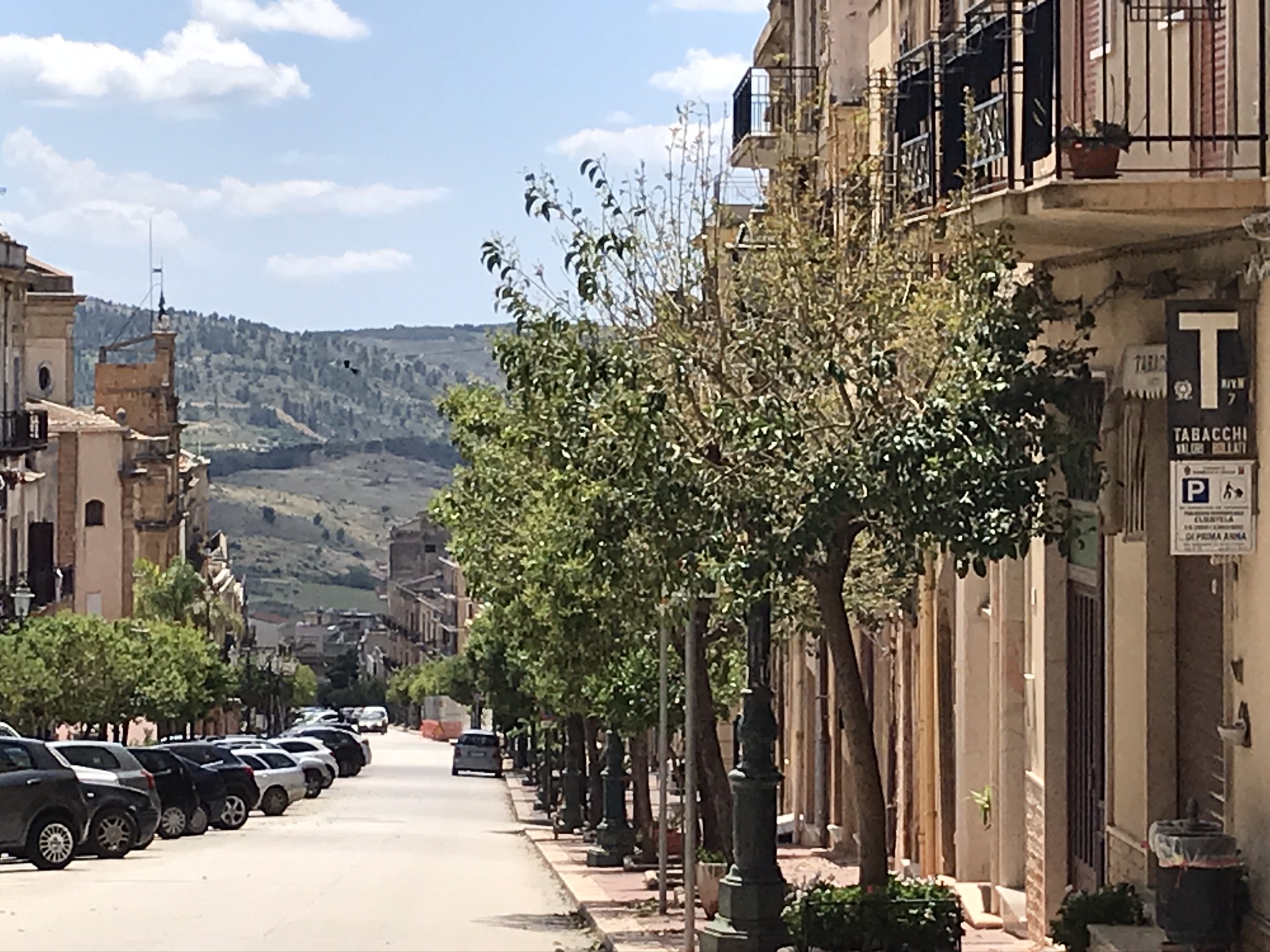
I returned one week later and Giuseppe introduced me to his friends Ginevra and Deborah, both of whom work at Planeta, a Sicilian winery. We ate spaghetti with wild asparagus at Caffe Beccadelli and then walked through the town looking at homes, not for me to purchase but to see things which I could not see on my own. By the end of the day, I had three new friends who insisted I return again before leaving Sicily.


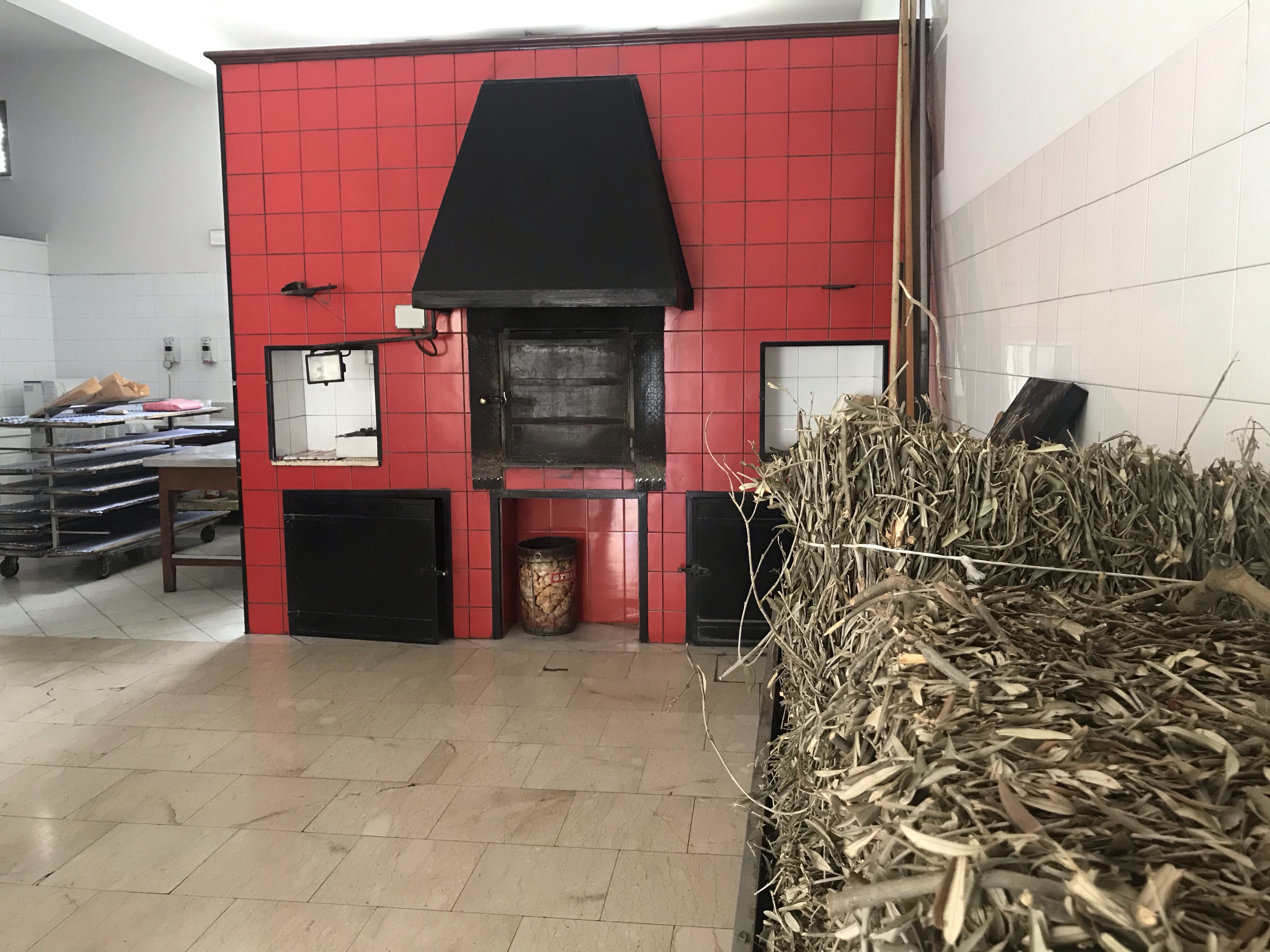


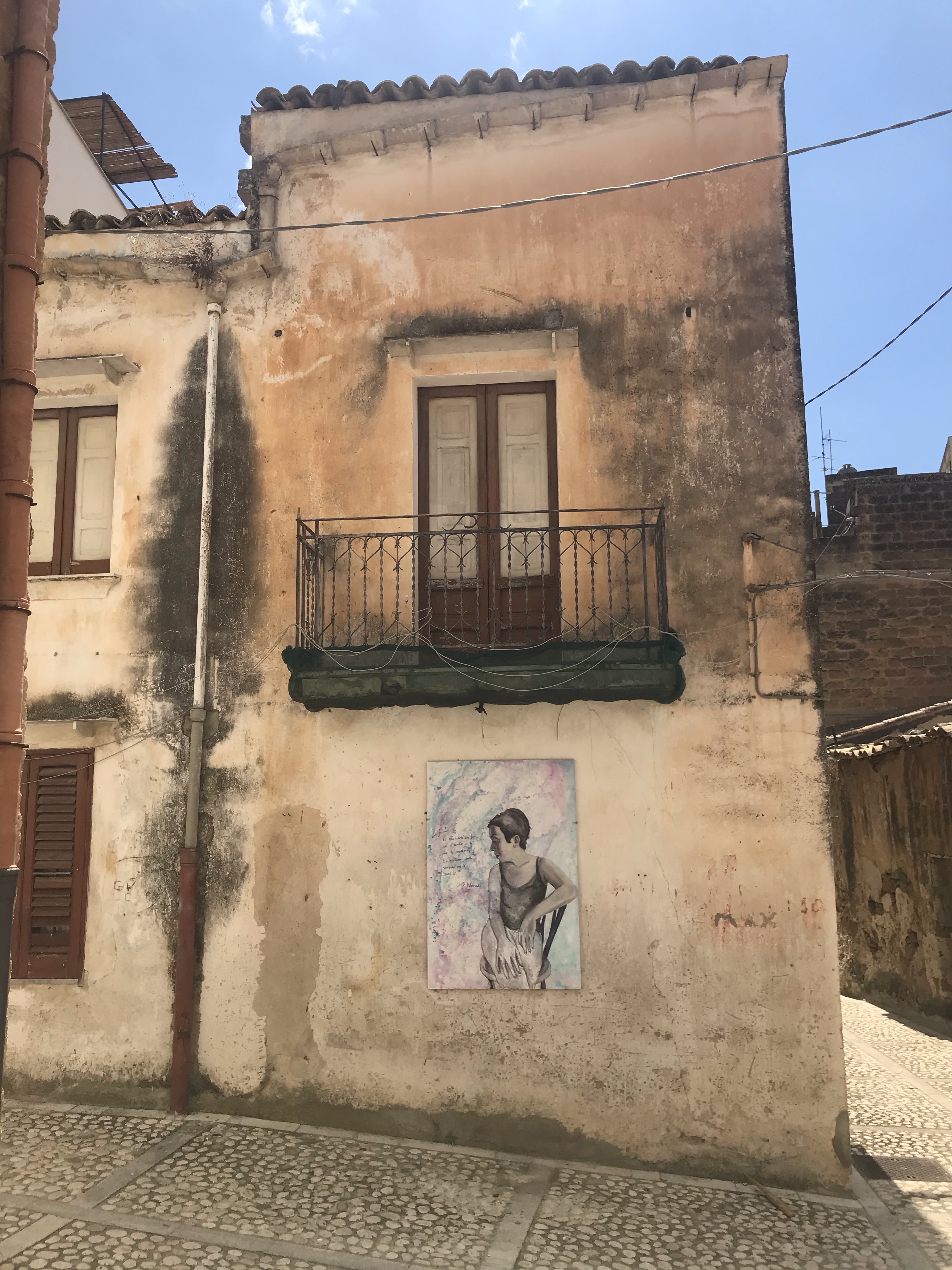
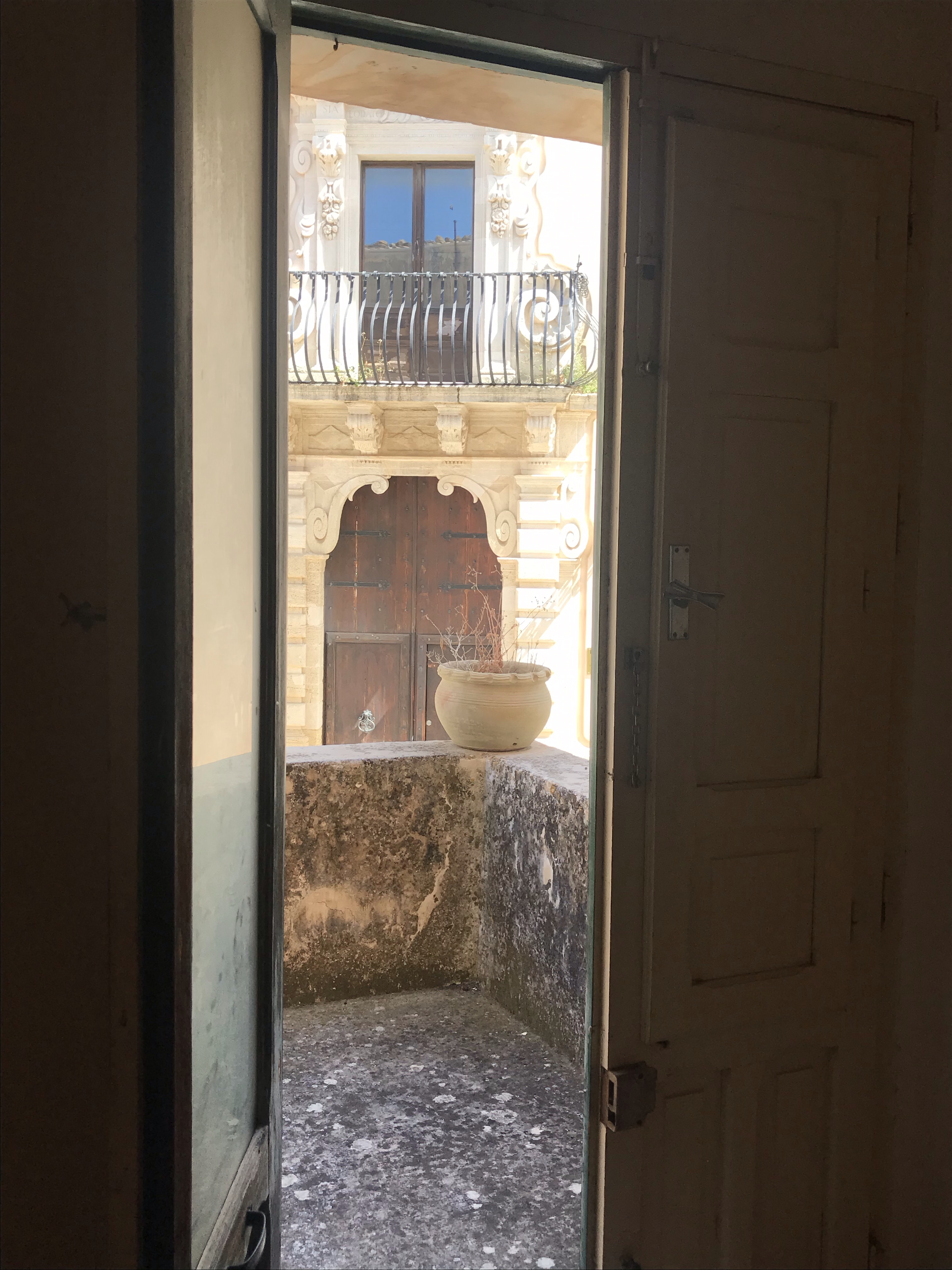
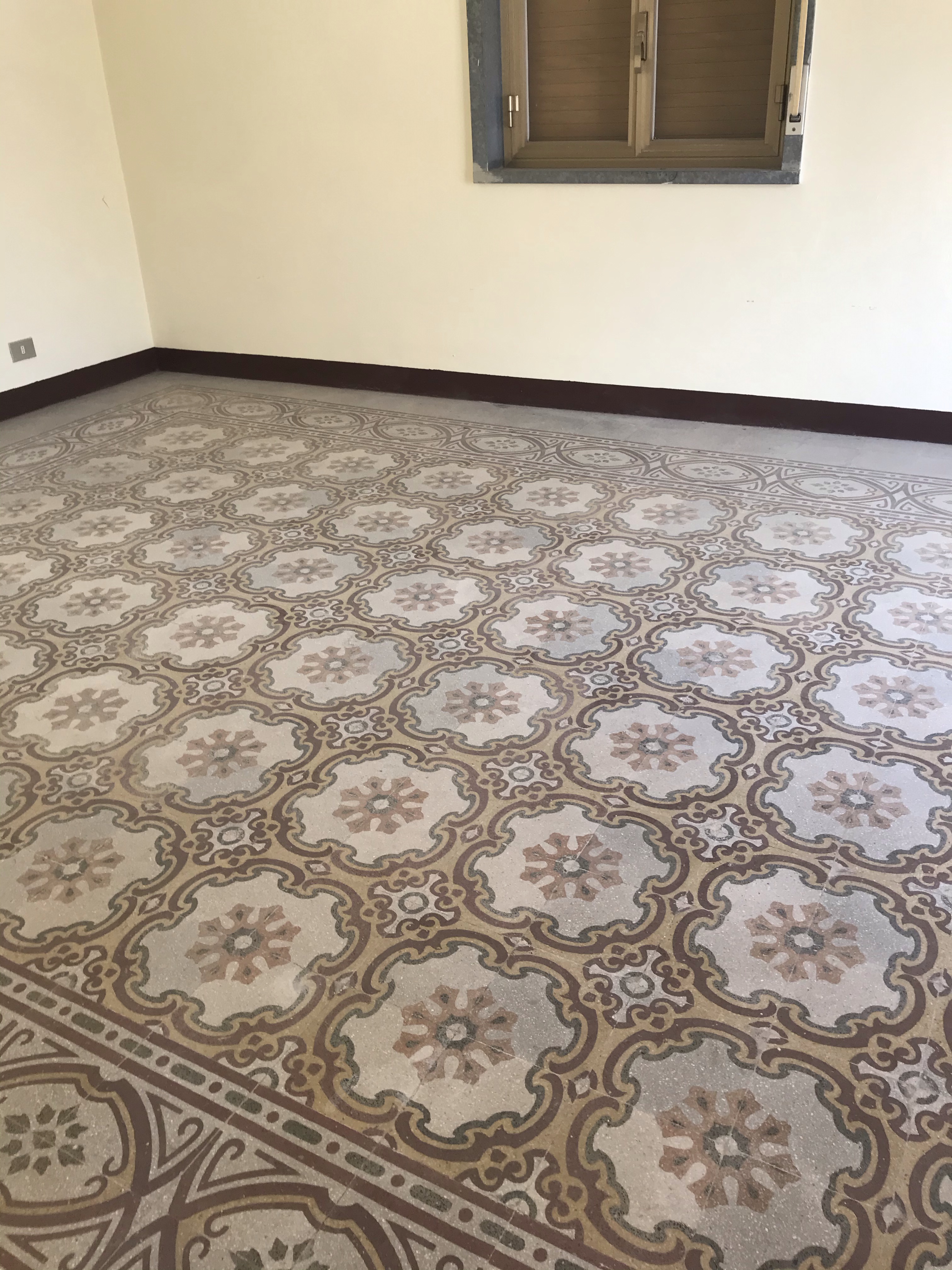

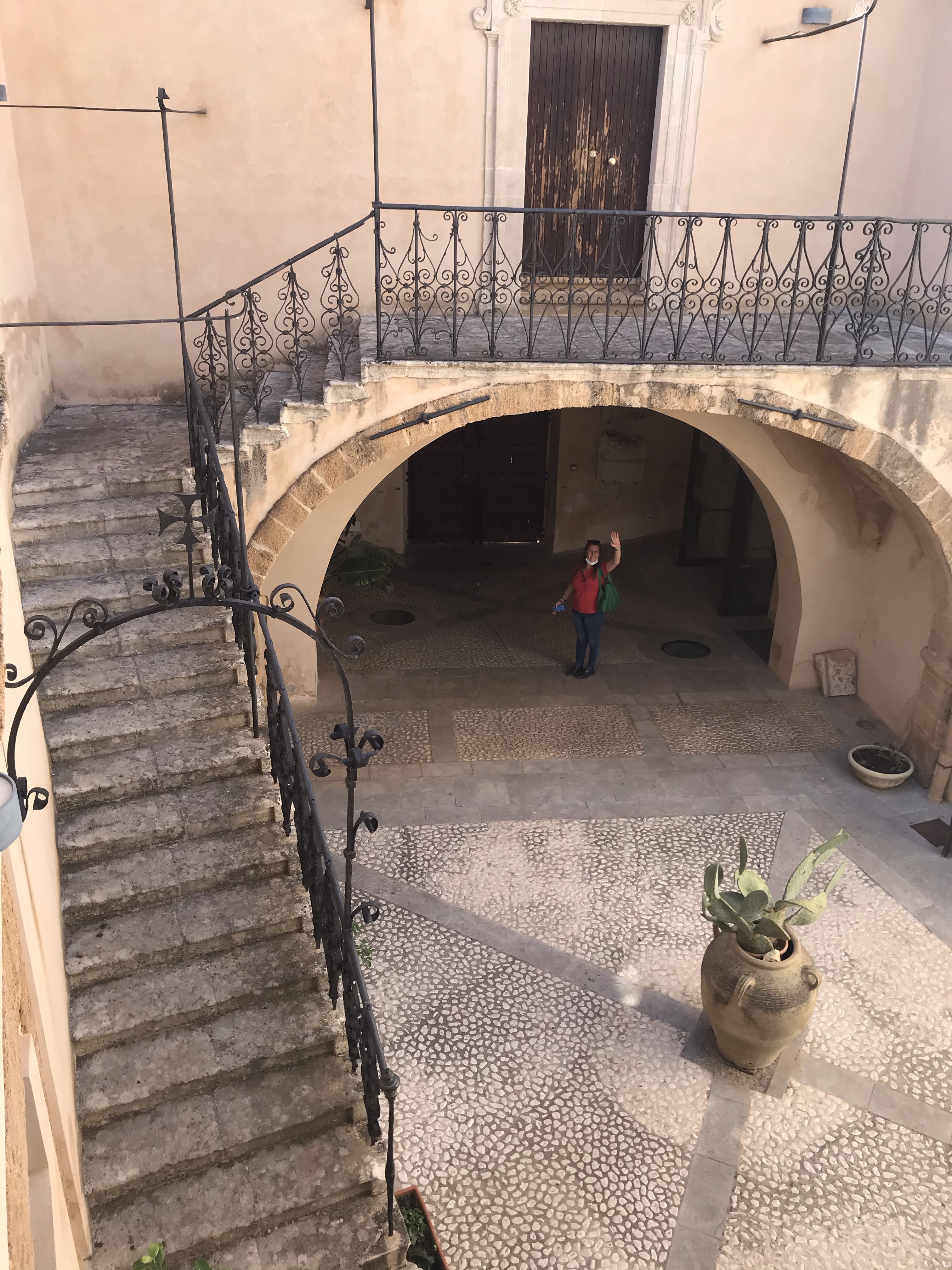
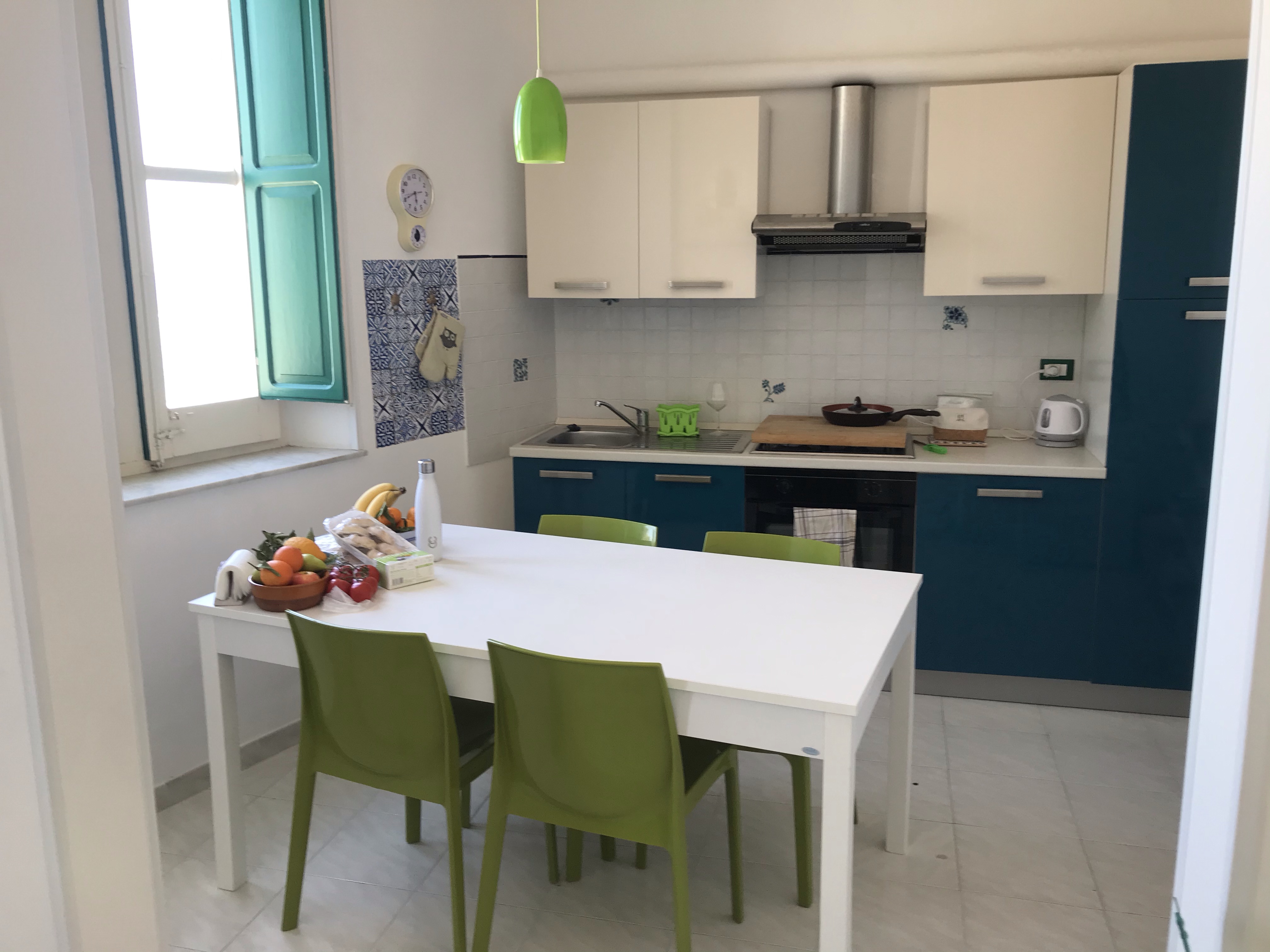
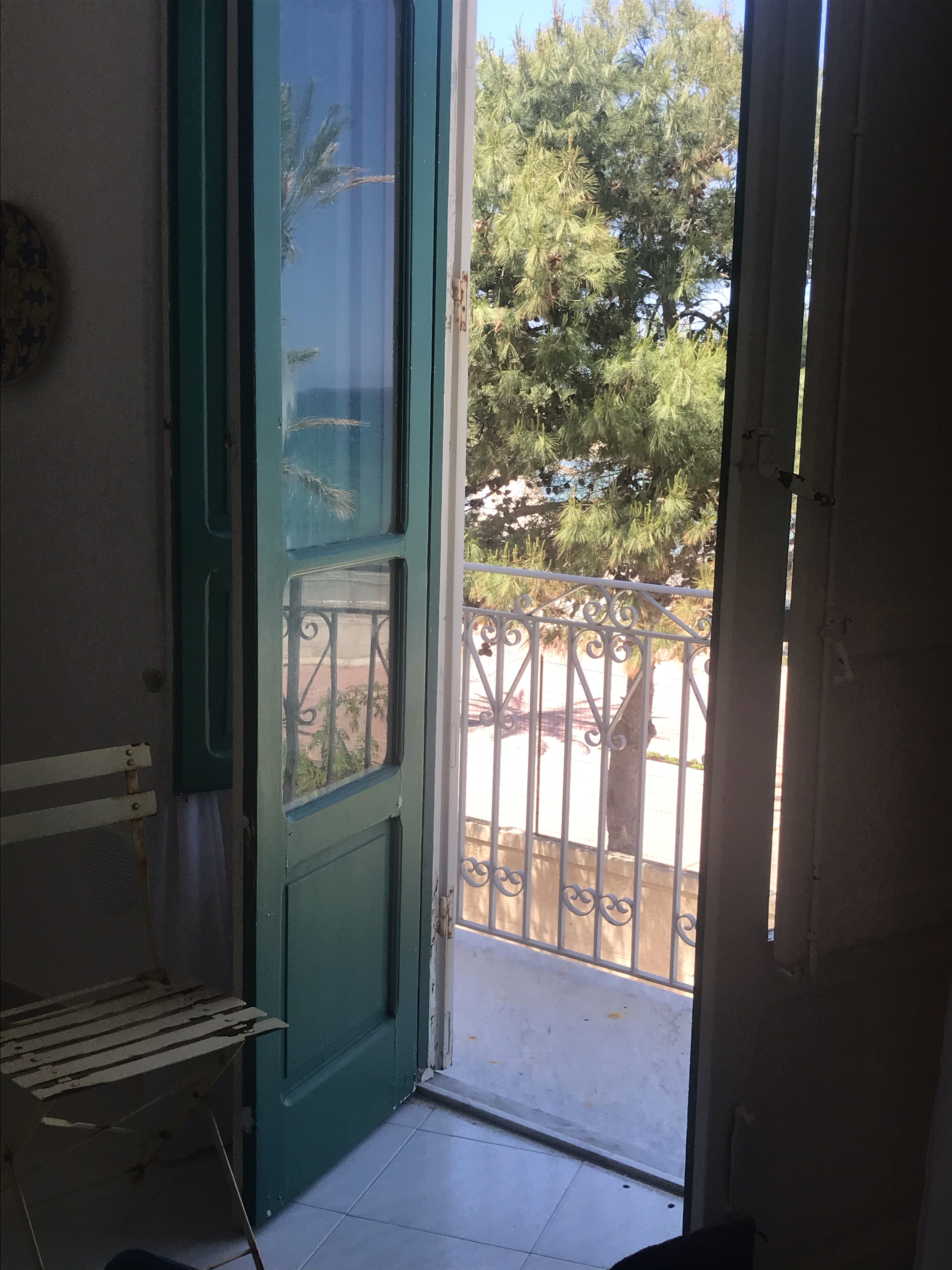
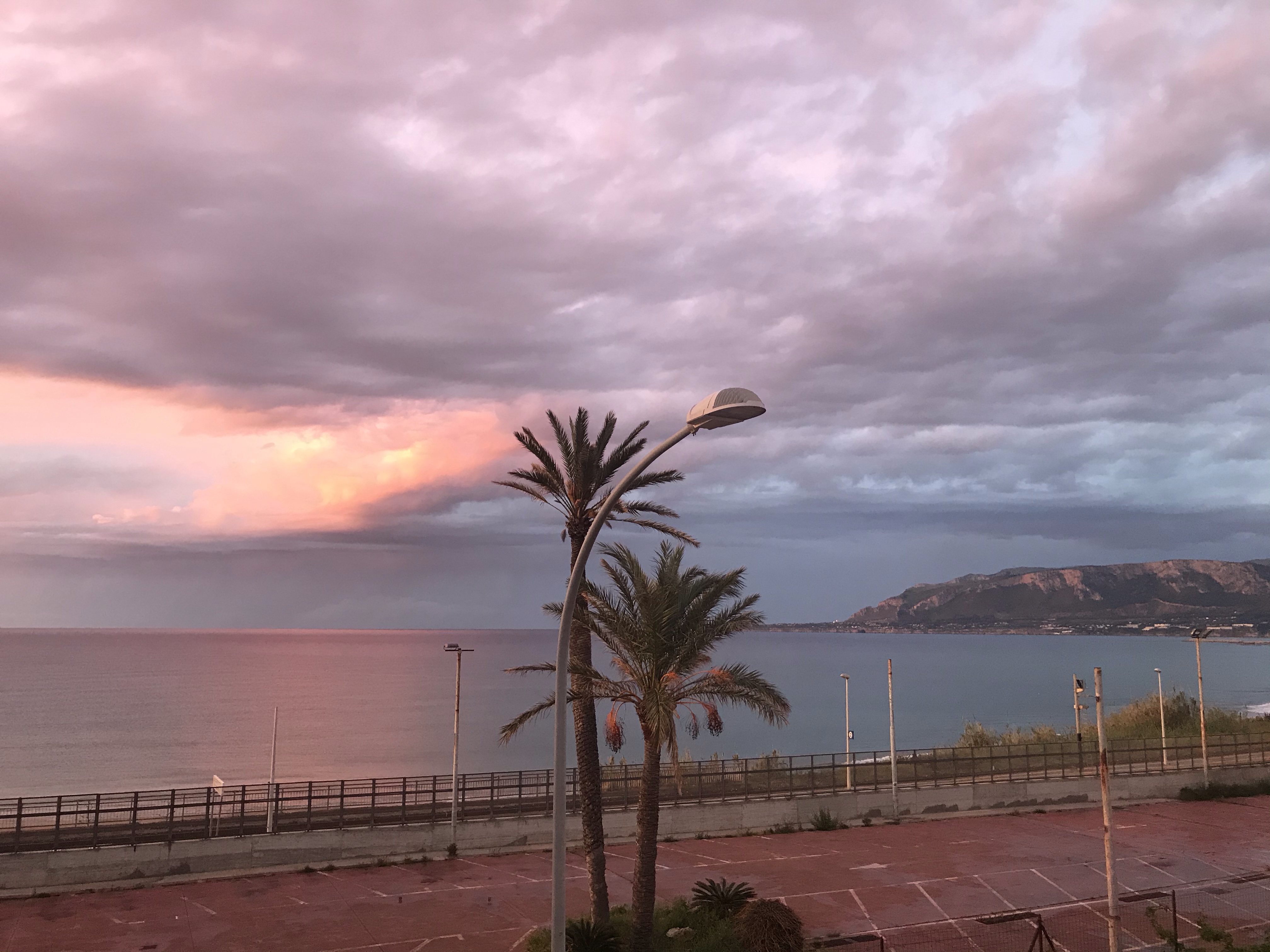
Ginevra arranged for me to stay at the home of a friend who is out of town. And this home, well… wow. Truly. Three levels with the kitchen on top, leading to three outdoor terraces. The view is simply fantastic, and the sunsets!!

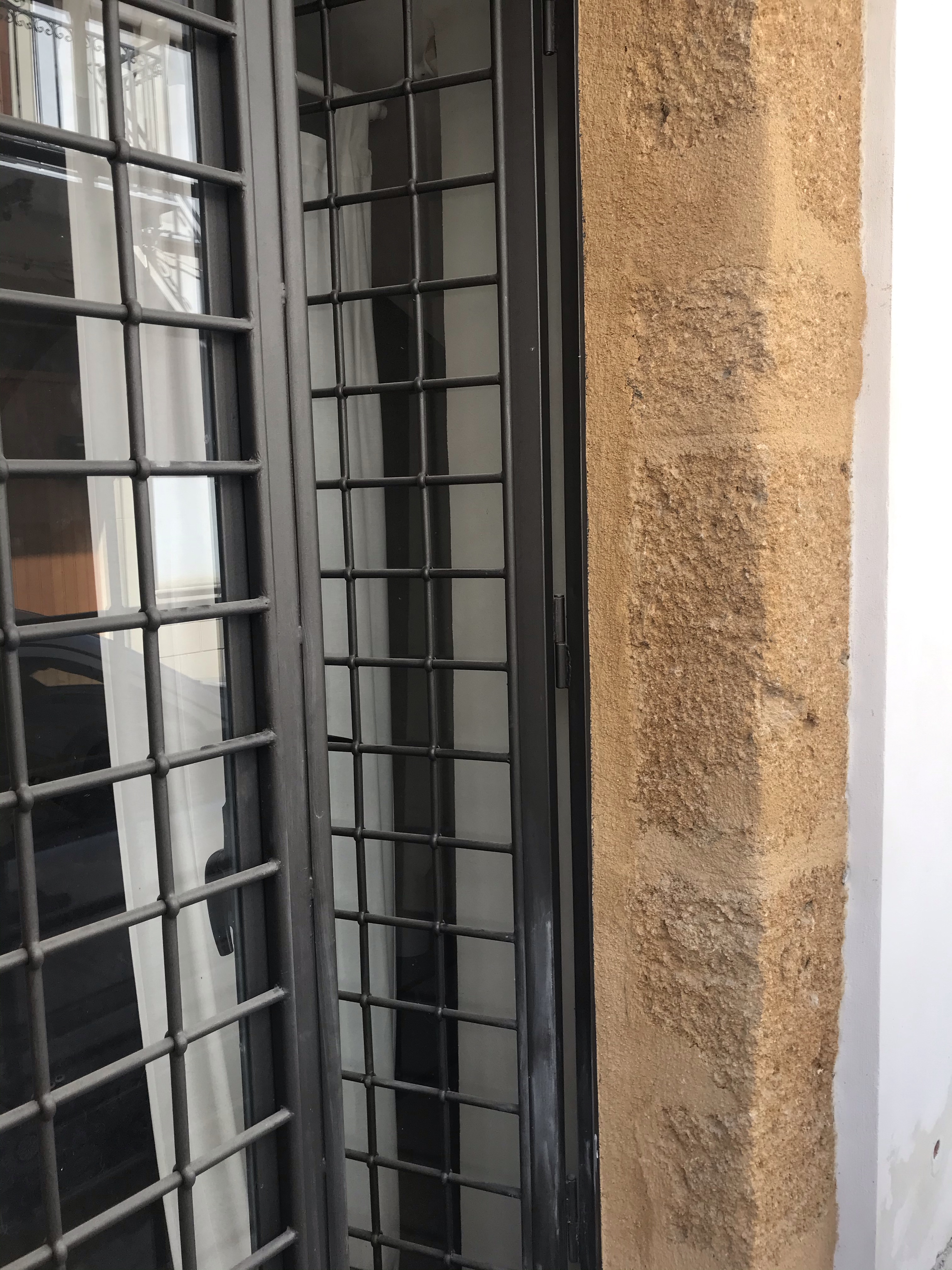


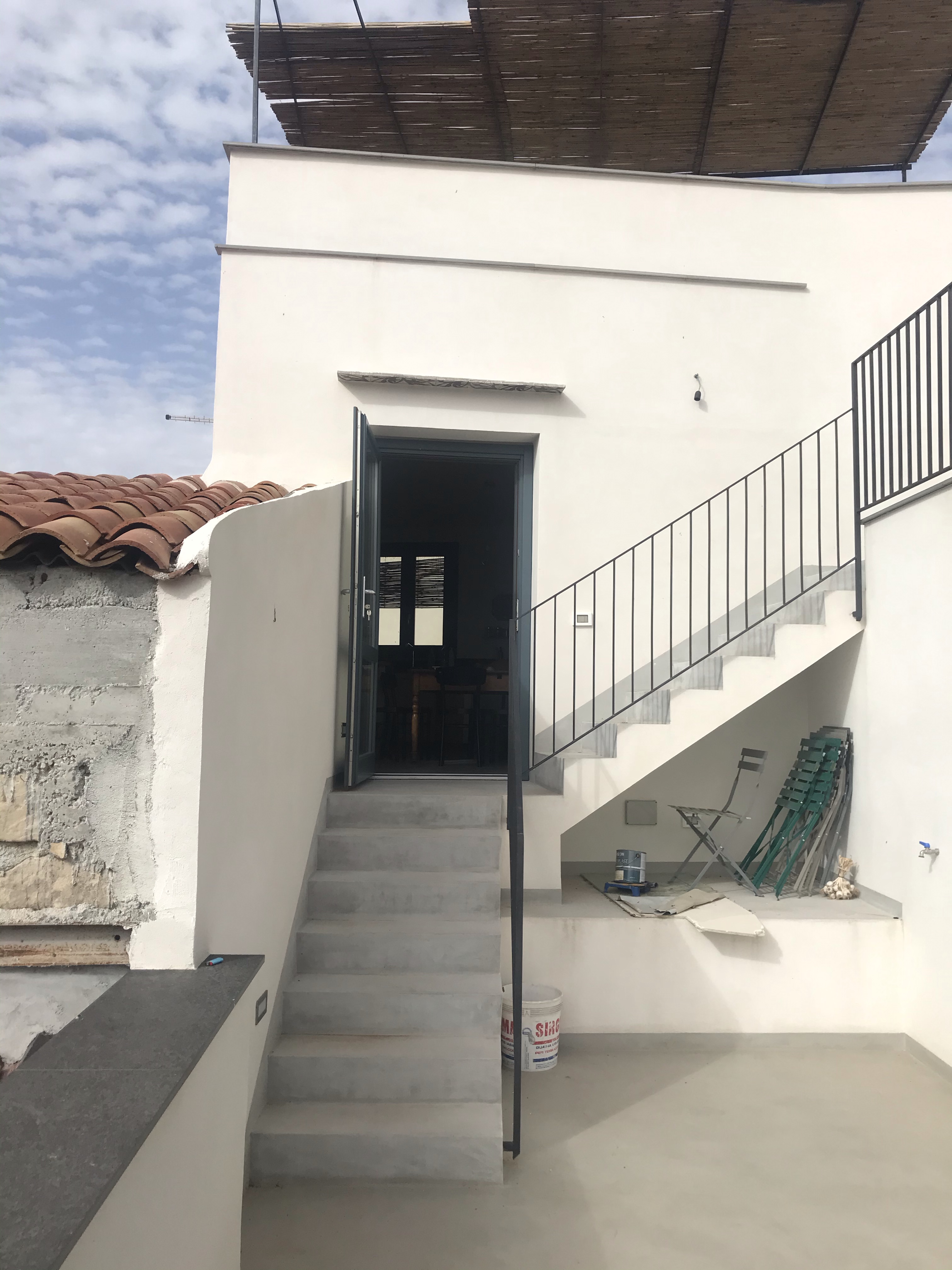
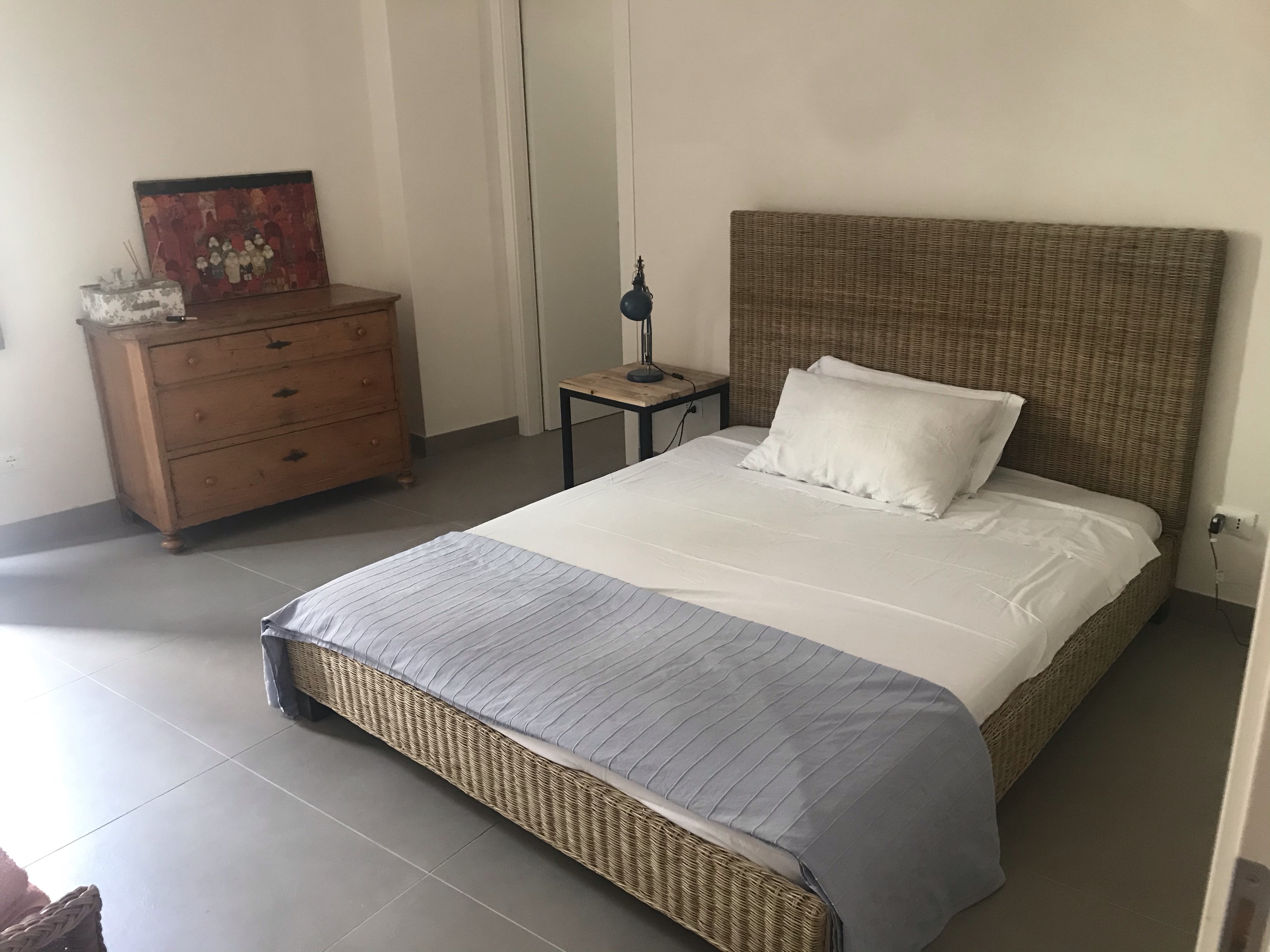

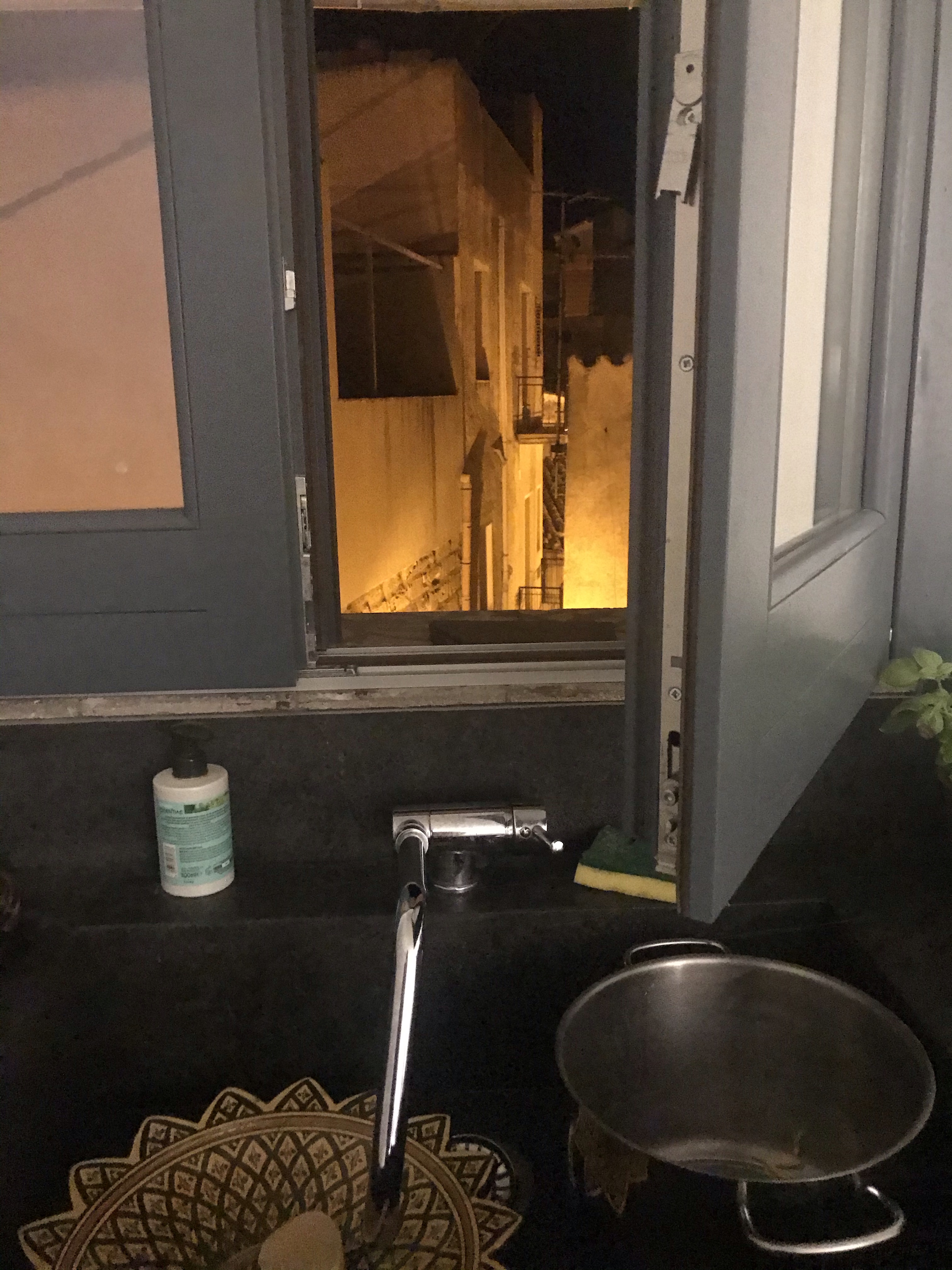
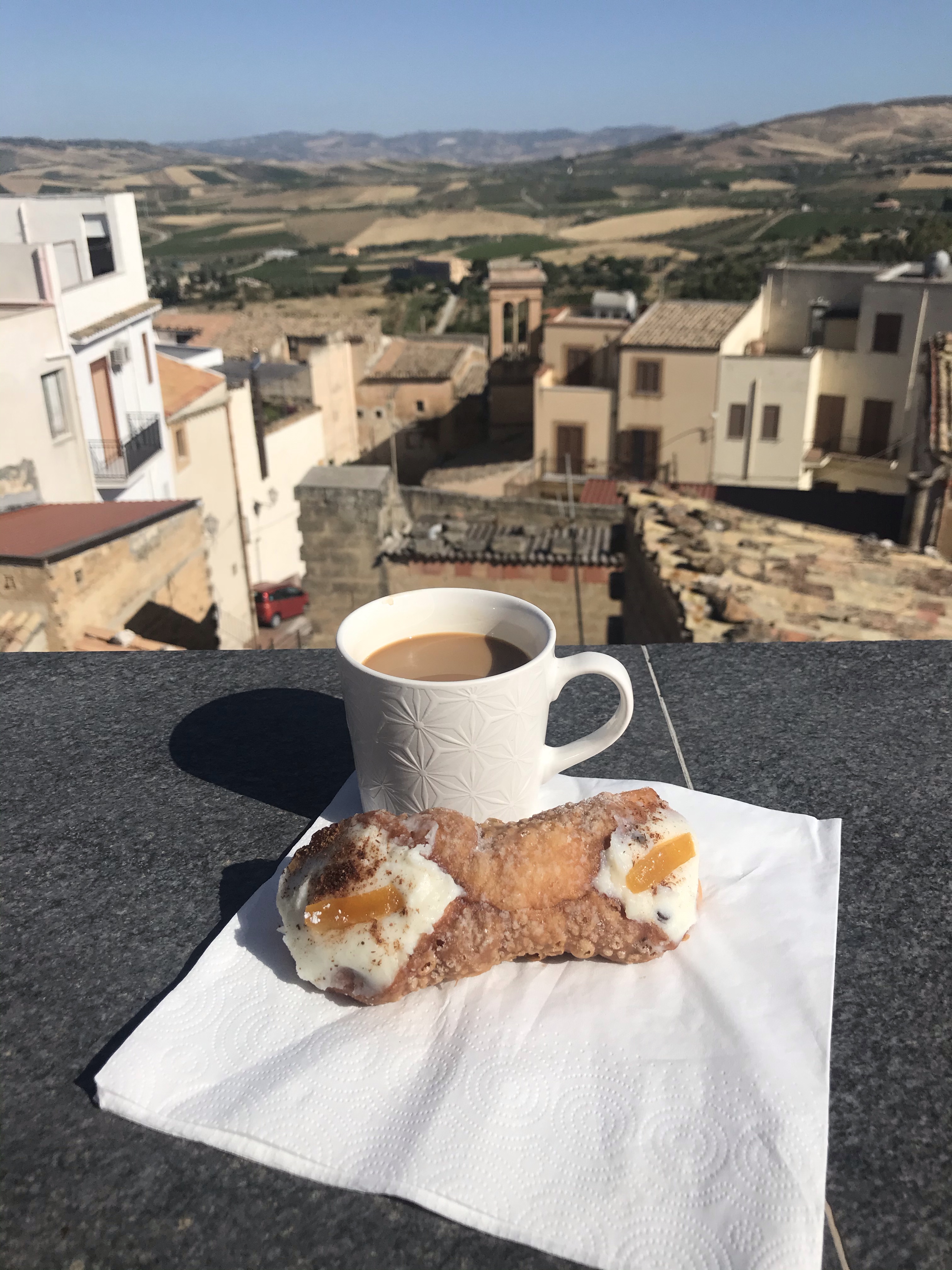
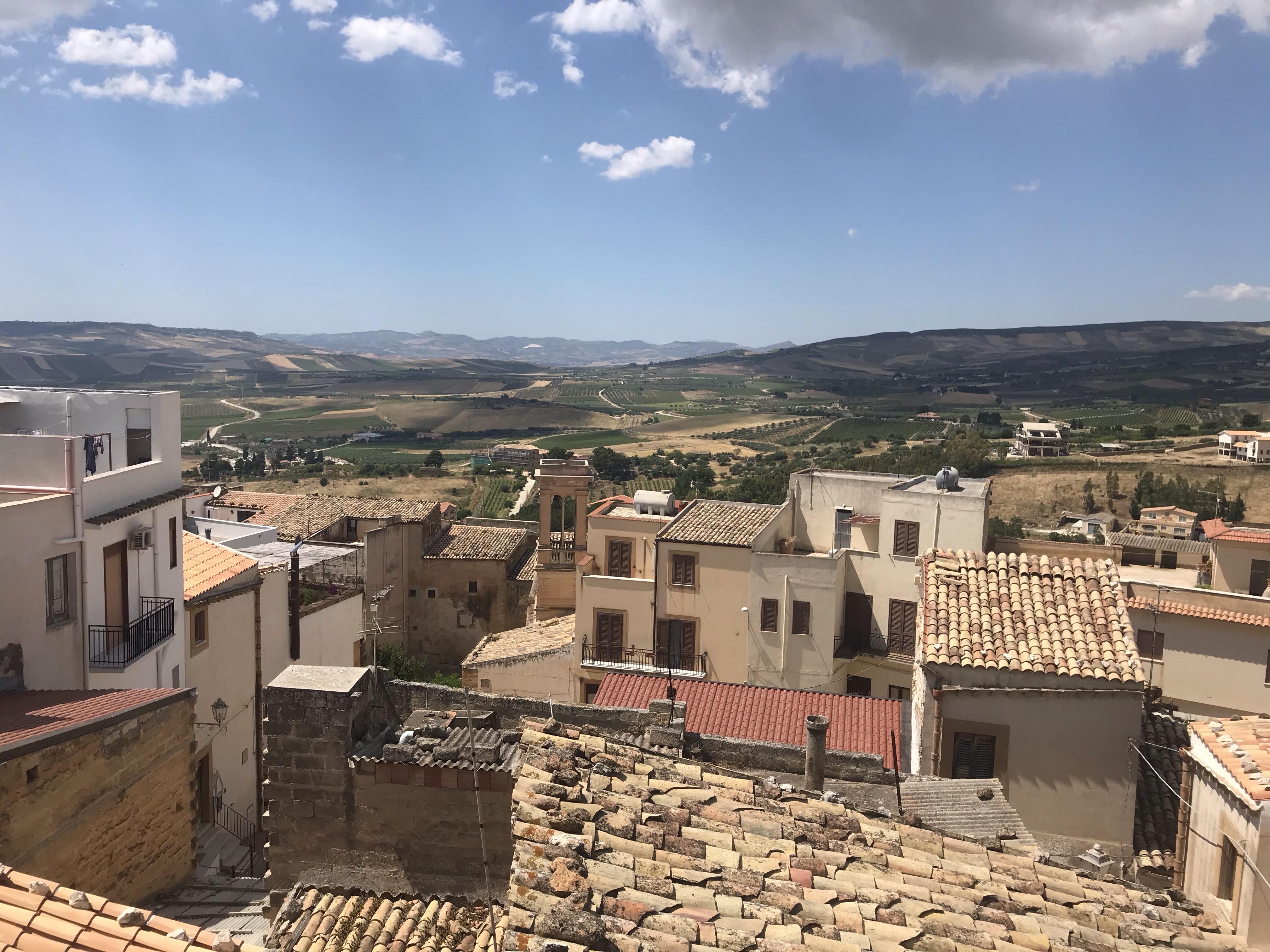
In gratitude, while still abiding Covid19, I asked if I could cook a meal for my friends. I thought lunch. They choose dinner. Much better!
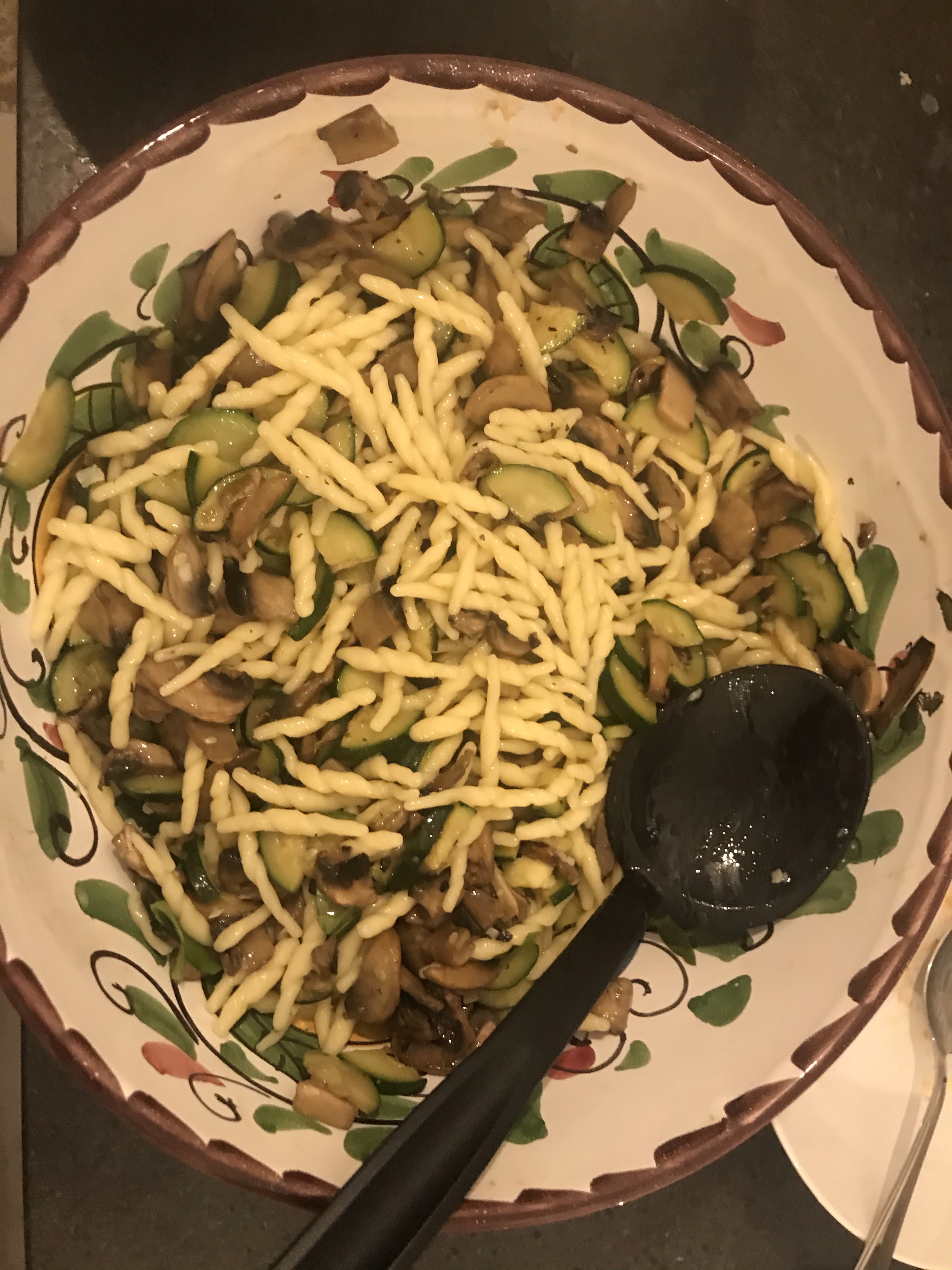
The menu was simple, nothing fancy. Just the way I always cook. The same things I have been making for myself throughout these months in quarantine. Pasta with zucchini and mushrooms, tomato basil soup, and a salad. Ok, the salad was a bit fancier than normal, with freshly chopped olives, artichokes, salami, and fresh buffalo mozzarella, a tiny bit of new onion and celery, tossed with lemon and olive oil.

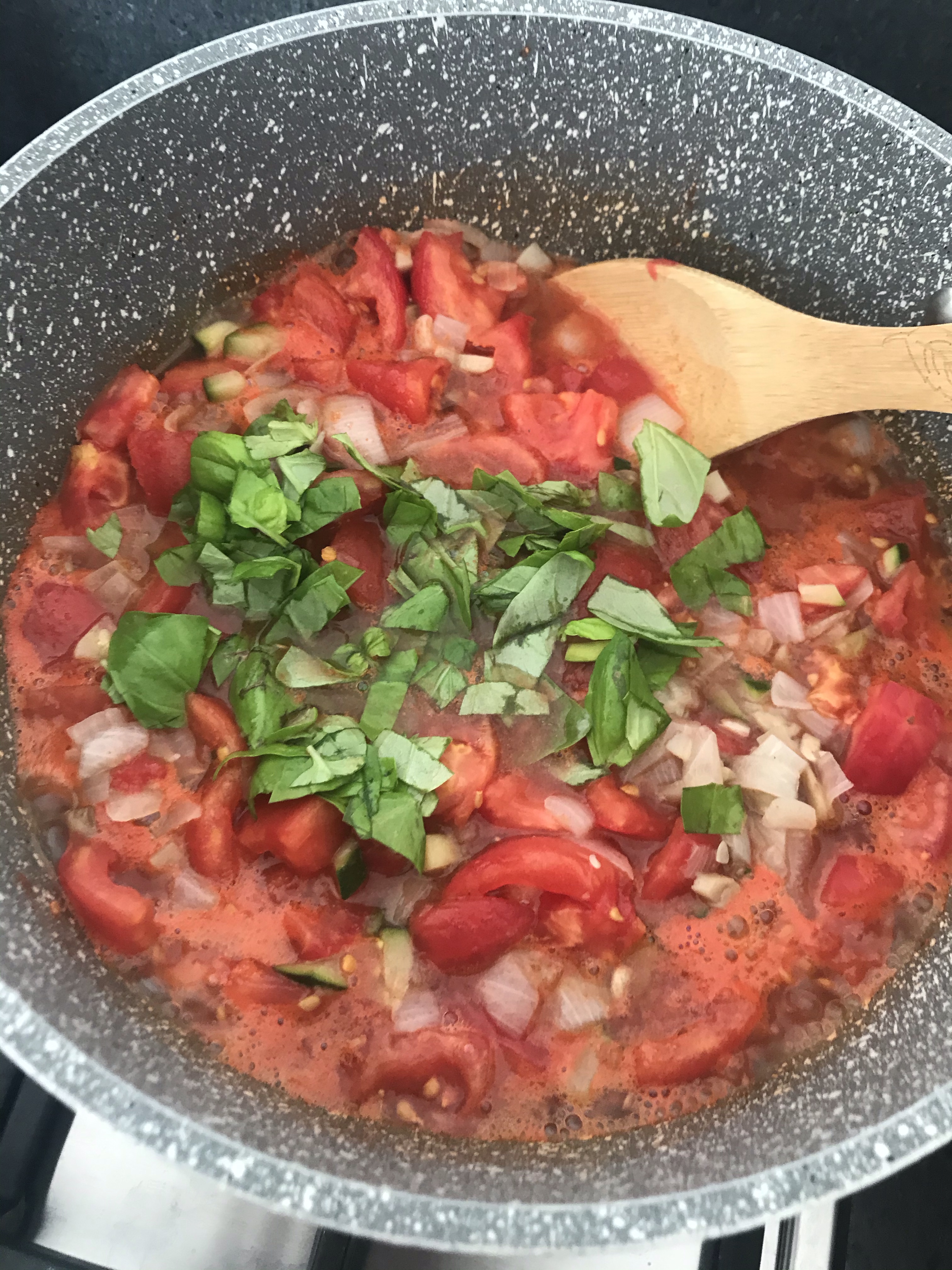

I spent the day preparing. There is something so incredibly satisfying about cooking for friends. And as an extra treat, I purchased a large Minni di Virgini, custom-made in celebration of Ginevra’s birthday. Turns out none of these locals had ever seen one so large! I clapped my hands repeatedly in glee!! Score one for the tourist! (Many thanks to the kind couple at Caruso Bar Pasticceria and Gelateria!)

My food was a success. Admittedly, as the time approached, I was nervous. Who was I to cook for Sicilians? What was I thinking?? But they were kind and genuinely complimentary. And what better compliment is there than this? Sicilians enjoying second helpings!


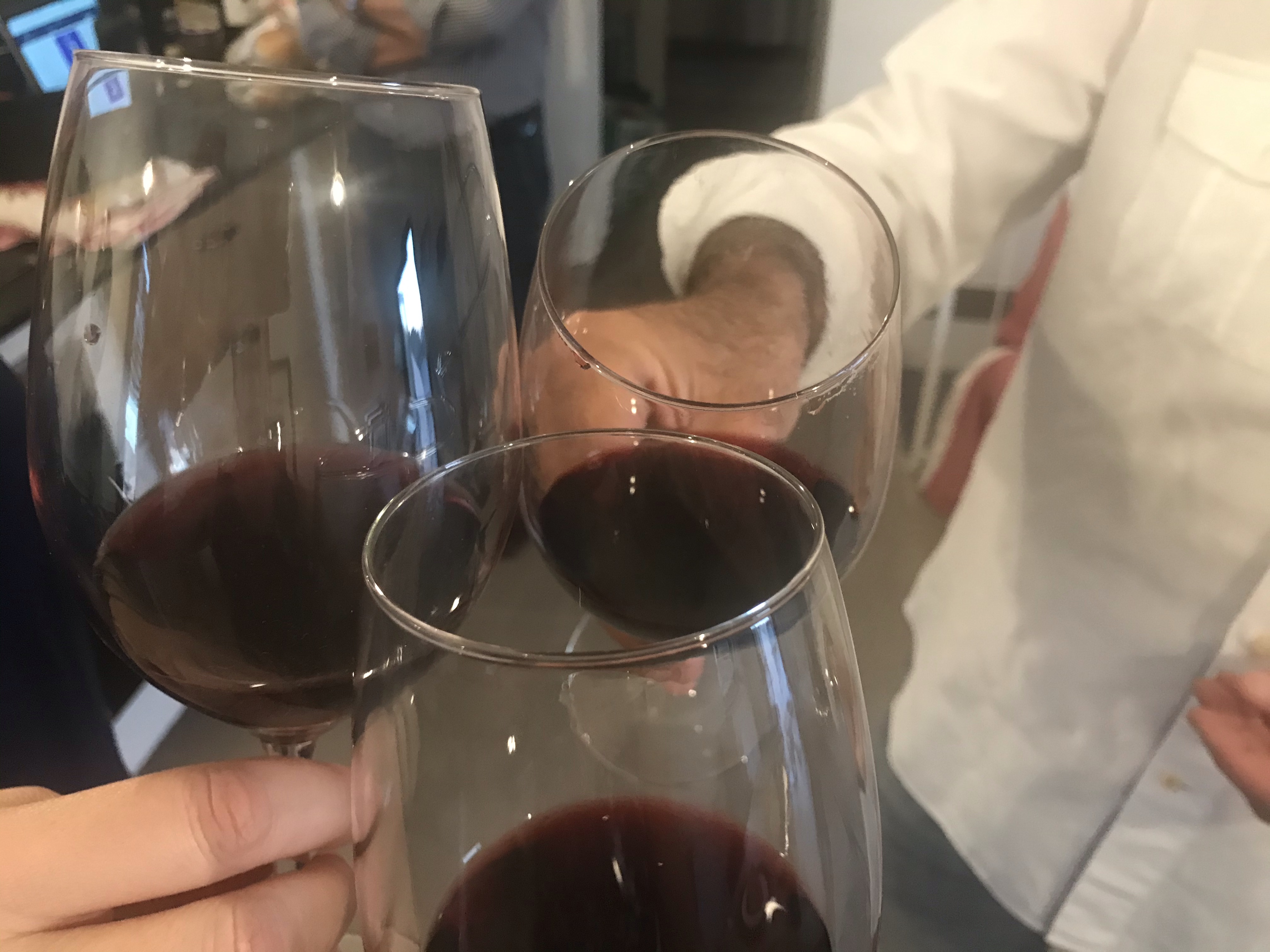


Ah, but it was my friends who made the evening what I longed for, what my heart needed but could never expect.
Ginevra brought cannoli and gelato slices (so divine, something I have never seen, also from Caruso). Giuseppe brought pasta and limoni gelato and brioche. Deborah brought wine. And then there was the special Sicilian champagne that Ginevra had welcomed me with when I arrived. More than this and quite unexpectedly, Ginevra and her husband, Paulo, cooked the pasta! At first implying there was too much zucchini and funghi … hah! Not for this American – I like plenty of toppings! The two of them sautéed and cooked while the rest of us nibbled on cheese, took photos, and enjoyed the view. We drank, we stuffed ourselves, we laughed. And when the evening air became too cool, we retired to the kitchen for decaffeinated coffee and one last cigarette.


My heart is full. This is a night I will never forget. Sambuca di Sicilia. And new friends.
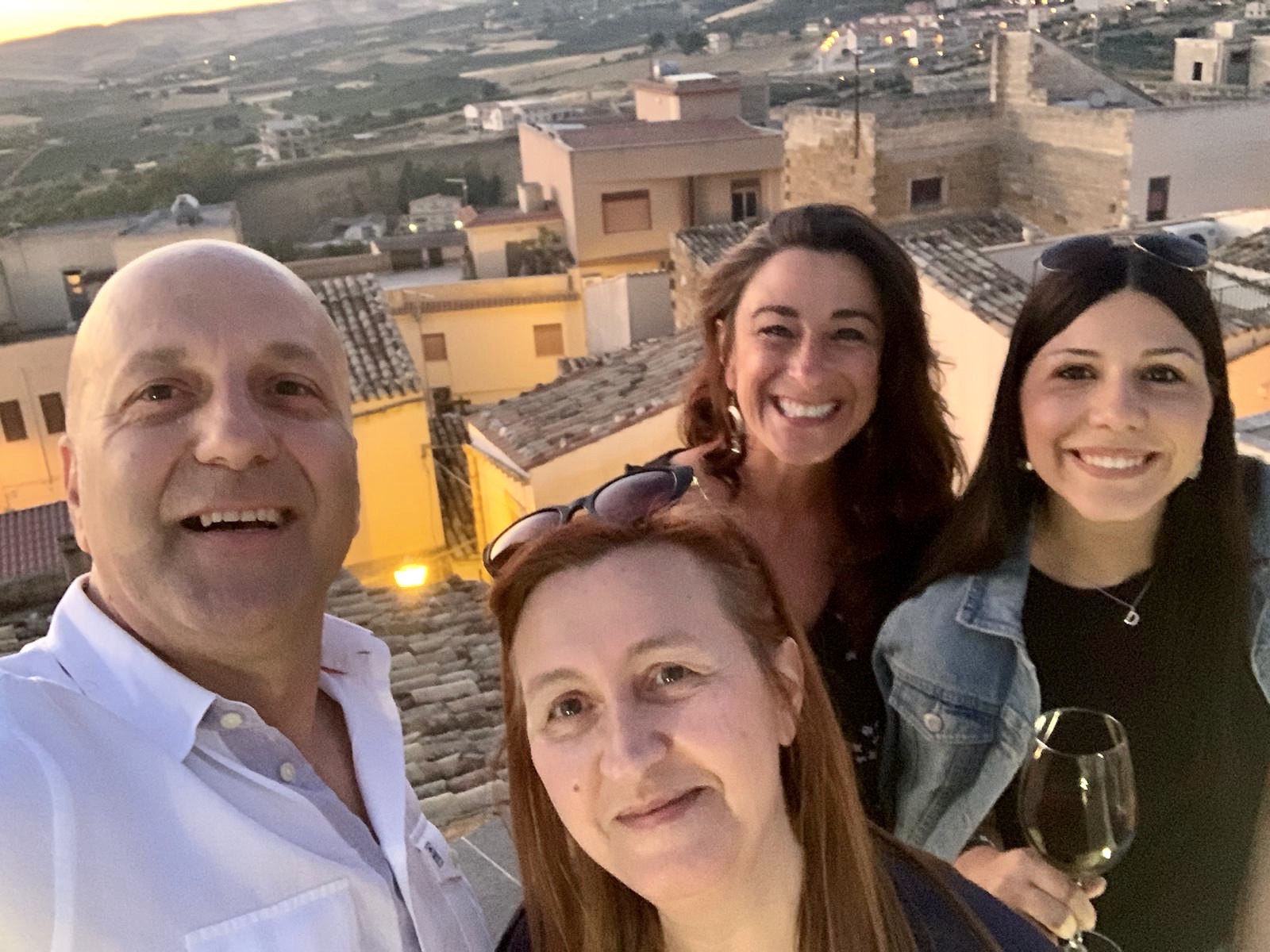
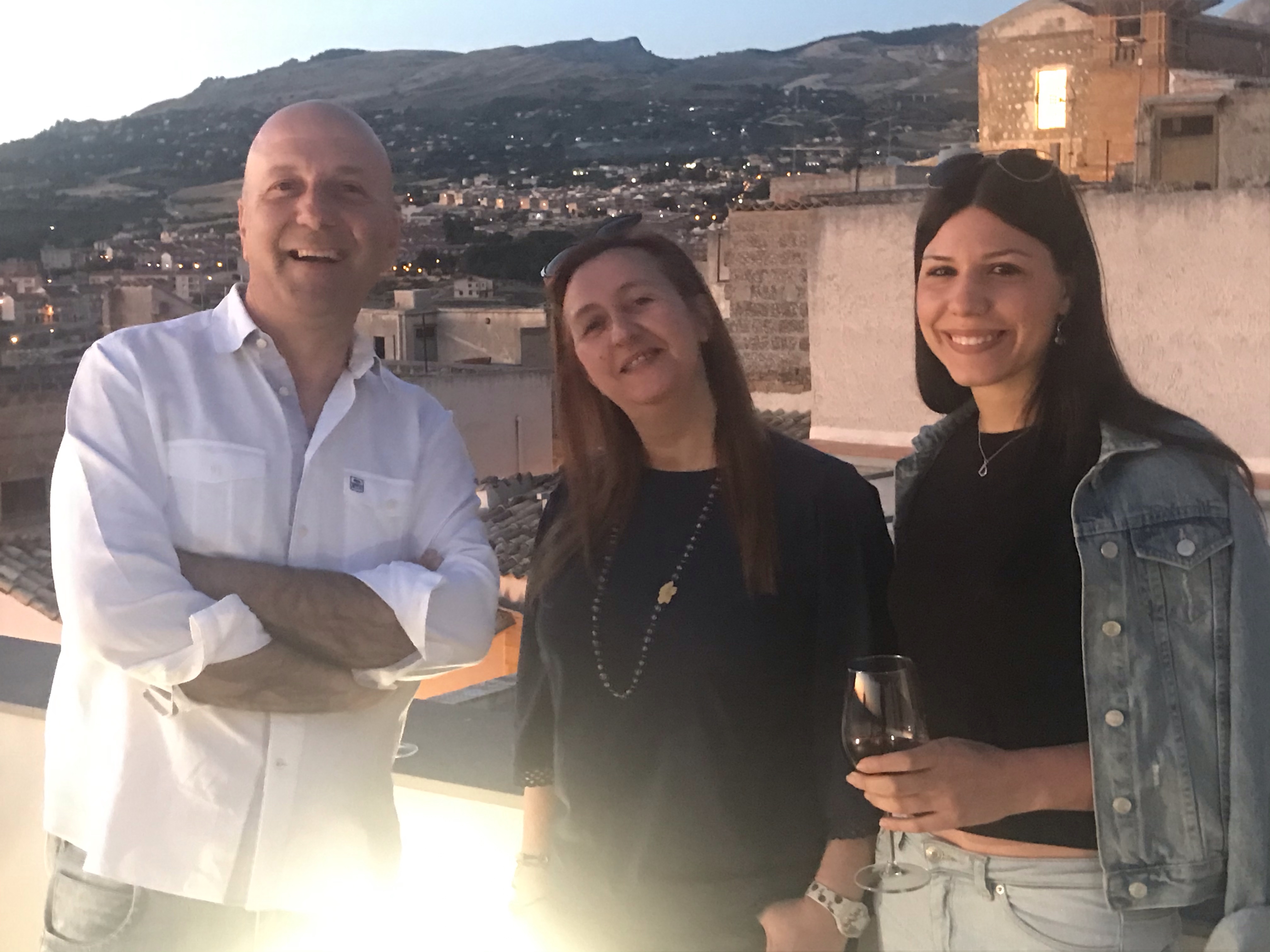

Sambuca has fortunately not had any cases of Covid19, however, everyone is still being extremely careful and always wearing masks everywhere. (Unlike other places I’ve visited, like Cefalu!) We did take off our masks for dinner but remained extremely cautious of precautions and safety.
Valley of the Temples, Agrigento, Sicily
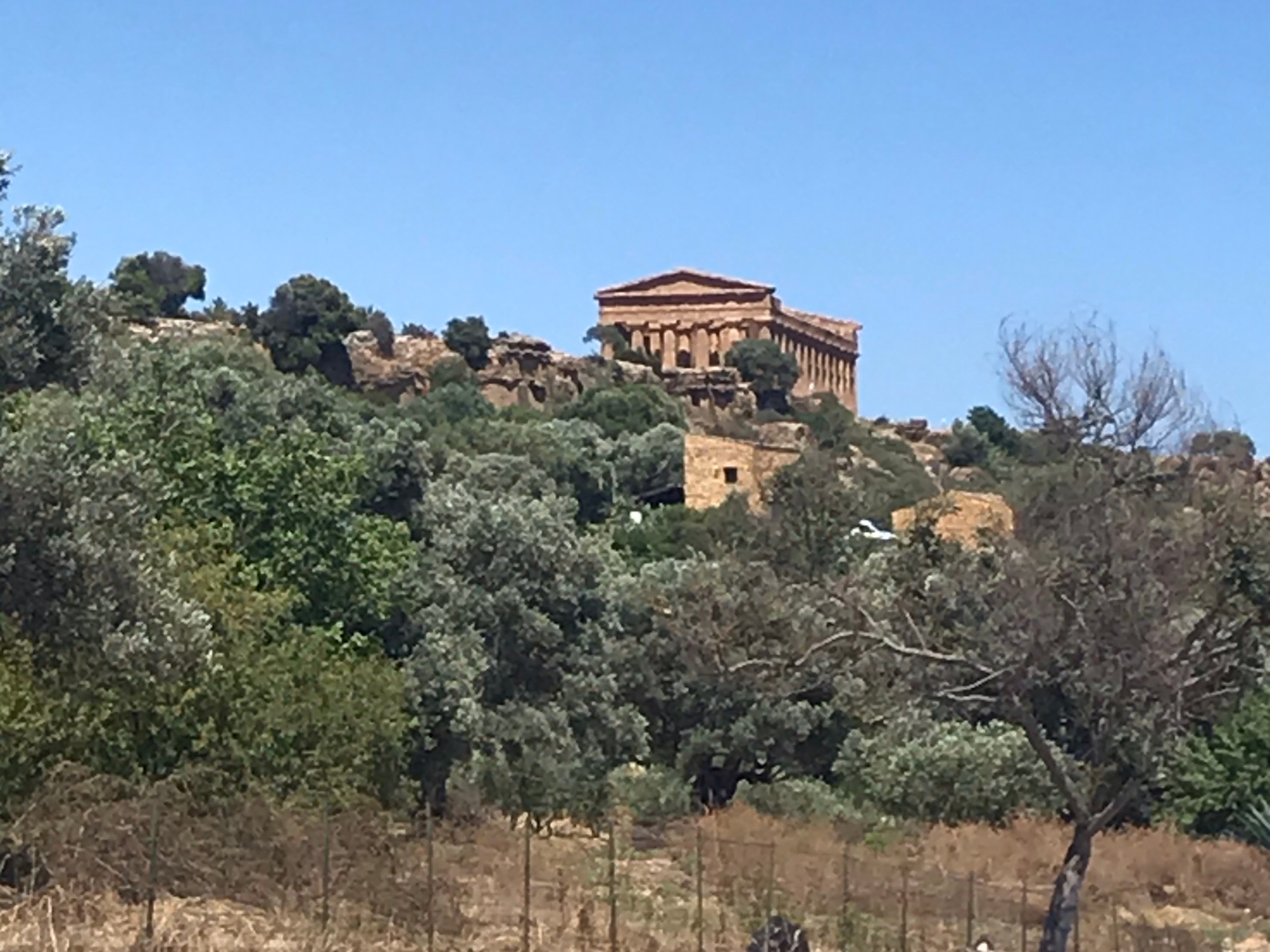
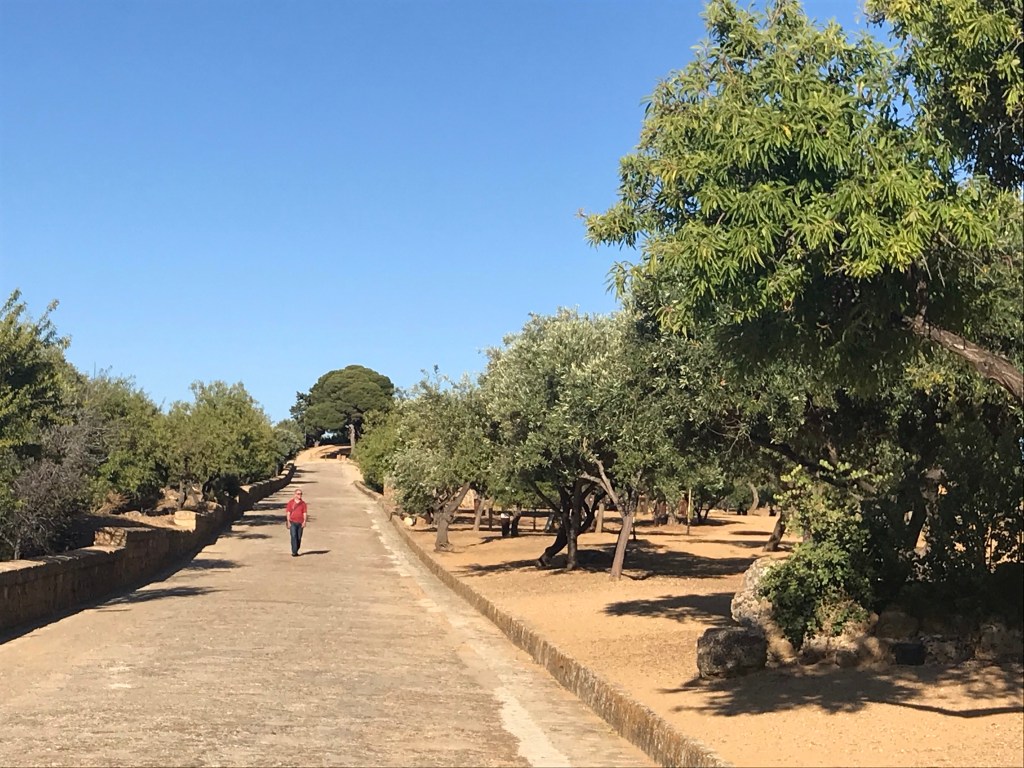
Visiting the Valley of the Temples was always on my itinerary for my trip to Italy. Considered one of the most important (and impressive) archeological sites in the world, it covers over 2,300 acres. (Guess what? I did not trek the entire space, but I did cover a lot of it.) Founded in the 6th Century BCE as the city Akragas, it was an influential city in Ancient Greece, albeit in Sicily. With almost half a million citizens, it prospered until the early 5th Century CE, when it was conquered by the Carthaginians. Like the rest of Italy, it was later occupied by the Romans, Arabs, and Normans. Amazingly, it wasn’t rediscovered until the 19th Century and became a UNESCO World Heritage site in 1997.
Note: It’s not actually a valley. Rather, the city sits 230 meters above sea level and overlooks what is now the city of Agrigento, as well as the sea. Quite impressive.

Agrigento 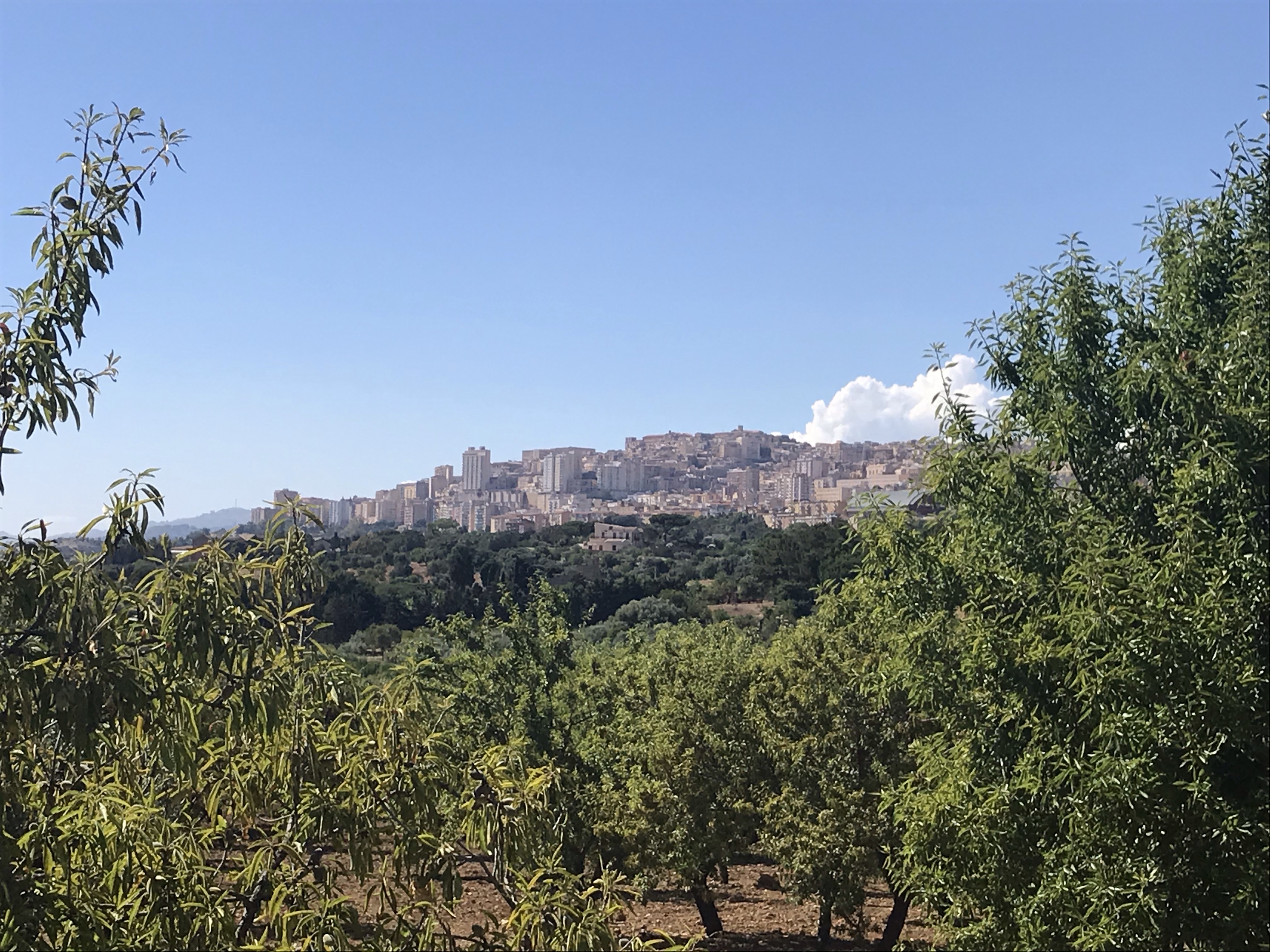
Agrigento
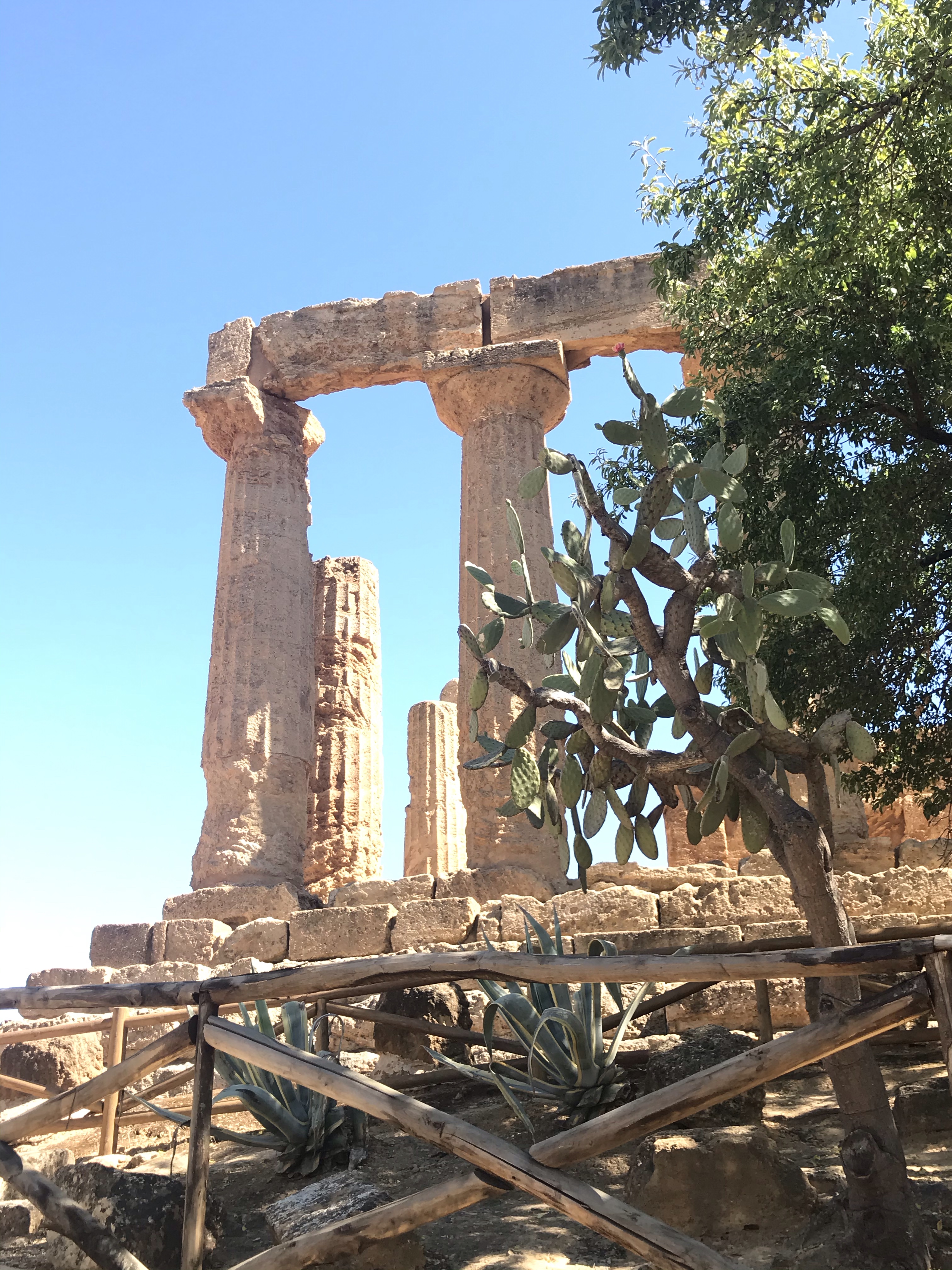
The Temple of Juno (Temple of Hera in Greek) is the first ruins you see upon entering the park. Like all the standing ruins, it features Doric style columns.



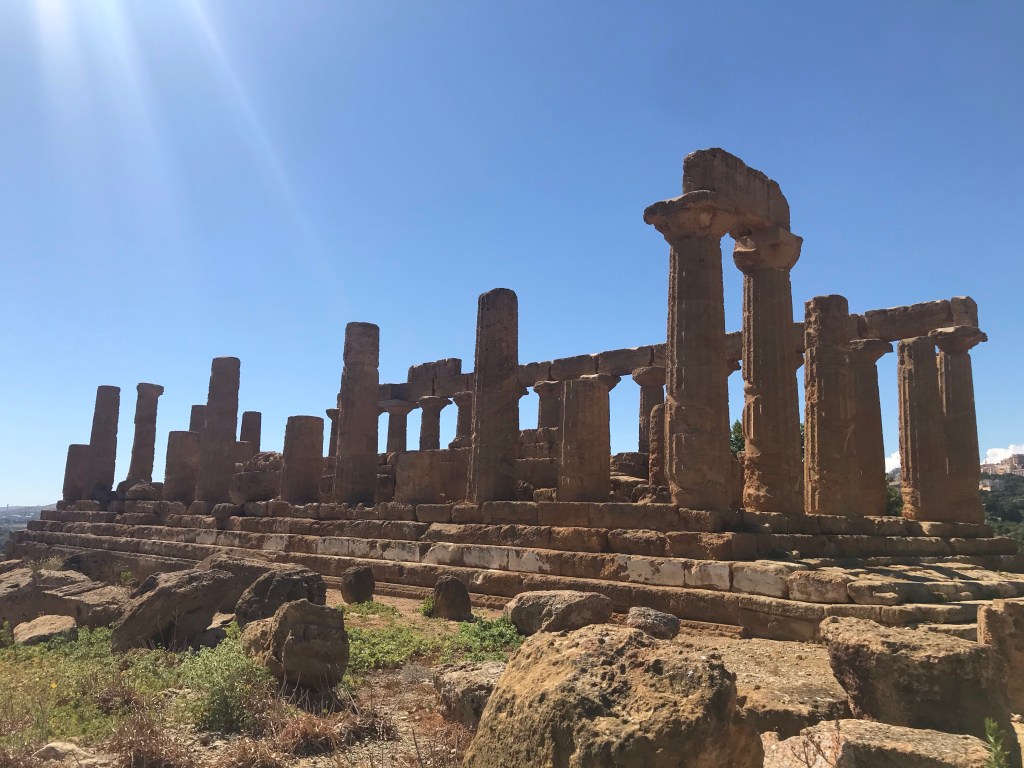

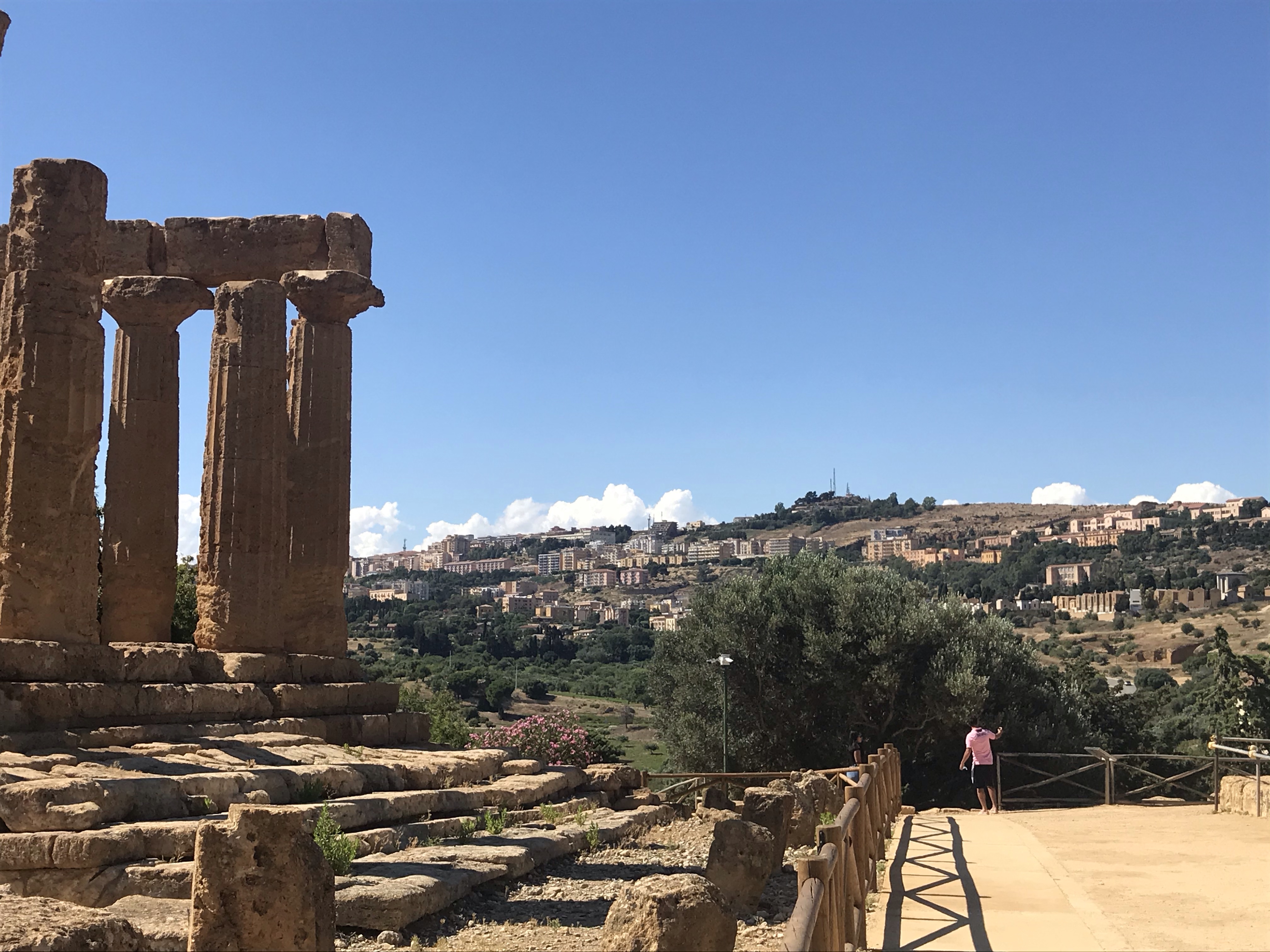
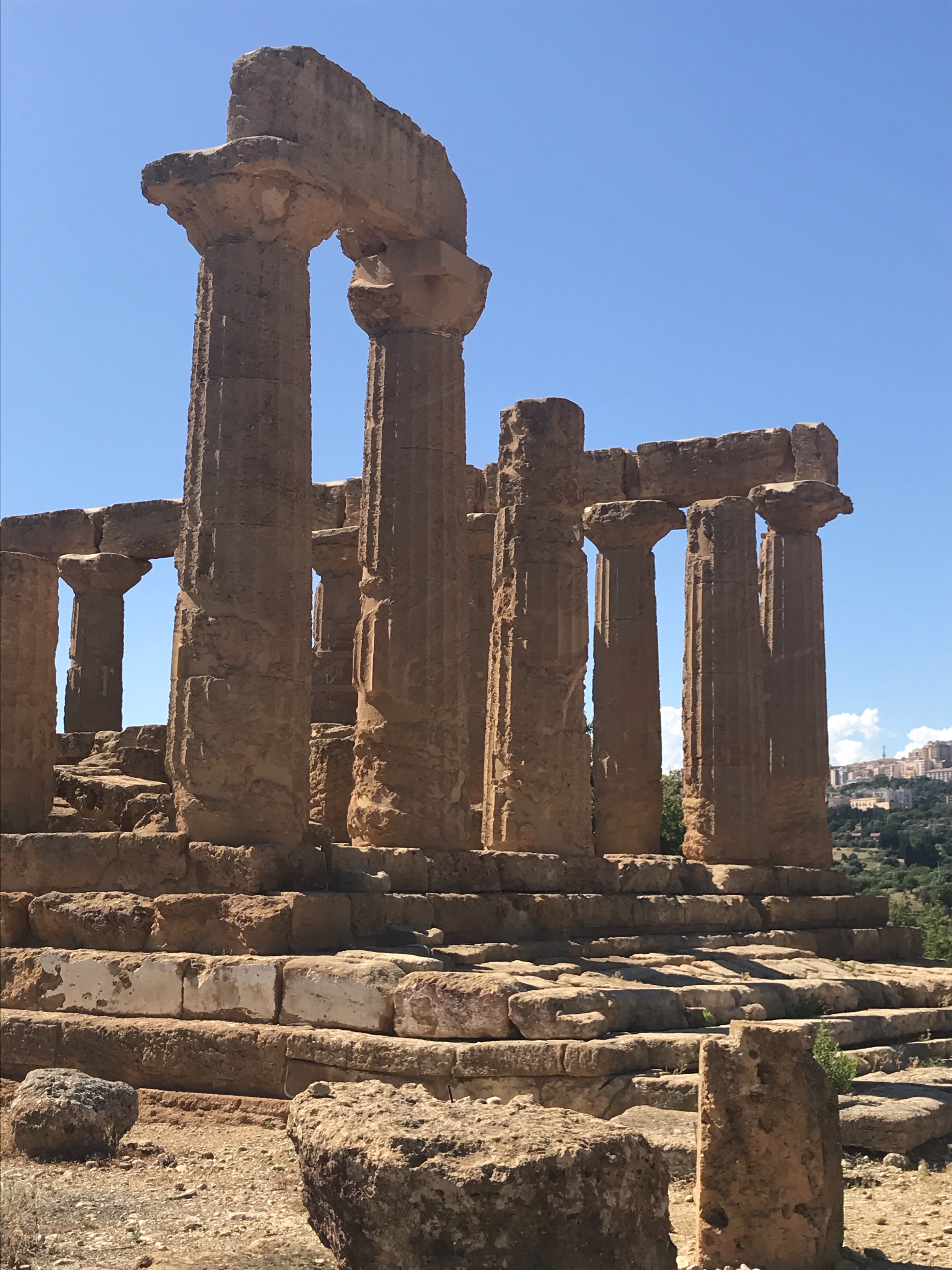
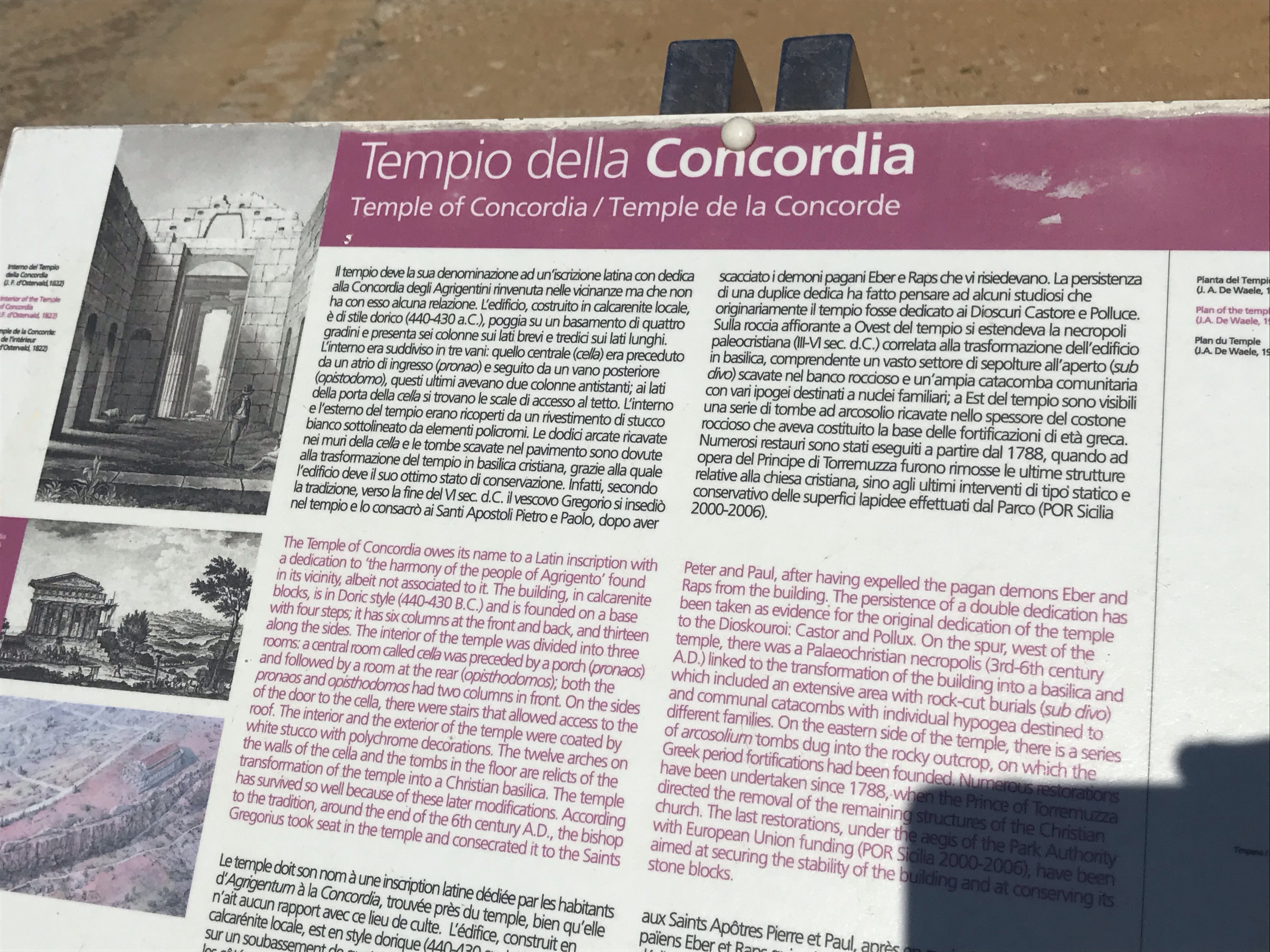
Most well known is the Temple of Concordia (the goddess of harmony), as this is the most well preserved, having been converted into a church in the 6th Century CE by the bishop of Agrigento. This is particularly worth noting since all places of “pagan” worshiped were being destroyed around that time.



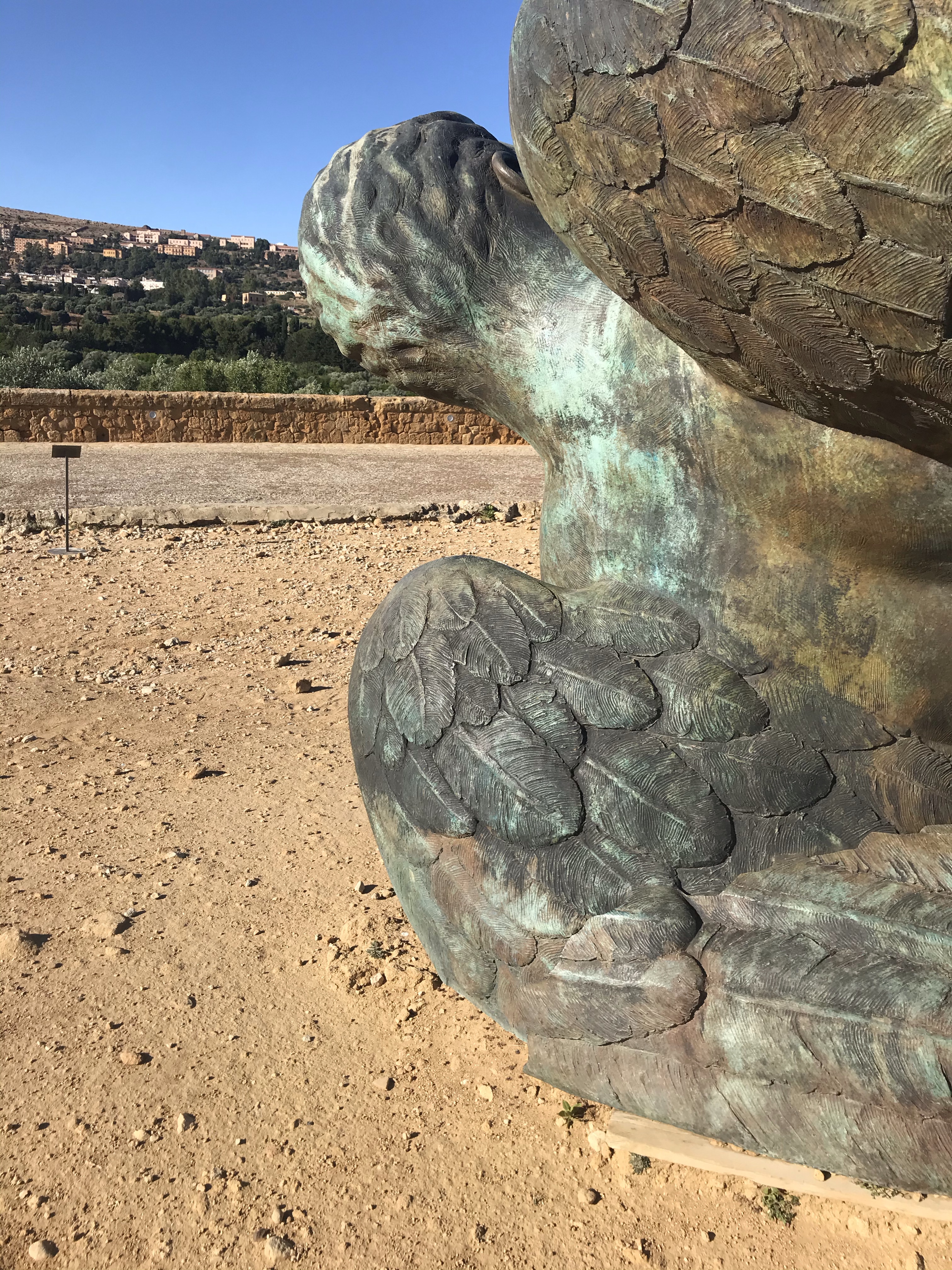
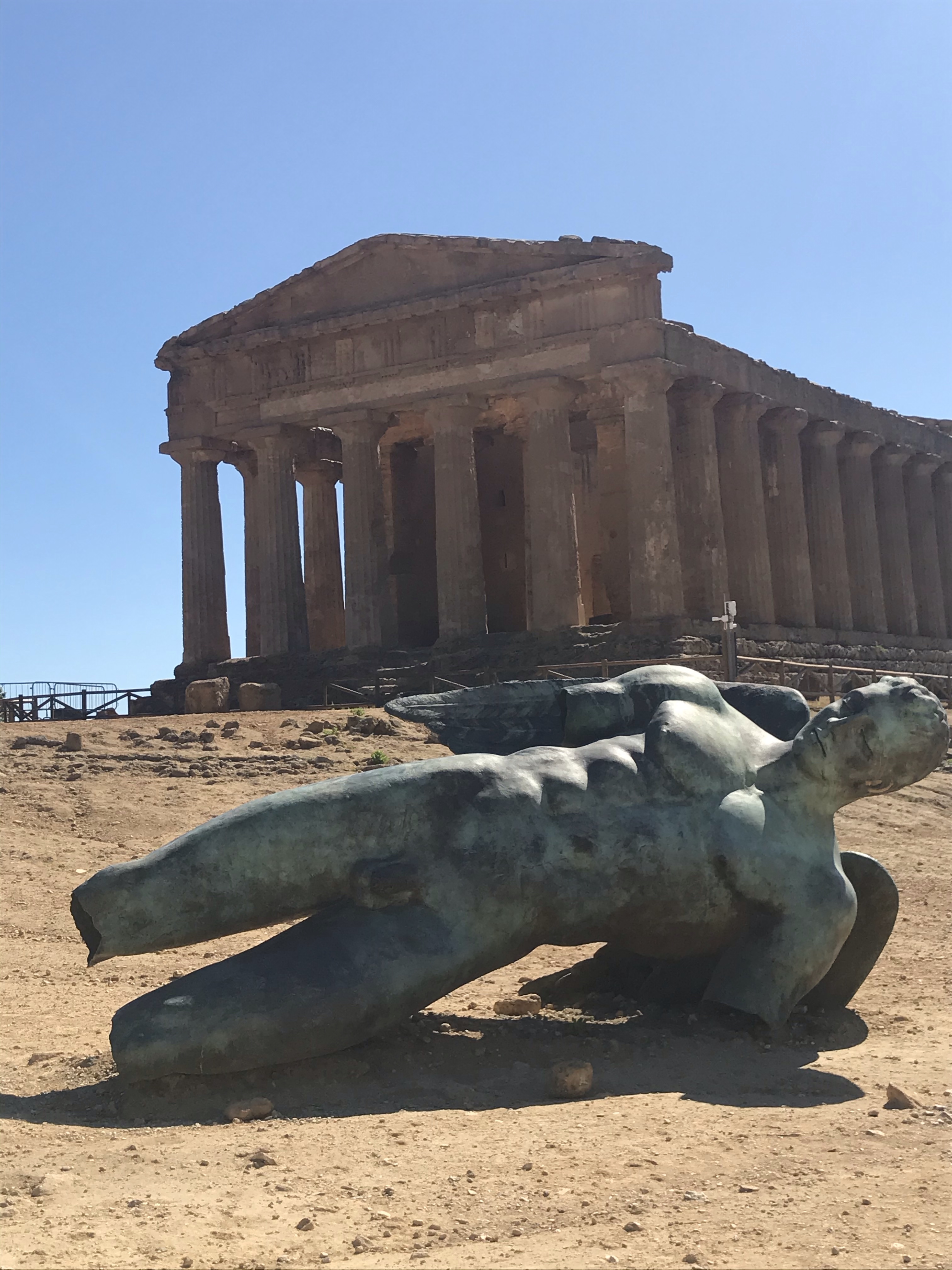
This fantastic “fallen angel” is actually a statue of Icarus created by Polish artist Igor Mitoraj for an exhibition on site in 2011. The exhibition included 17 statues and this is all that remains. Inset on the back of right wing (the unbroken wing), is the face of Medusa, which actually looks very much like an angel. Unfortunately, I don’t have a photo of this – the light wasn’t cooperating so I only admired it. (With no one else around, it was easy to get up close.)

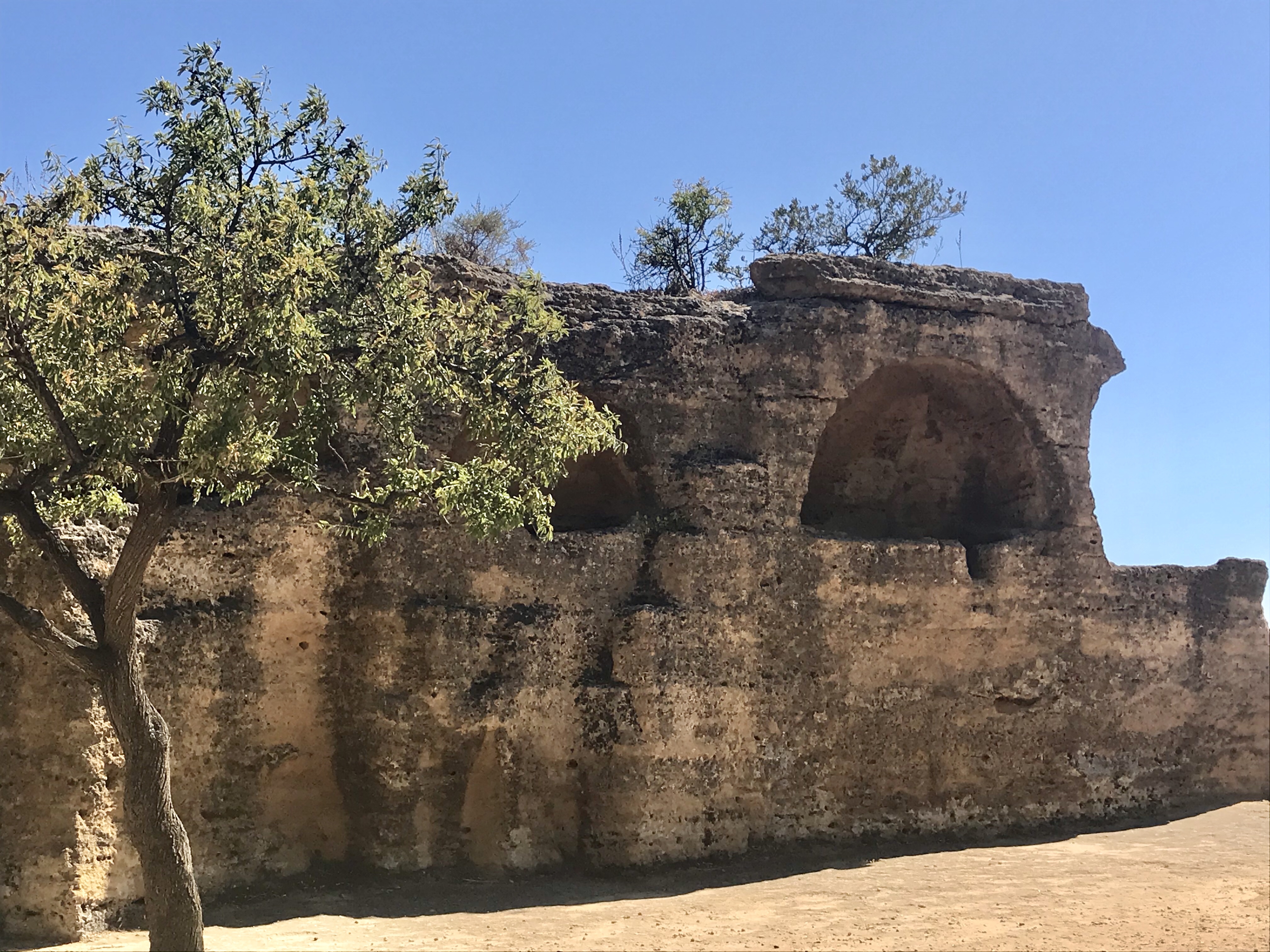
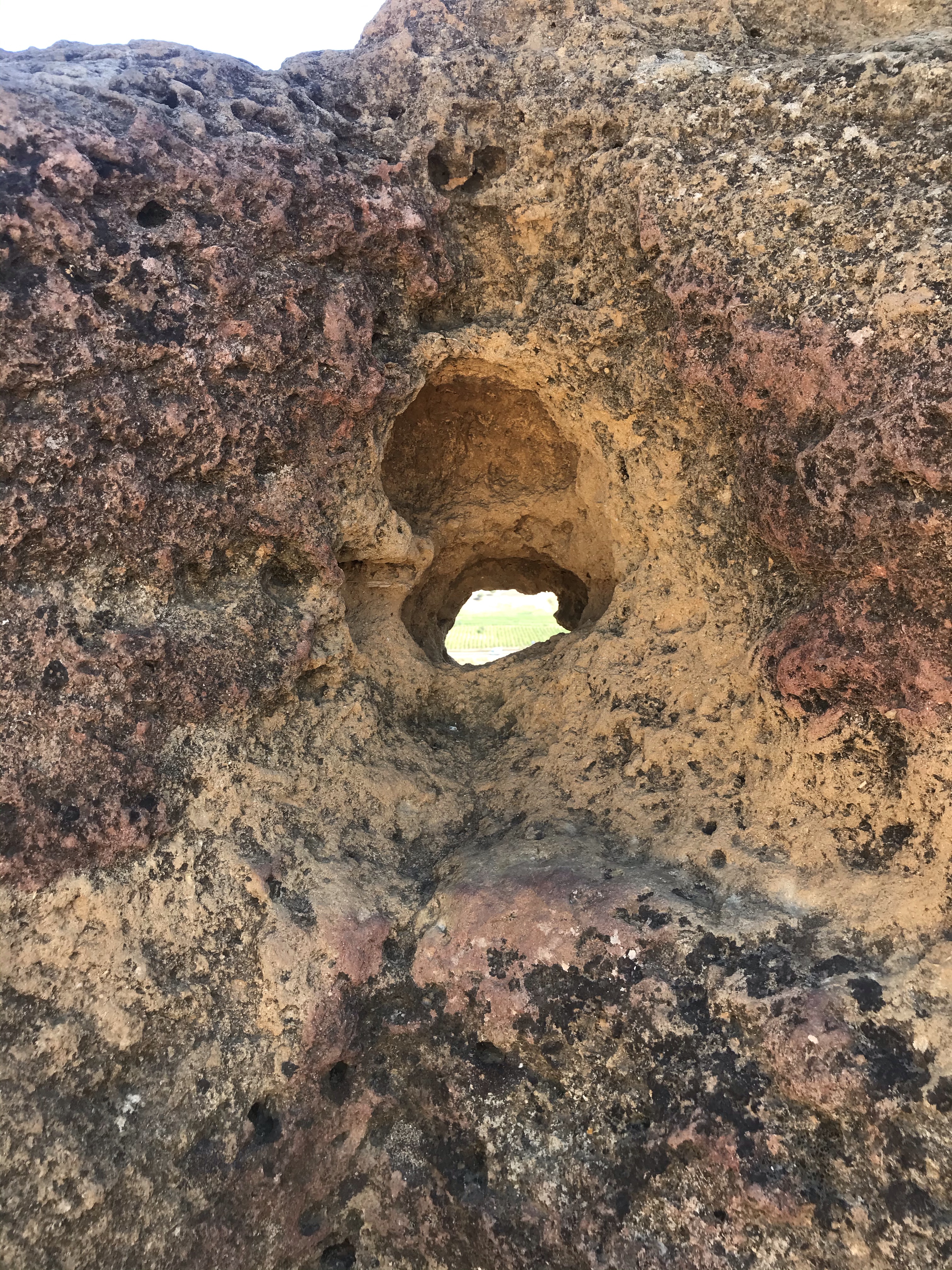
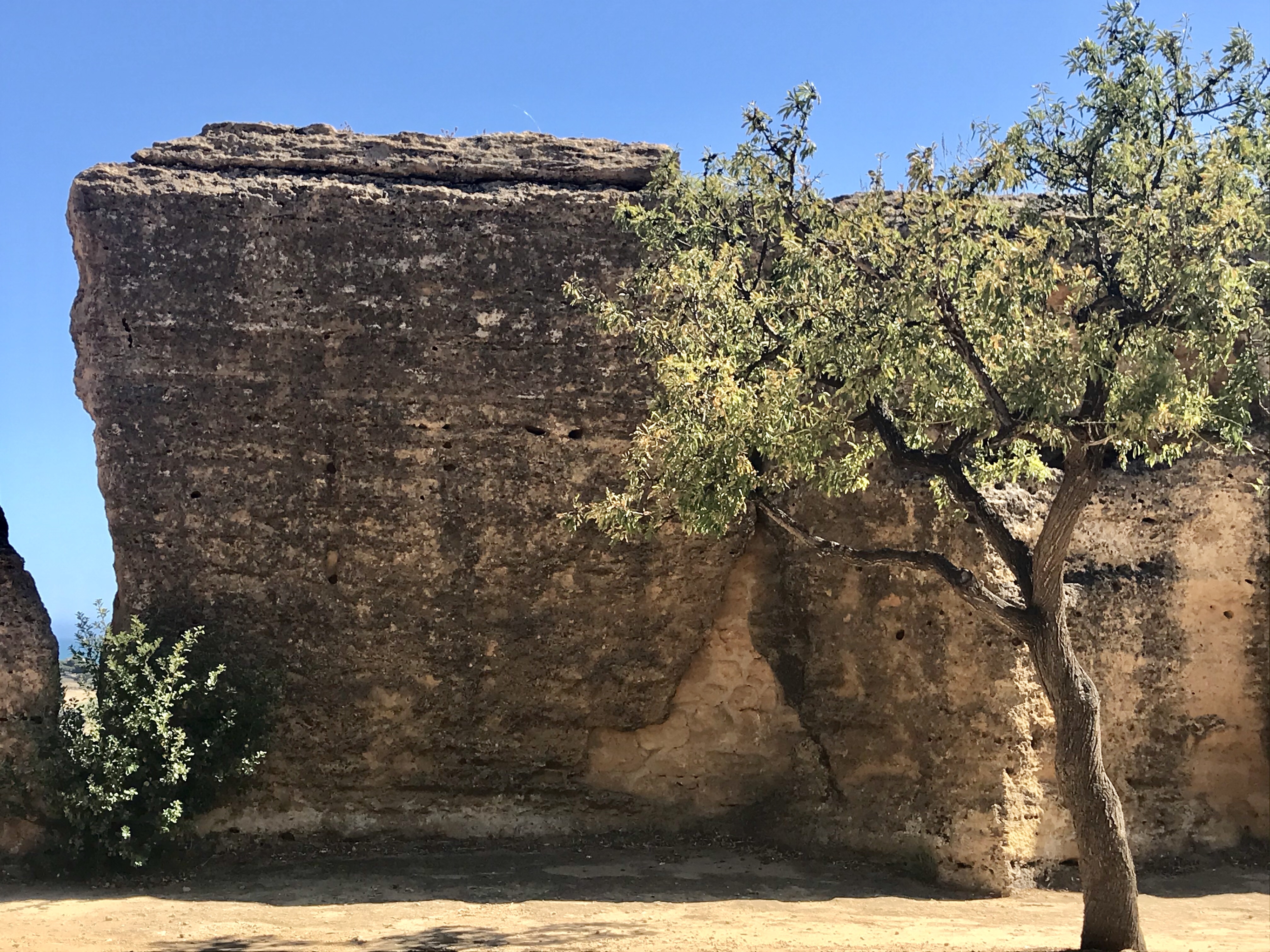
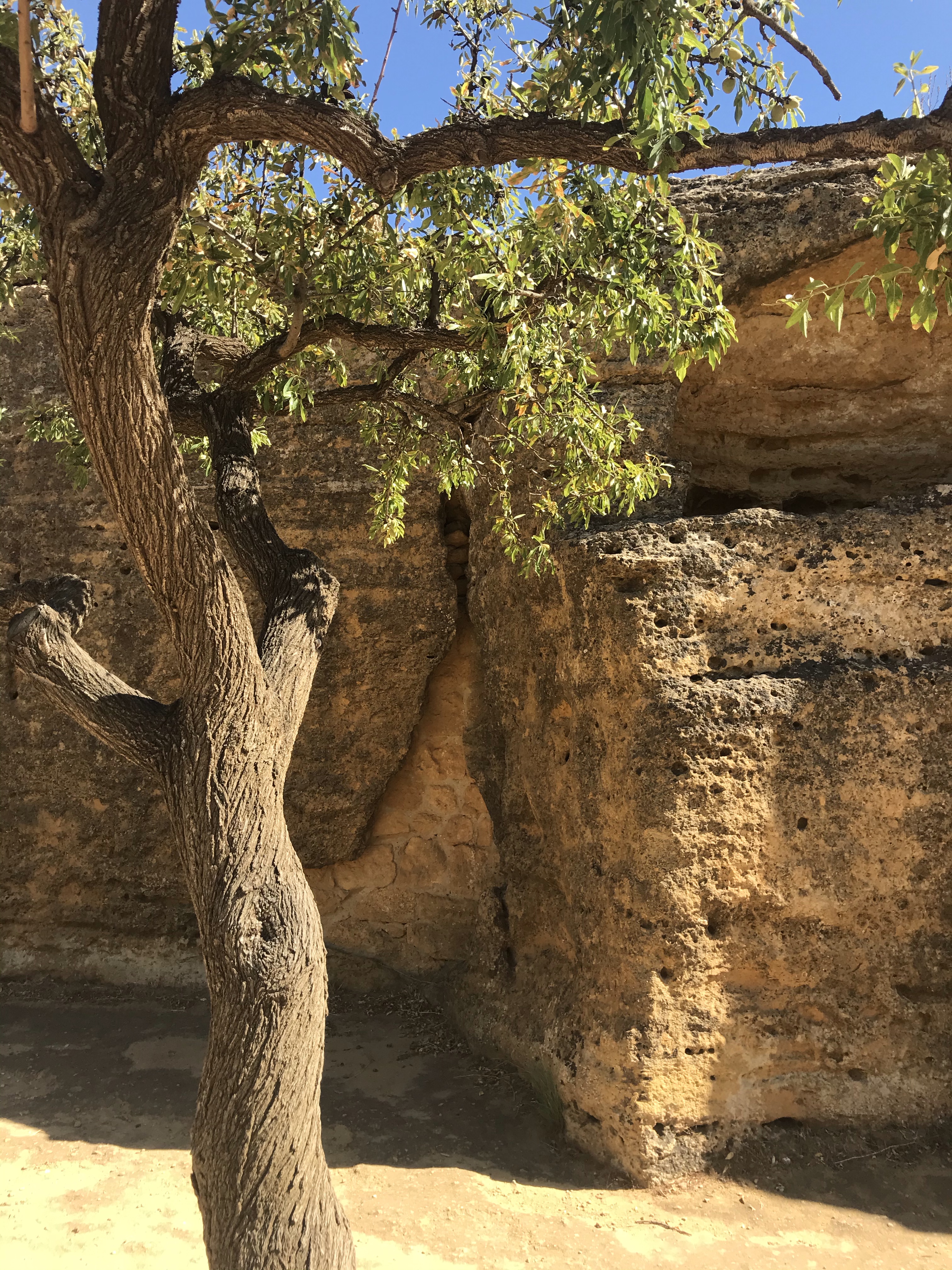
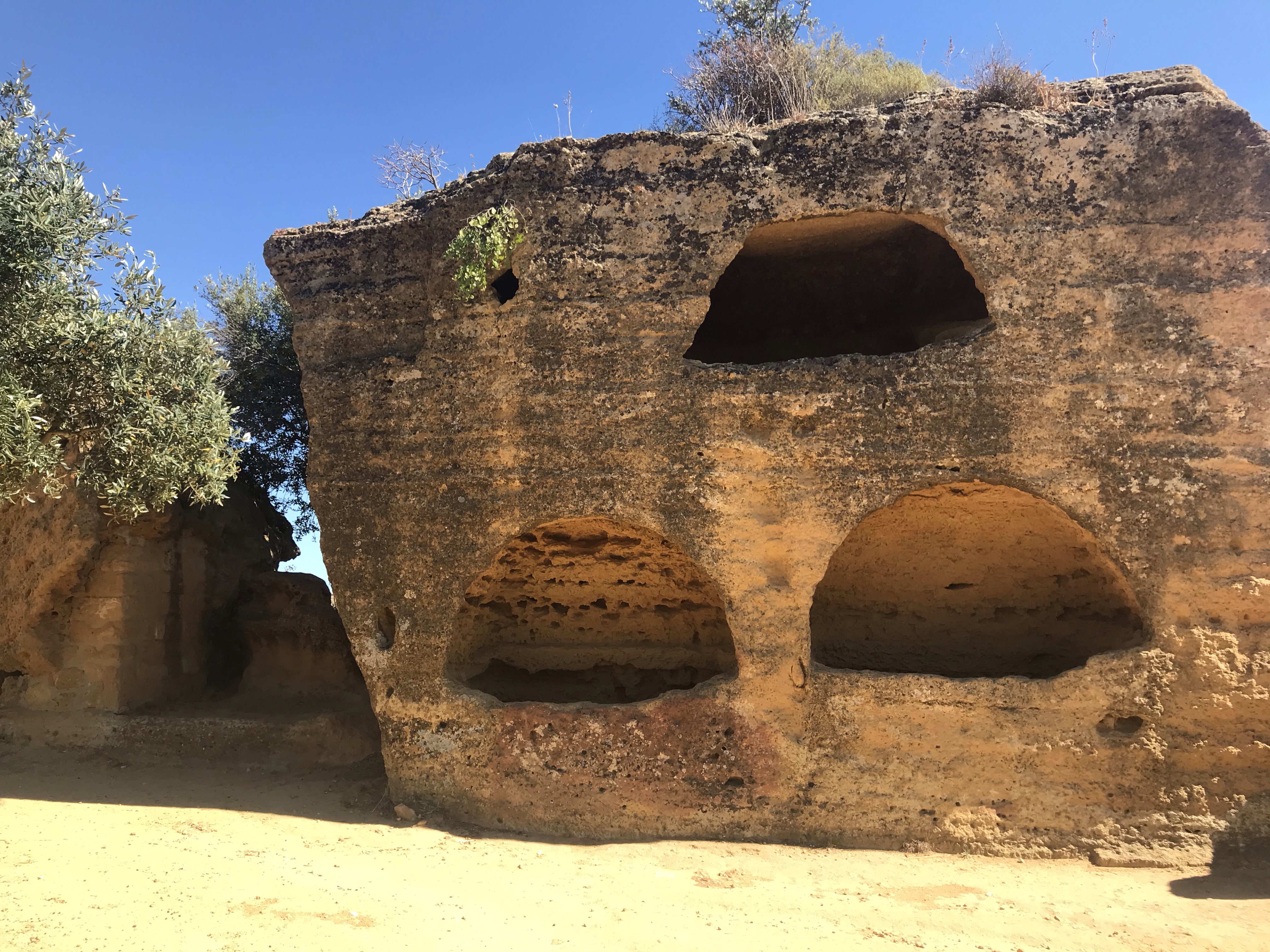
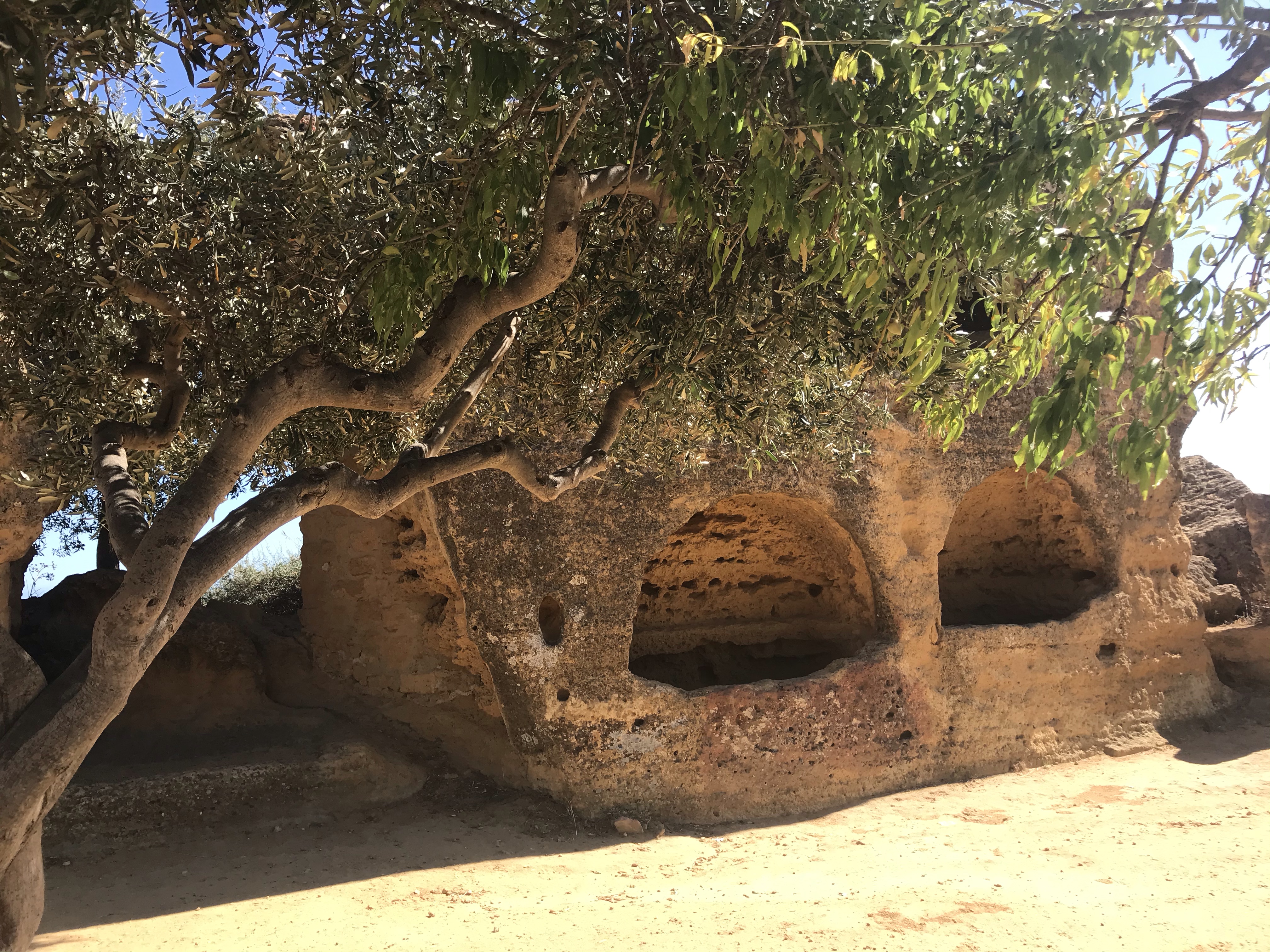
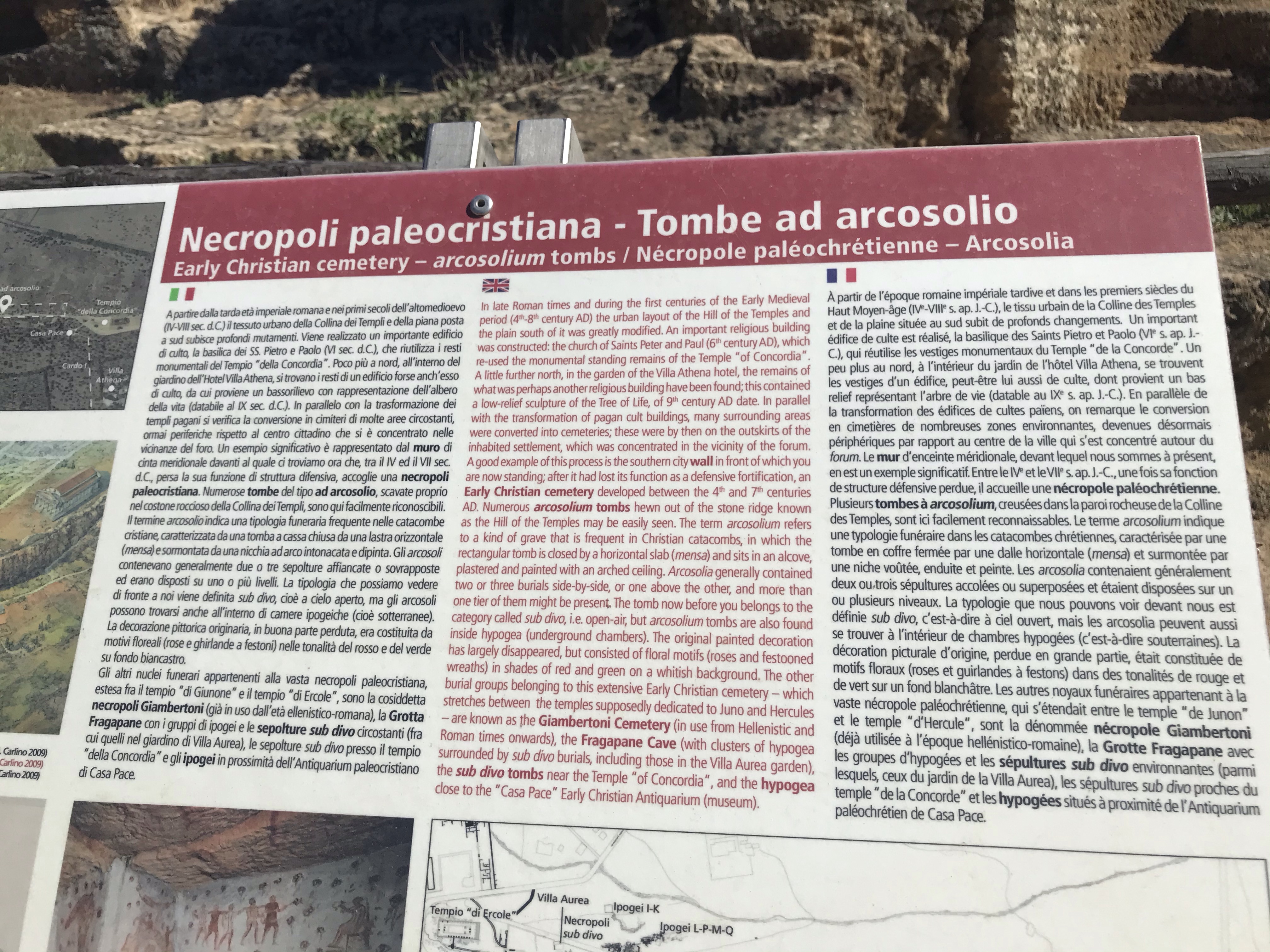
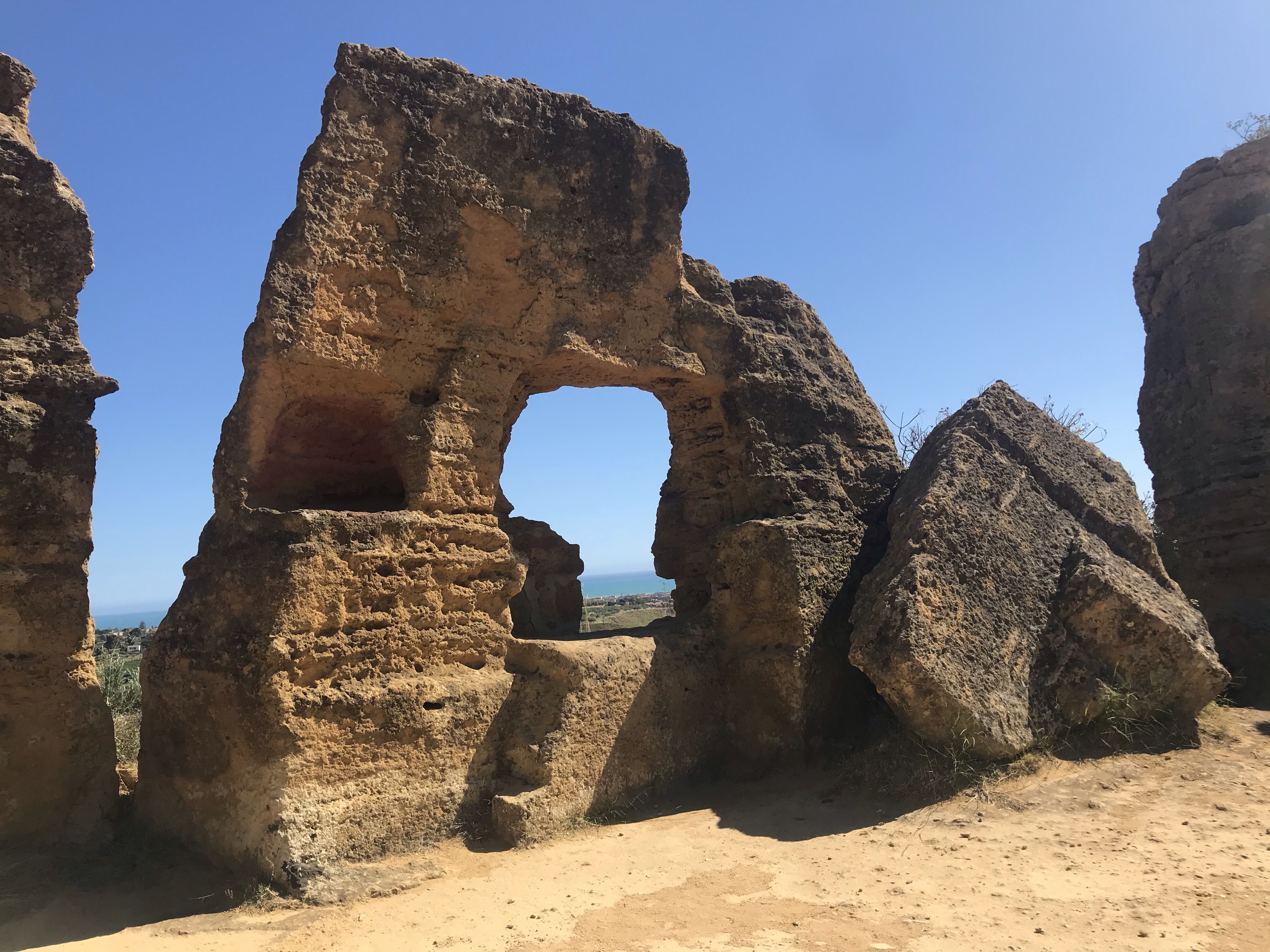
The photos below show what is believed to have been part of the ancient city wall. During the late Roman and Byzantine eras, it was repurposed into a cemetery as burial holes. Having seen historical Native American dwellings in the Southwest, I actually thought they might be sleeping quarters of the military guarding the wall. Hah! Good thing I read the sign!




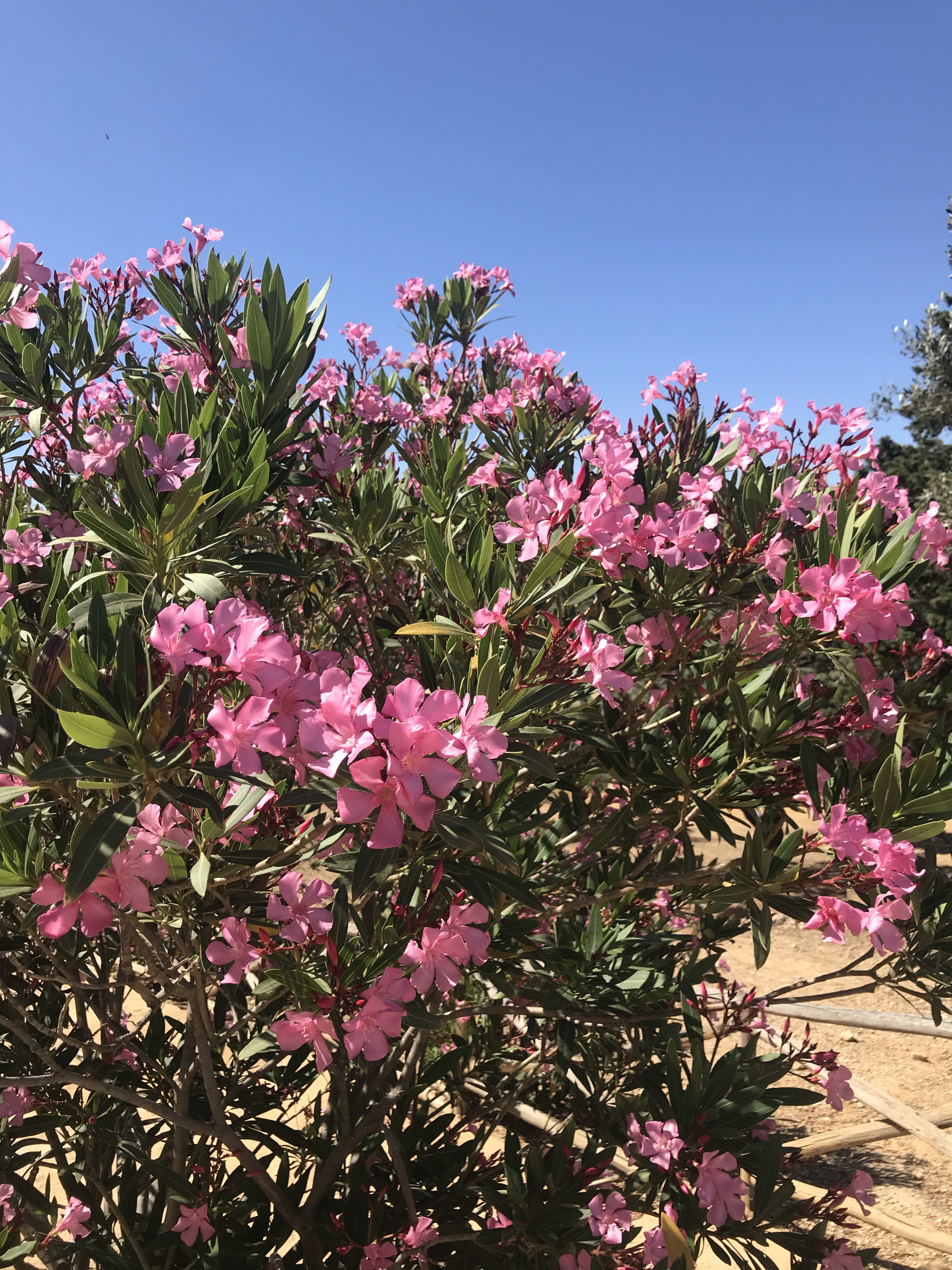
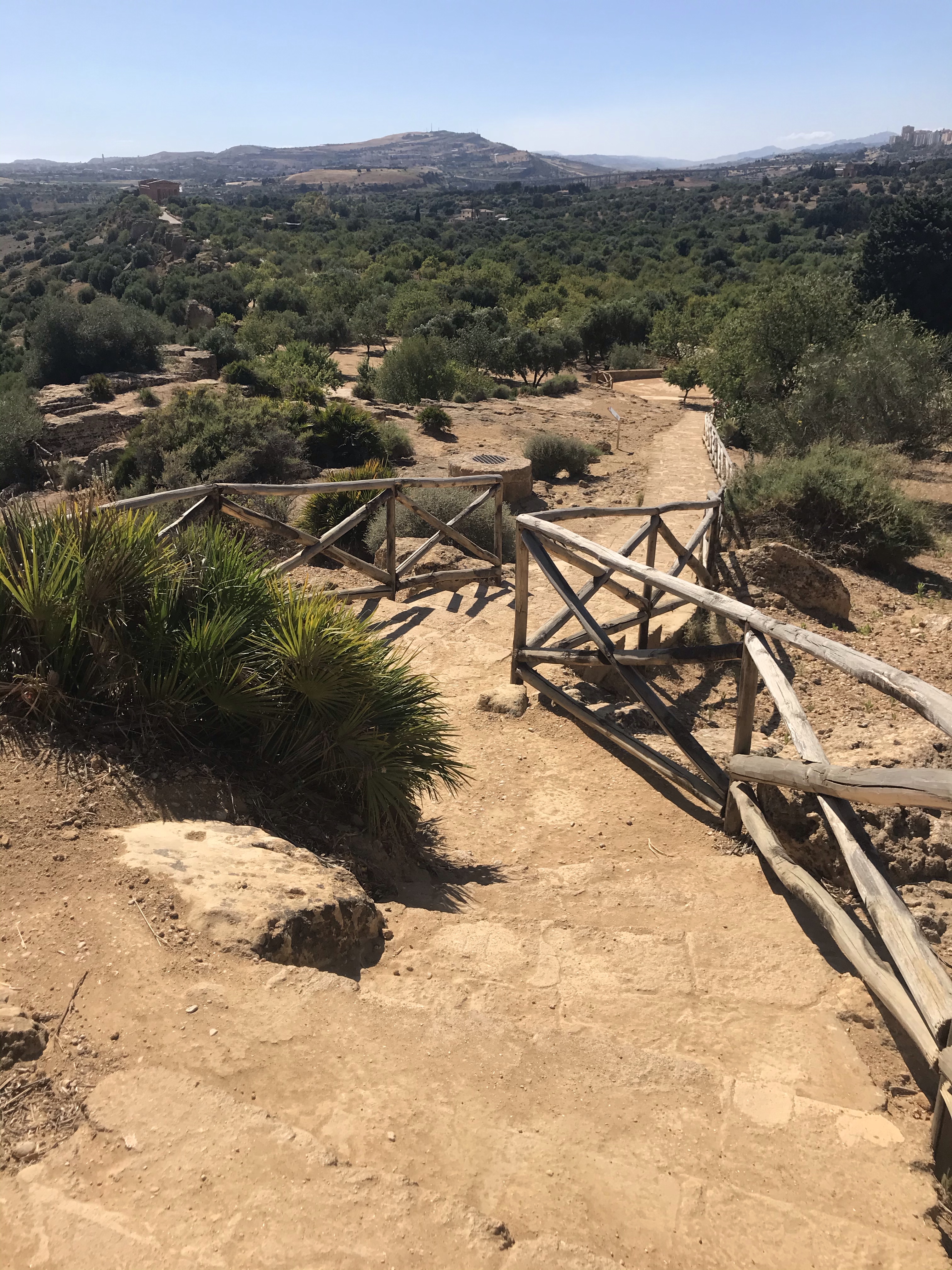
Of course there’s plenty of nature to see as well.
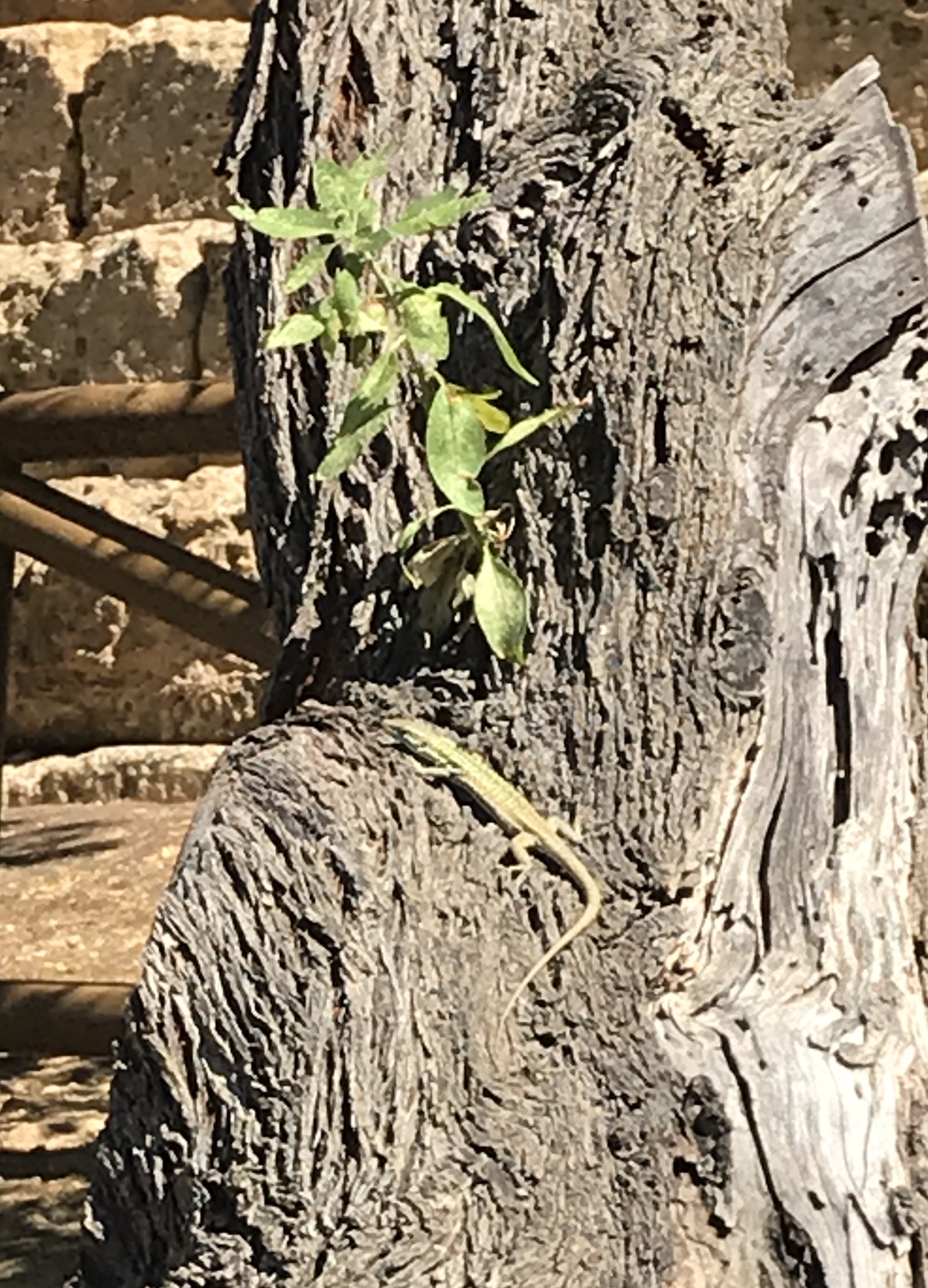


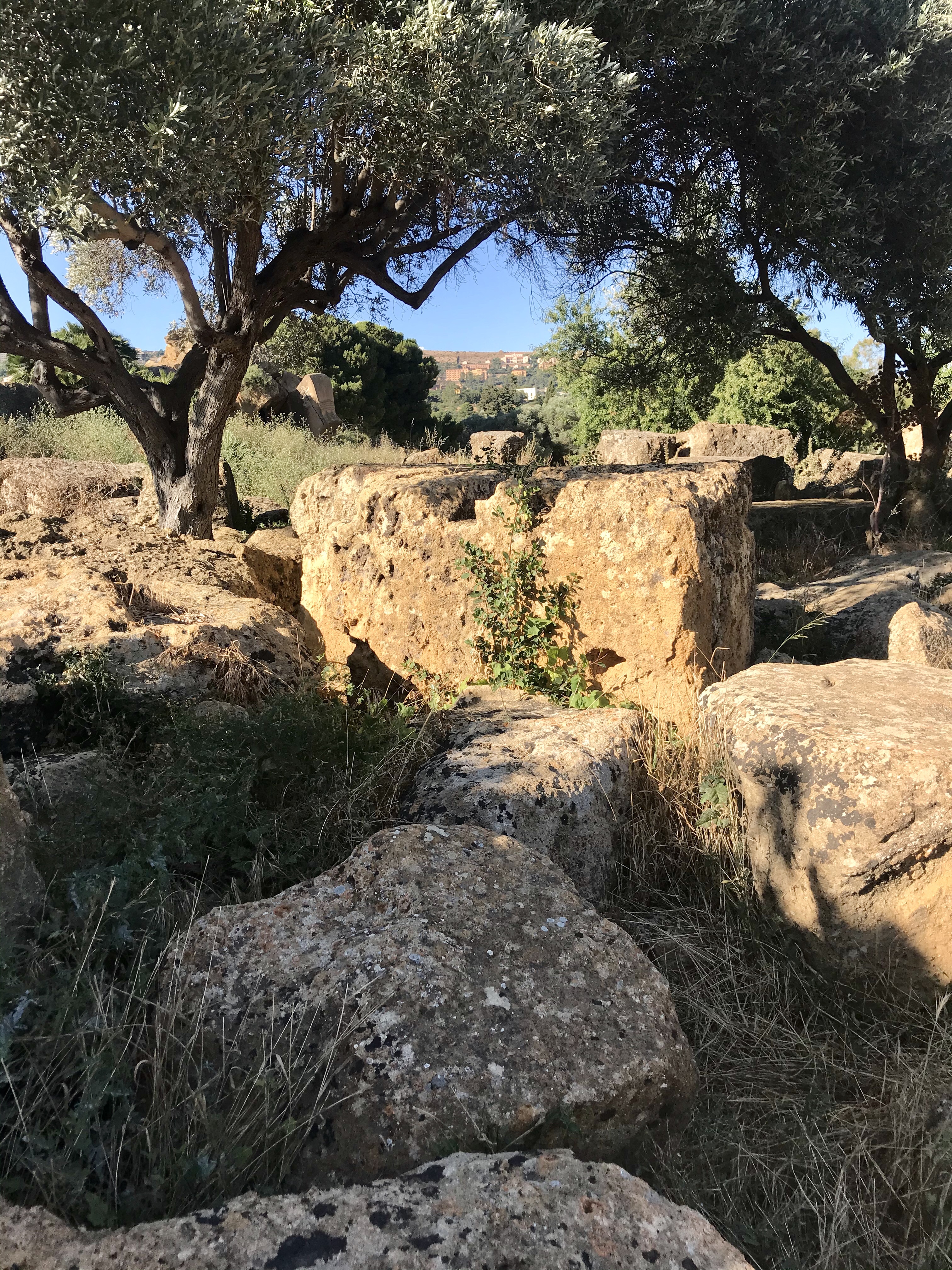

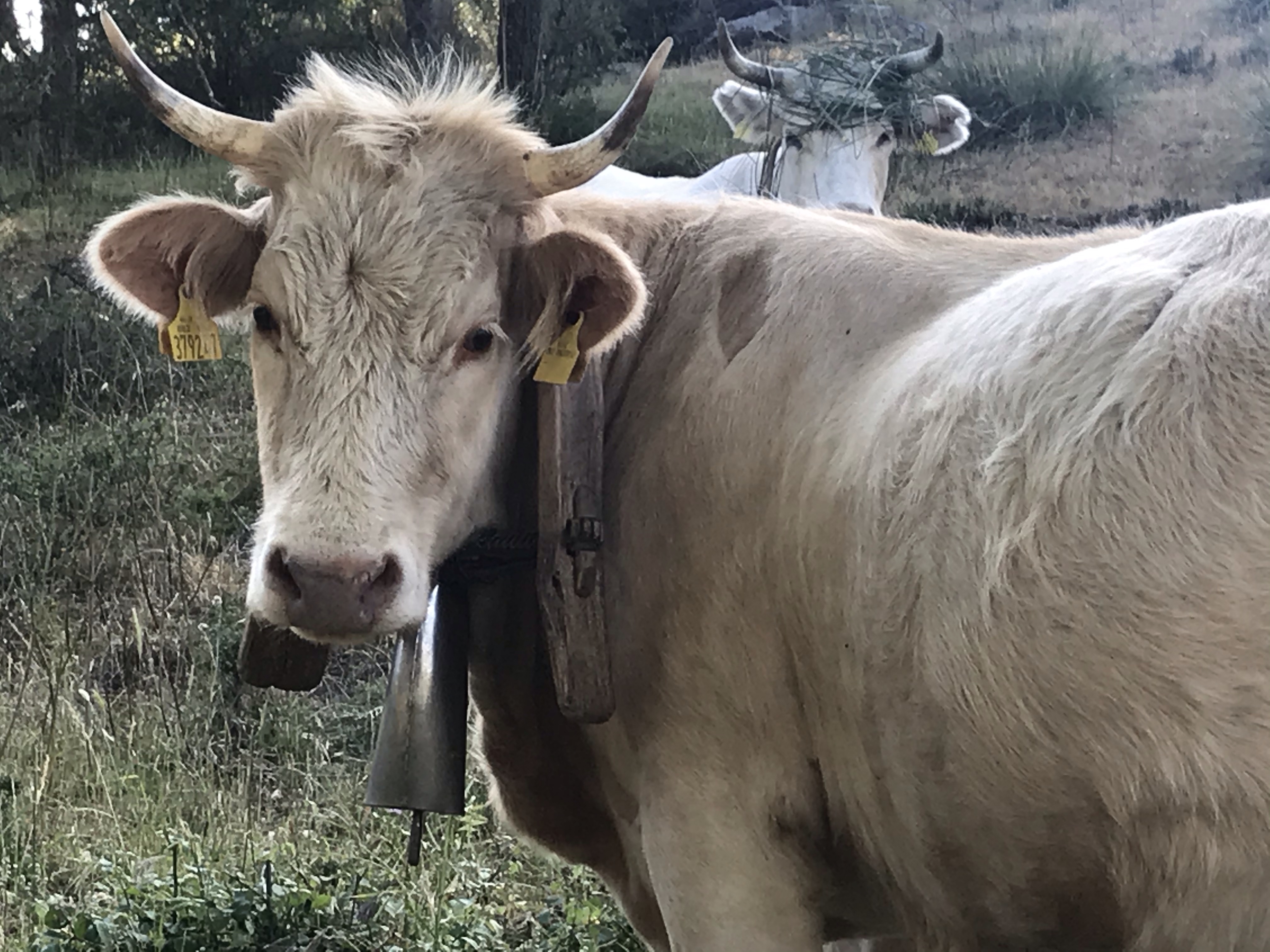
fantastic horns, don’t you think?
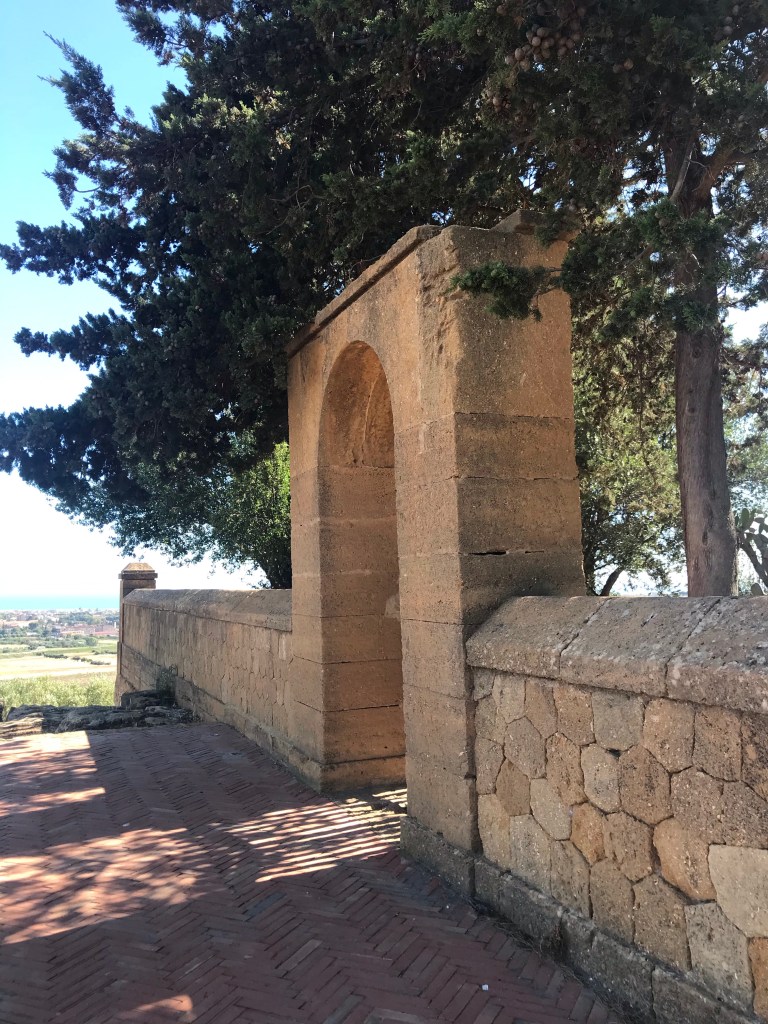


The Temple of Heracles

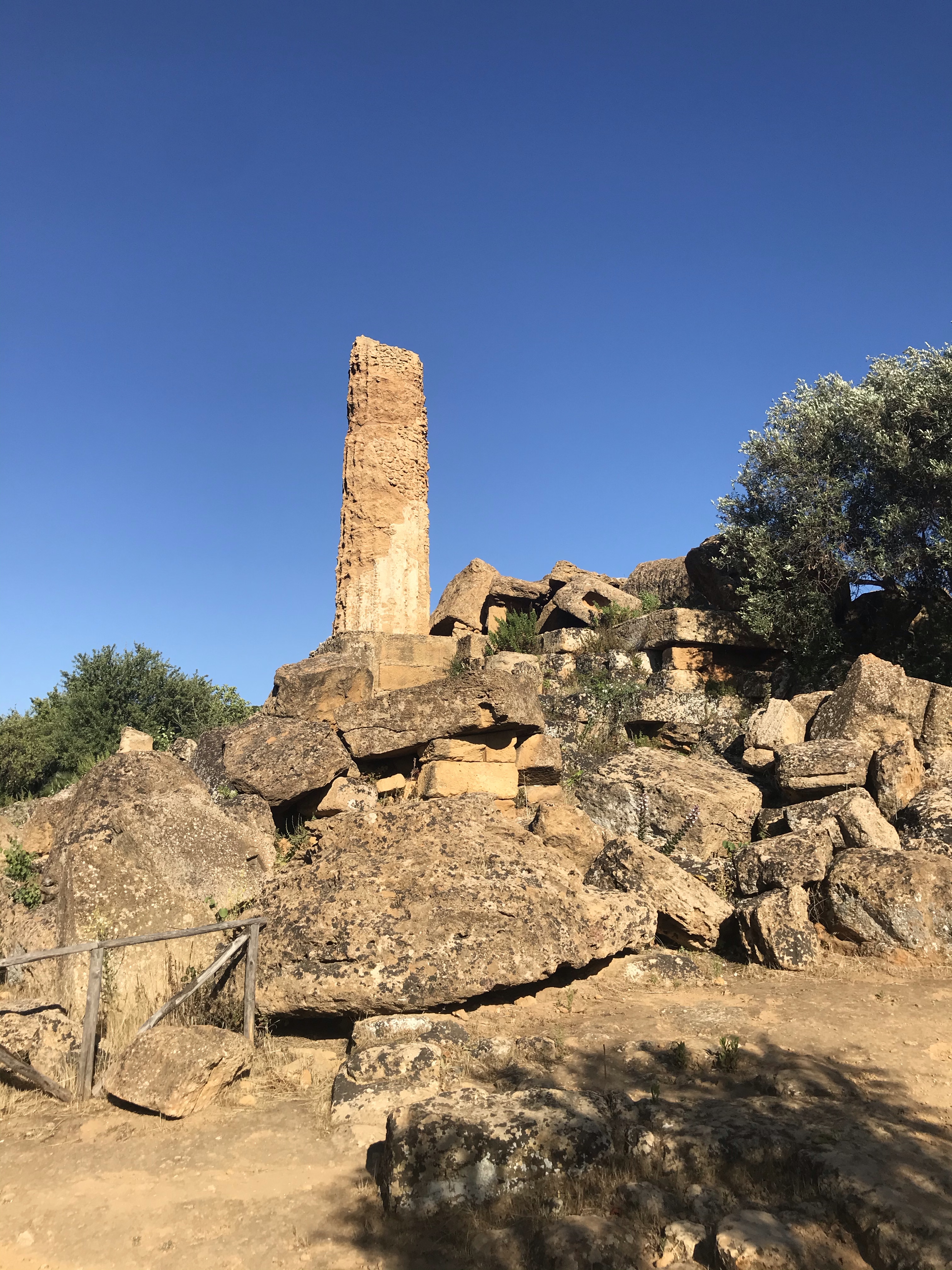


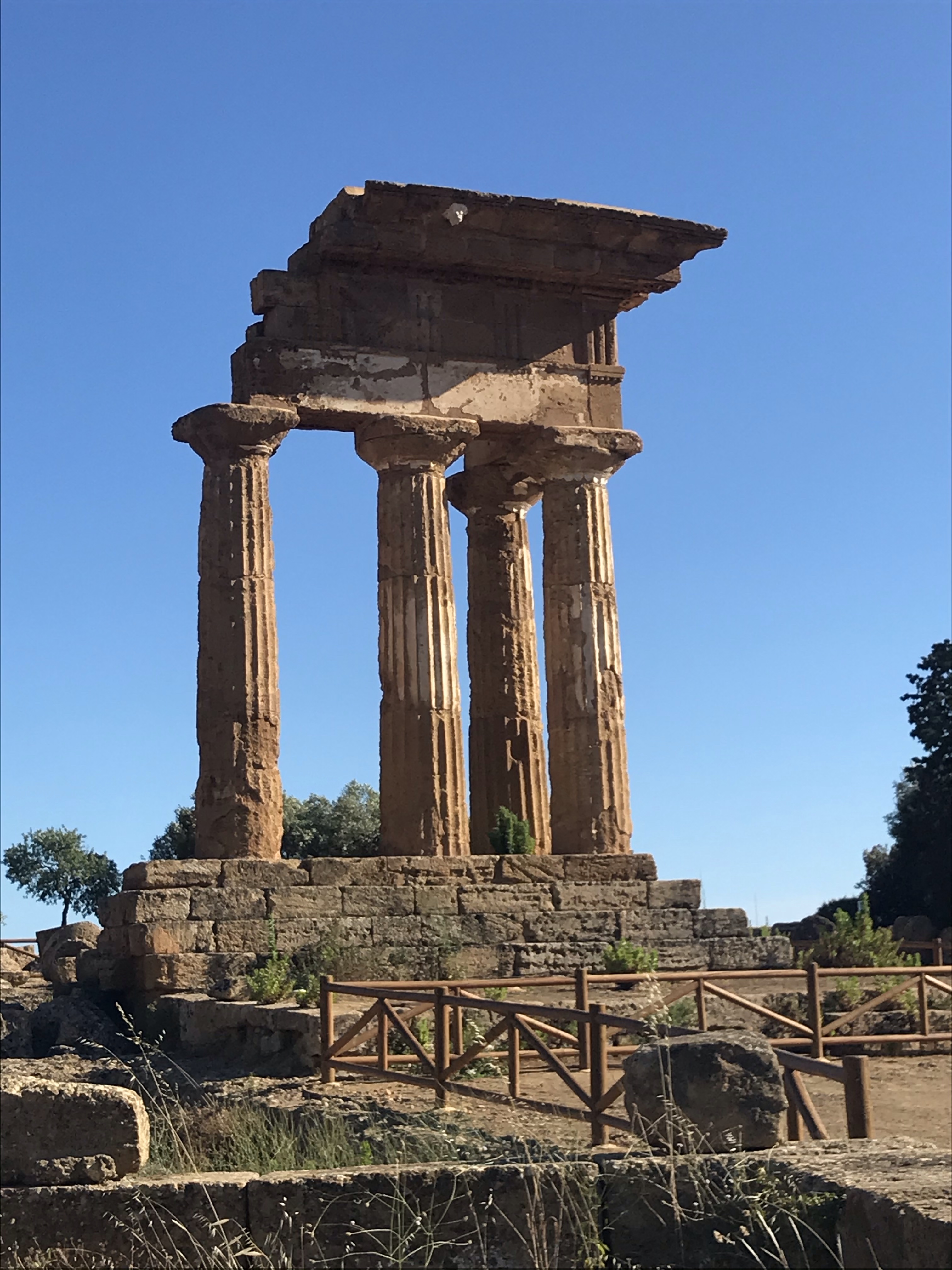
The Temple of the Dioscuri (Temple of Castor and Pollux). In Greek mythology, these twins were born of Leda. (Anyone remember the story of Zeus shape-shifting into a swan in order to seduce Leda?) Interestingly, however, these twins had different fathers. Pollux is the son of Zeus (making him a demigod) while Castor is the son of Spartan king Tyndareus. They had their share of escapades, the last of which involved stealing their cousin’s cattle, which led to Castor’s death. Pollux was inconsolable and pleaded with Zeus to grant his brother half of his immortality, which led to the twins becoming the constellation we know as Gemini. (Just had to throw a little myth in there for y’all.)
This temple, however, is a bit misleading. It was reconstructed in the early 19th Century using pieces from other temple ruins in “a vast sacred area” devoted to Demeter and Persephone. So strong was the cult of Demeter and Persephone that ancient authors referred to Sicily as Zeus’s wedding gift to Persephone. (Who the ancient authors are, I don’t know – but that’s what the sign said. And the idea of Persephone’s wedding… well, that’s another topic!)


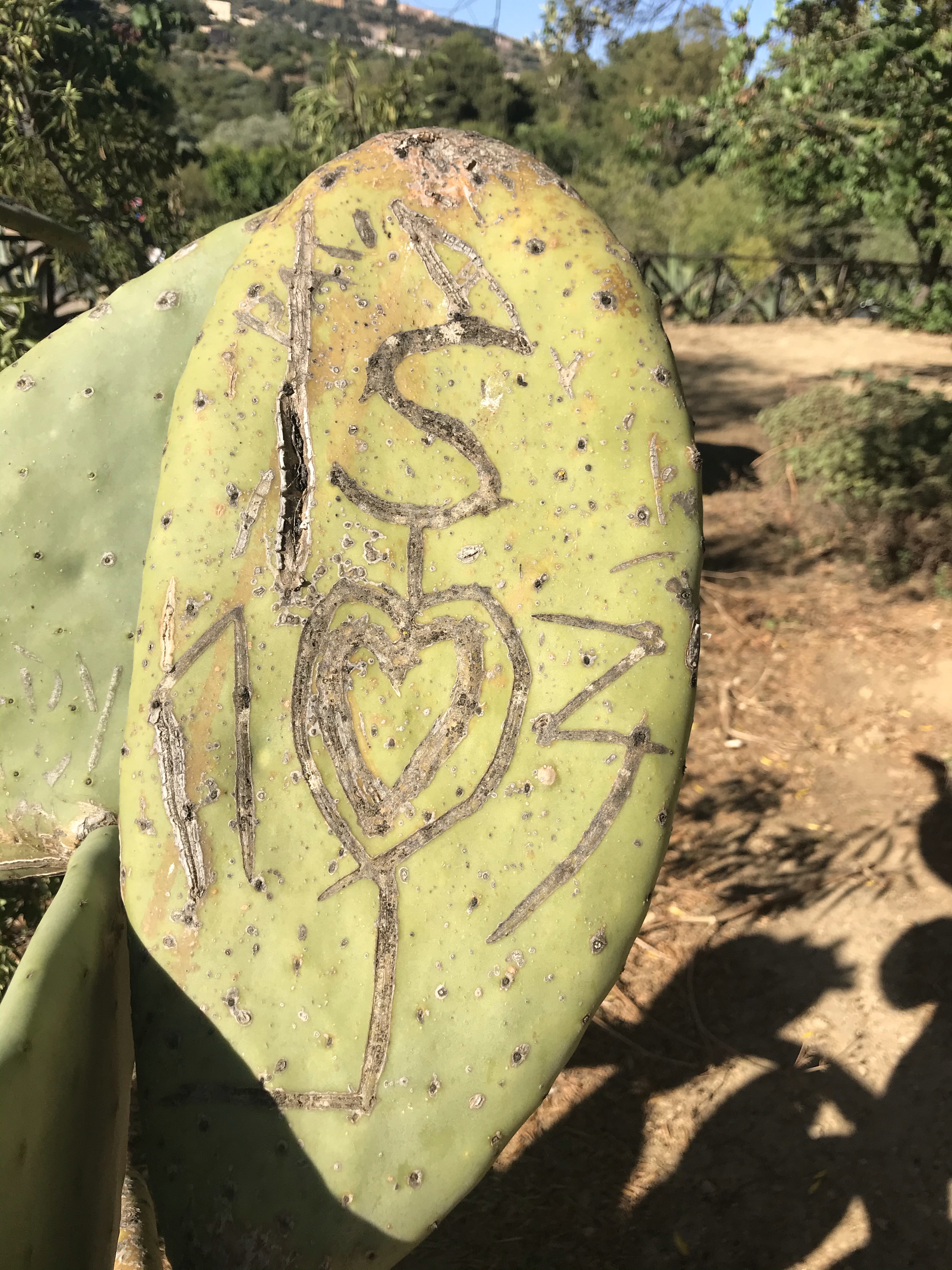
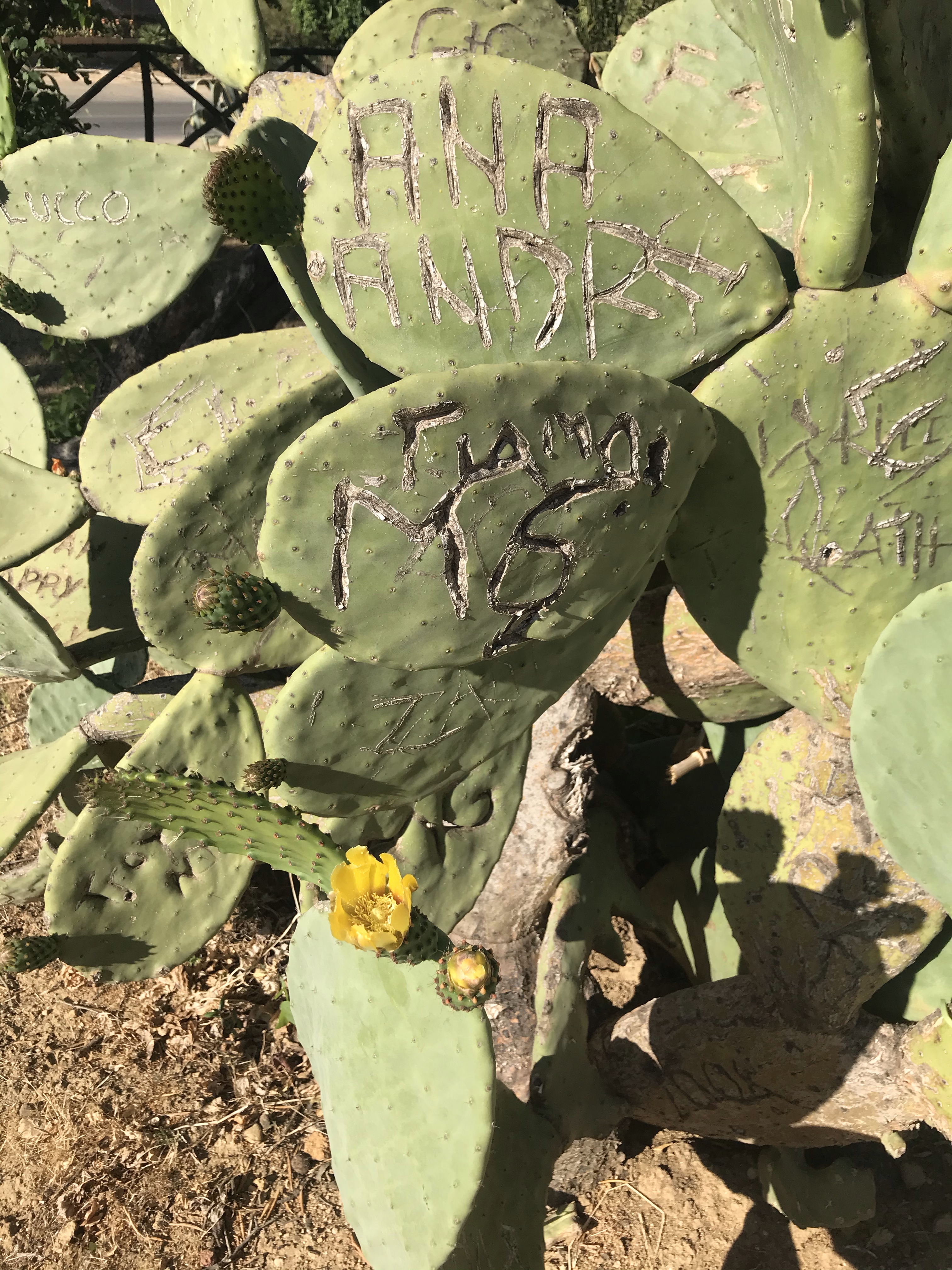
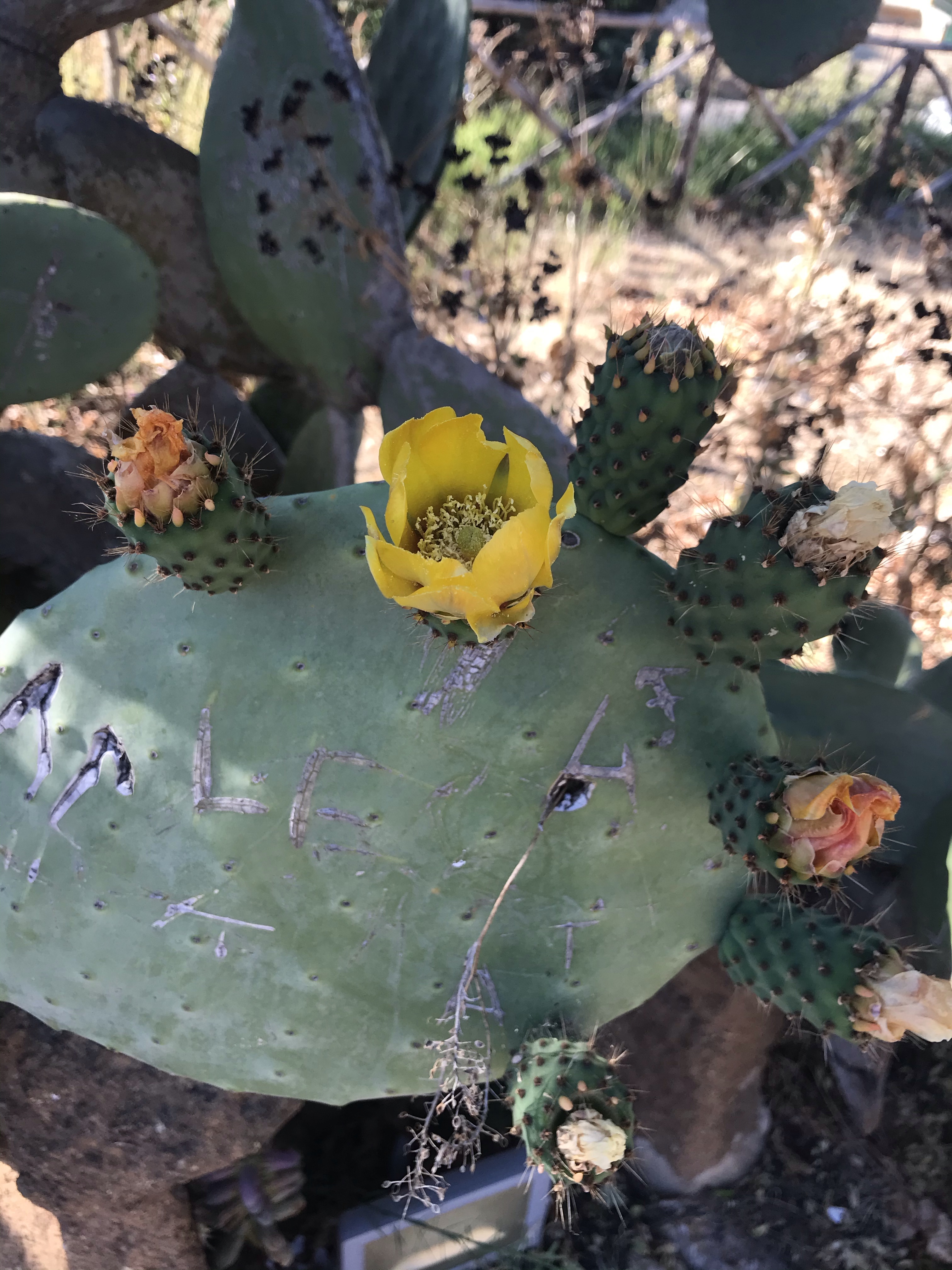
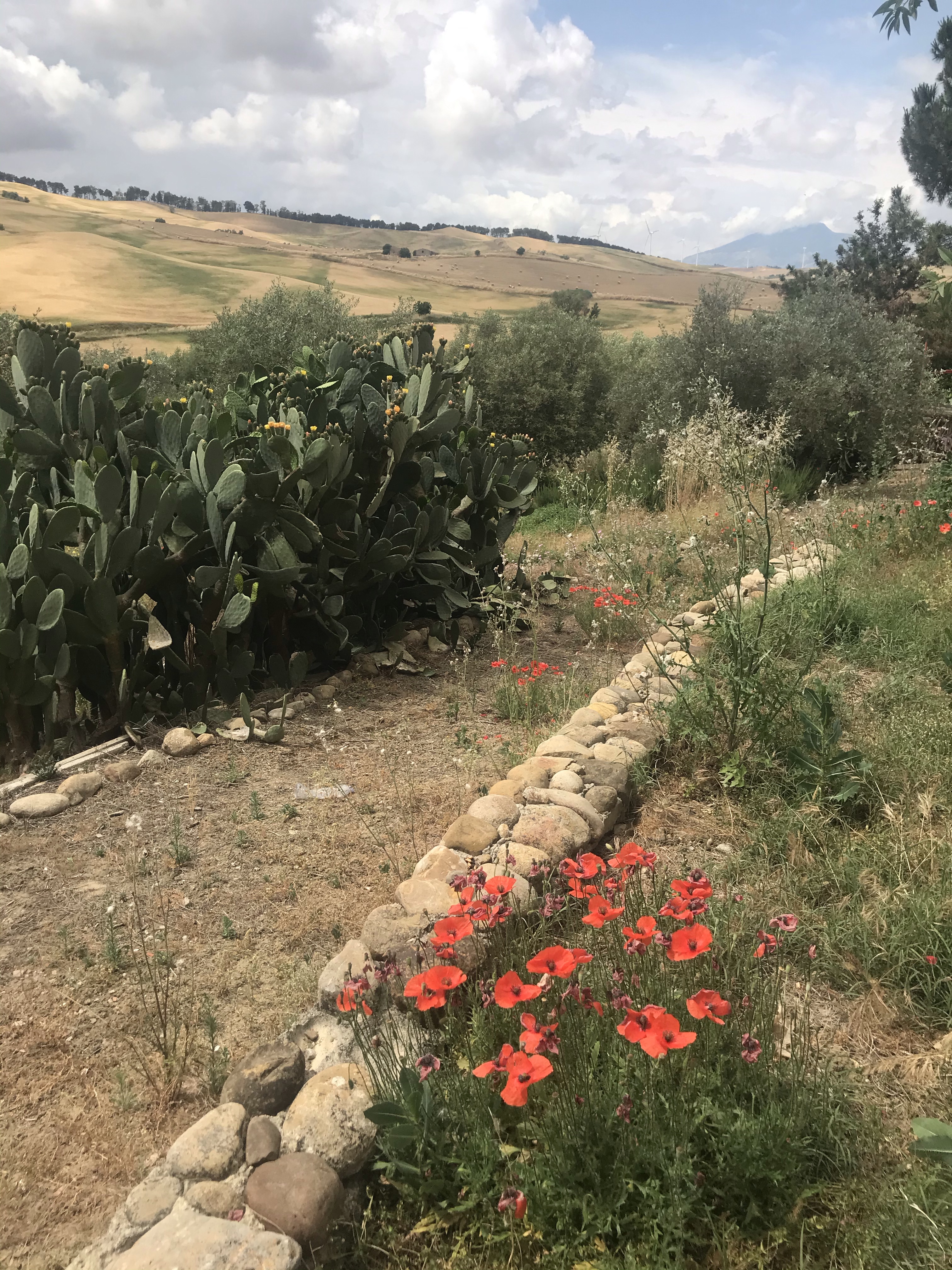
Cacti are prevalent throughout the park. Such gorgeous, majestic, old growths, continuing to flower. Here, however, they have been scarred. Almost every leaf I saw had been marred by human carvings. Deeply upsetting, this grieves me. These poor plants bearing the pain of human narcissism.




But I will end with hope, with something beautiful and a testament to humanity. The Garden of the Righteous of the World (Giardino dei Giusti del Mondo) is new, inaugurated in 2015. This memorial to martyrs and activists for justice, more than anything else in the park, moved me. Honestly, I expected to feel more when visiting the temples. More awe, I suppose. As I did at the ruins in Rome. But here, in this one absolute place that I had to visit on this trip, I felt no awe. Just interest. It was a learning experience. It was pleasant to be there, virtually alone. (I saw only 10 other visitors.) But here, at the Garden of the Righteous, I was moved. I read the names and their stories. And maybe that’s the lesson for me. History is always recorded by the victors. But it is the lives of the people, and the courage of those who fight, that is the foundation of all civilization. There would be no art, no monuments to human ingenuity and creativity, without the people themselves. Art (architecture, music, sculpture, paintings, literature) is a testament to what is good in people. It captures but a glimmer of our potential. May we always remember the people. And when necessary, fight for them too. And, if we’re honest, as the demonstrations around the world right now (prompted by the death of George Floyd) show us, the fight never ends.


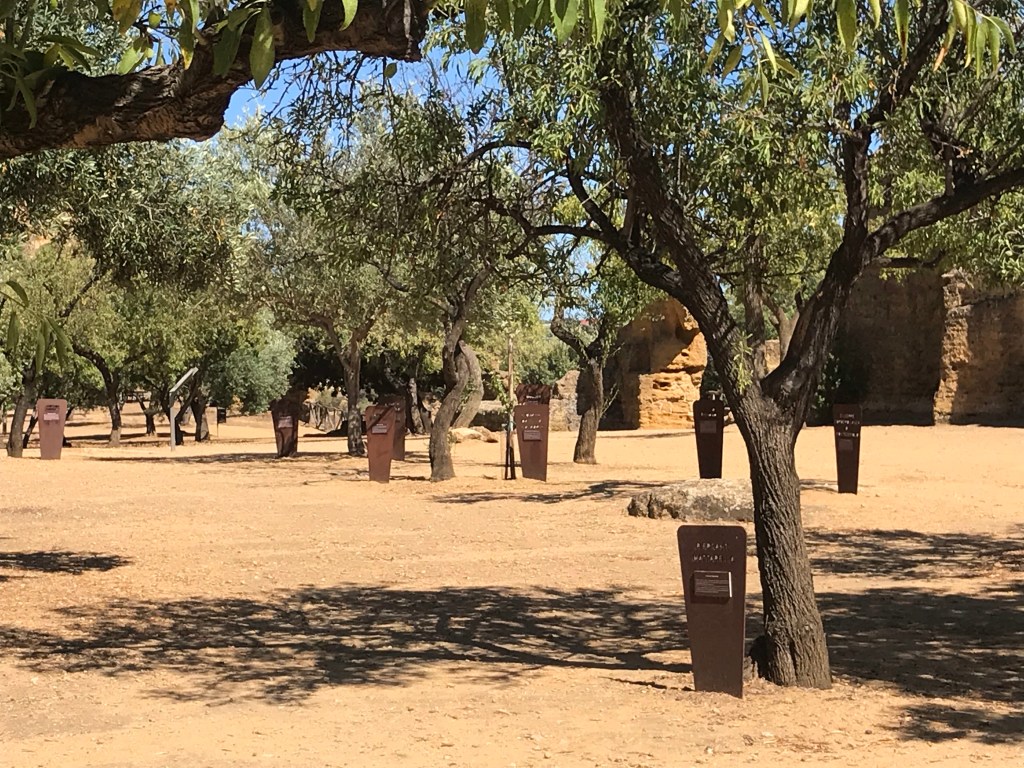

Garden photos
Scala dei Turchi

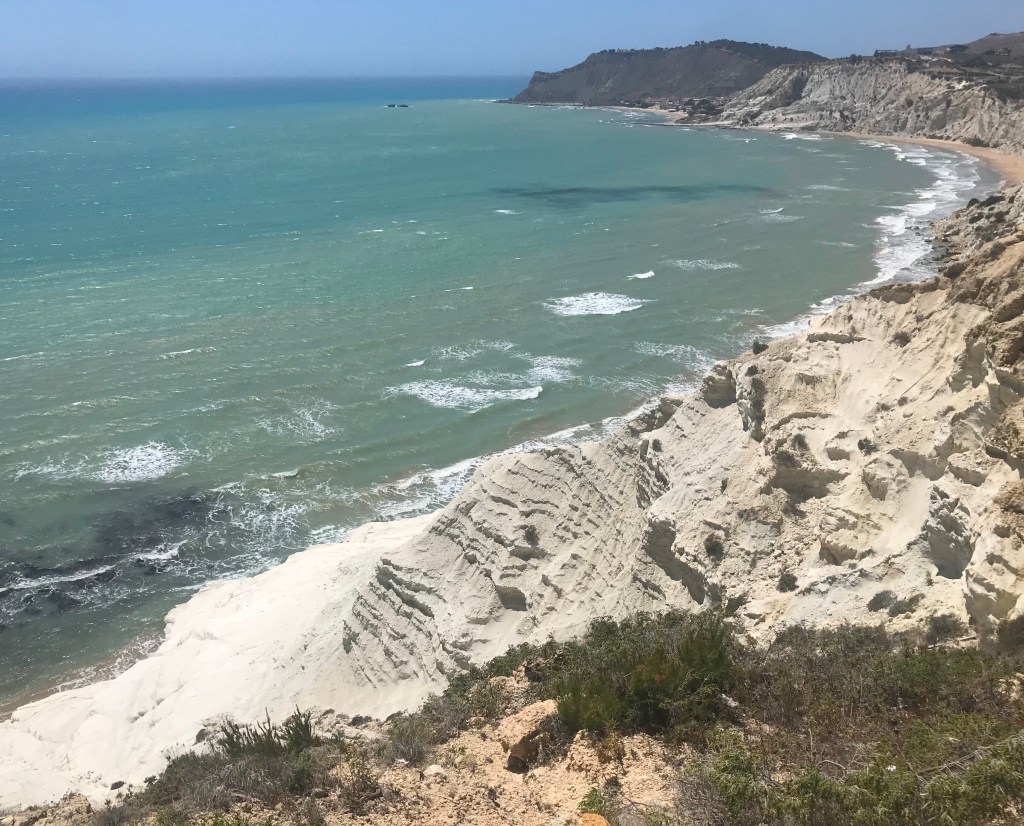
The Turkish Steps are white rocky cliffs on the coast of Realmonte, Sicily. This gorgeous natural site, blindingly white when the sun is shining, accentuates the colors of the sea. My photos do not do it justice. Normally a favorite tourist spot, and a great beach for sunbathing, it was (as most of Sicily curing Covid19) extremely empty of people when I visited on my way to Agrigento. Well worth the stop!

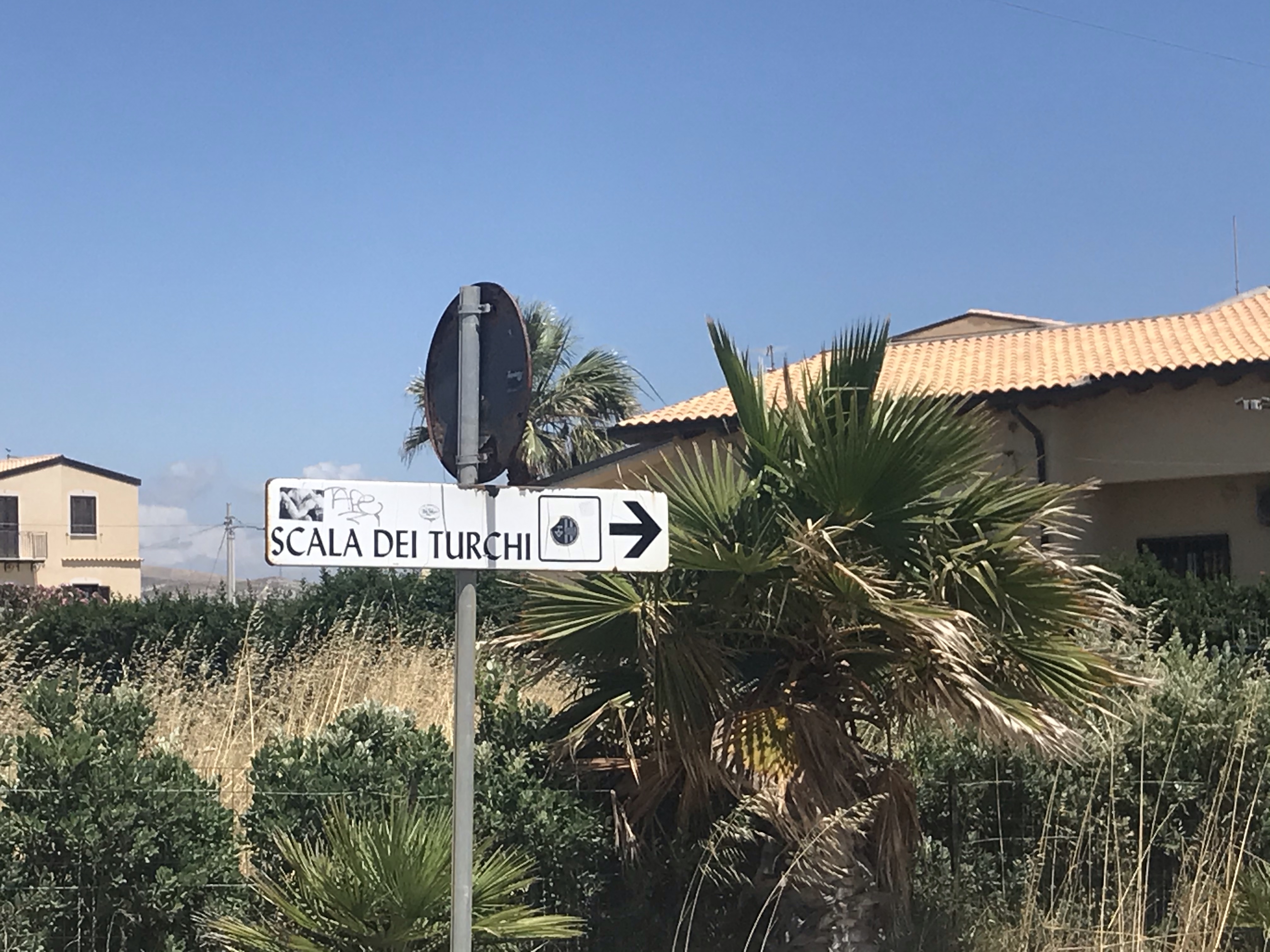


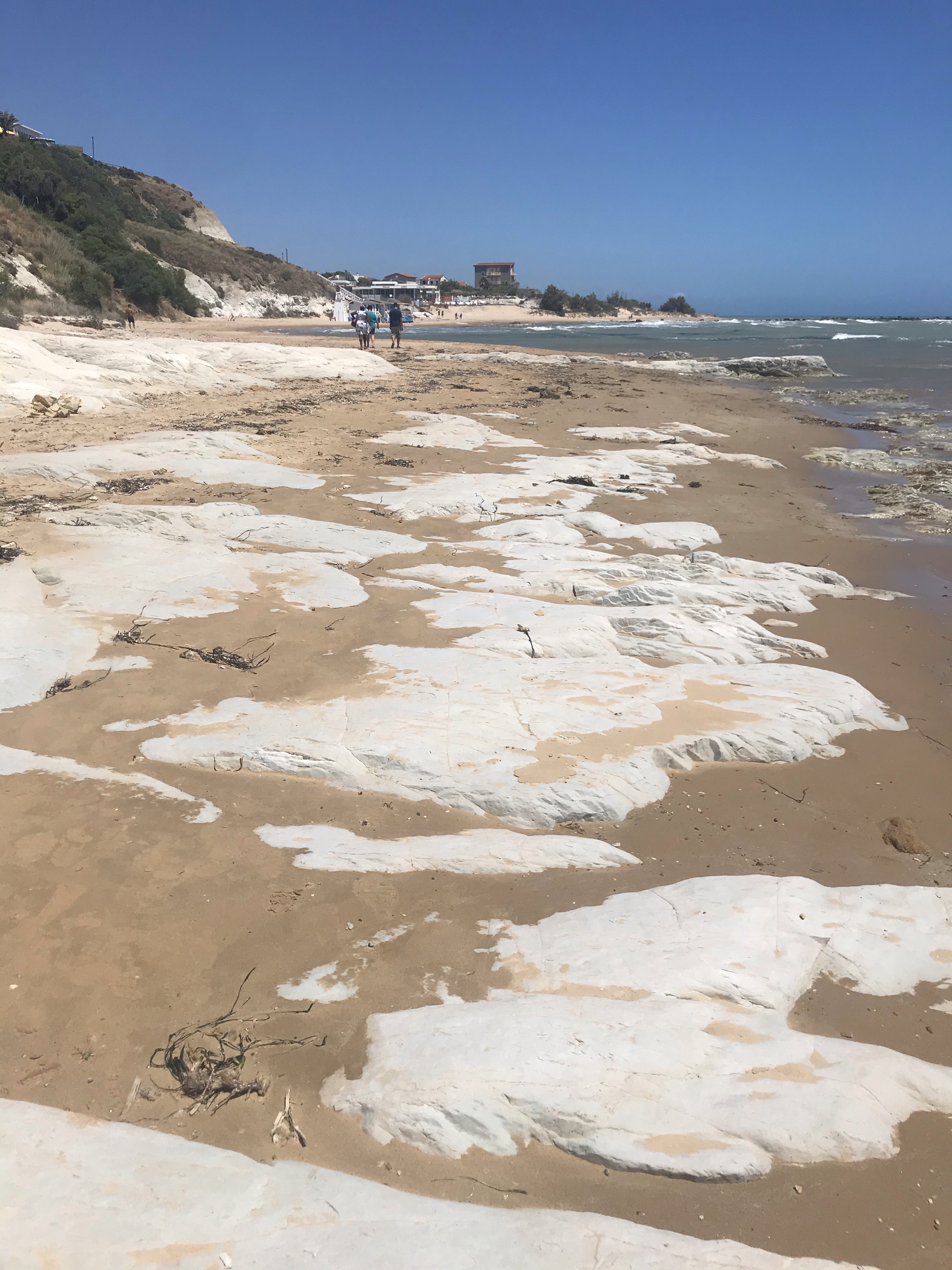
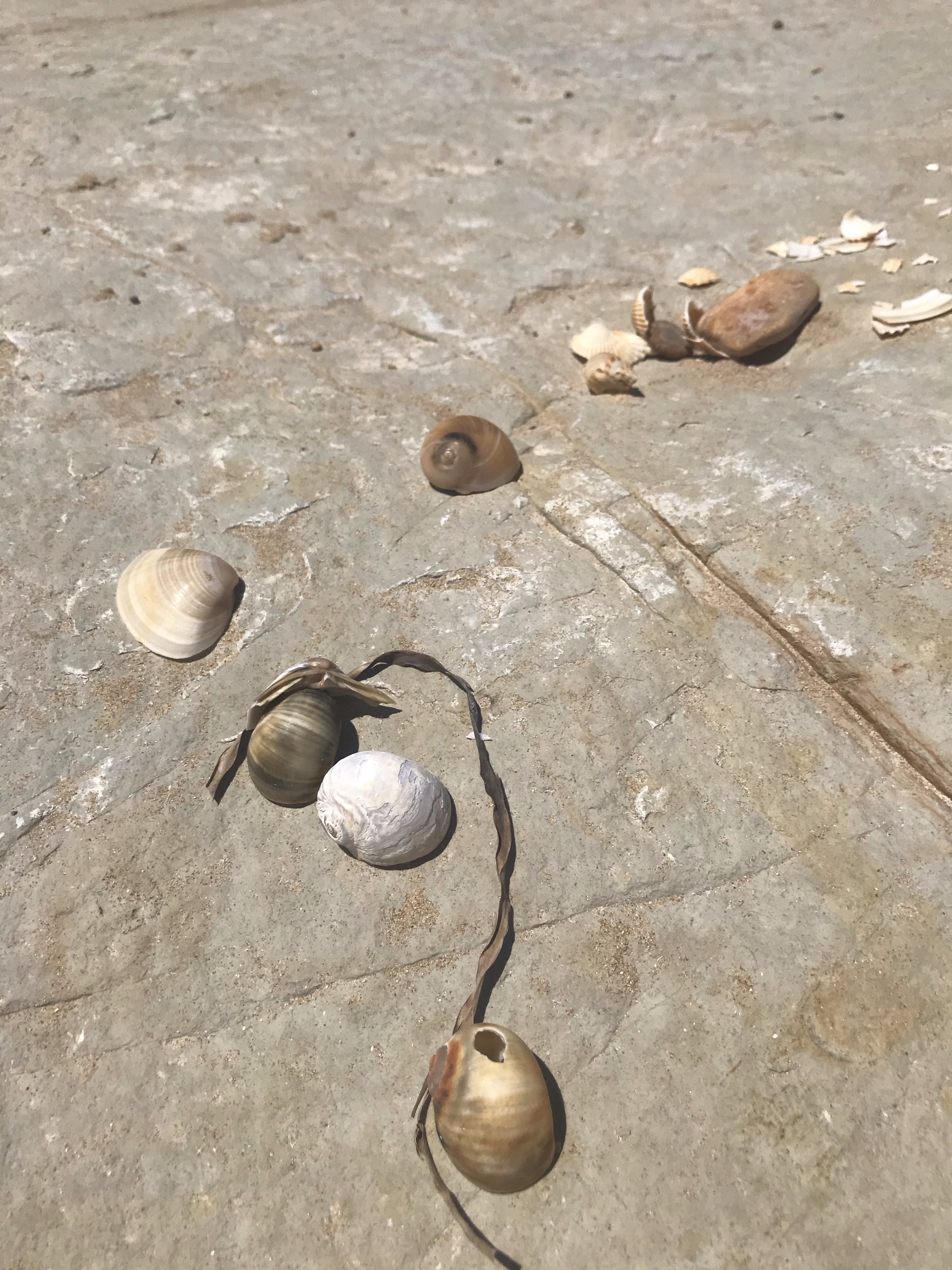


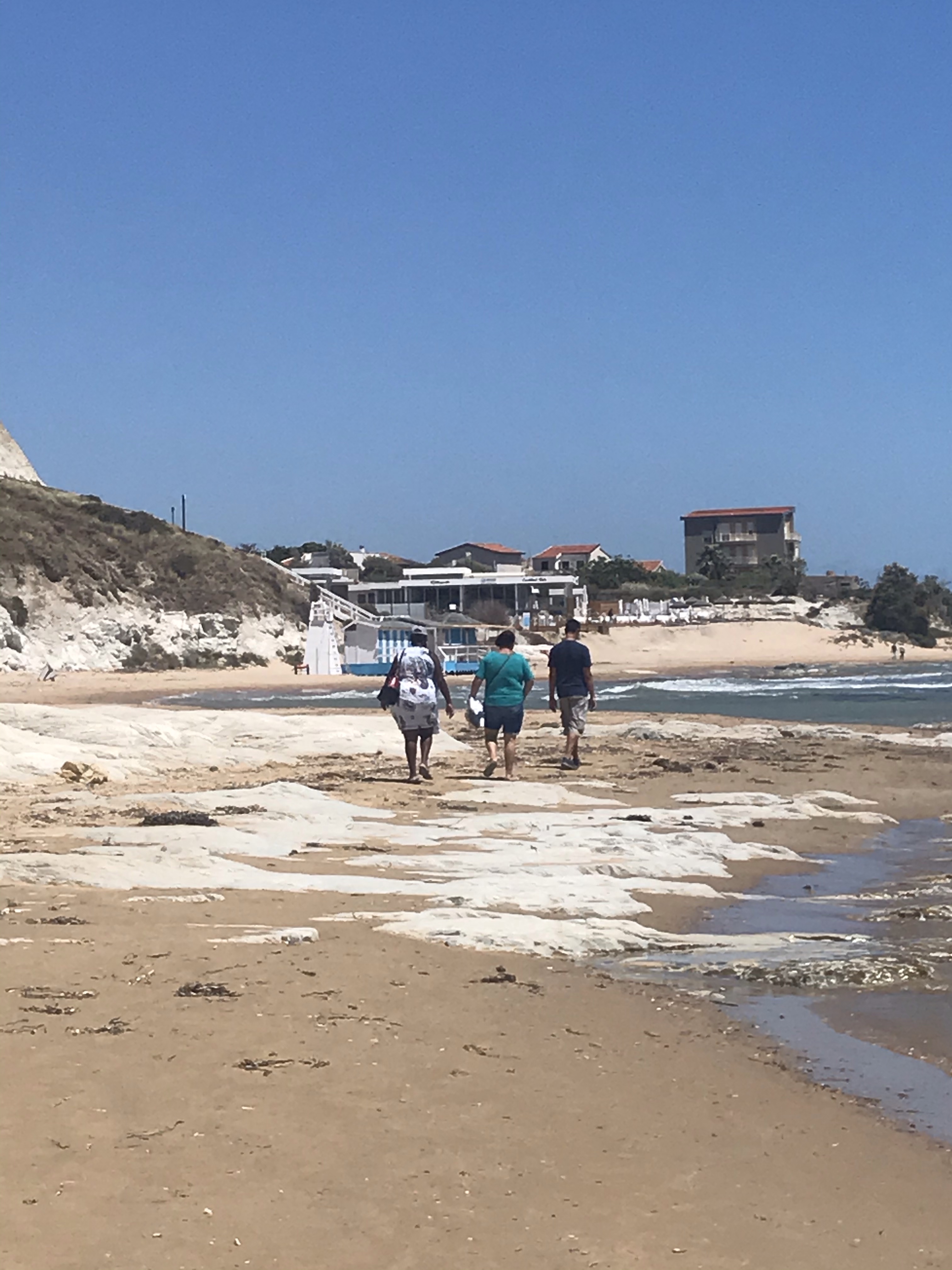
Free to visit and free to use the washroom, I felt obliged to purchase something at the top, where only one patron was sitting, having coffee. And of course, a dog.
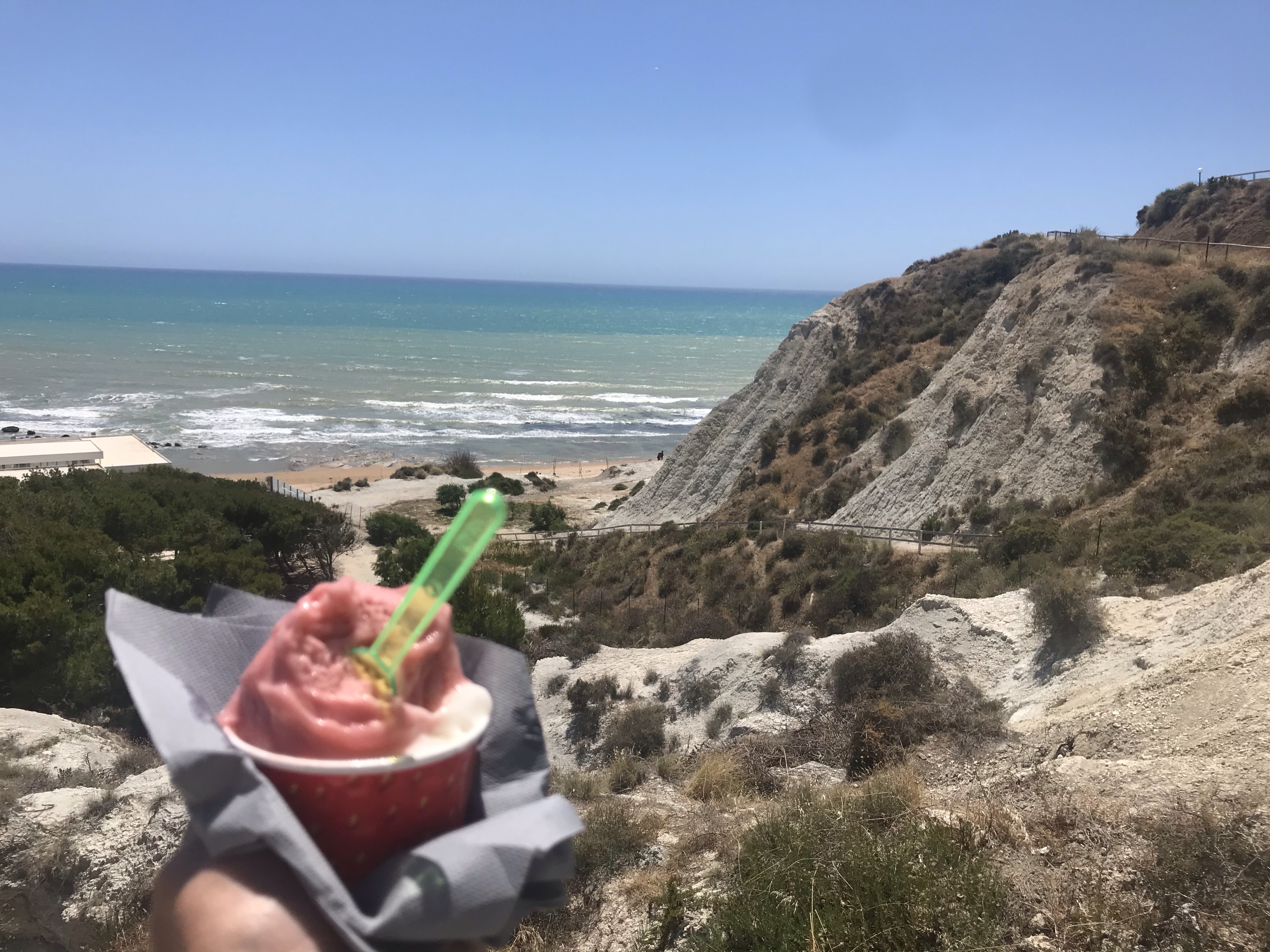

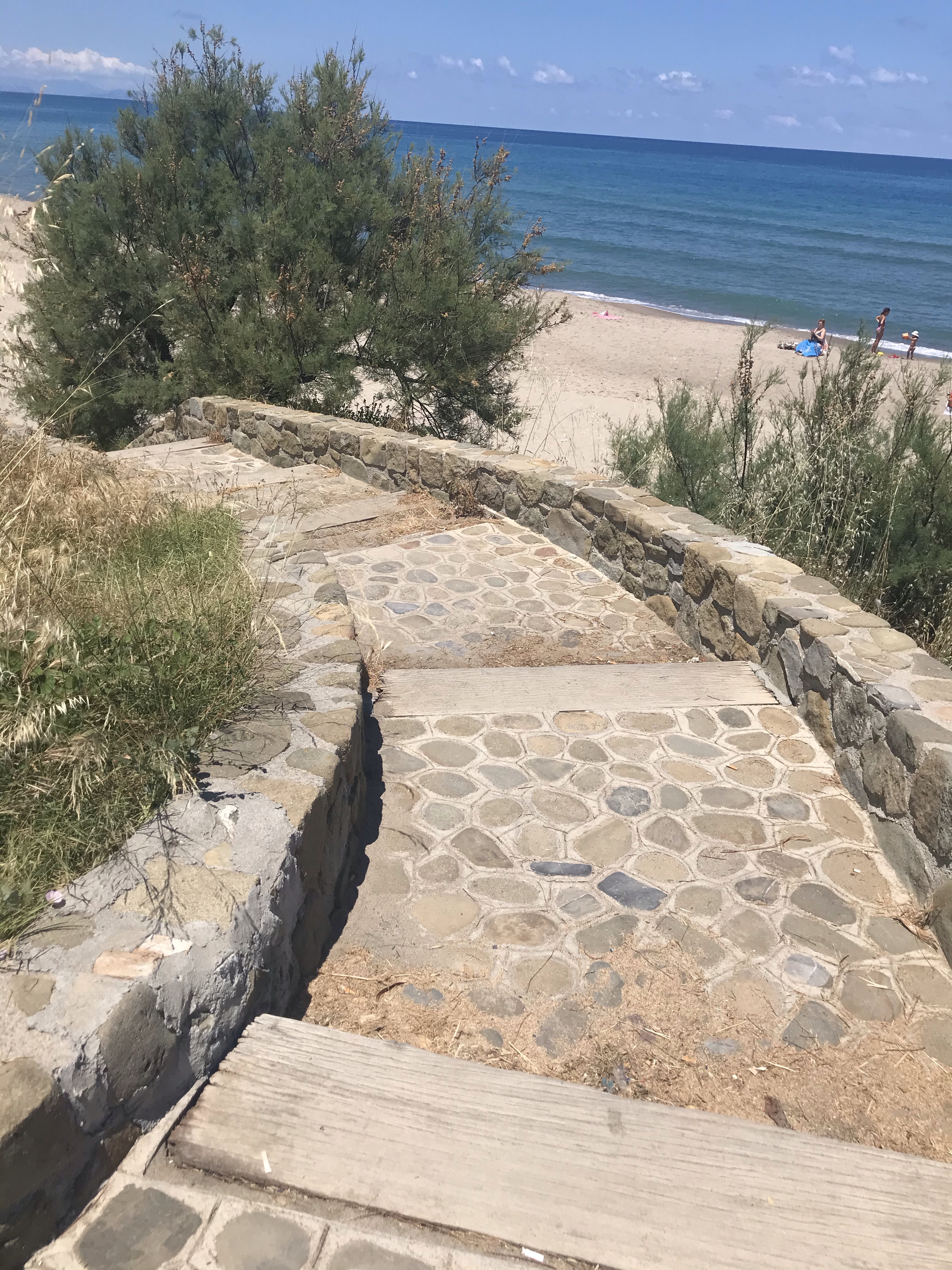
The path down to the beach is pretty cool too. Of course, set up for tourists to rest and imbibe in a beverage, but alas, there were none.


Path photos
What I’ve Learned from Travel

It’s often said that we travel to see new places and meet new people. To expand our lives and our point of view. I think even more importantly, we travel to learn something about ourselves.
Over the 12 days of Christmas in 1997/98, I traveled to Spain and France. Naturally, I visited the Louvre. I saw the Mona Lisa. I felt nothing. Except, maybe, disappointment. I remember thinking, this is it? Here I was, in this infamous institution of art, staring at this iconic painting and all I could think was… well, ok, at least I’ve seen it. (Similarly, I felt the same when I saw Michelangelo’s Pieta in Rome recently.) The dear friend with whom I was traveling seemed to understand. He asked me, “When was the last time you saw something that set your heart on fire? That gave you the experience you were hoping to have now?” Immediately I knew the answer. Venezuela.
In 1997, I spent several weeks backpacking through Venezuela with a guide. At one point, he announced we would trek to “the abbeys.” I expected some old cloister ruins. It was the most physically taxing thing I’ve ever done. Up up up an extremely vertical hike and then across and over and across a seemingly endless plain. It was no less than an eight-hour trek, maybe longer. I grew increasingly weary of seeing his back in front of me. And then he said, “Drop your pack. We’re here.” Here?? Where?? I saw nothing, certainly no ruins. Yet relieved to release the burden from my back, I did. He beckoned me forward. Maybe only 12 or so steps. And there it was.
The abyss. I was standing over the Brazilian rainforest. I was at the center of the world. The earth was breathing up at me with a wind so strong, it pushed the hair off my face. I swear I could hear every living thing below that chirped and moved and slithered. It was amazing. More than amazing. I swear I felt the heartbeat of every living thing below me. The vibration of the earth. To this day, I have no words for it. But I can still feel it.
We were visiting the abyss, not the abbeys. I misunderstood his words, but the meaning, the metaphor… are the same. Here was a sacred place. The most sacred of places. The unknowable, the unfathomable, only reached through a long and strenuous journey.
I came to Italy for a 6-week holiday. I have studied the humanities my entire life. I was raised, even nursed, on classical art, literature, and music. Italy is the inspiration and birthplace of so much beauty created by man. It seemed obvious that I would go to Italy to see these things: to visit Florence, Sienna, maybe even Venice. But no. I wanted to spend time in the country, in the South, in Sicily. I couldn’t explain it rationally, but I knew, I just knew, this was were I needed to be.
Luckily, I made it to Sicily just as the mandatory quarantine began. Now, after 11 weeks, I am free to take my holiday, to travel the country. It occurs to me that this may be the time to visit Florence, to meet my new friends residing there. There will never be a time like this – to see the city without so many tourists. But as for the museums, the art… I am indifferent. What really draws me is the Tuscan countryside. The landscape of Umbria. Or the lemon groves around Sorrento.
For the moment, I remain in Sicily. I have a car. There are so many notable places of interests to visit. Towns I’ve been told I must see. I’ve seen some. I forced myself to visit Monreale, to see the cathedral, and I’m glad I did. A few days ago, I forced myself to visit Cefalu. As soon as I arrived, I wanted to leave. Too many people, SO many people, almost no one wearing masks. Ok, this is going to sound crazy, but I actually burst into tears. It was too much. Yet, after all the effort of getting there and after all I had heard that this city must be seen… I sat by the sea and pondered, calming myself. I found a route above the city that would take me to the cathedral. I gathered myself up and went. Again, I’m glad I did. And after that, Castelbuono. Again, very much worth the visit. Especially since I was able to score locally-made caciocavello cheese with pistachios and various marzipan treats. And yes, a fresh cannolo.
Now I am back in the country, sitting in the sunshine and breeze at the centuries-old stone cottage where I am staying for a week. I am more than content.
I have seen many beautiful things in my life. And yes, it can be argued that these things have all enriched me, expanded my appreciation and understanding of humankind and history. But what really thrills me, what sustains me? The simple things.
Windows, portals, and doors. Old buildings with crumbling facades, some still functional, others waiting to be repurposed. Animals roaming freely. Wide open spaces filled with growing things: trees, flowers, grains, and vines. Green landscapes. Winding roads through valleys and mountains.
People. Simply being. Not crowds and certainly not tourists. People living, more so than doing. The opportunity for authentic exchange: smiles, nods, conversations. Even, slowly as the threat of coronavirus subsides, the traditional kiss on both cheeks and big hugs.
Finally, I have come to understand this about myself: the very thing I have long known but skirted around, refusing to completely embrace due to my upbringing and education. I can live without seeing anymore art – what the world calls classic and lives in museums or behind glass cases, roped off, at a distance. But I cannot live without beauty. The simple regenerative and everlasting beauty of life and living.
Will I visit more cities in Italy? Perhaps. But my life will not shrink if I don’t. Ah, but the country! Amidst the blooming colors and vibration of that which grows and lives, here is where I expand. Where I breathe comfortably and calmly. Whether traveling or residing, this is what I need. This is home.


Cefalù and Castelbuono

Cefalù is considered one of the most beautiful towns in all of Italy and is certainly the most visited city in Sicily. And for those reasons alone, and since I was told the city literally overflows with tourists in the summer (and I better get there before they arrive), I took the trek on Monday to see what I could see.
There’s probably a lot that could be said about this town of 13,000 full-time residents, a UNESCO World Heritage site that includes a medieval town and long beautiful beaches. Or about La Rocca, the huge rock mountain at the center of the city, said to resemble a snail that keeps guard over the town. Only, I’m not the one to say any of it. I honestly didn’t see that much.
I arrived on the main street, which was filled with people. And I do mean filled. An officer directing traffic while the sidewalks bustled with crowds. I simply cannot image what this town is like when tourists arrive. As it was, people were very close together and maybe only 10% were wearing masks – mostly around their necks or arms. The beach was definitely better, only in that it allowed for social distancing and the weather was good.

The truth is, I was tempted to leave. I was rattled by all the activity. But since I had made the effort to get there, I figured I should make a little more effort to actually see something. I wanted to hike La Rocca, but the trail was closed. I found the cemetery and I love cemeteries. I could have walked around this one for a long time, but no sooner had I taken this photo when I was informed it was 12:30 and the cemetery was closing.

Finally, I found a route that took me above the city and back along the sea.

The road then dropped me within walking distance of the Duomo, the two-towered Norman cathedral built in the 12th Century.


Here there were no people! A few milling about the streets, but none in the cathedral, except four workers whose job it was to direct throngs of sight-seers who had not yet arrived. It always feels like such a gift to visit an empty church devoid of people. To feel the space.
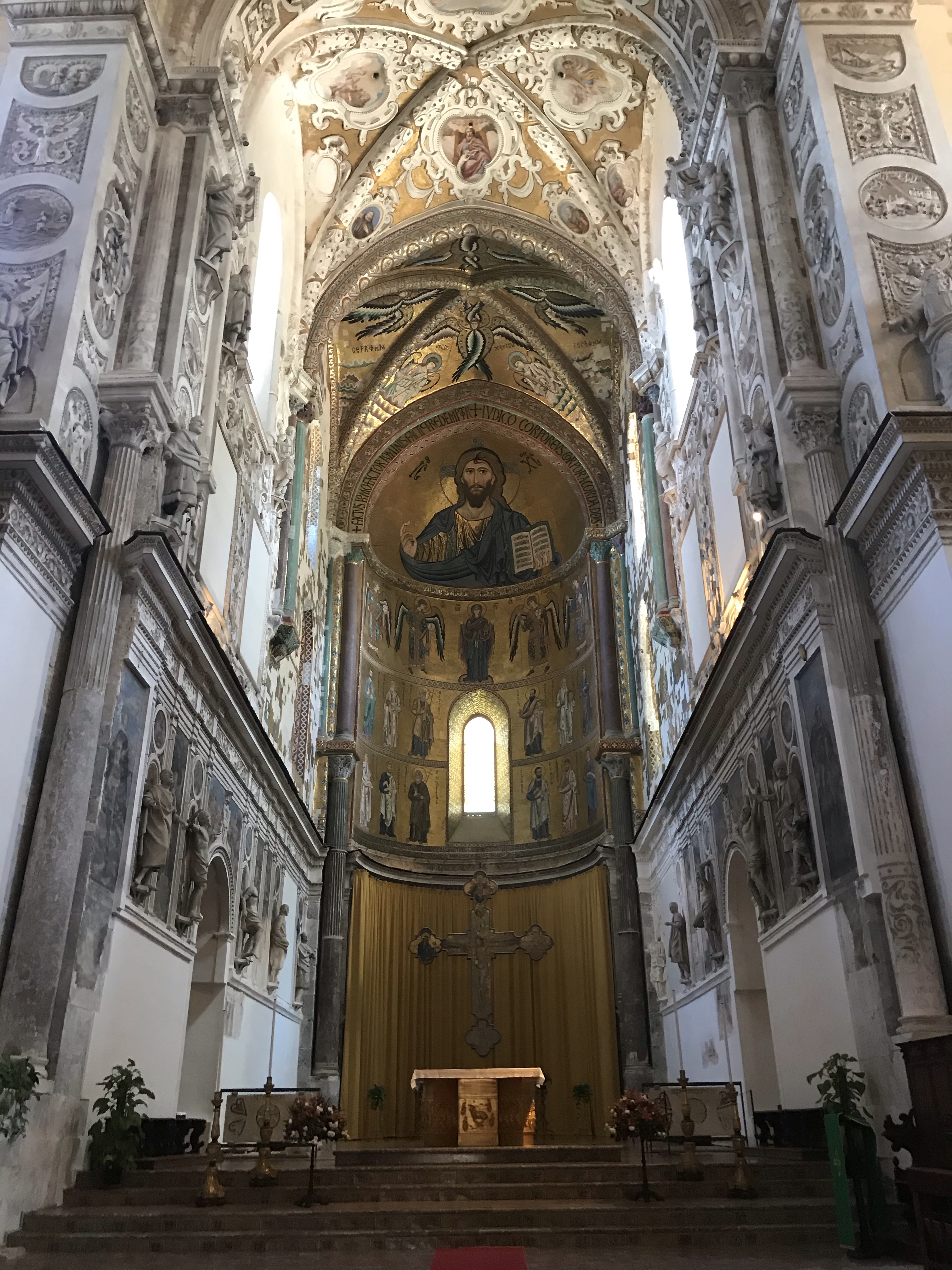


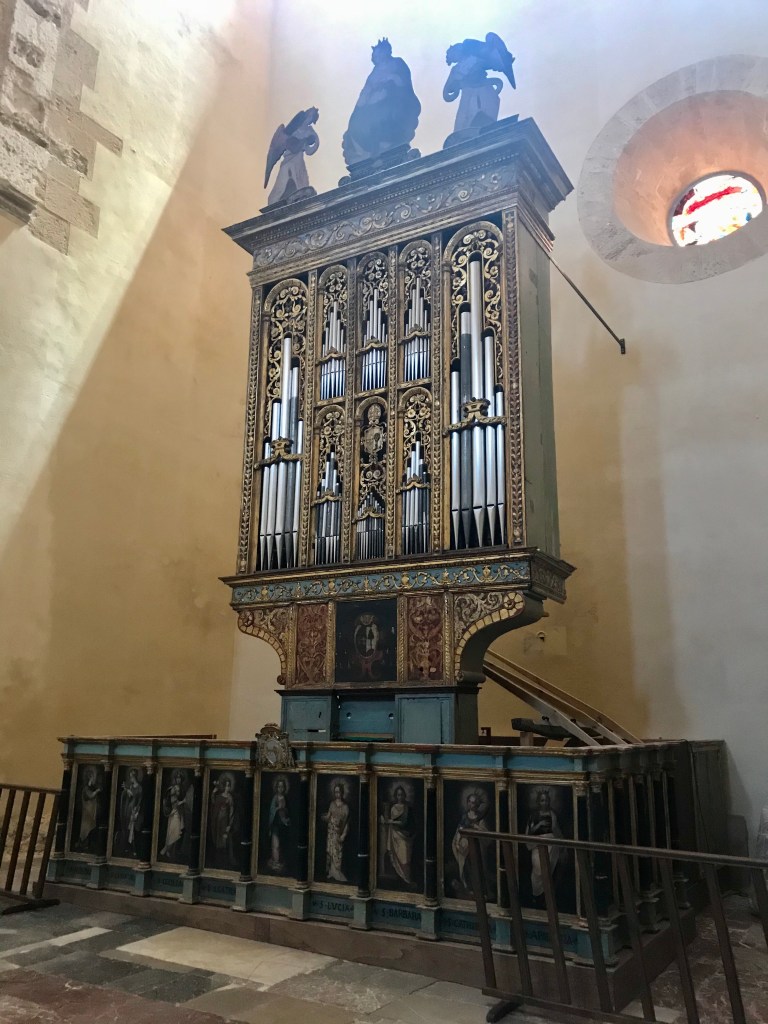
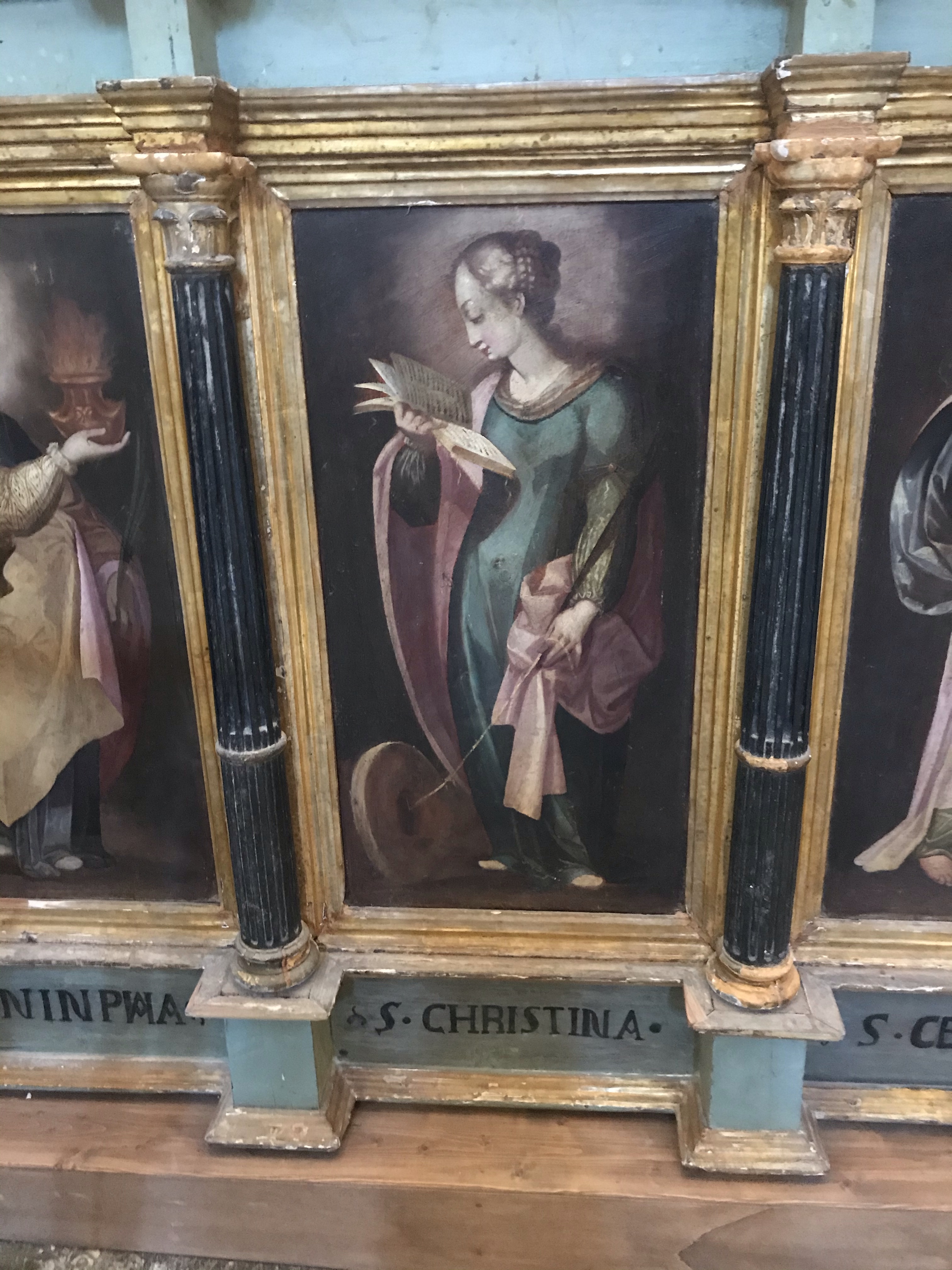

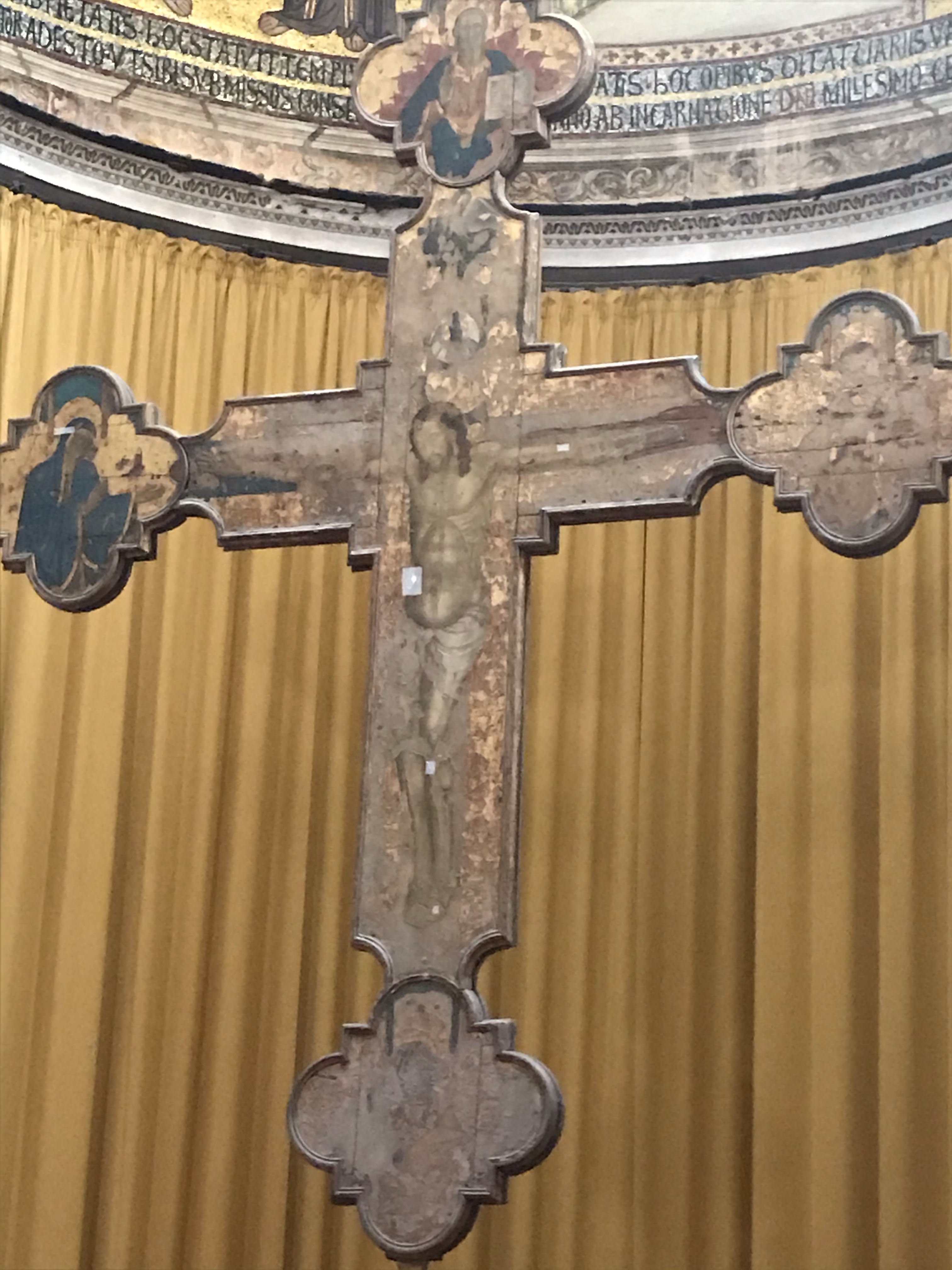
To the delight of the workers, I agreed to pay €7 to visit the towers, the roof, and get closer to the mosaics. (I’m pretty sure I was their first paying visitor of the day and it was already after noon.) What I saw was absolutely worth the €7. And to see it alone, I would have paid more. (Note: they took a temperature scan of me before I was allowed to pay and tour! And yes, all the guides were wearing masks. The church, like all churches I’ve visited, has hand sanitizer in multiple places. After paying for the tour, they actually made me use the hand sanitizer before proceeding.)
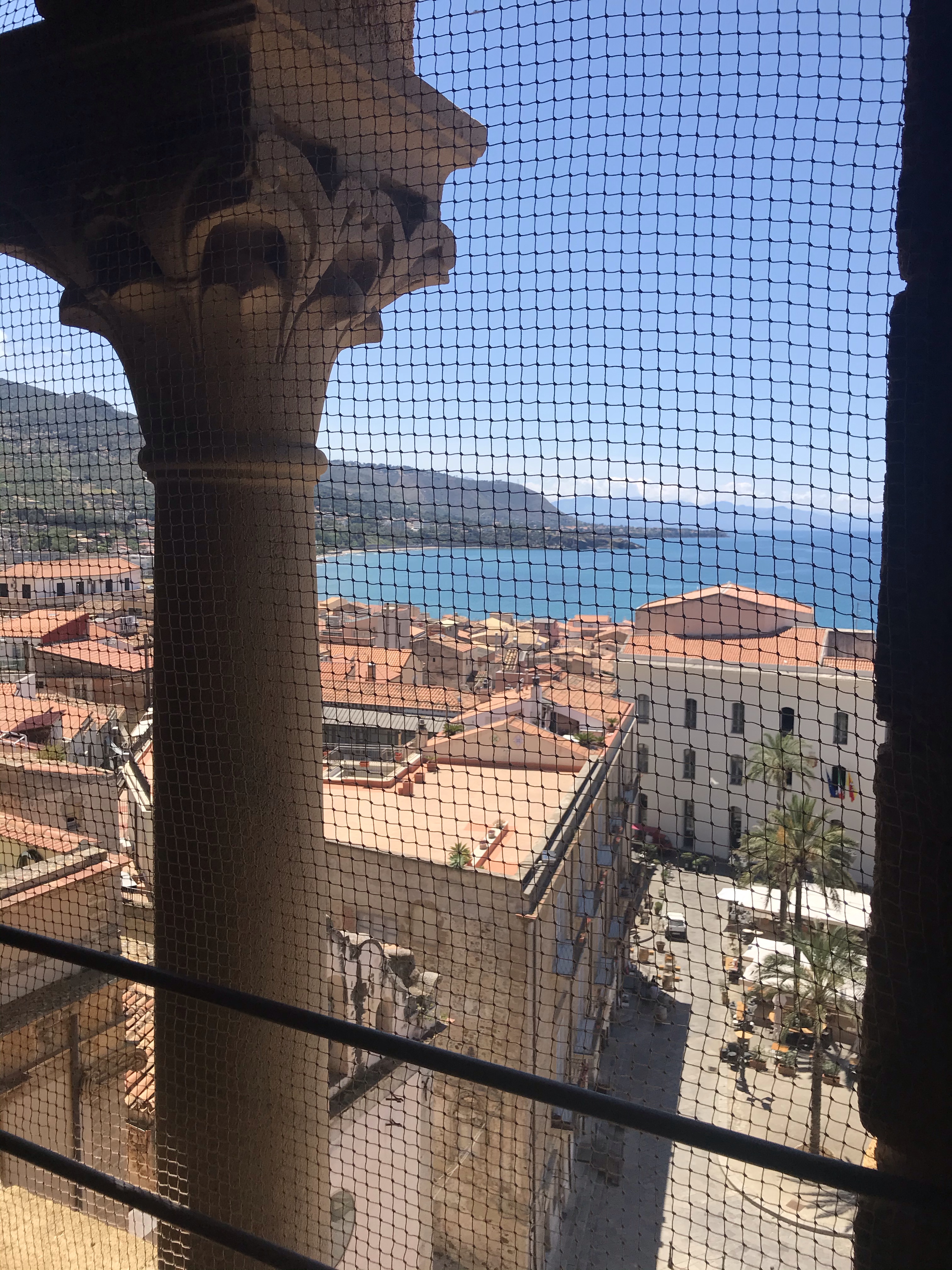
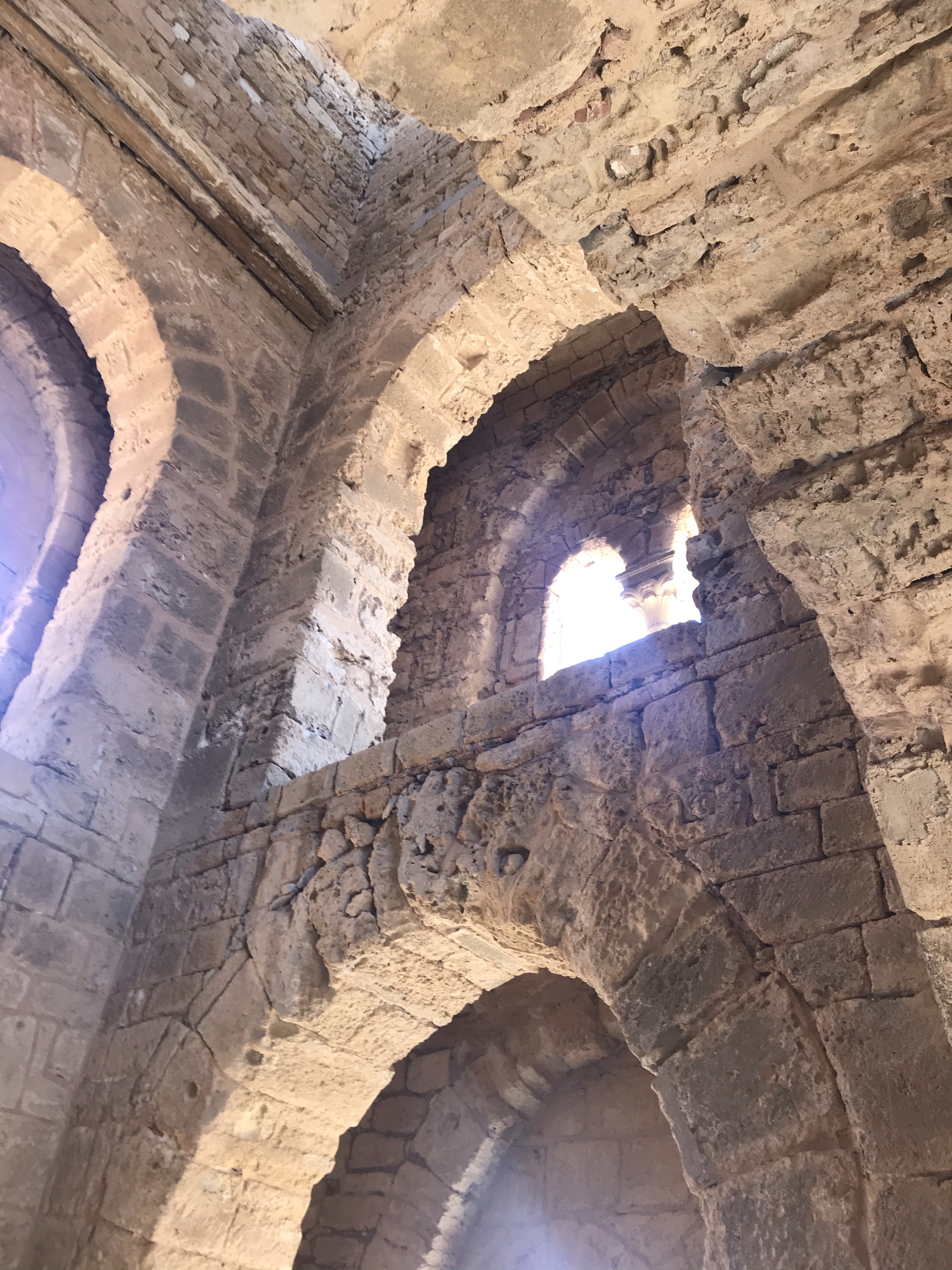
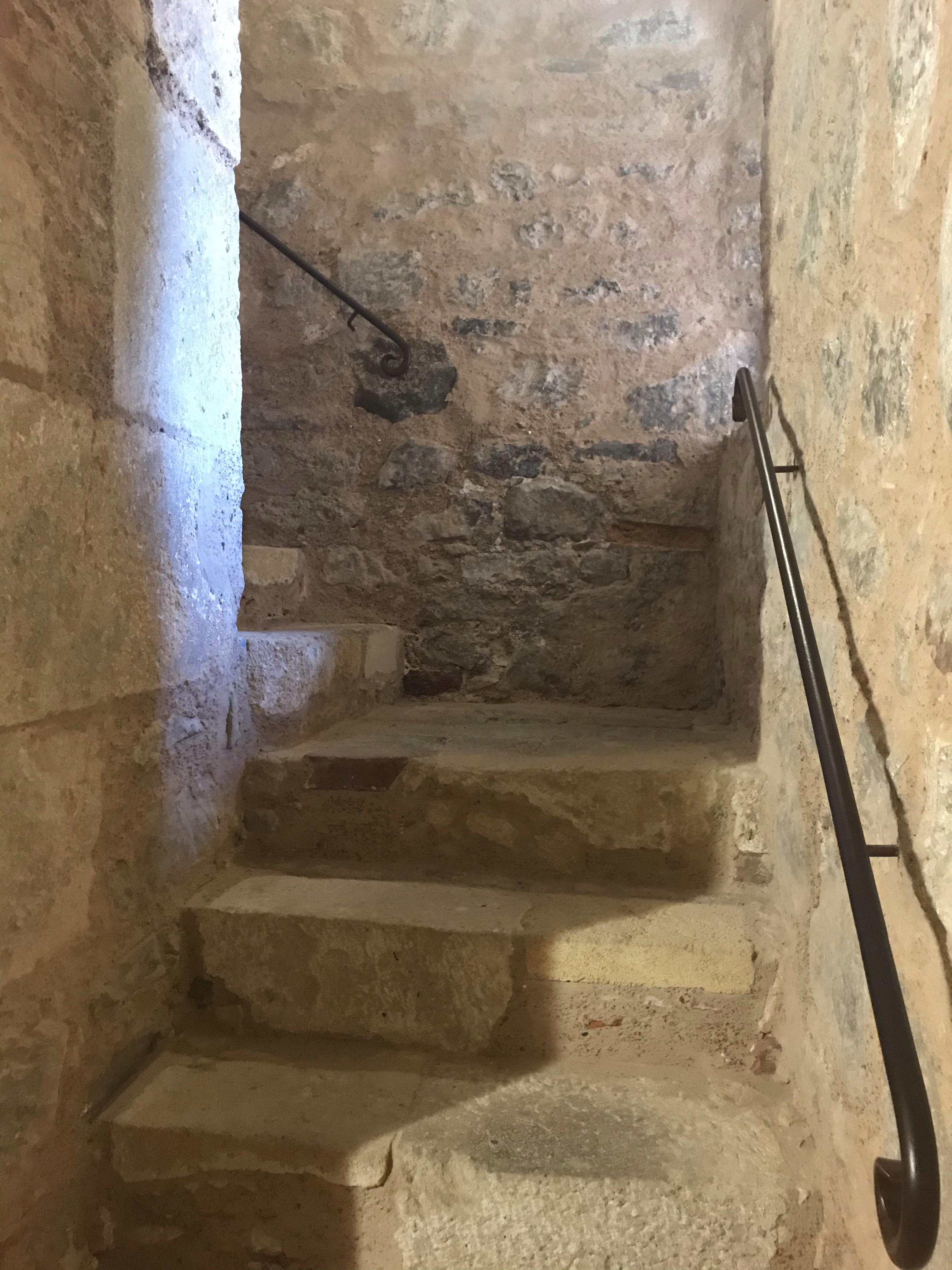


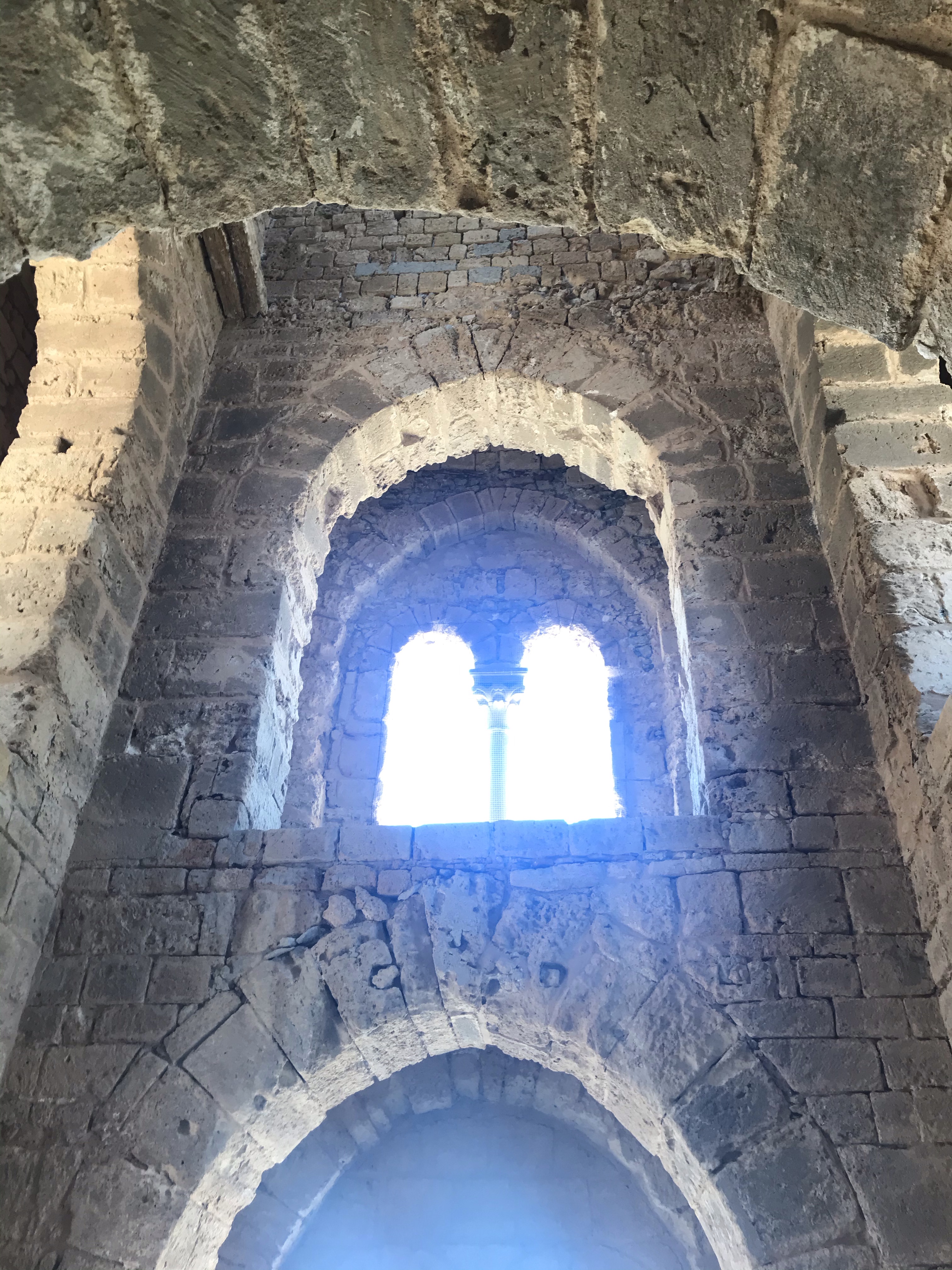
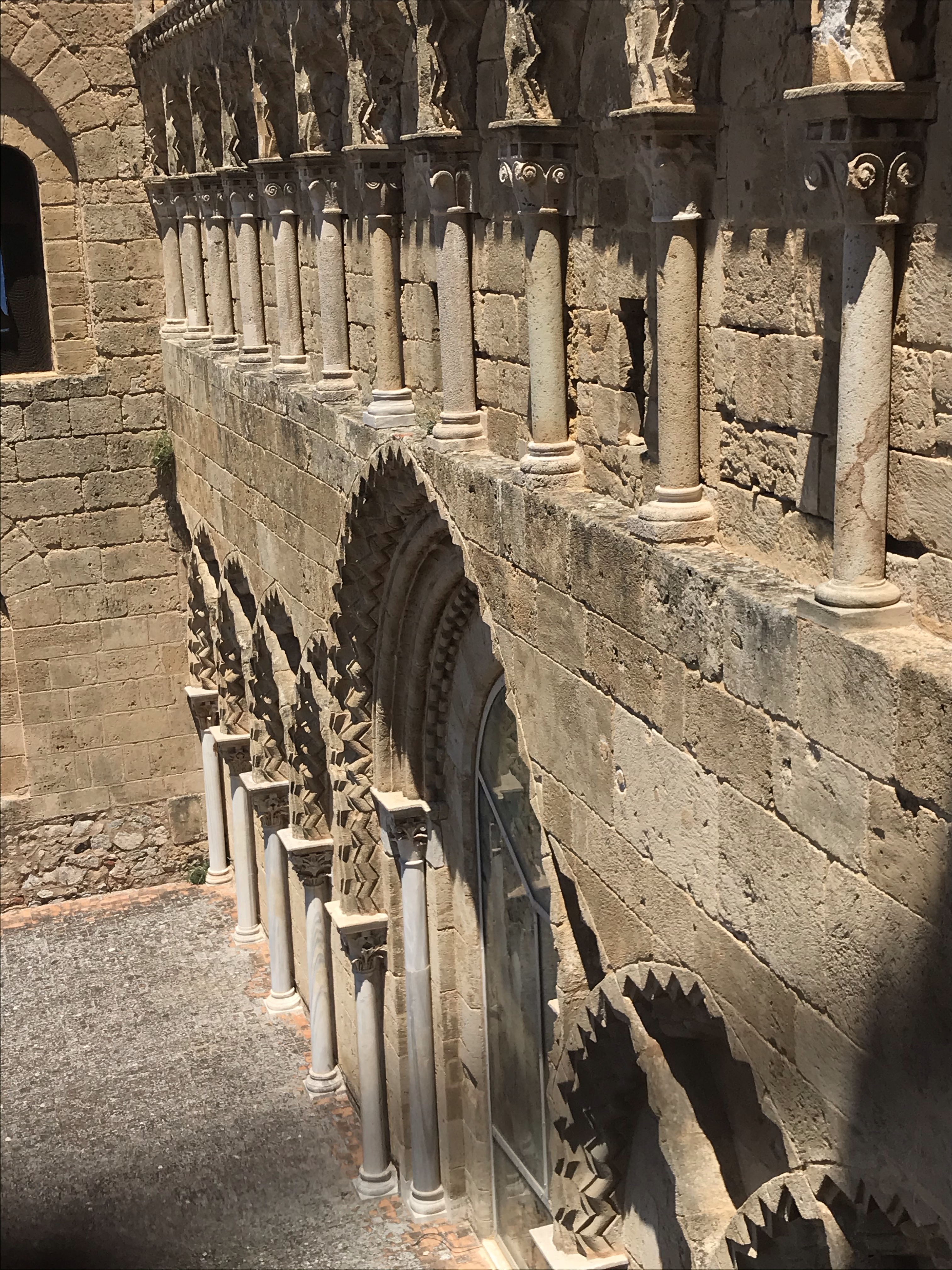

mural of details
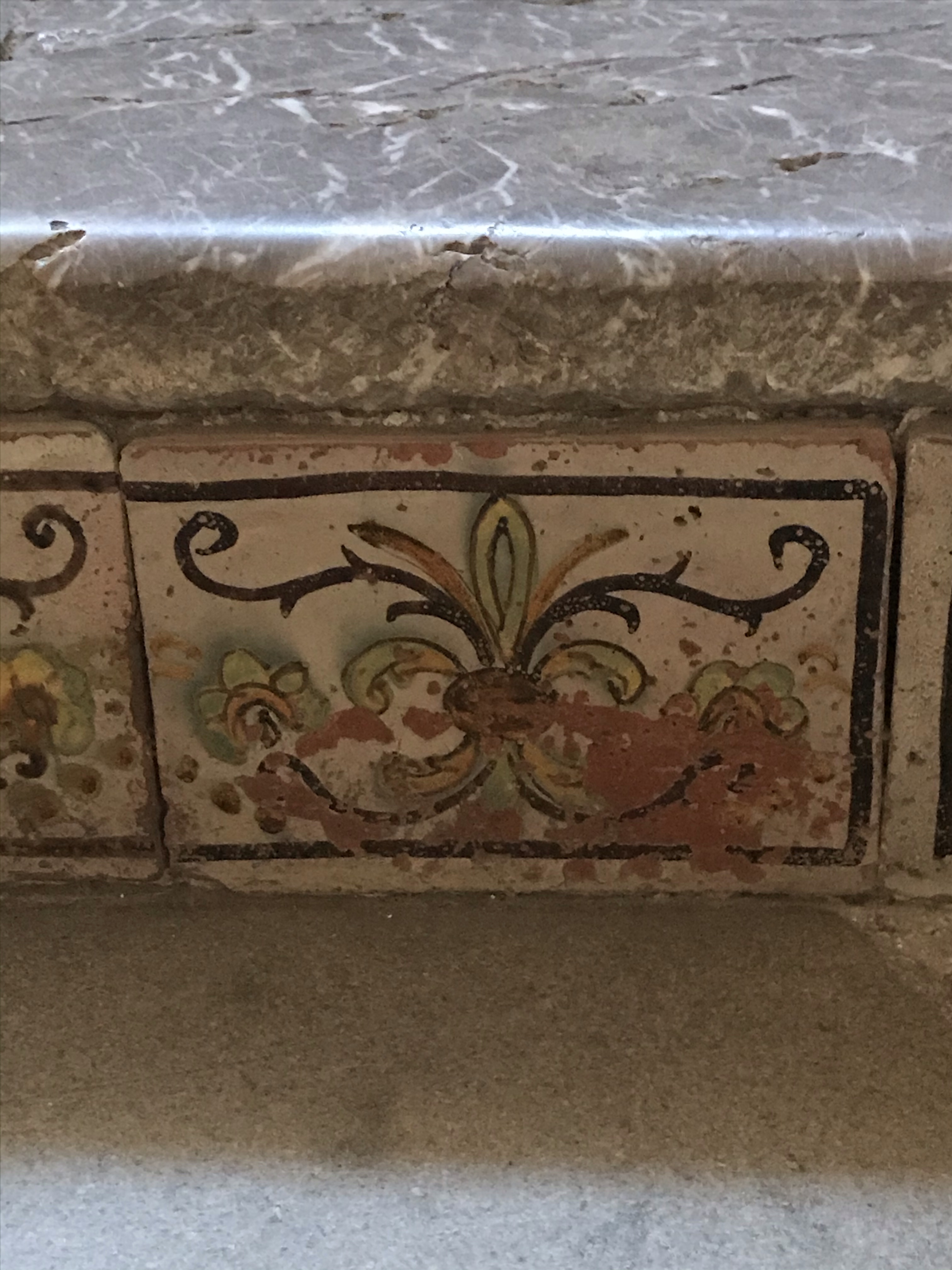

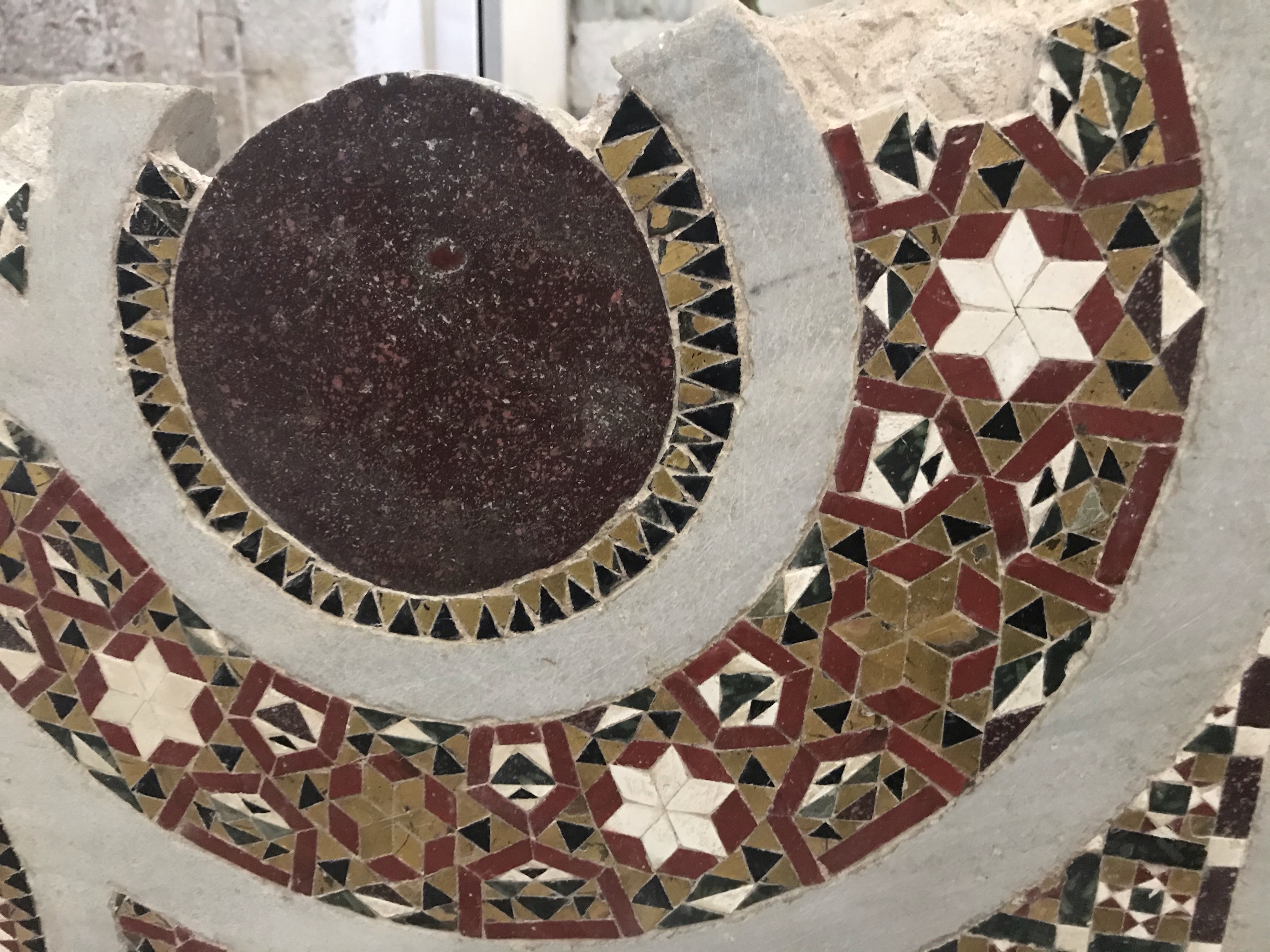

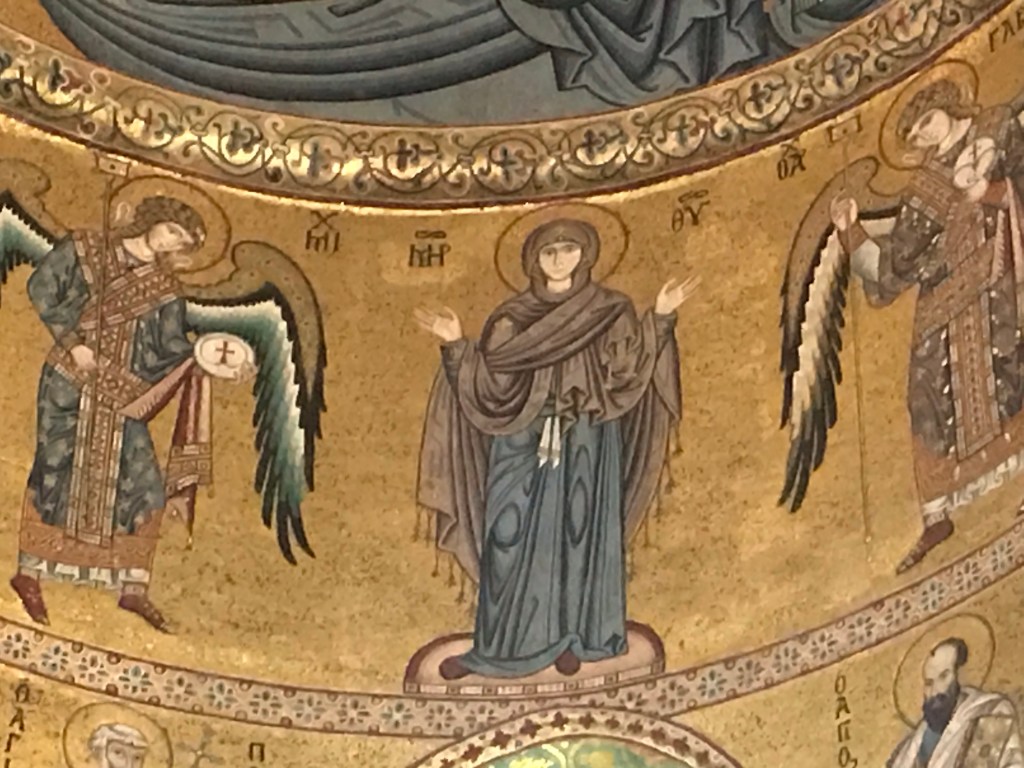
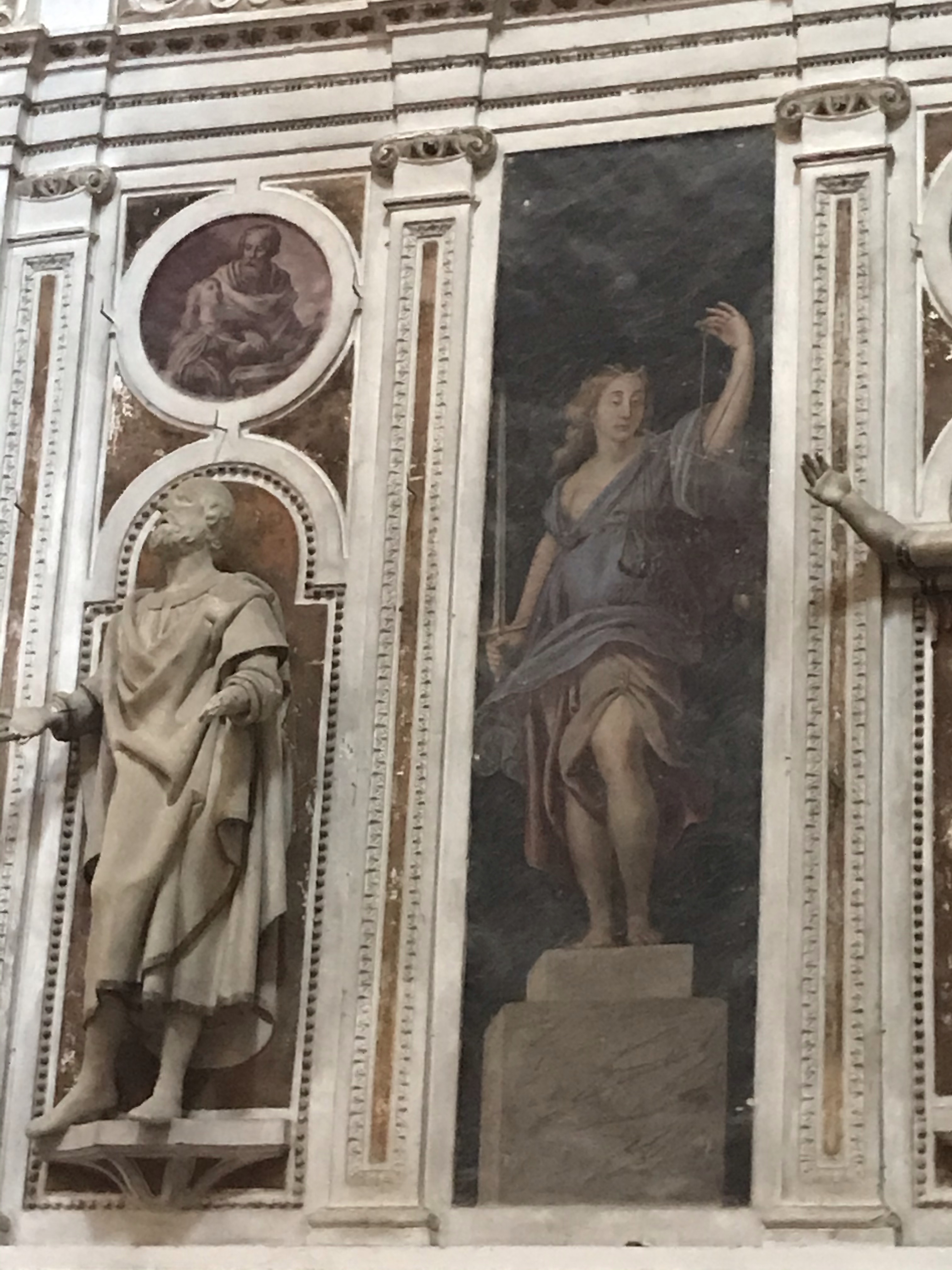


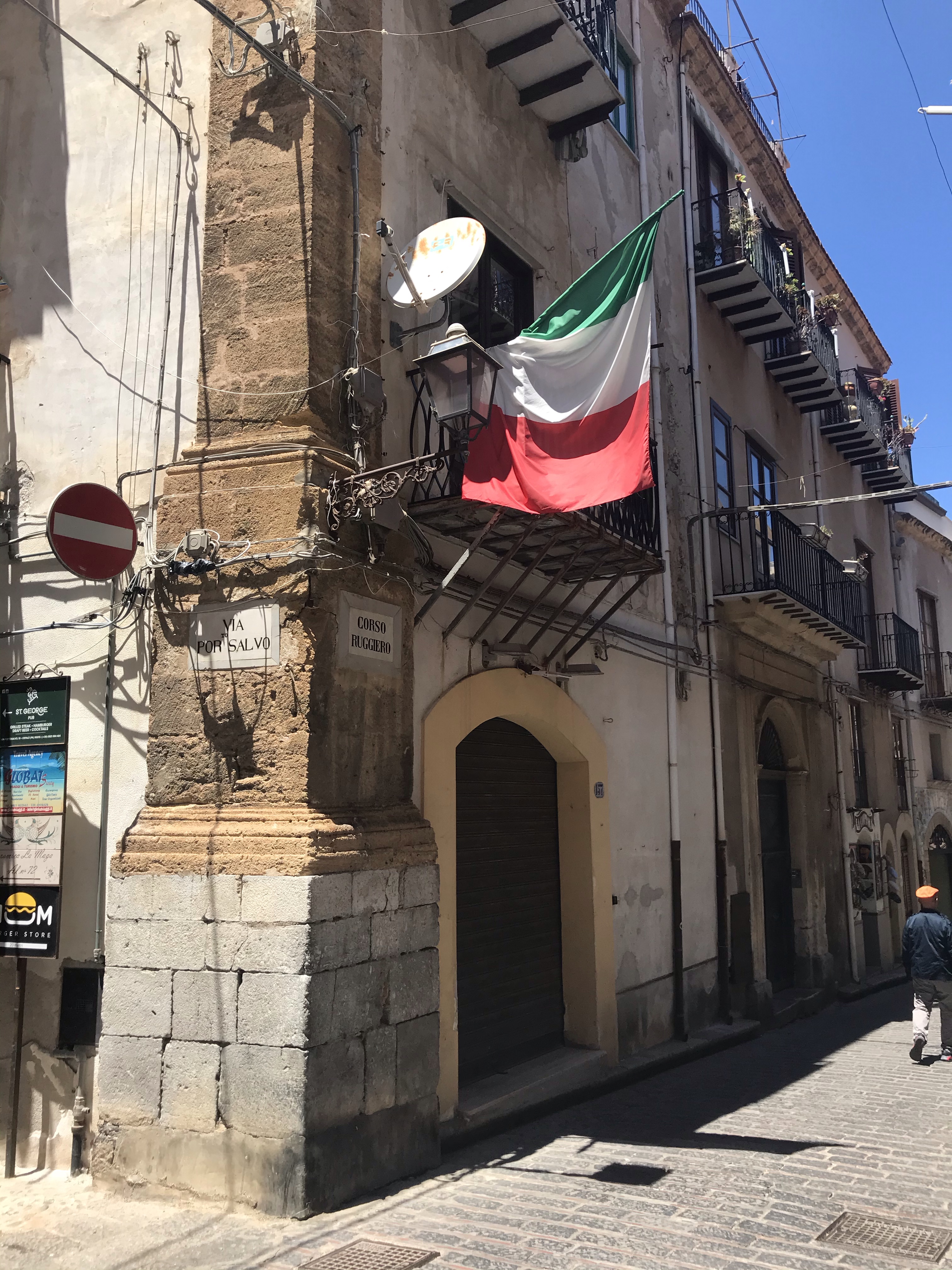
Then I wandered the streets a bit


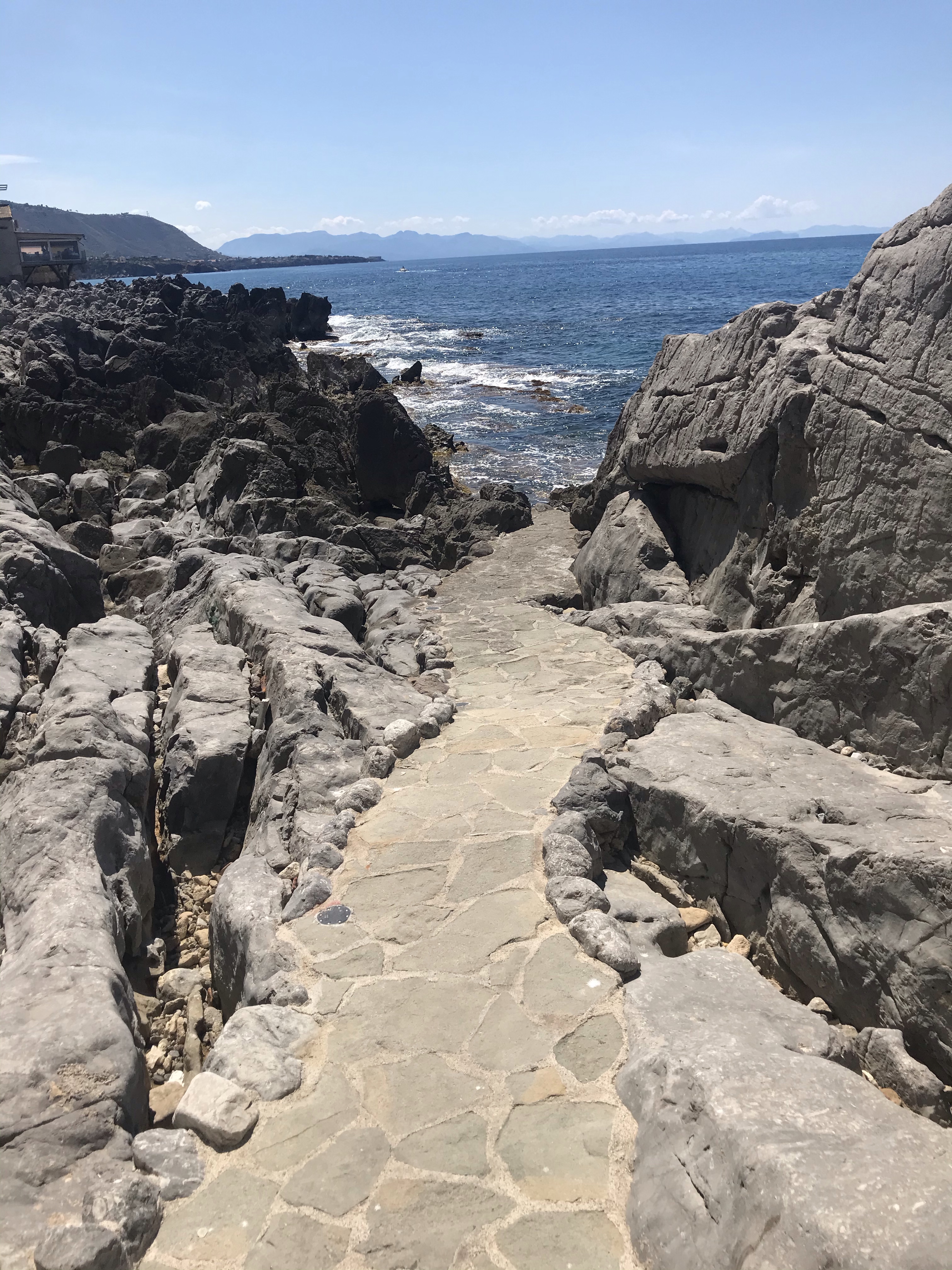
Eventually found the sea again


Now it was around 3pm (15:00) and I was hungry. My one big challenge when traveling is my frugality. The truth is, I am always pretty frugal (which is often met with some amusement from my friends). But add to that an additional three months that I hadn’t planned for while traveling and an unwillingness to go into credit card debt and, well… I’m watching my money very carefully. Even in the States, I’m disinclined to pay for meals that I can eat at home. (I’m a simple but very good cook.) Which means, when traveling, I hate to spend my money on restaurants unless I know the food will be good. Really good. As in, worth the expense. And this, as far as I can tell, is the one disadvantage of traveling alone. No one to push me or help me make a decision. I was hungry and I walked by many restaurants, considering each one and the possibility of a fantastic meal, unique to Sicily and the famous cuisine I had read so much about… and… ultimately I chose to eat the apple I had brought with me instead. (Ok, yes, this could be considered my one big travel fail of this trip. But I’m willing to live with that.)
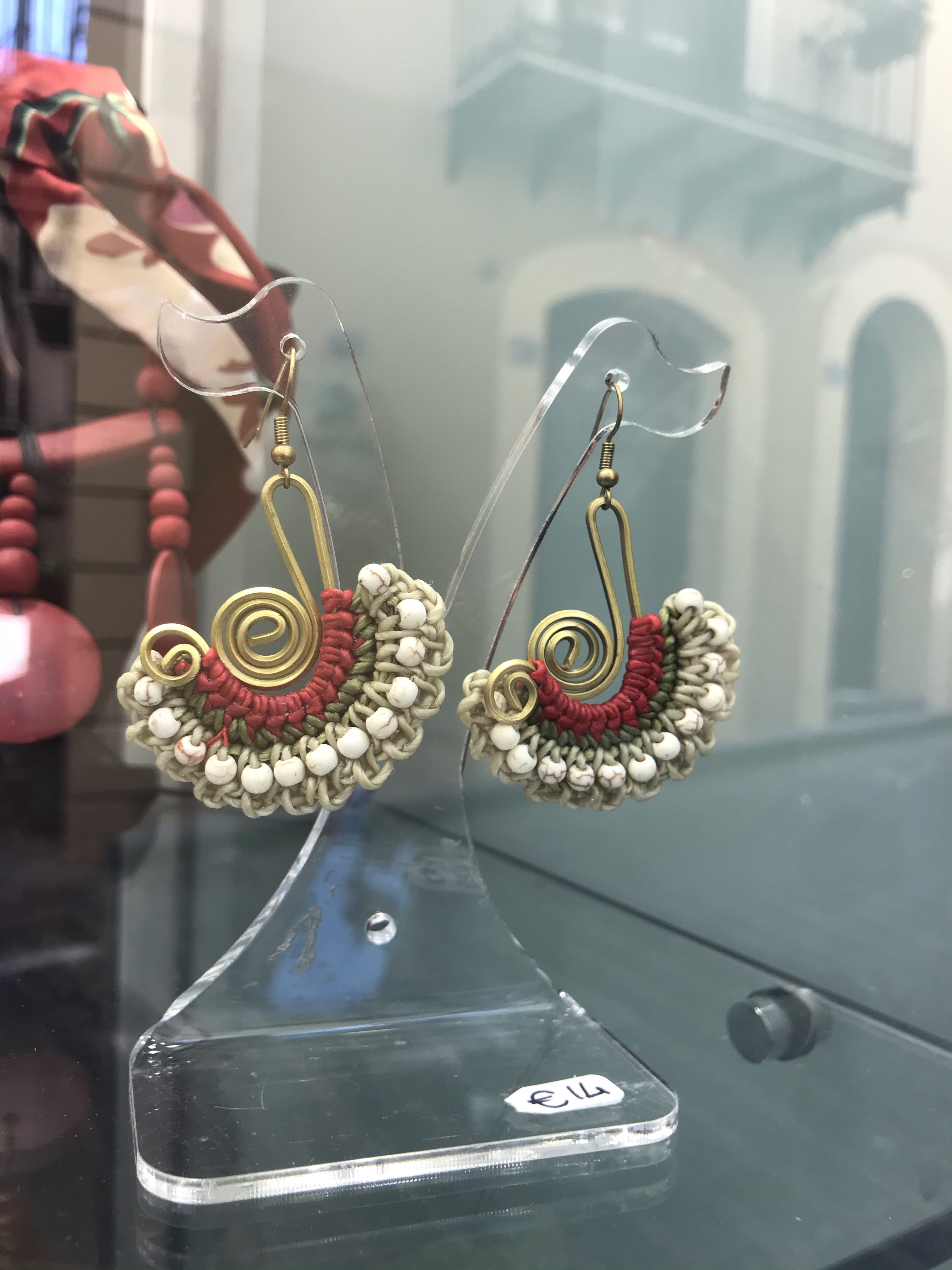
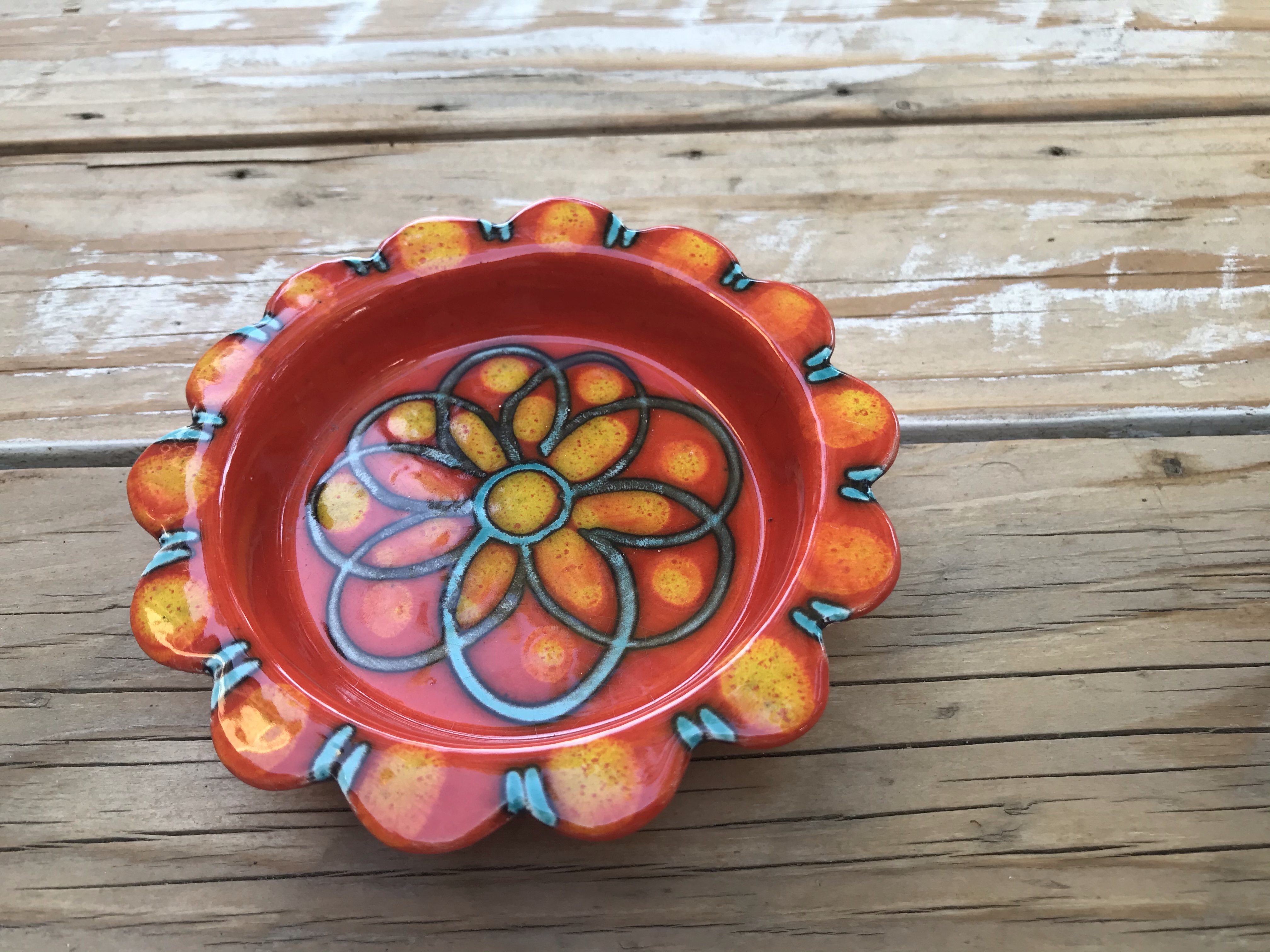
I’m not one to buy souvenirs, but jewelry… I am easily persuaded to purchase something beautiful I will wear. I would have bought these earrings but the store was closed. Having passed many stores with locally-made ceramics, I succumbed to a small dish (in which to place my earrings, of course!)
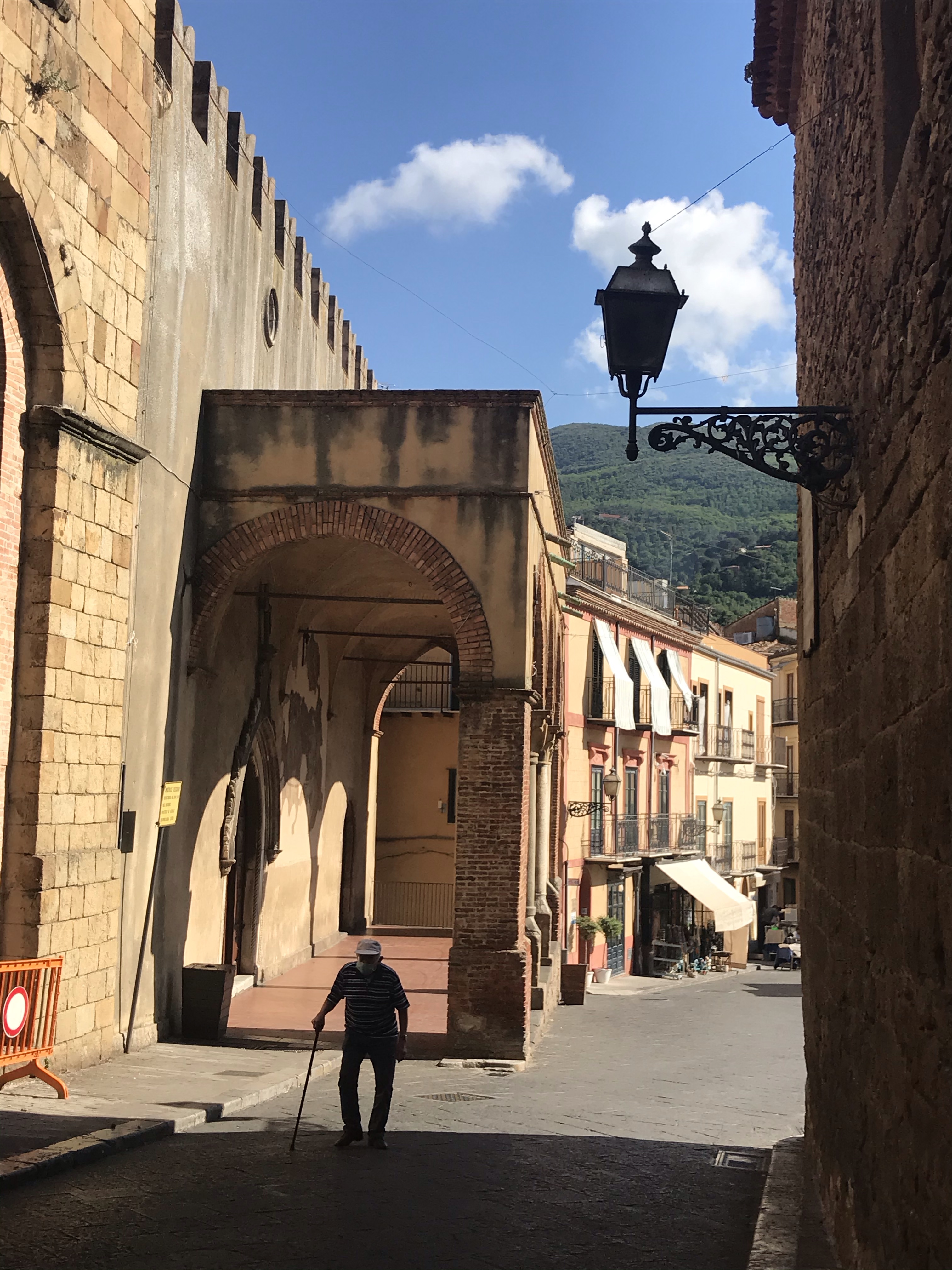
Then I was off to Castelbuono, conveniently on my way back to where I’m staying, in the Madonie Mountains. This town is half the size of Cefalù and much more modern – by 200 years. 😉 As you might expect, the town gets its name from the castle built upon its highest peak.
Again, I was able to find a place to park and walk into the old medieval part of the city, which like every other Sicilian town I’ve encountered, is lovely. Mostly, I only wanted to see the castle. Unfortunately, it was closed. But as I turned the corner and walked under the arch, my heart heavy and my mind preoccupied with the demonstrations happening all across America, my spirit lifted when I saw this.

A temporary installation in the castle, Sacro Refugio
Then back through another archway…


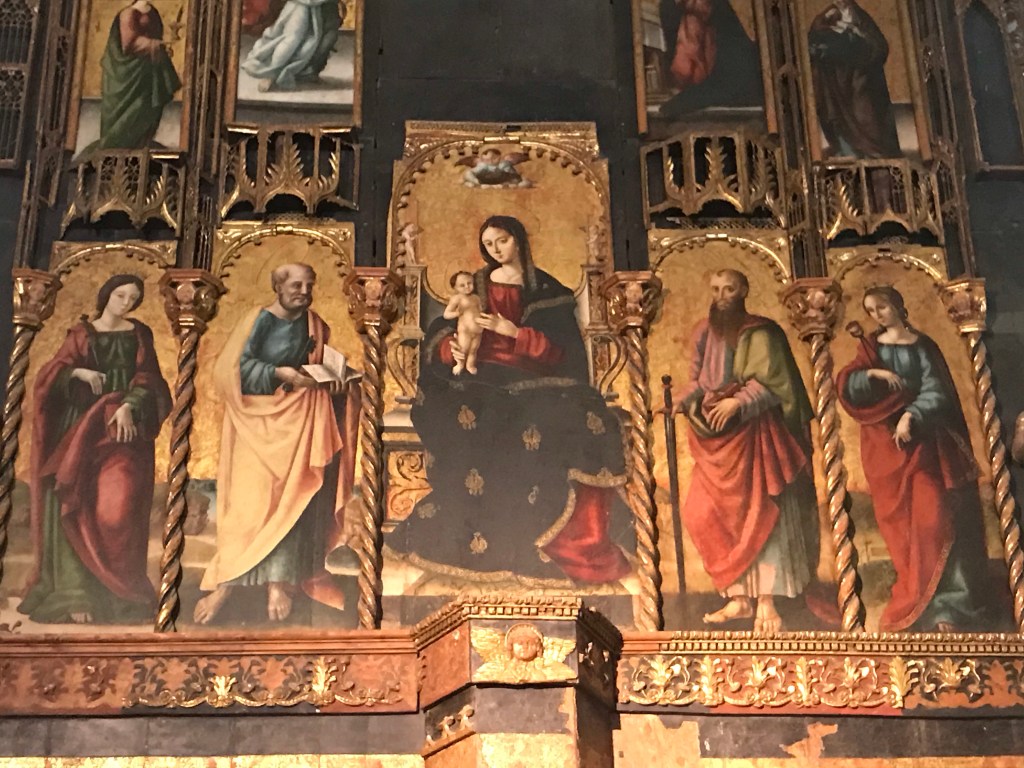
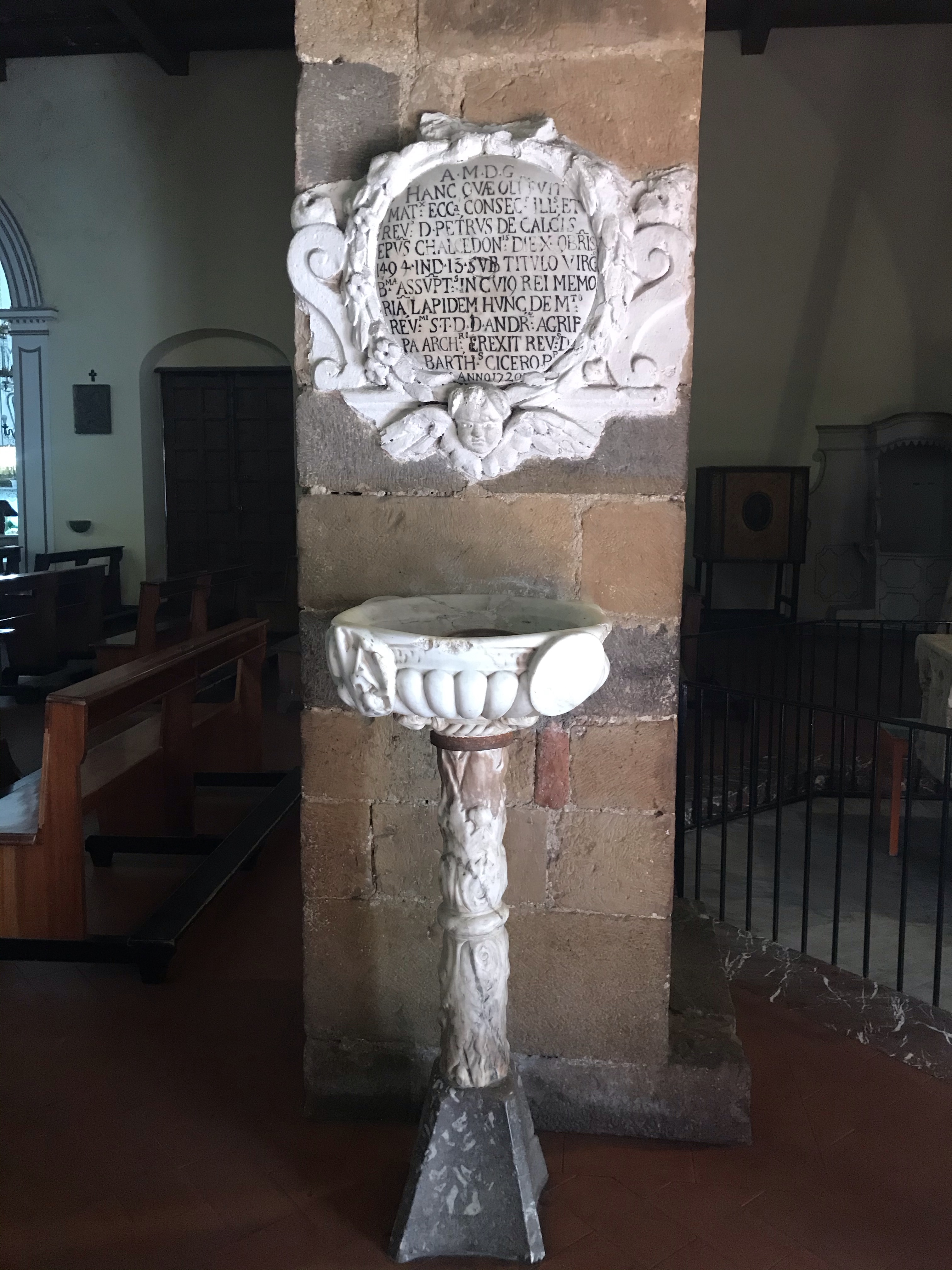
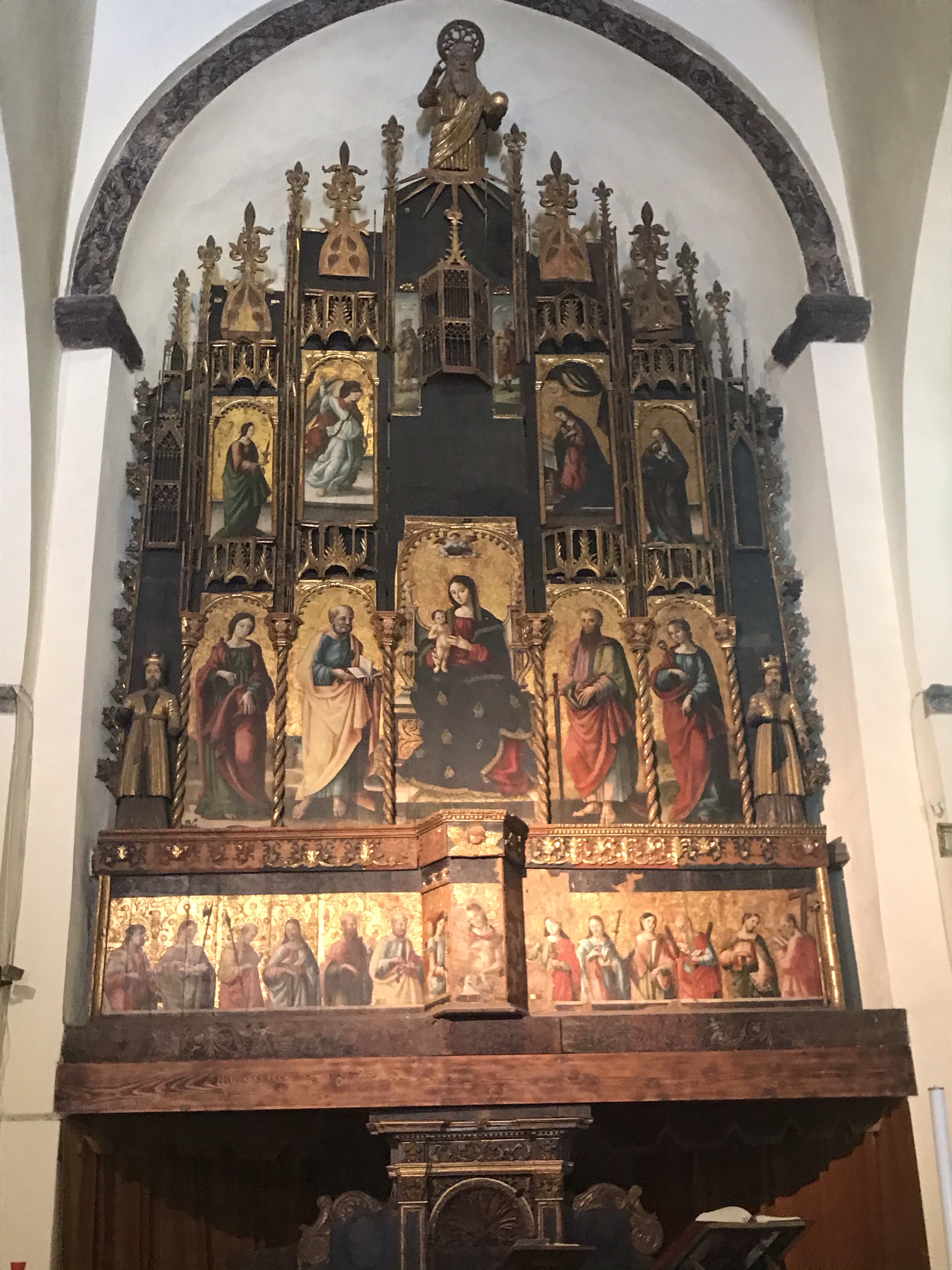
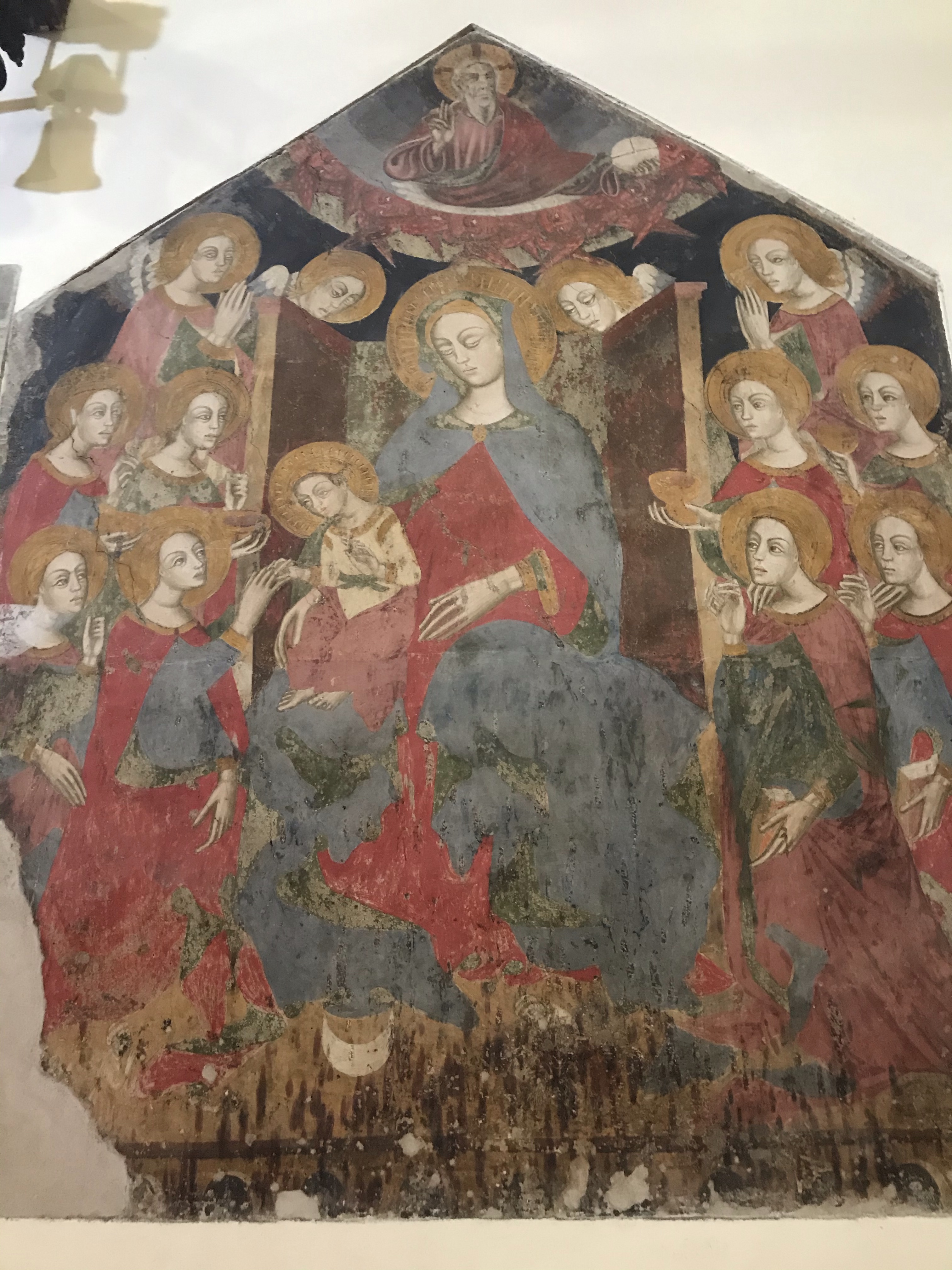
And into another church

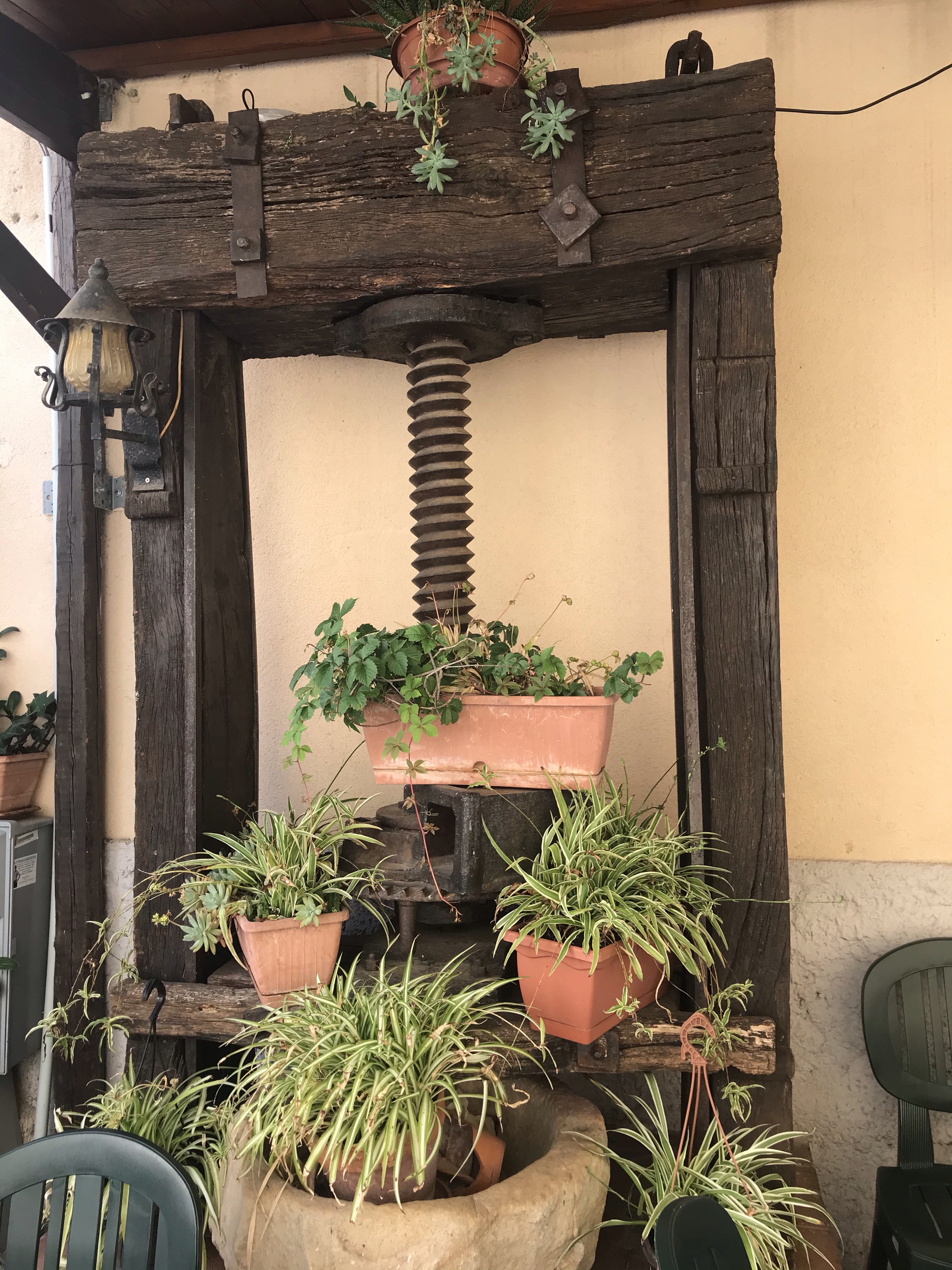
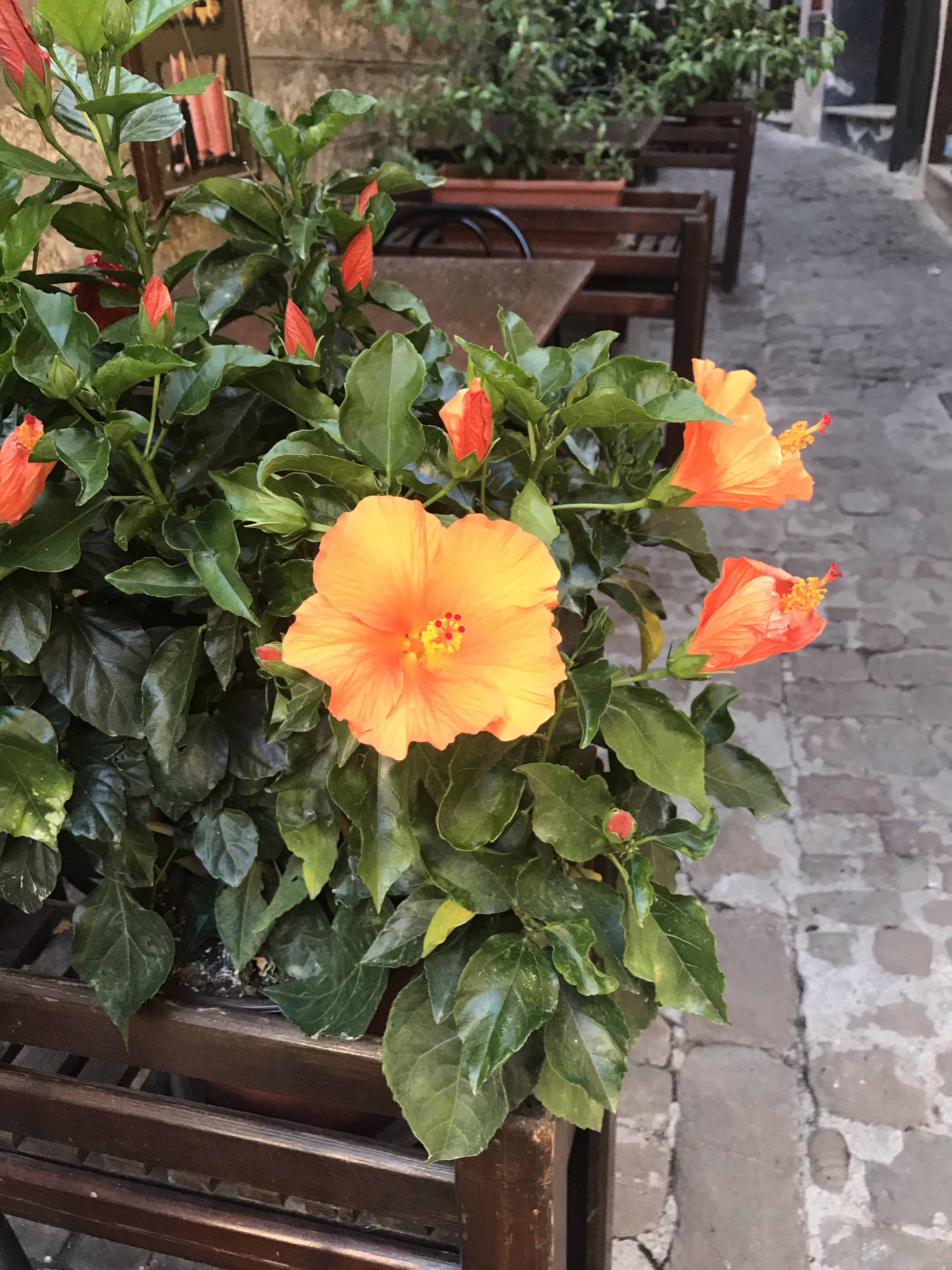
It was now aperitif time, when people gather in the town square (almost always in front of the local cathedral), and socialize while imbibing in the drink of their choice, along with some nibbles or something sweet. I find it hard to photograph people without their permission, so I strolled the perimeters of the square.


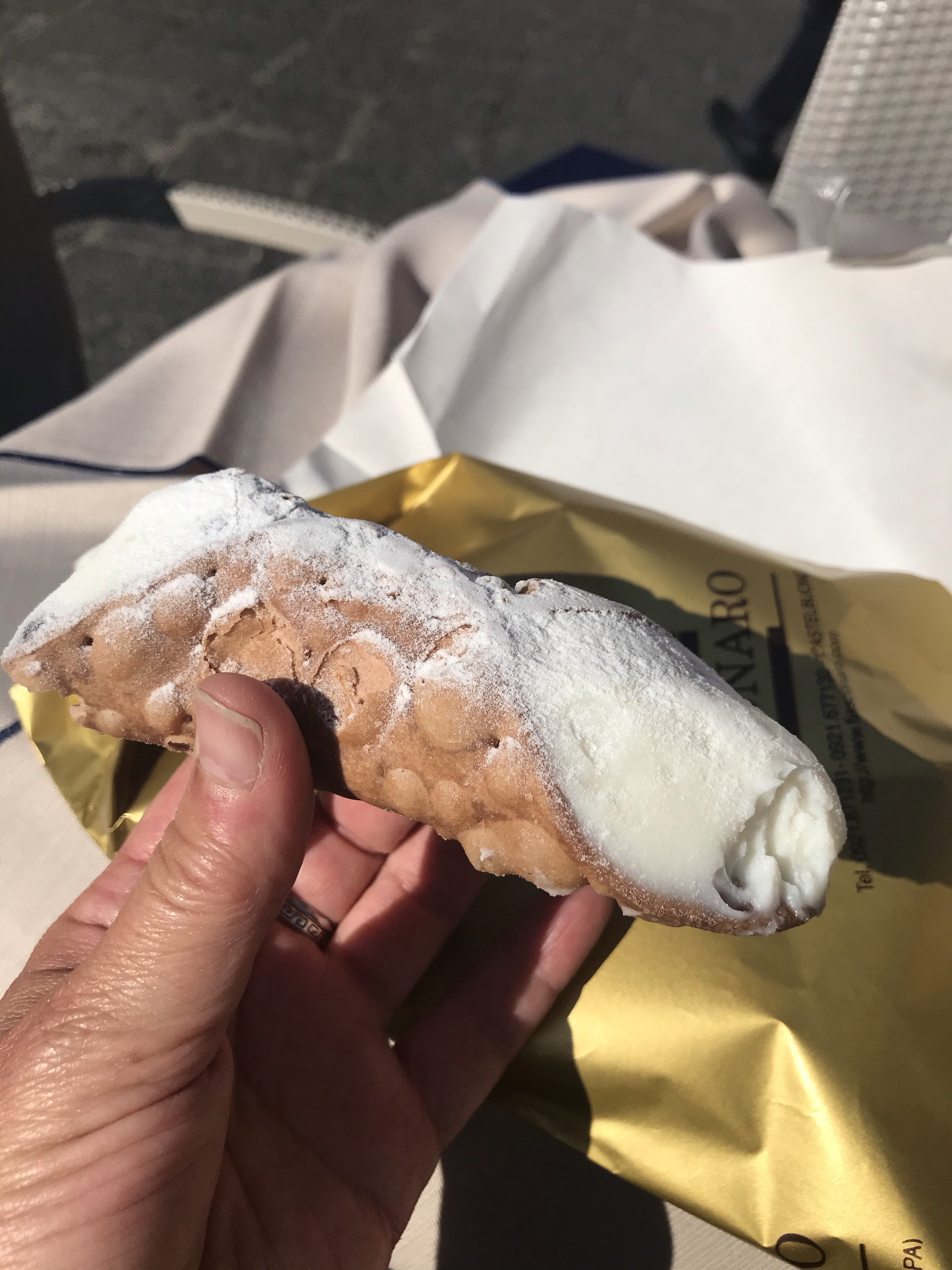
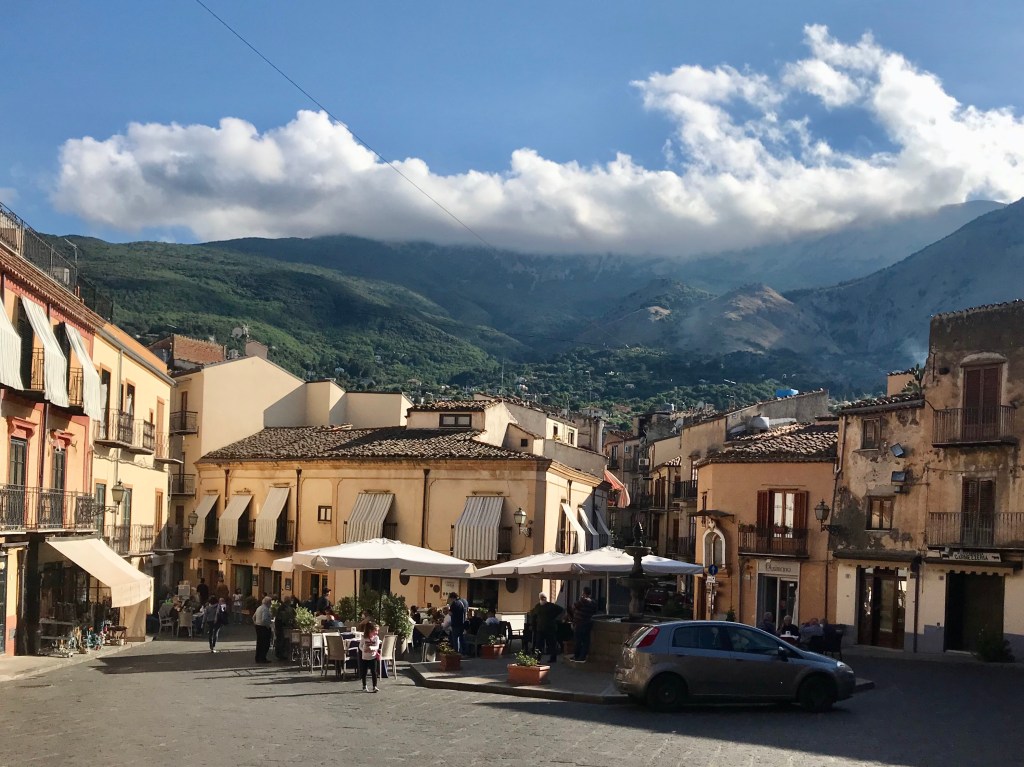
It was time to sit, to relax, to take it all in. Savoring a fresh cannolo, with a small tray of marzipan treats to go, I watched the locals. It was a thing of beauty. Old men in clusters talking, school-age children riding their bikes and swinging about enjoying their new freedom (and almost all wearing masks), and adults casually strolling and chatting. I was the rare, if only, outsider, met with smiles and curiosity. It was too special to photograph but I will always remember it fondly.


Respite in the woods

Most of us are familiar with Henry David Thoreau, notably for his time of living in the woods for two years, two months, and two days. He writes in his book, Walden Pond:
I went to the woods because I wished to live deliberately, to front only the essential facts of life, and see if I could not learn what it had to teach, and not, when I came to die, discover that I had not lived.
Thoreau was largely influenced by Ralph Waldo Emerson, and his essay “Nature,” which explains the idea of transcendentalism as the soul of the world, the soul of every man, where God resides. Living simply and in harmony with nature, we are better able to hear God, to trust the intuition of the soul.
It seems to me now that my time in Italy has become my own version of Thoreau’s Walden Pond. Certainly not intentionally. I planned a 6-week holiday, that was all. Yet, as I’ve experienced over and over again, life rarely goes according to plans.
After nearly three months of Covid-19 quarantine in Balestrate, looking out at the sea, it was time. Not time to return to the States. Time to return to the trees. Time to hear nature reveal the whisperings of my soul.

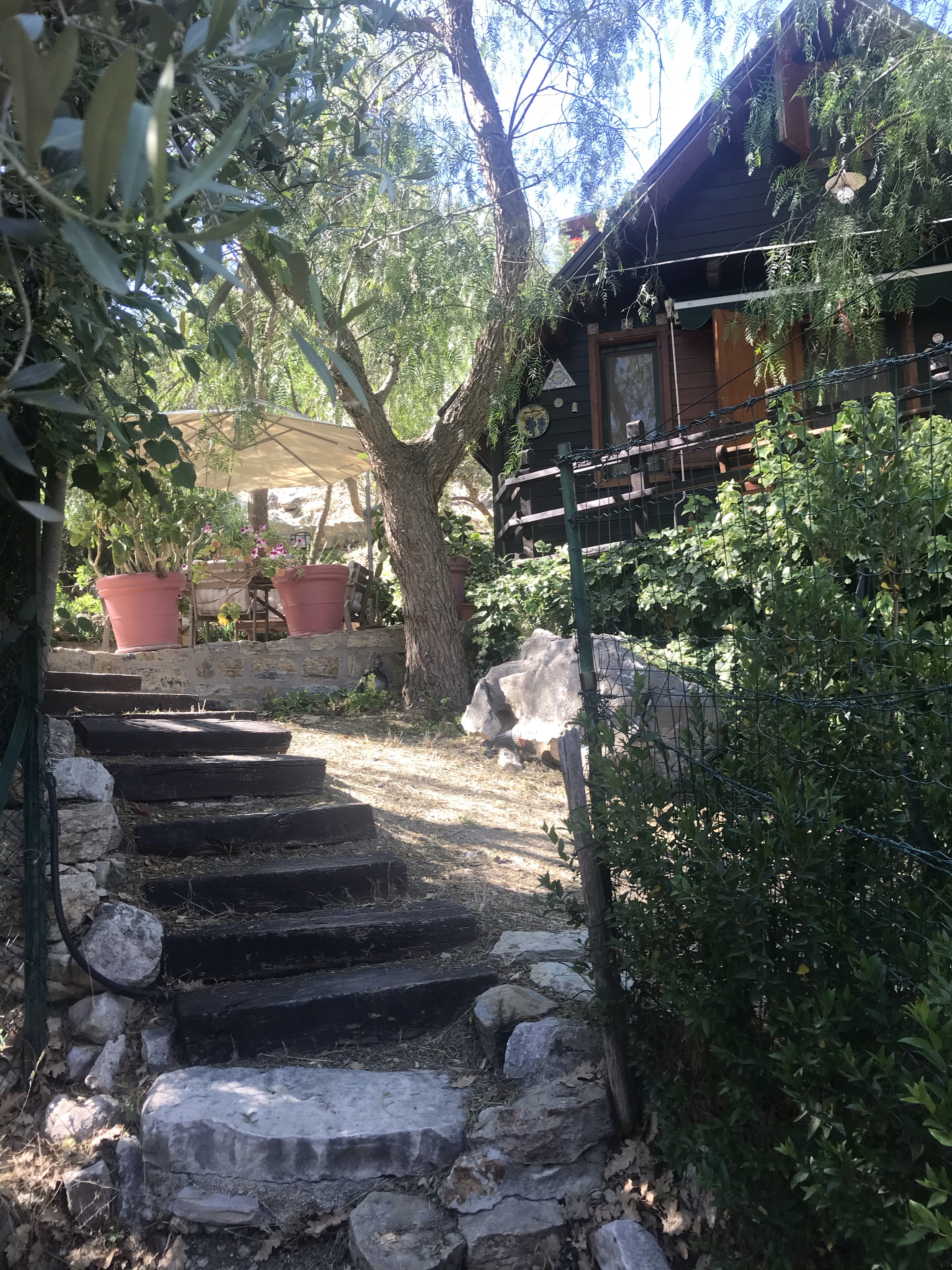

Tonight as I write this, some breed of pigeons are conversing. (I clearly don’t know birds- their rather passionate exchange is a kind of hooting.) Other birds are chirping. And others still are singing. A cat (go figure) is meowing incessantly. Last night I fed her milk, tonight the remains of my make-shift asparagus risotto. Now she purrs and won’t leave me. The air is fresh and soft and clean. The cooling night air tickles my exposed feet.
I needed this.


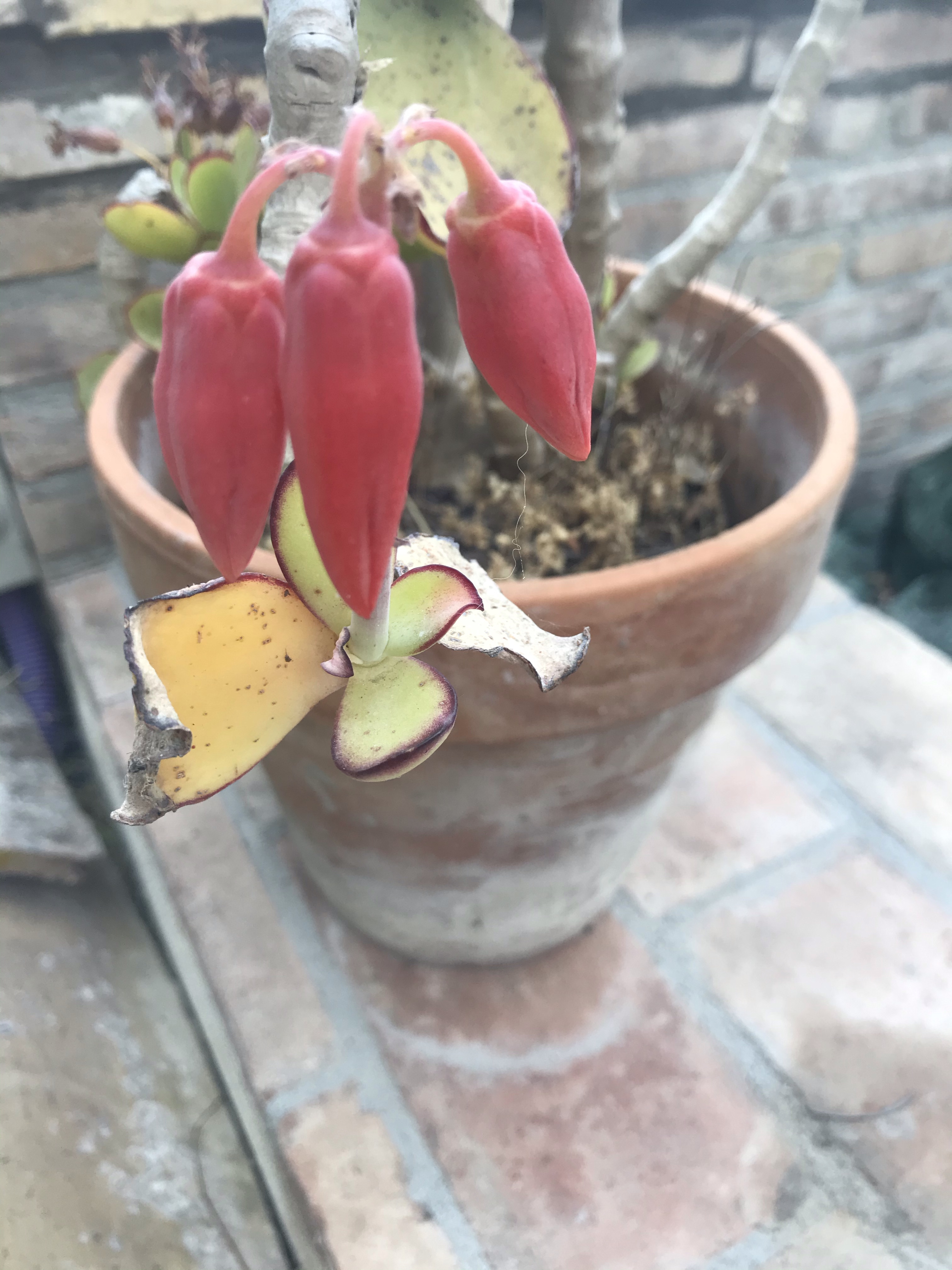


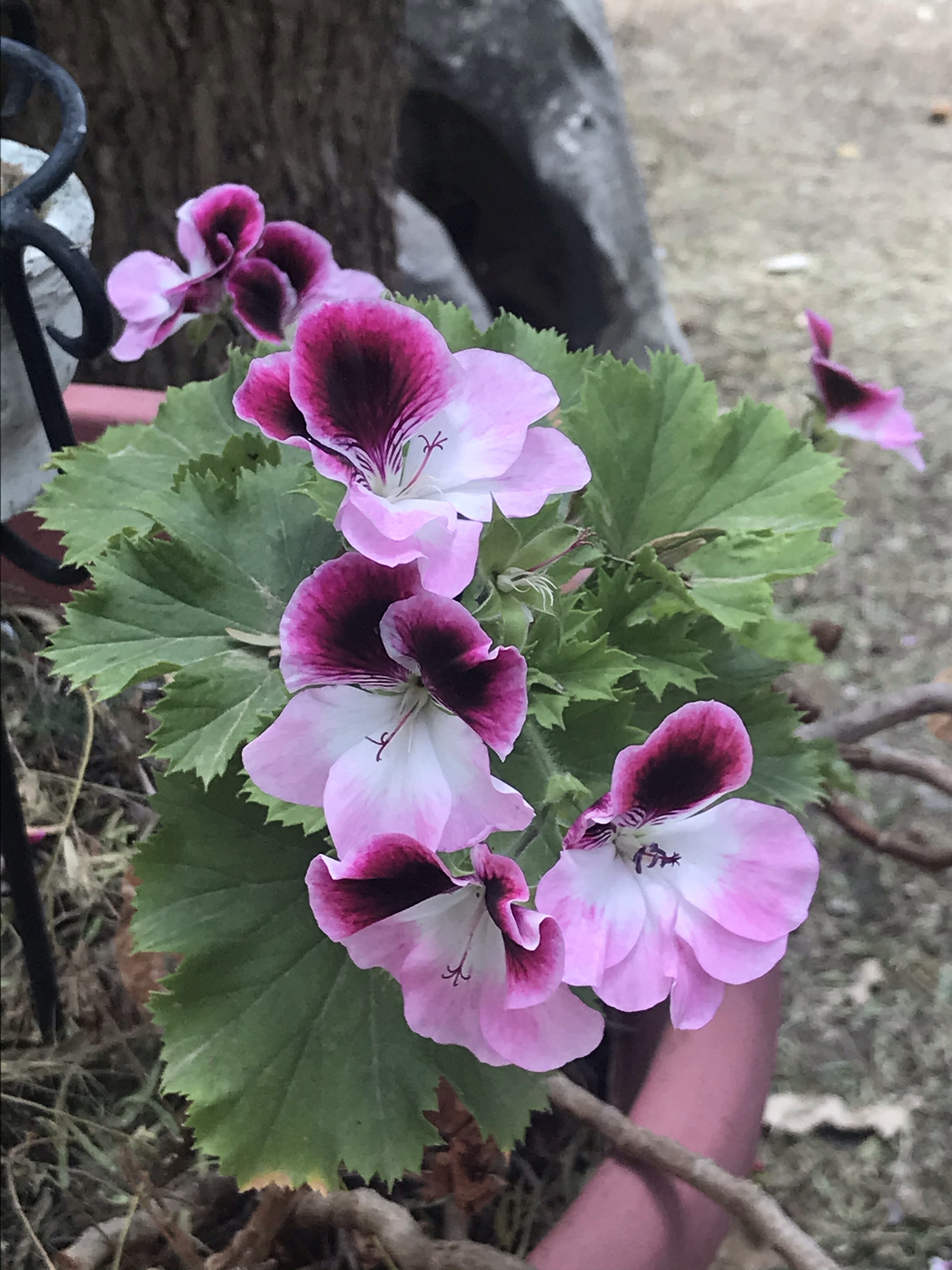
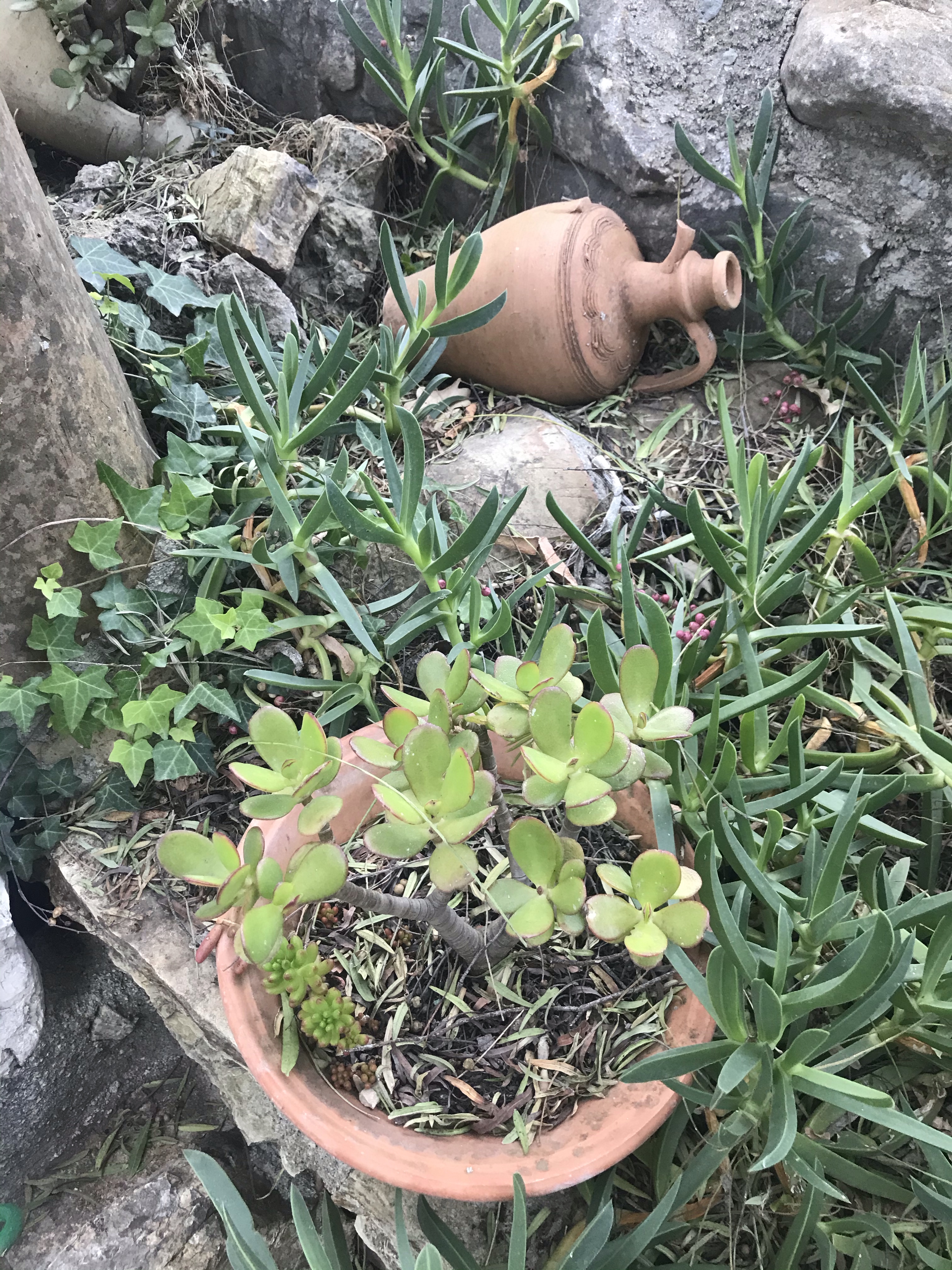

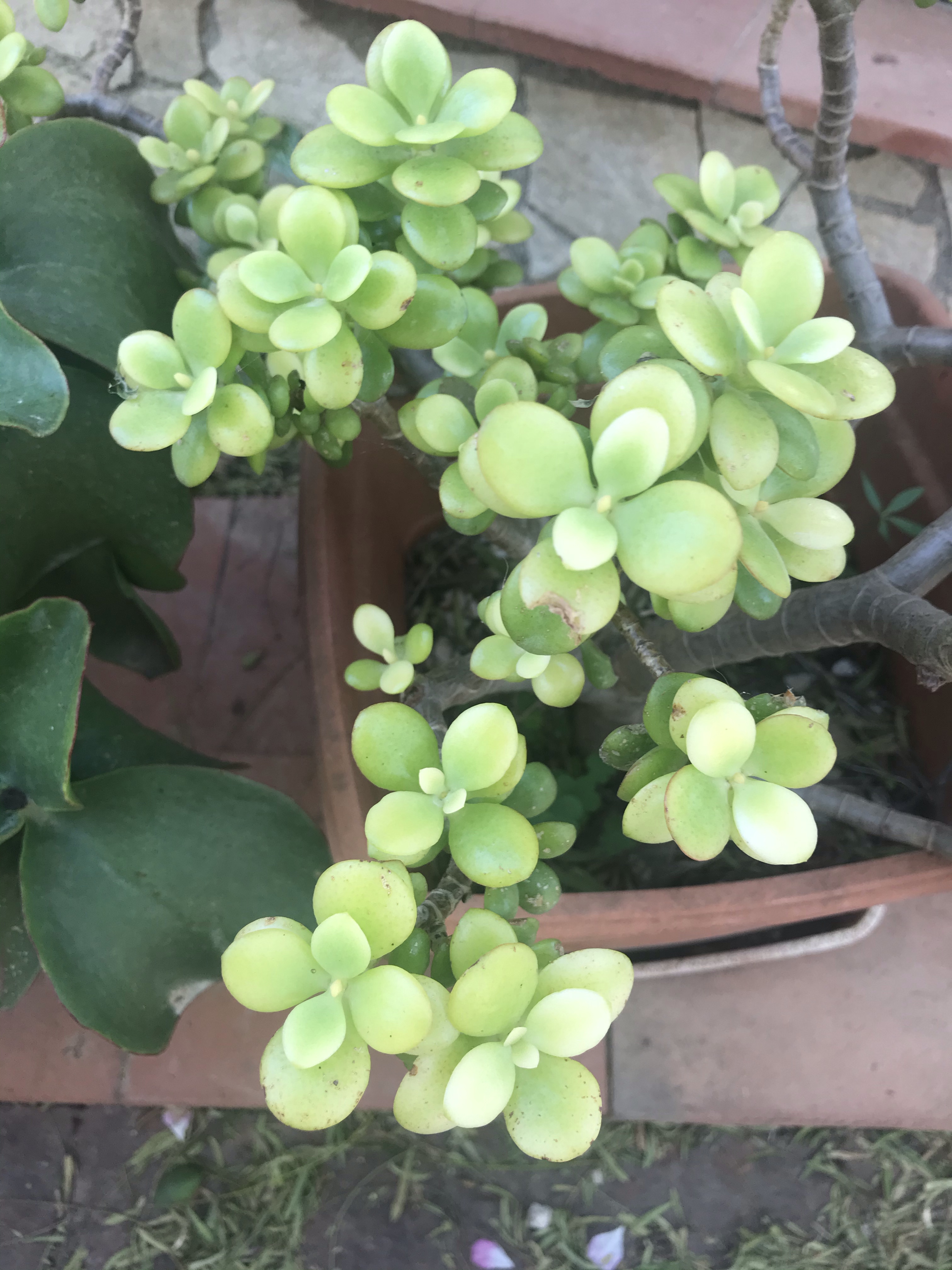

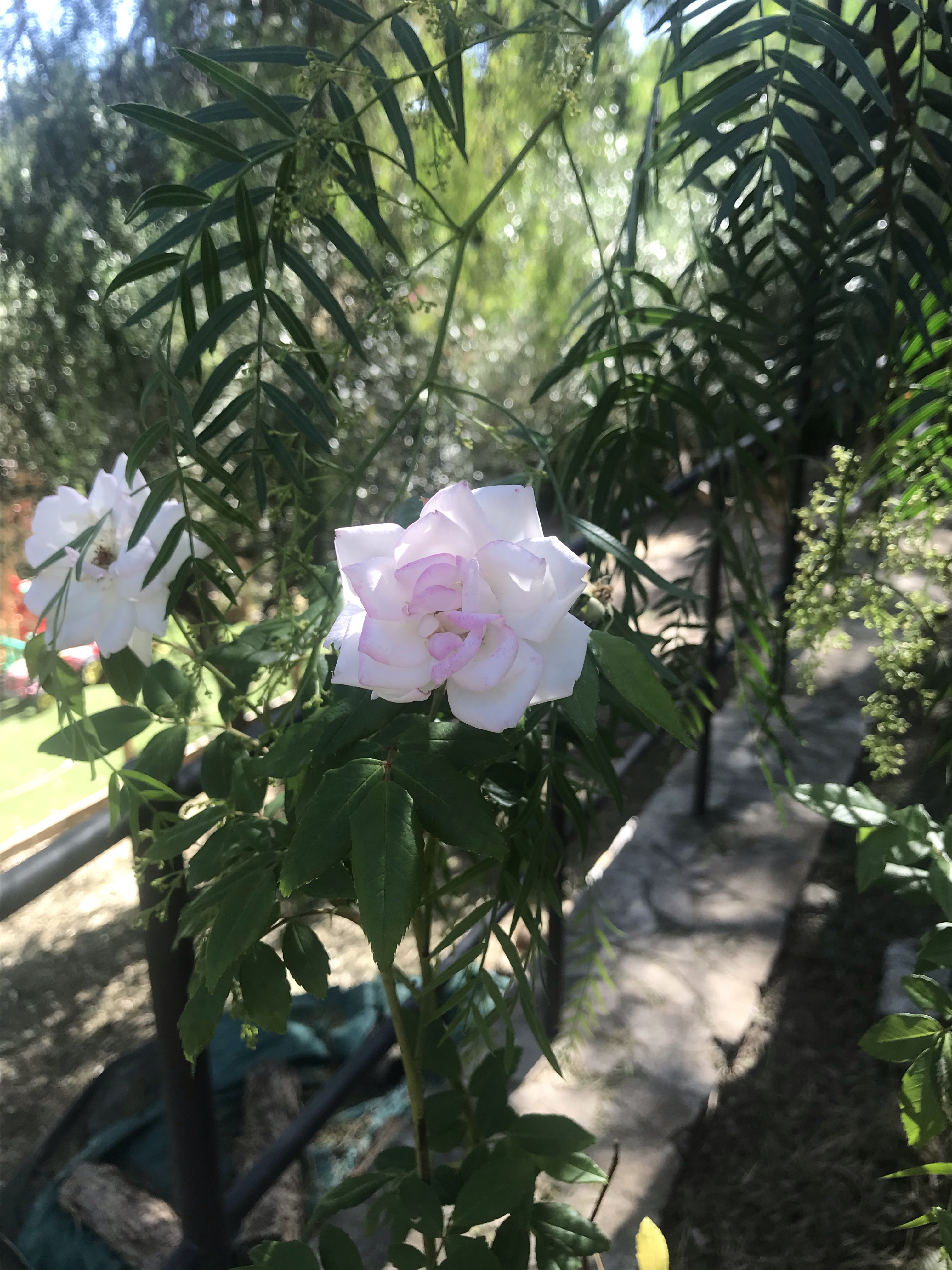
I have lived. My life has been rich and in some ways extraordinary. But I haven’t lived this. None of us have.
This moment in time is like no other. Will it pass too quickly? Is a return (to normal, to our lives as we were living) really what we want? I still believe we are – each of us, individually and collectively – at a threshold. Living in a liminal space. May we take the time to ponder, to reflect, to choose carefully our next steps.
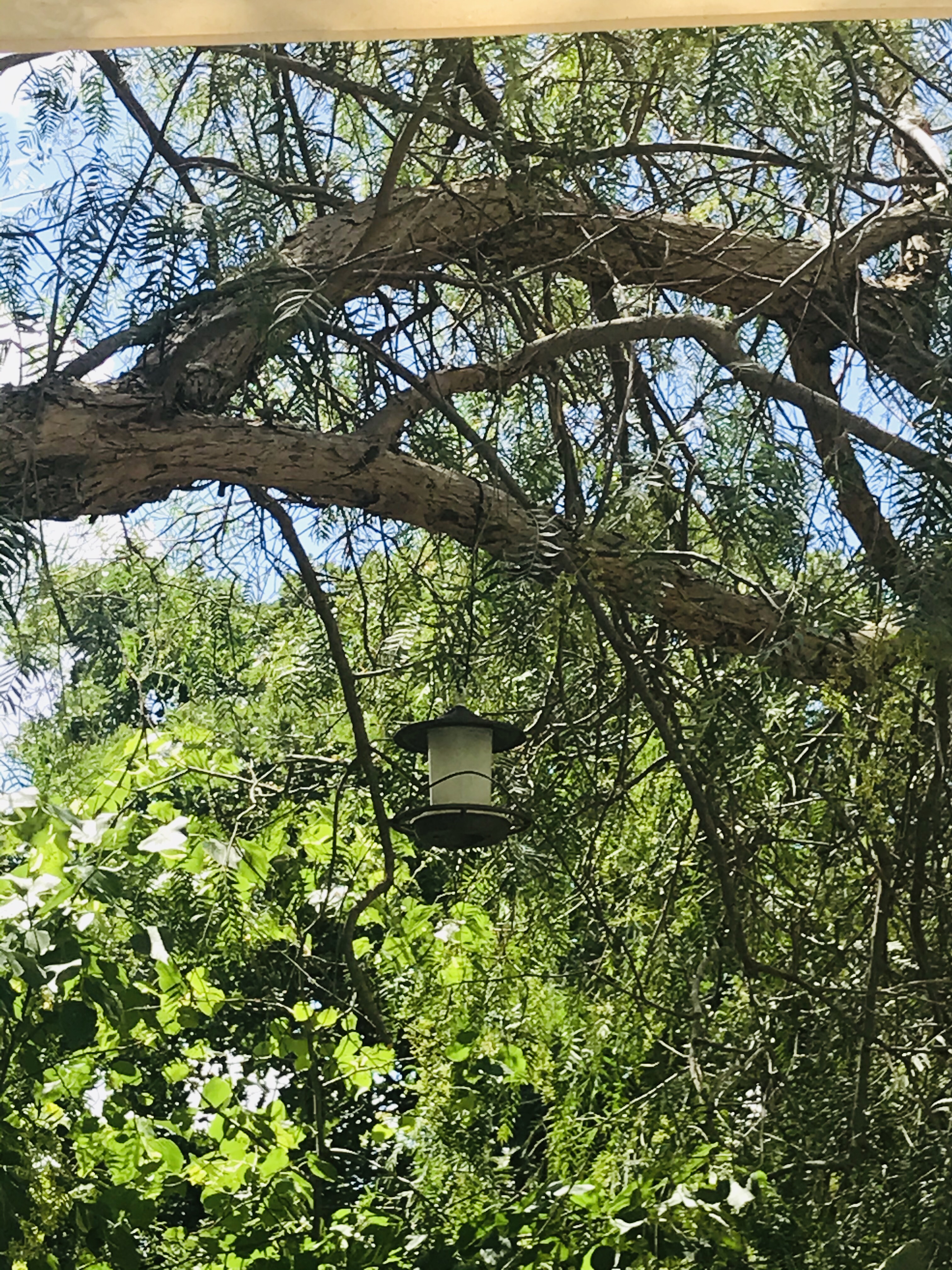
I came to the trees to rest and reflect. Which may seem odd after so many weeks of doing nothing but watching the sea. Only, as much as I love the water, it’s not my element. (Despite being a double Pisces.) I need land and trees and things growing around me. This is my childhood imprint. Here, I am home.

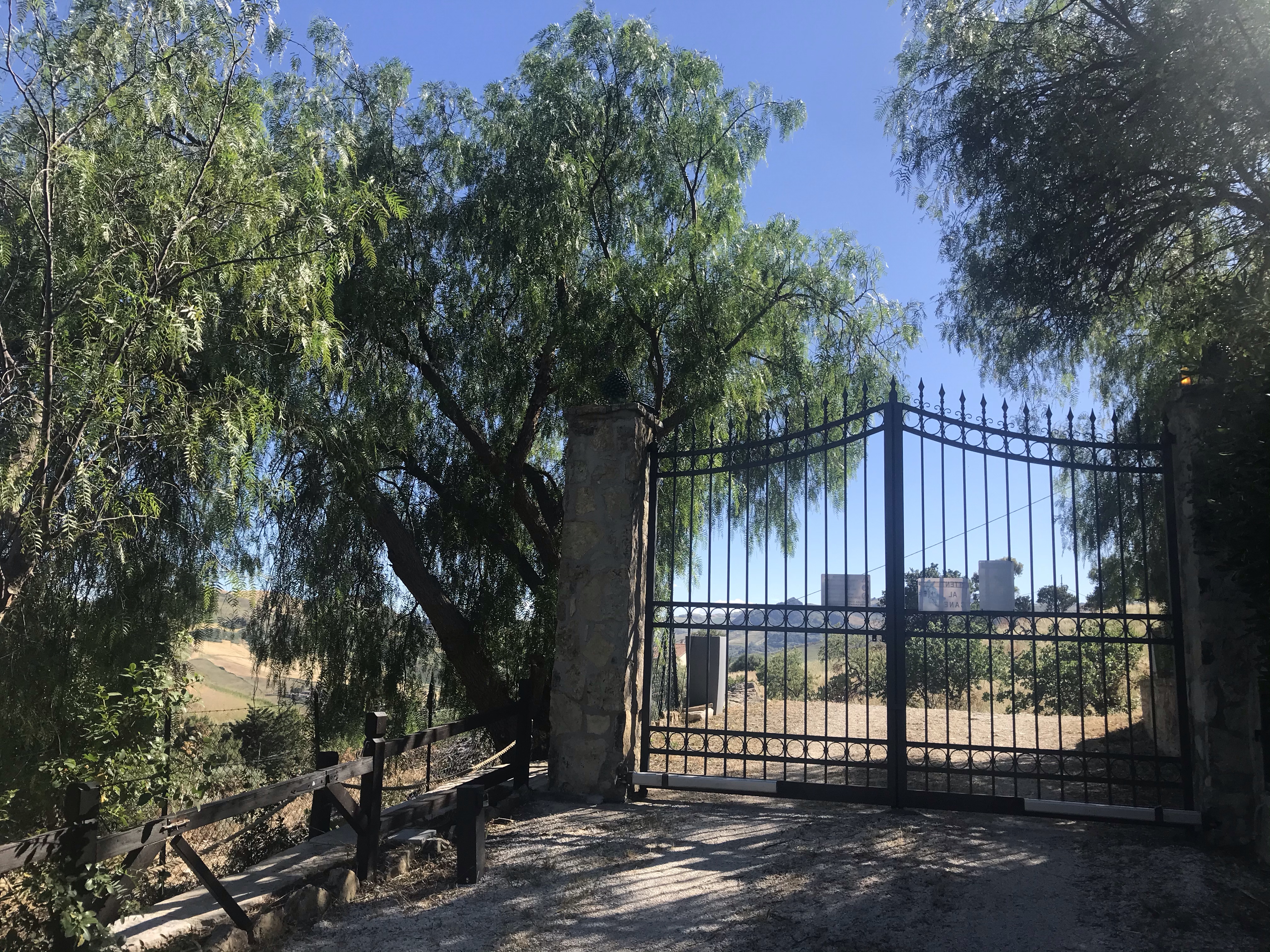
Bruno, the property canine, is watching with me. Looking up, sniffing around, napping. Dog is my totem. And this is my landscape. Here is where I recapture, remember, and recommit to what I know. May you, in your special place, be able to do the same.
“The Supreme Critic on the errors of the past and the present, and the only prophet of that which must be, is that great nature in which we rest, as the earth lies in the soft arms of the atmosphere; that Unity, that Over-Soul, within which every man’s particular being is contained and made one with all other; that common heart, of which all sincere conversation is the worship, to which all right action is submission; that overpowering reality which confutes our tricks and talents, and constrains every one to pass for what he is, and to speak from his character, and not from his tongue, and which evermore tends to pass into our thought and hand, and become wisdom, and virtue, and power, and beauty. We live in succession, in division, in parts, in particles. Meantime within man is the soul of the whole; the wise silence; the universal beauty, to which every part and particle is equally related; the eternal ONE. And this deep power in which we exist, and whose beatitude is all accessible to us, is not only self-sufficing and perfect in every hour, but the act of seeing and the thing seen, the seer and the spectacle, the subject and the object, are one. We see the world piece by piece, as the sun, the moon, the animal, the tree; but the whole, of which these are the shining parts, is the soul. Only by the vision of that Wisdom can the horoscope of the ages be read, and by falling back on our better thoughts, by yielding to the spirit of prophecy which is innate in every man, we can know what it saith.” – Ralph Waldo Emerson “The Over-Soul” (1841)

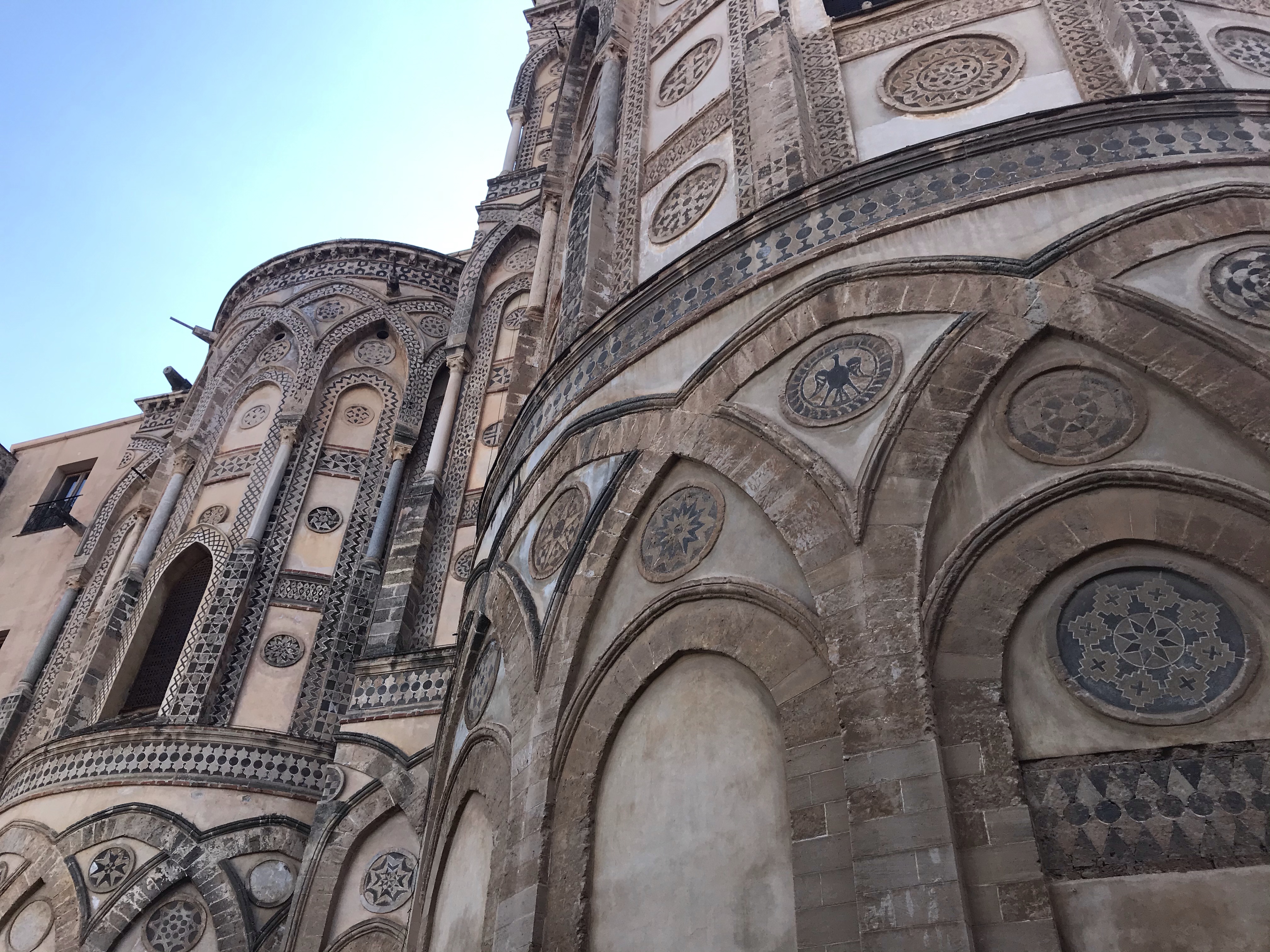
Monreale Cathedral

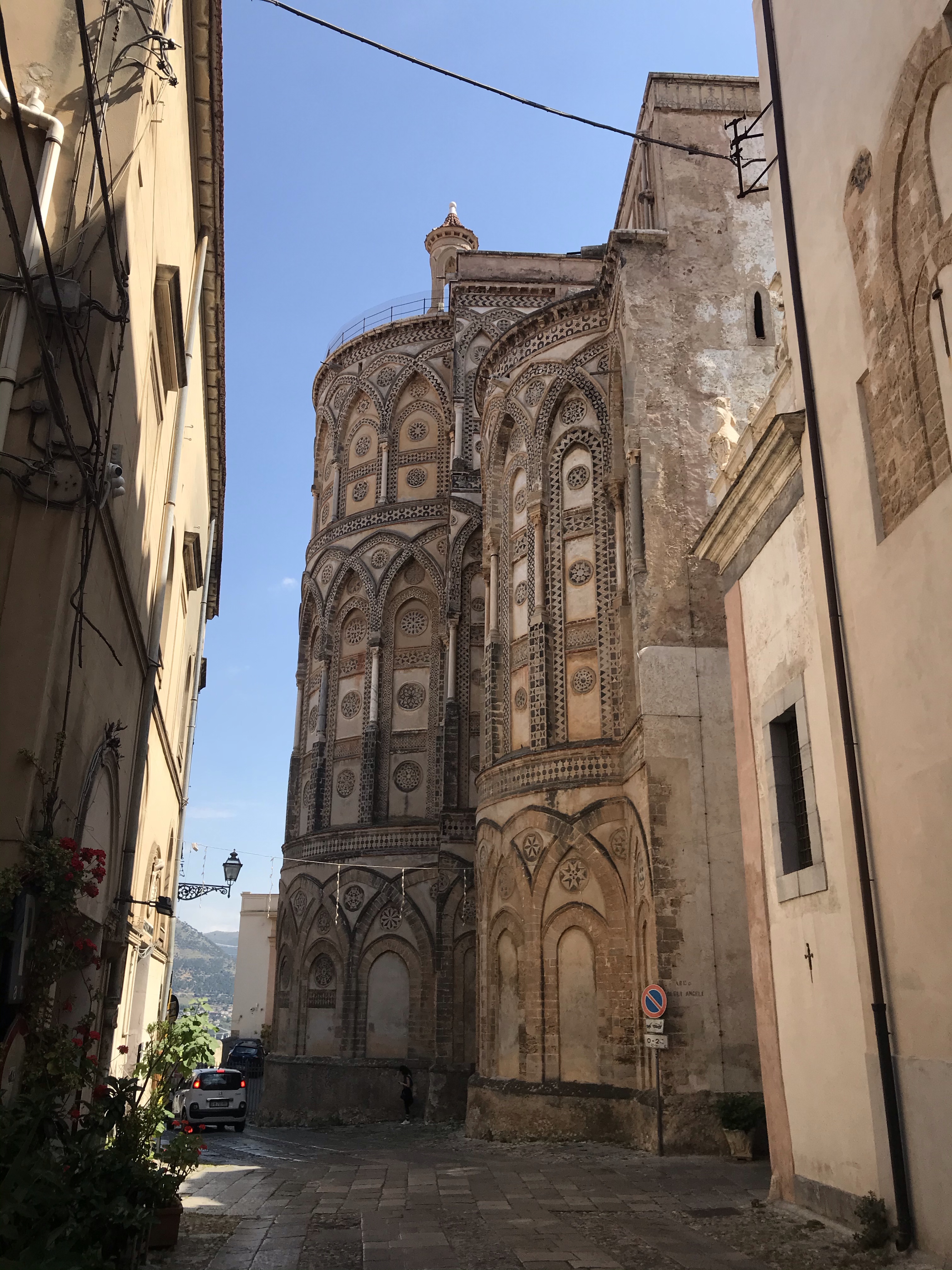
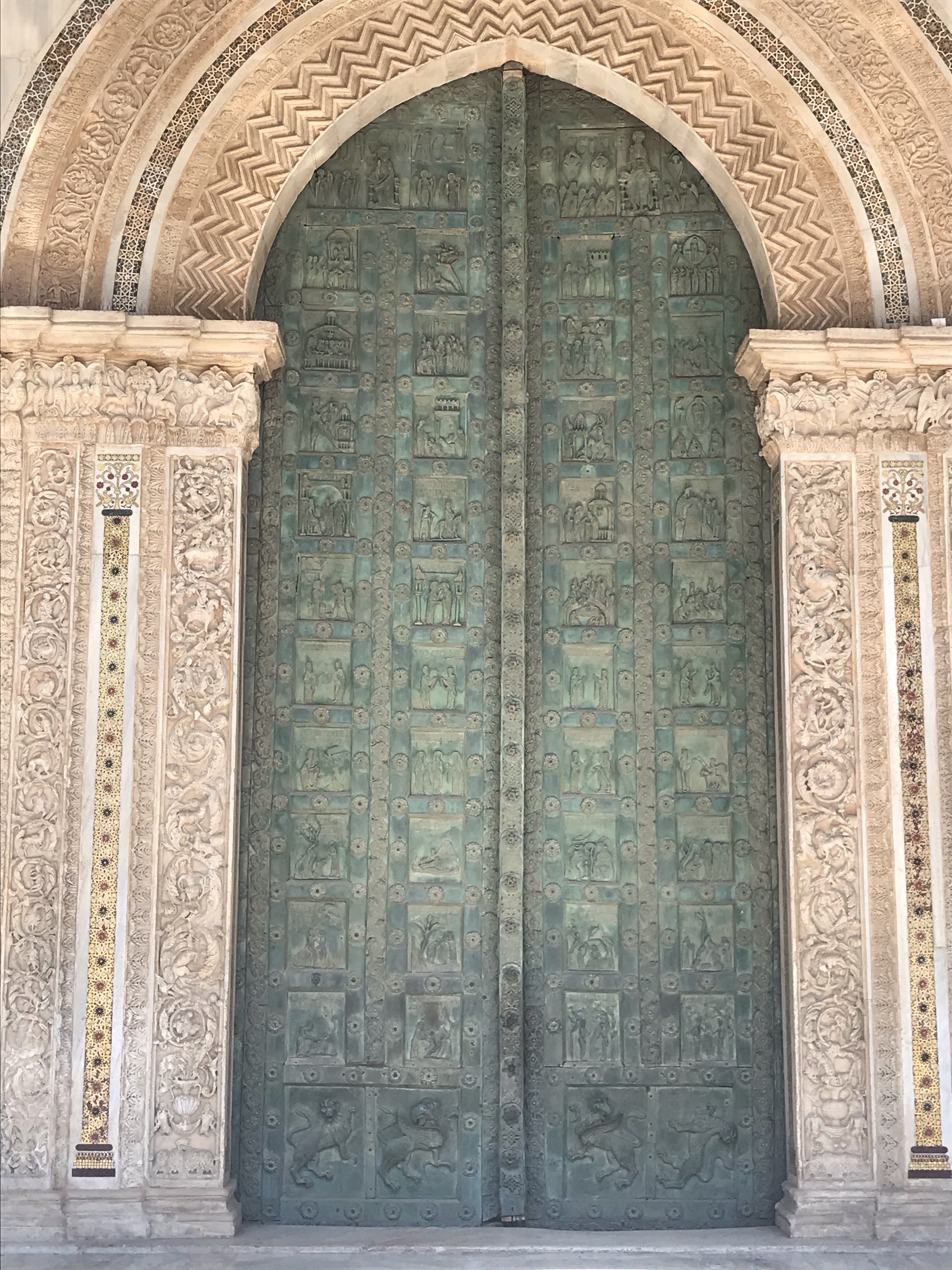
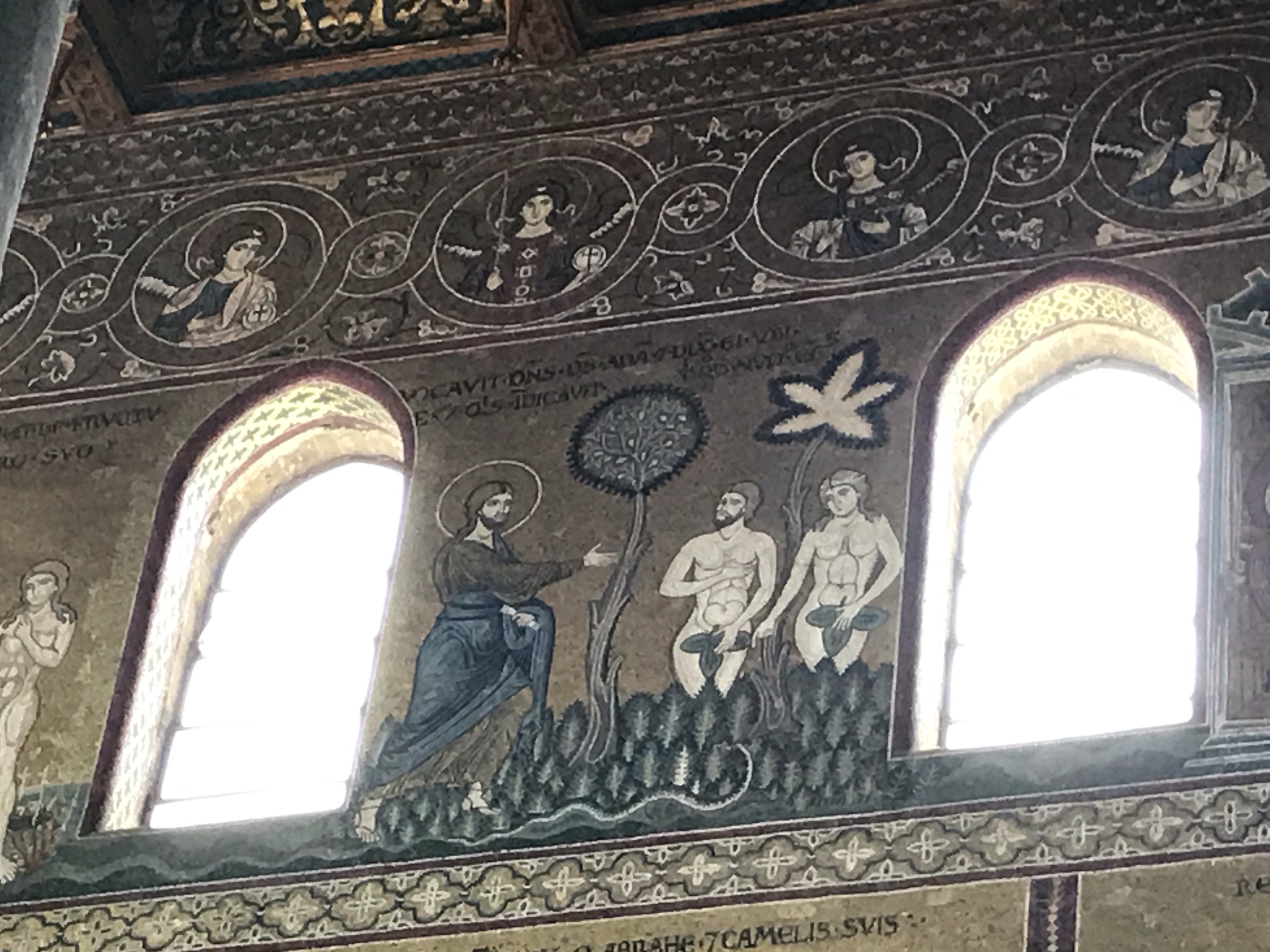
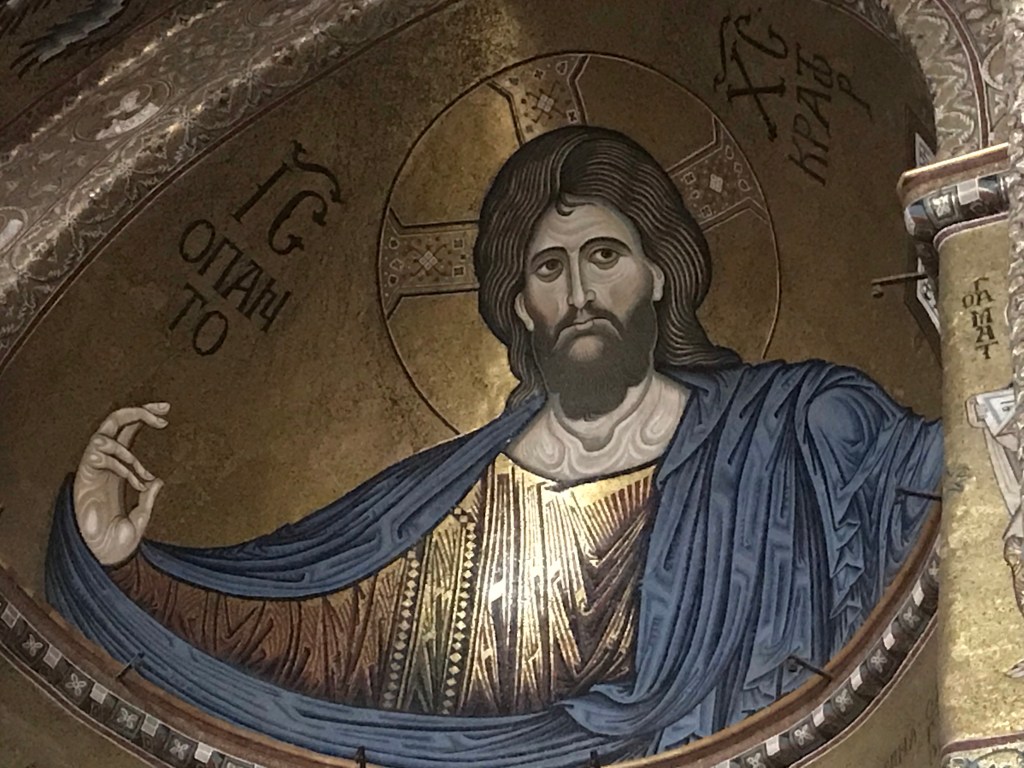
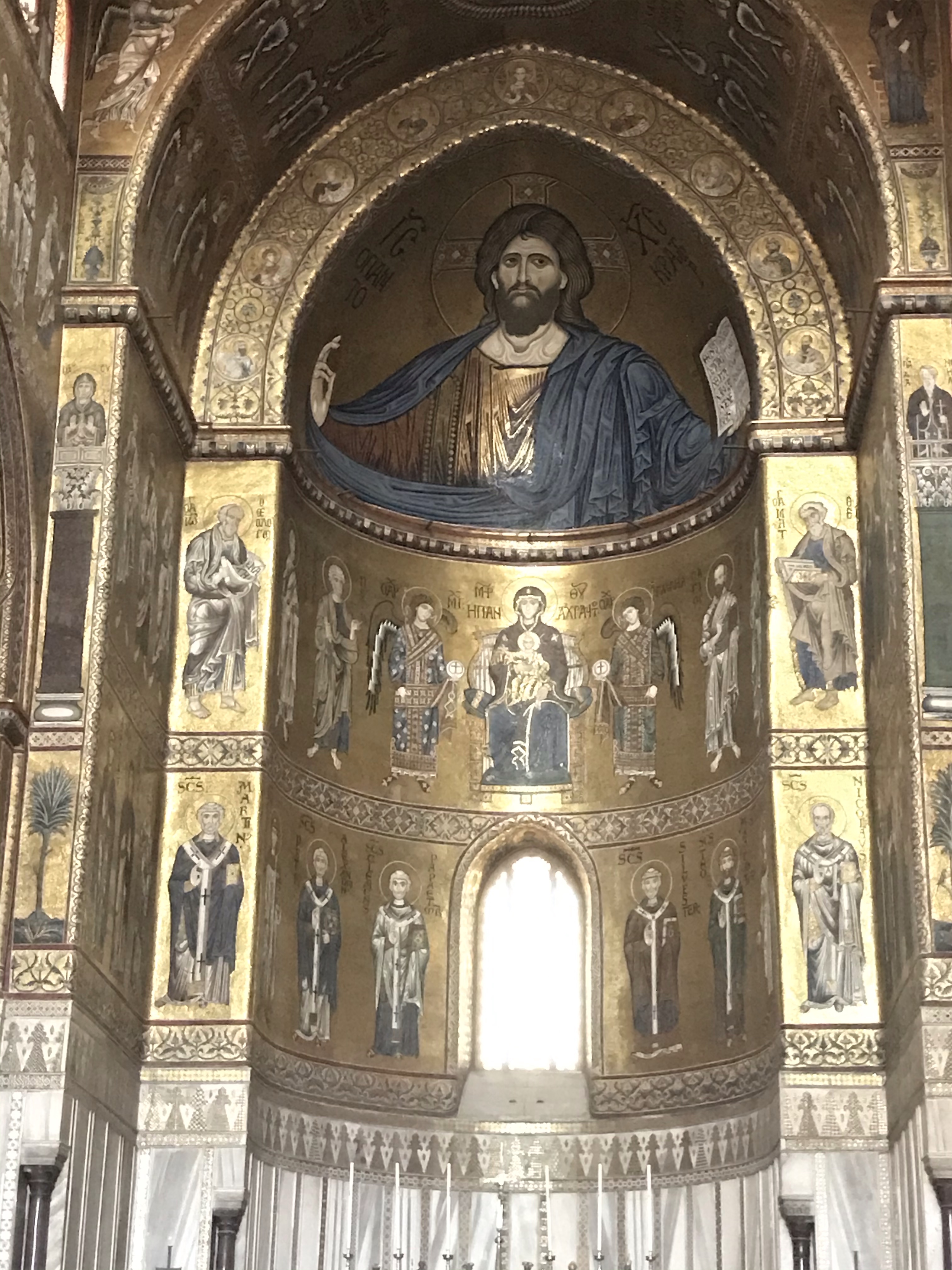
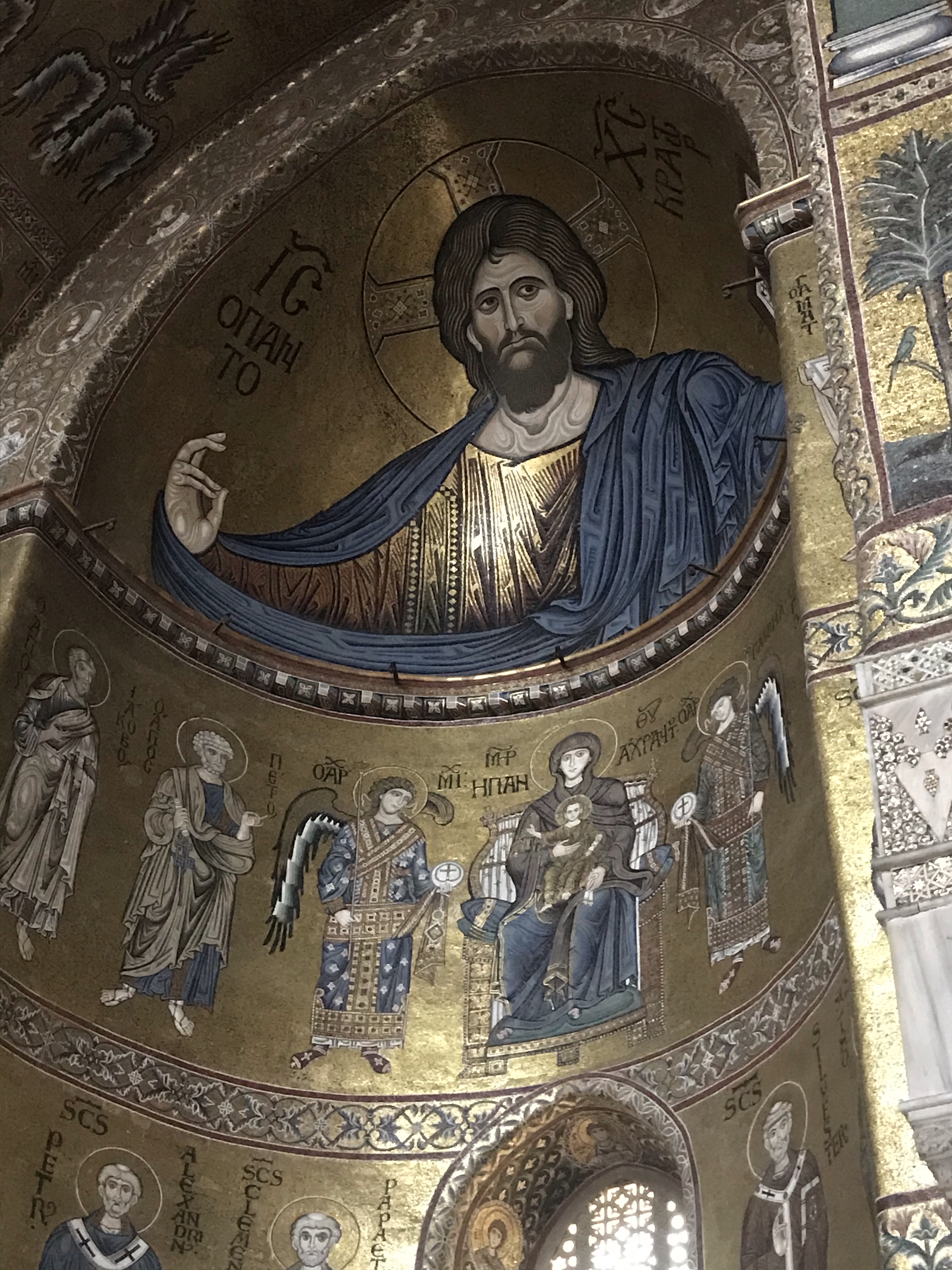
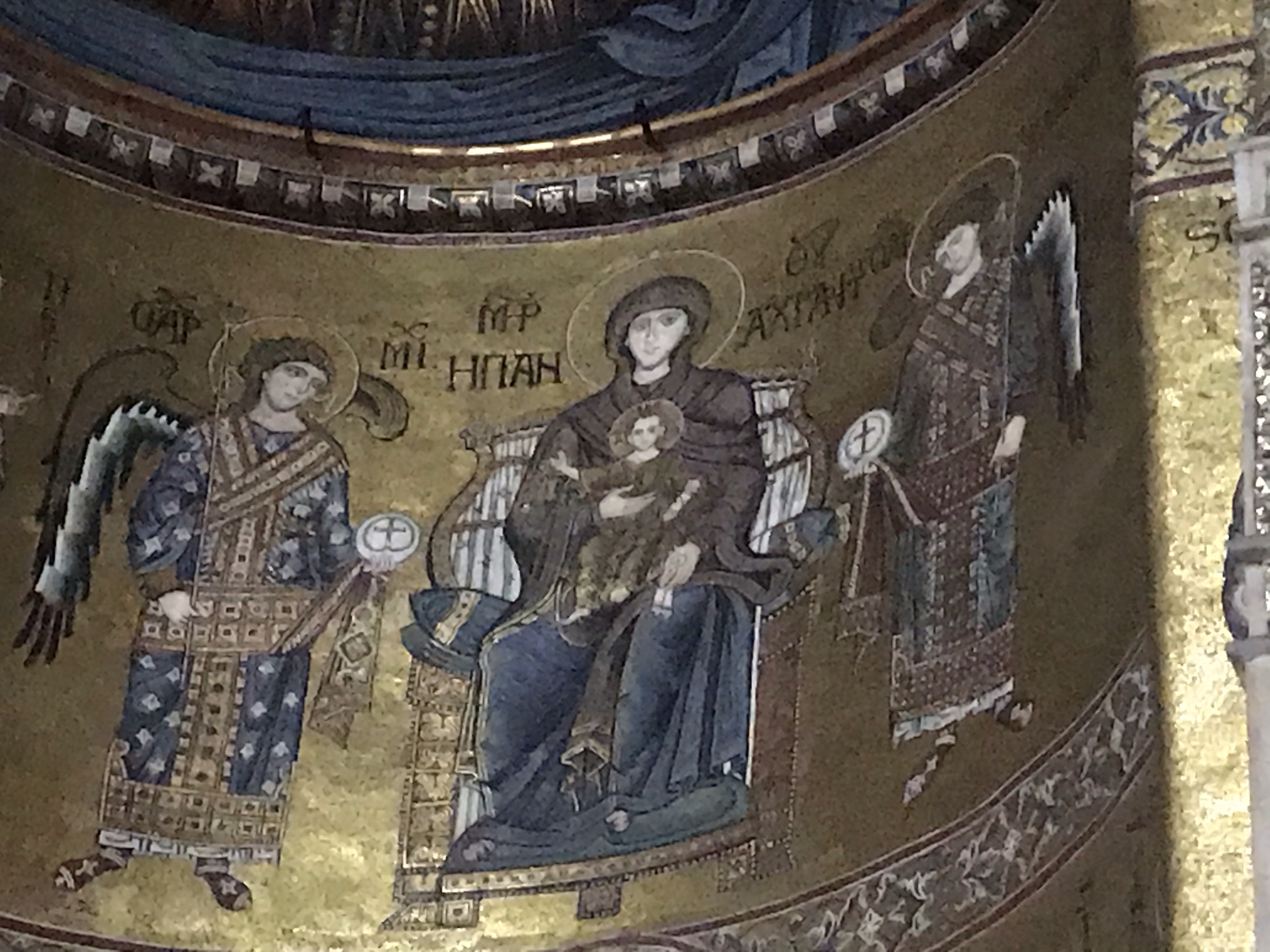
The town of Monreale (meaning “royal mountain”) sits 300 meters above sea level, overlooking Palermo. The Monreale Cathedral, built between 1170 and 1189 AD, is considered the most beautiful church in all of Sicily. A unique blend of Norman-Romanesque architecture and Byzantine craftsmanship, with additional Arab influences, it contains 6,000 square meters of mosaics made with 2200 kg of pure gold.
Somewhere I read (though I can’t find the source now) a Sicilian saying that if you go to Palermo a donkey and don’t visit Monreale, you return an ass. Not wanting that moniker hanging over my head, I obviously needed to take the drive and see what the fuss was about before leaving Balestrate. It did not disappoint. These photos fail to capture the glory of this place.



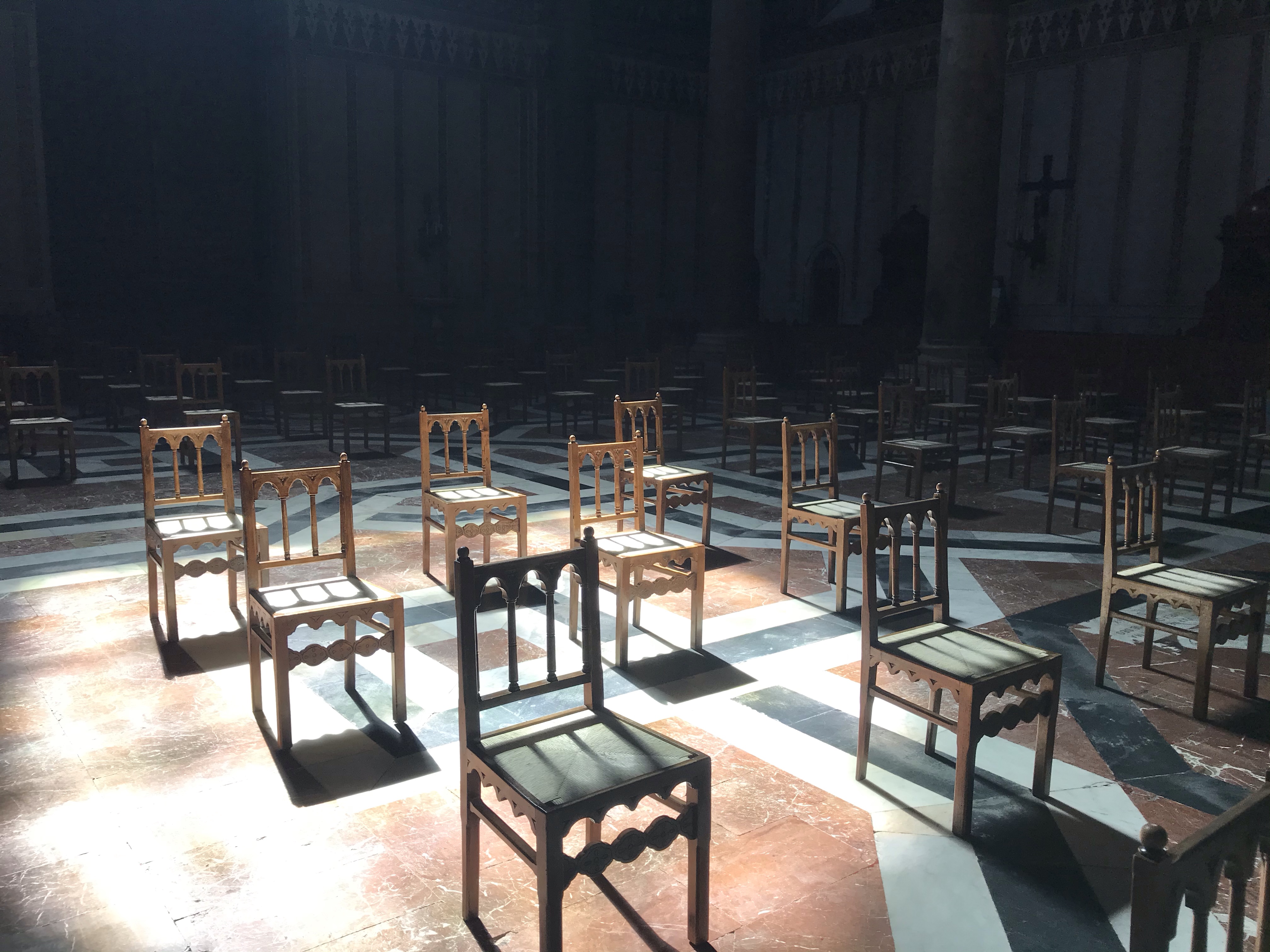
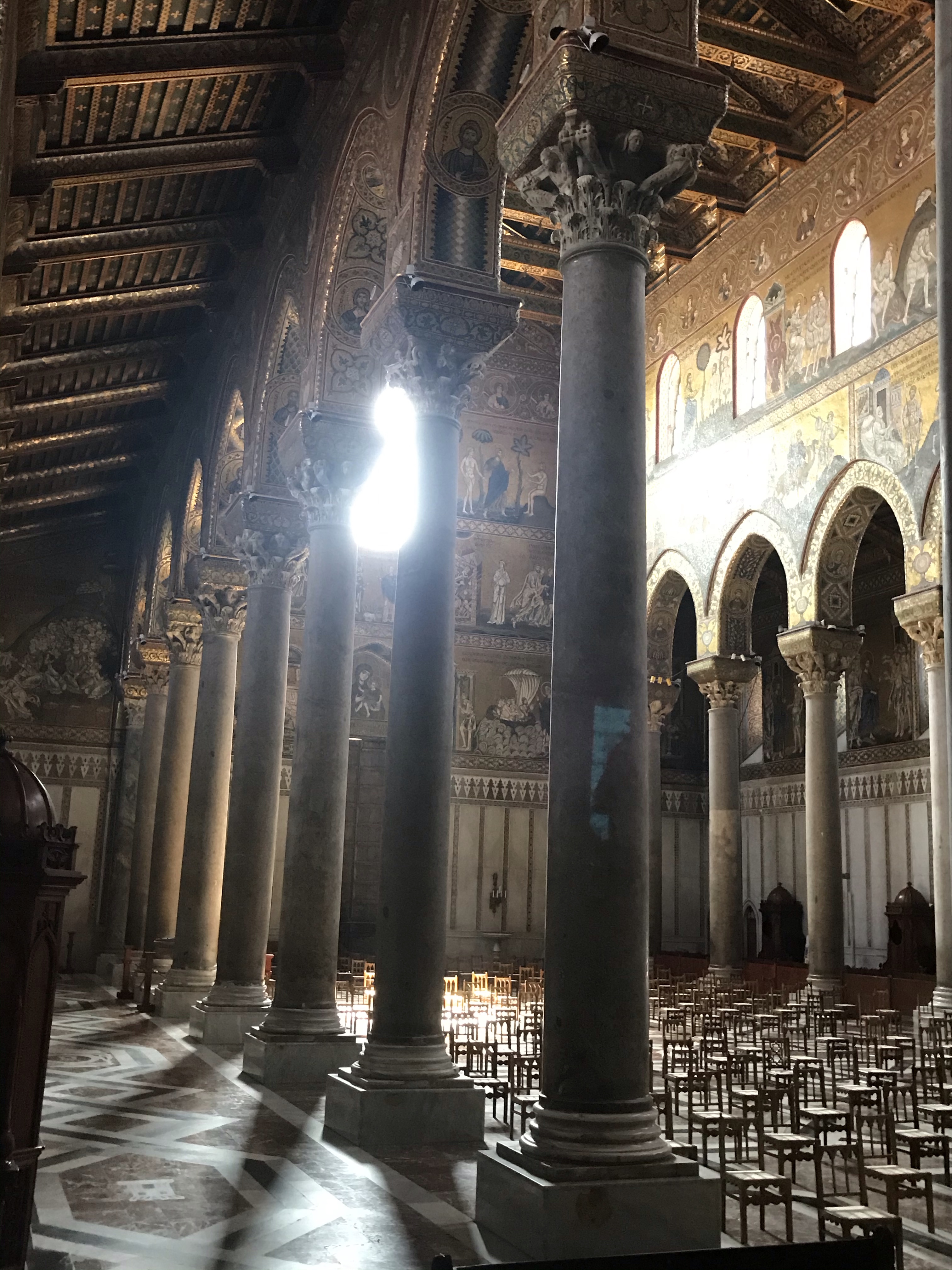
The first thing that struck me: in an empty cathedral, the almost eeriness of social distanced chairs.




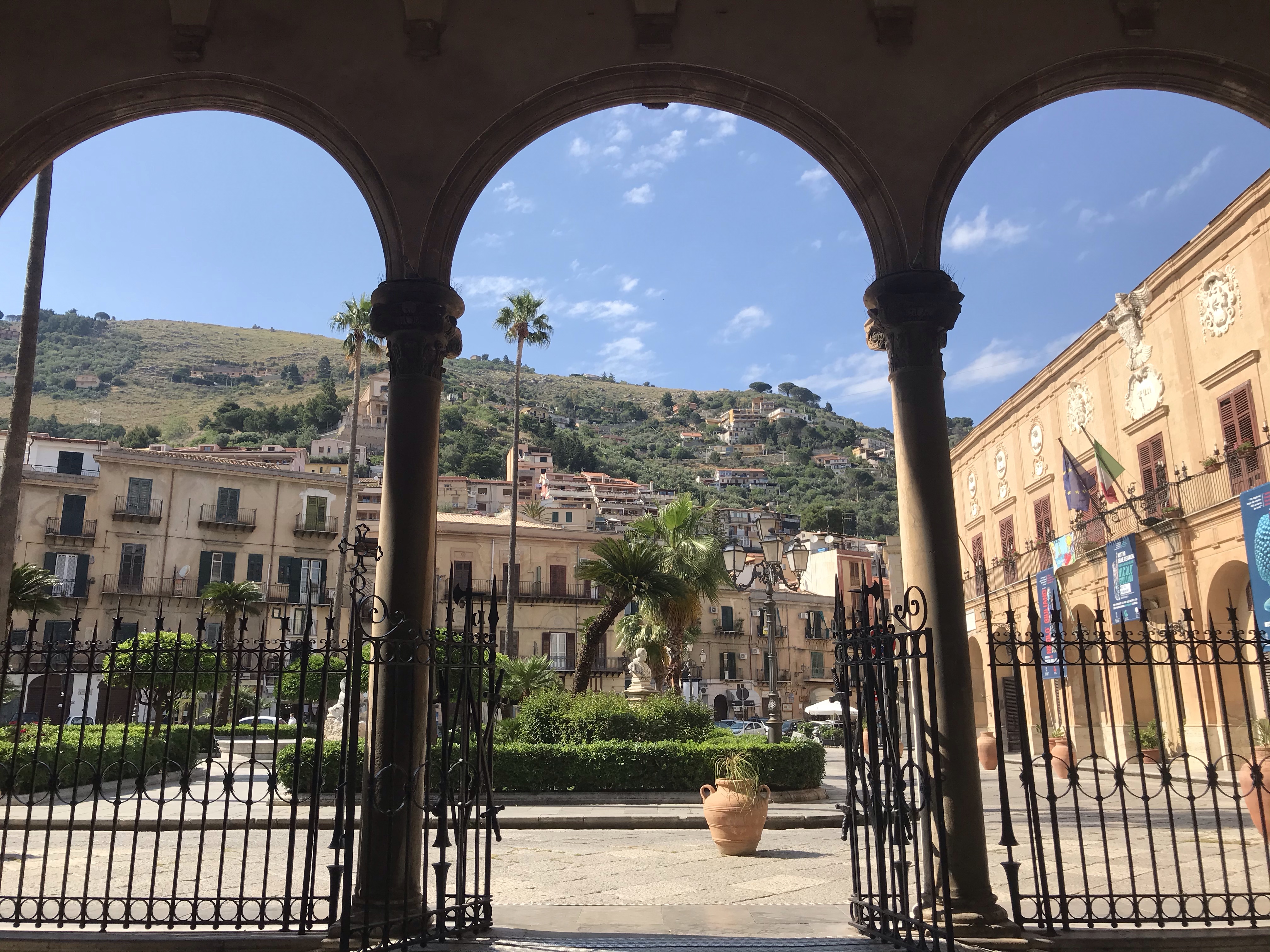
Le Luminarie, My Quarantine Home
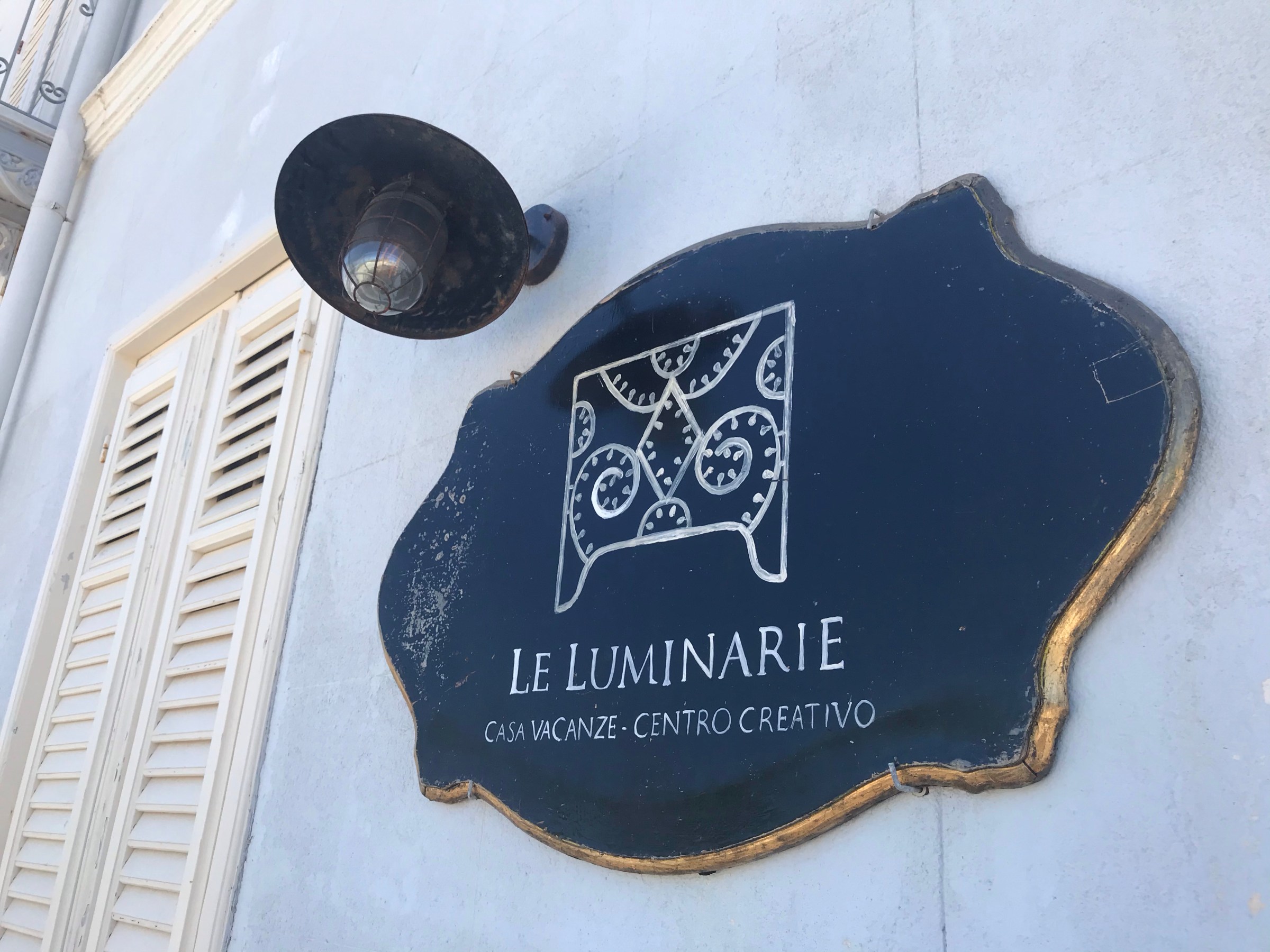
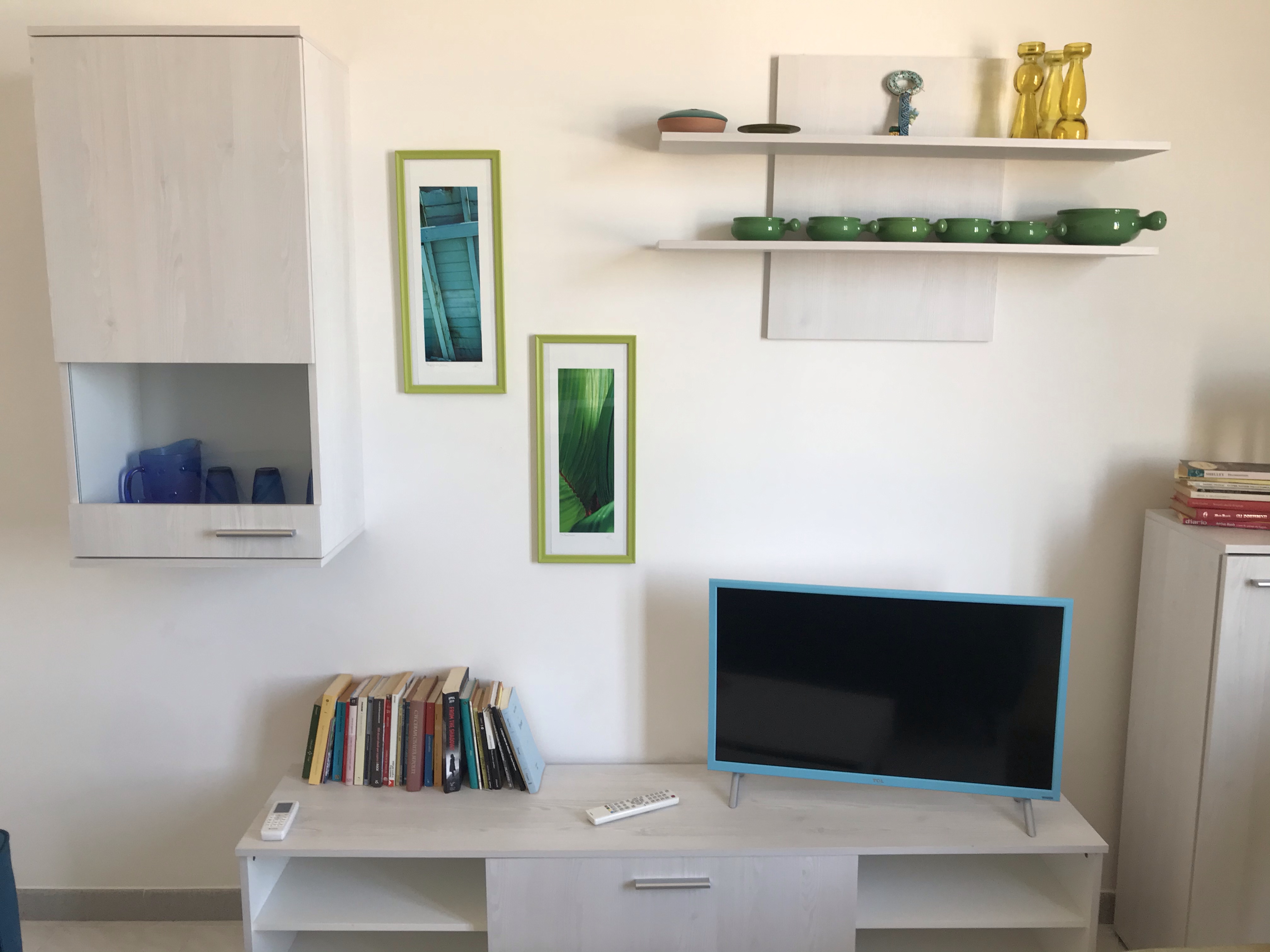
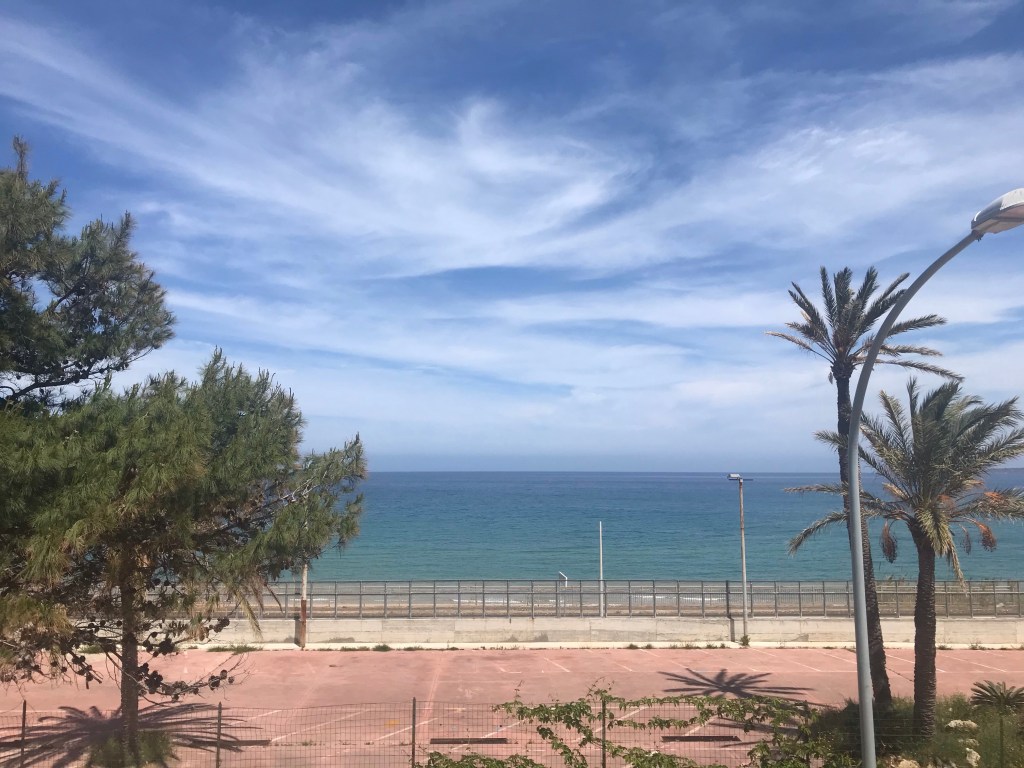
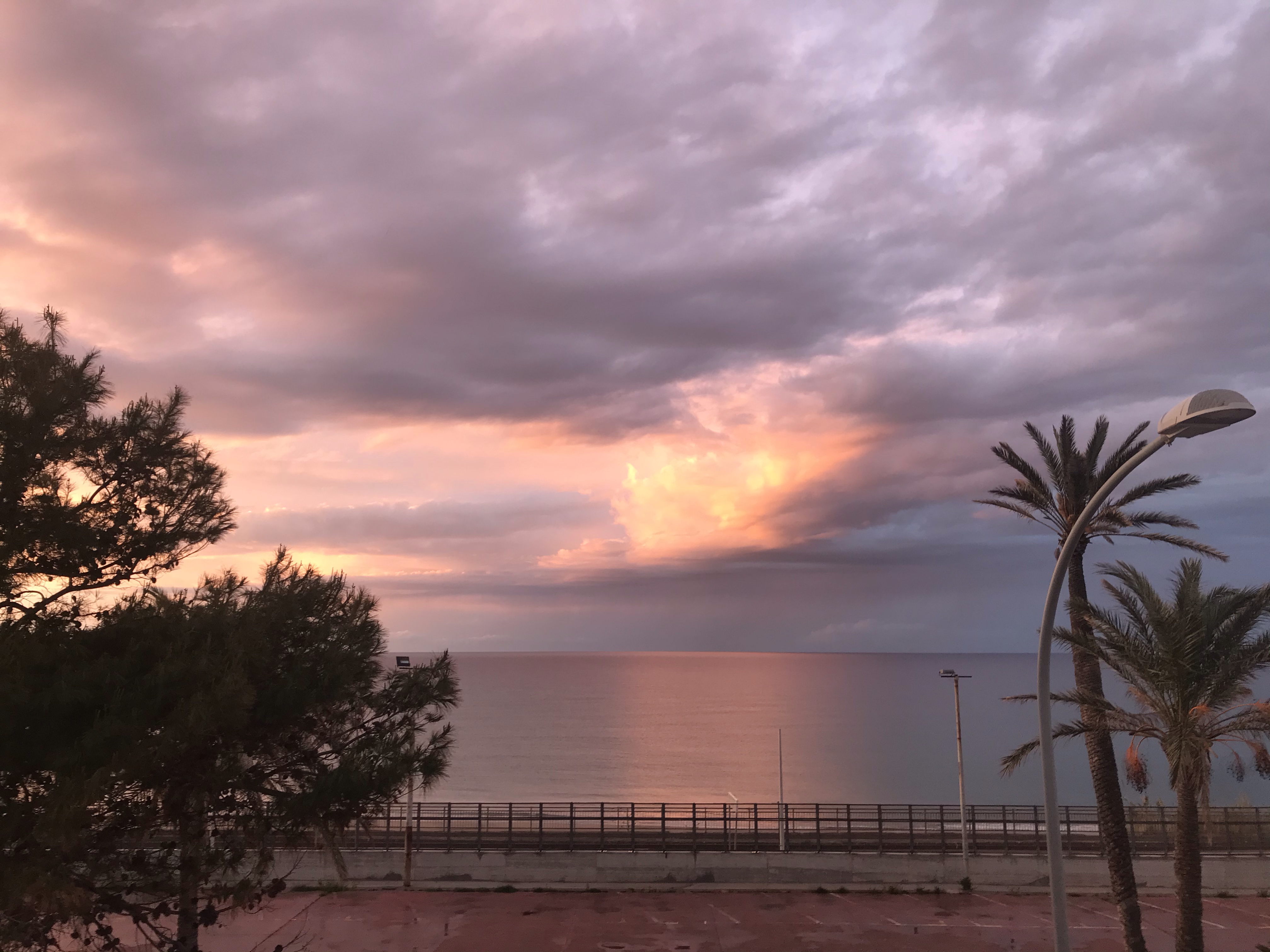
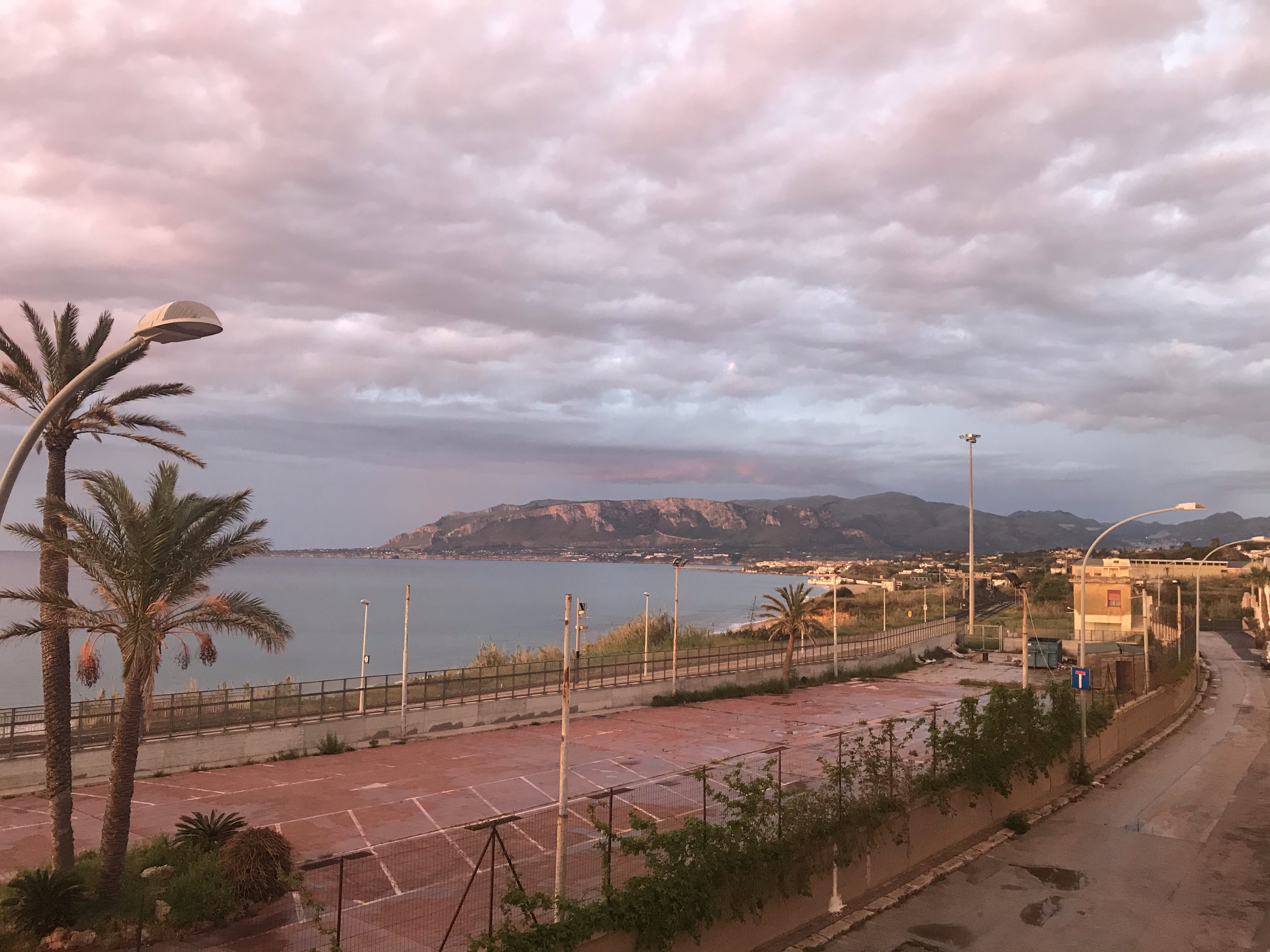
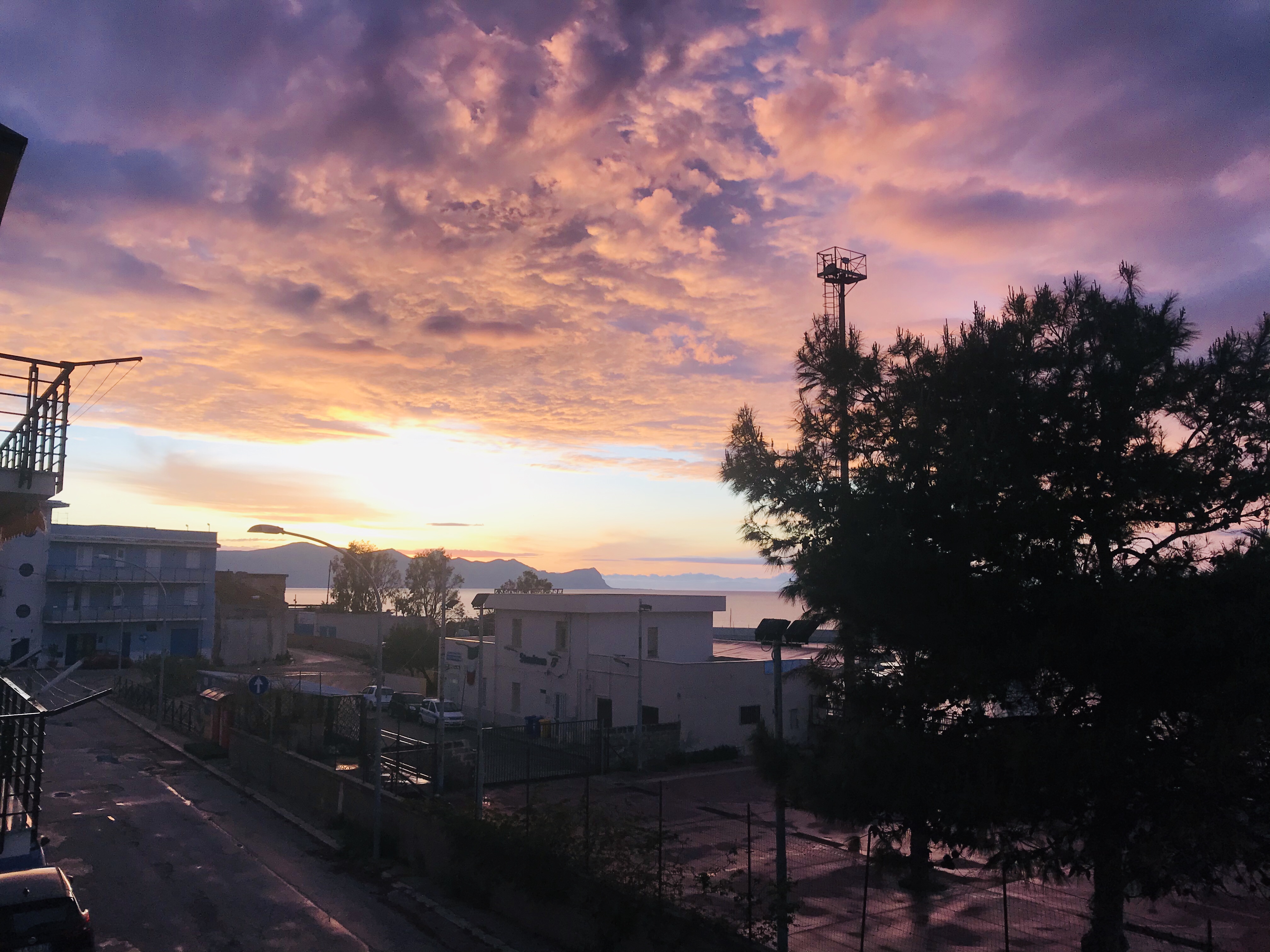
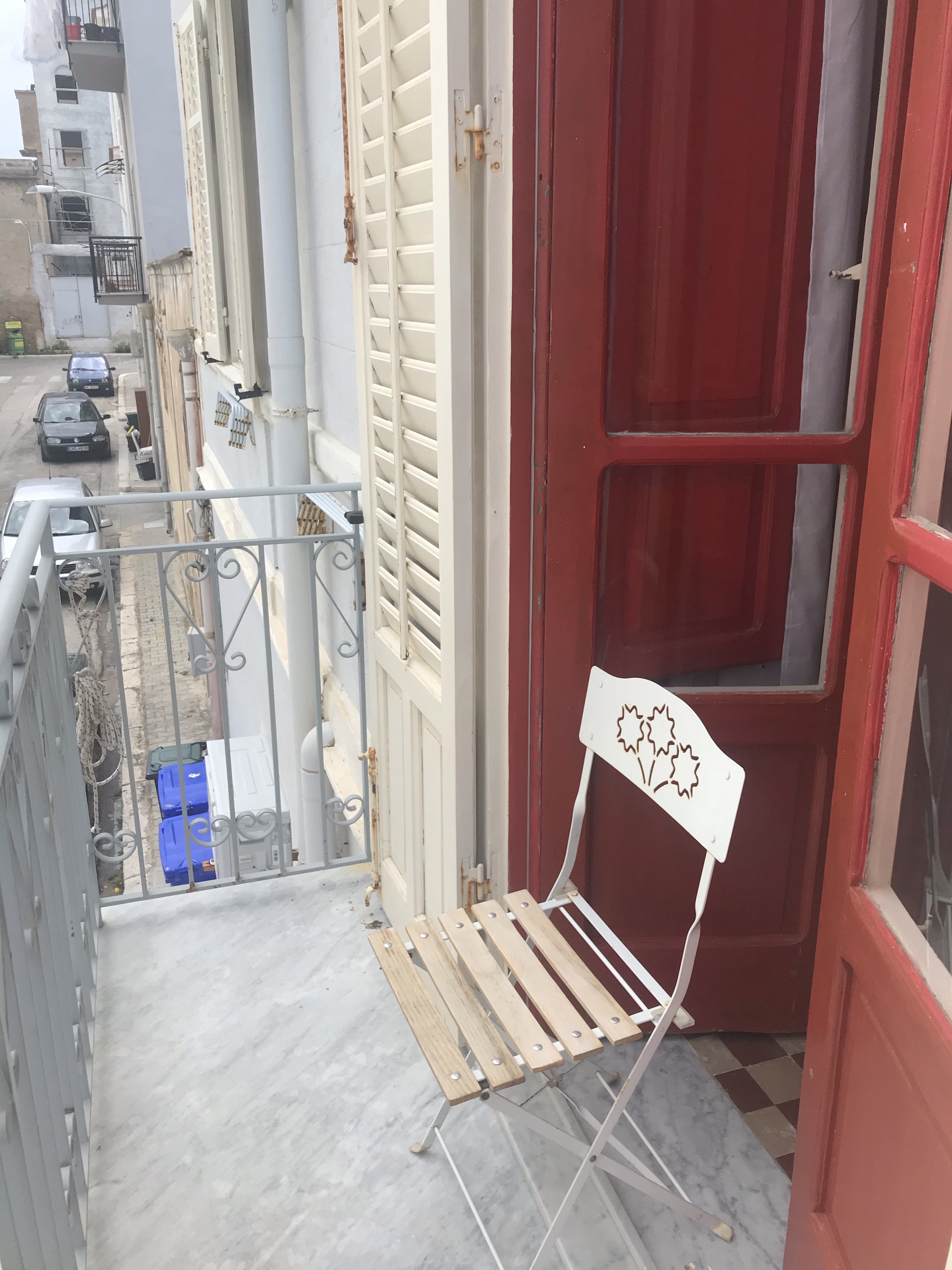
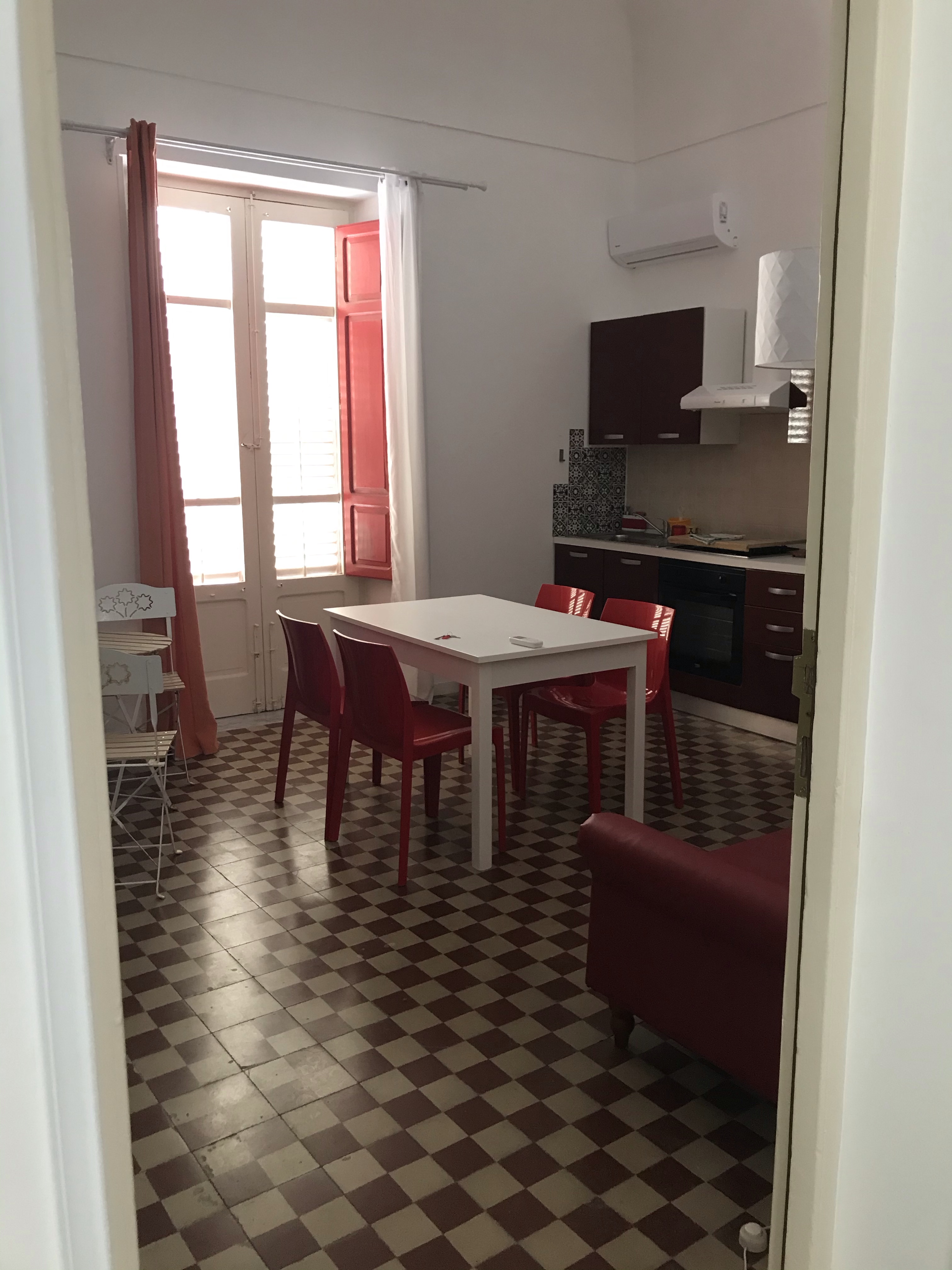
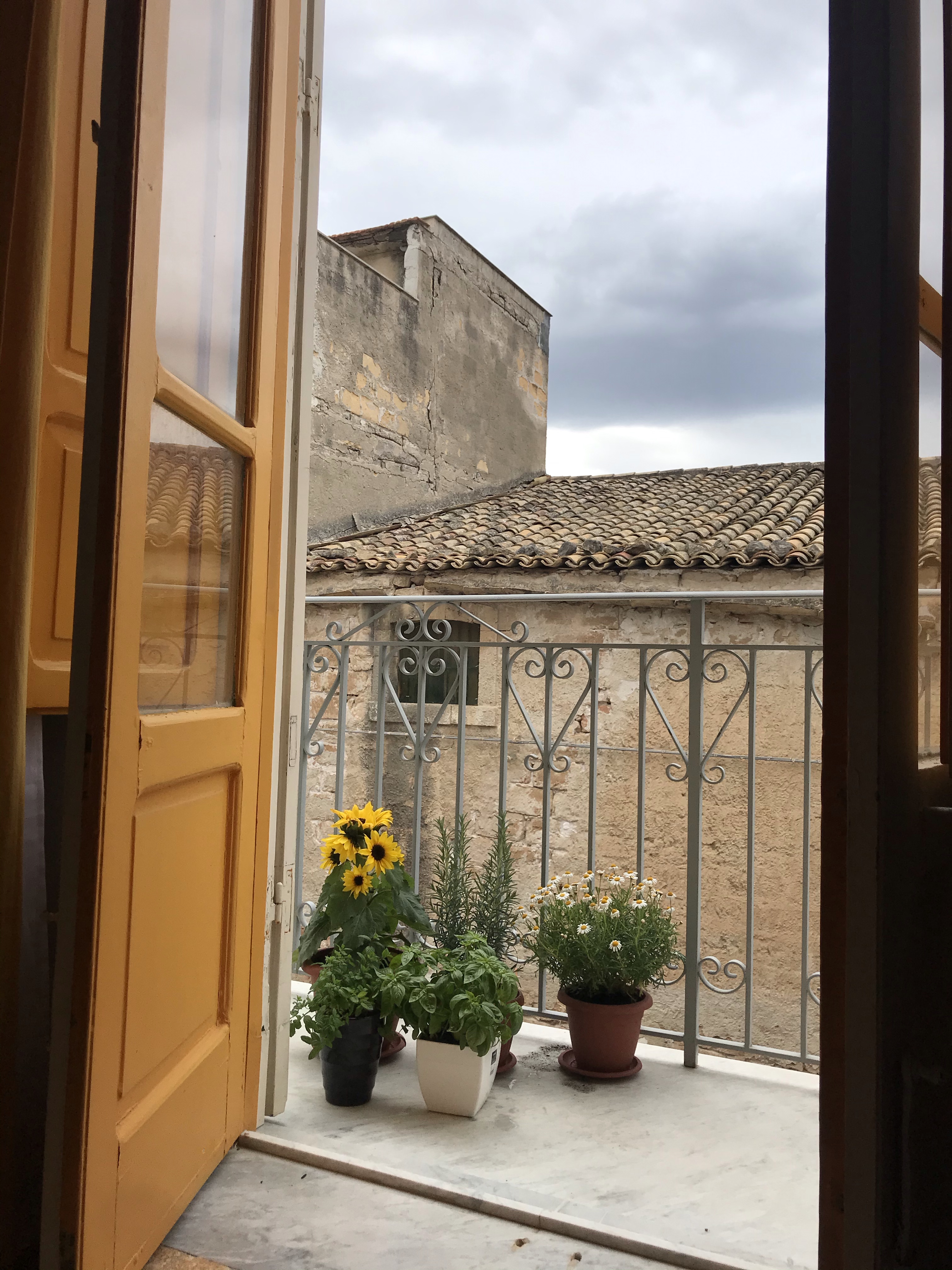
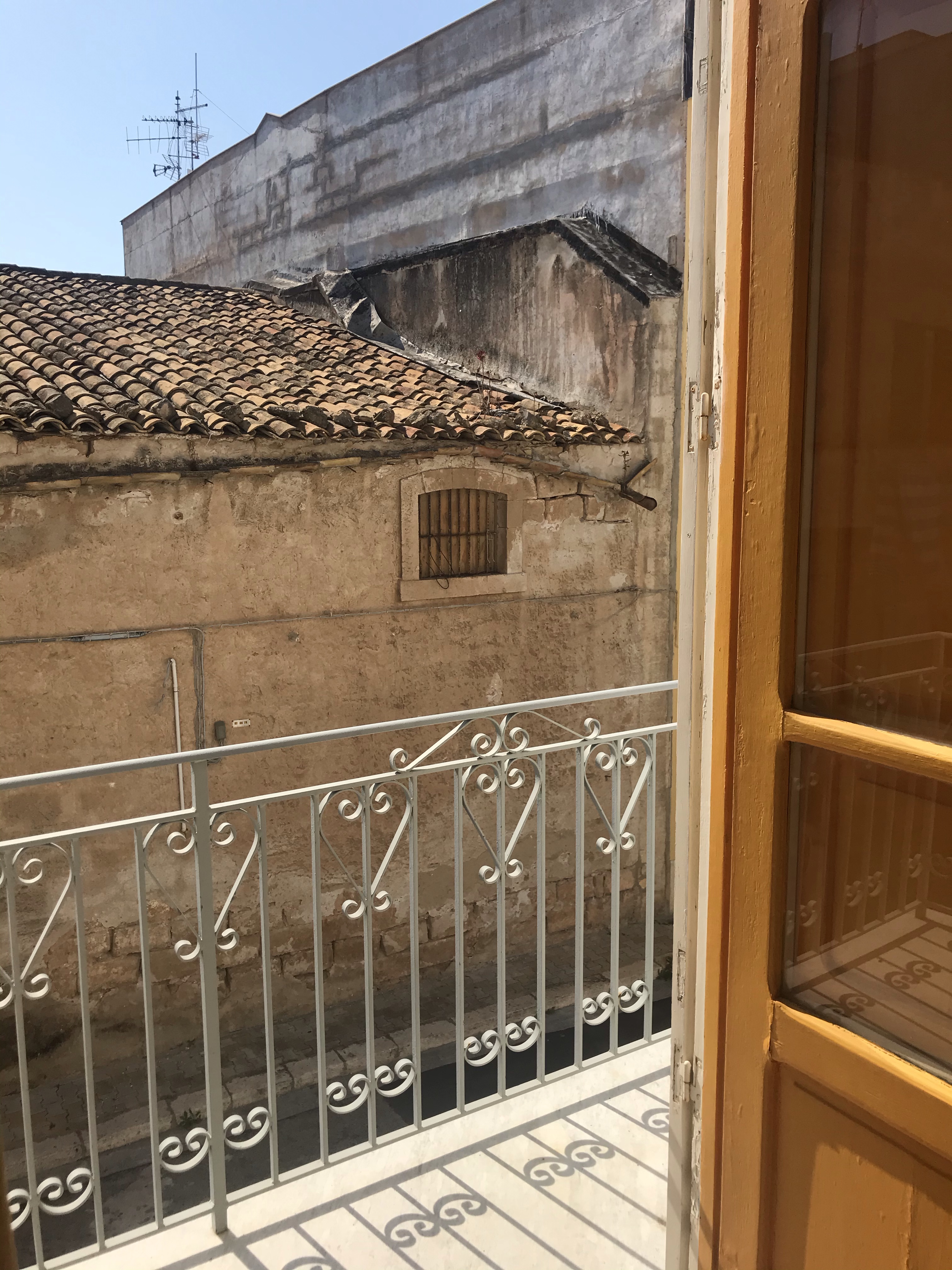
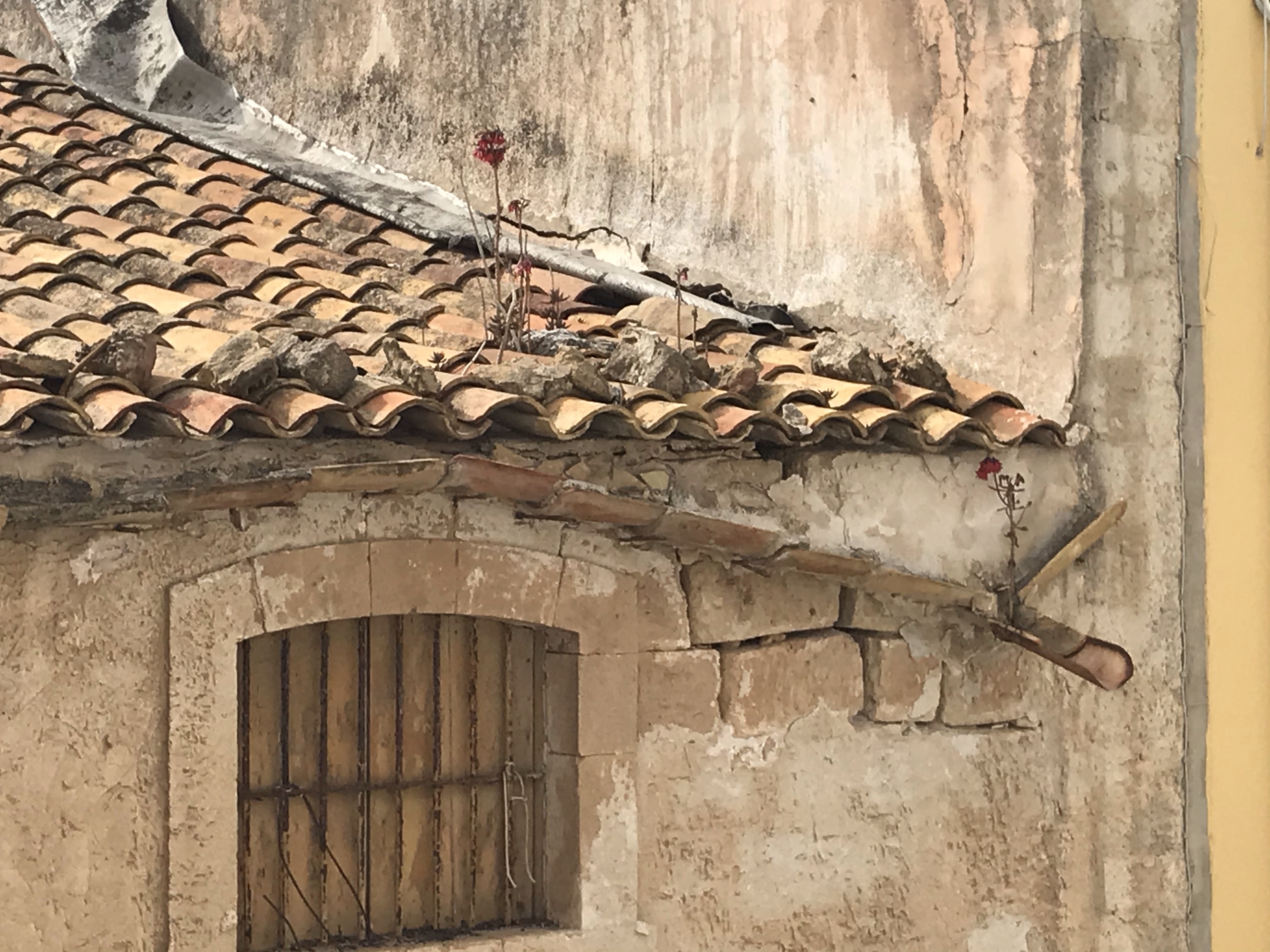
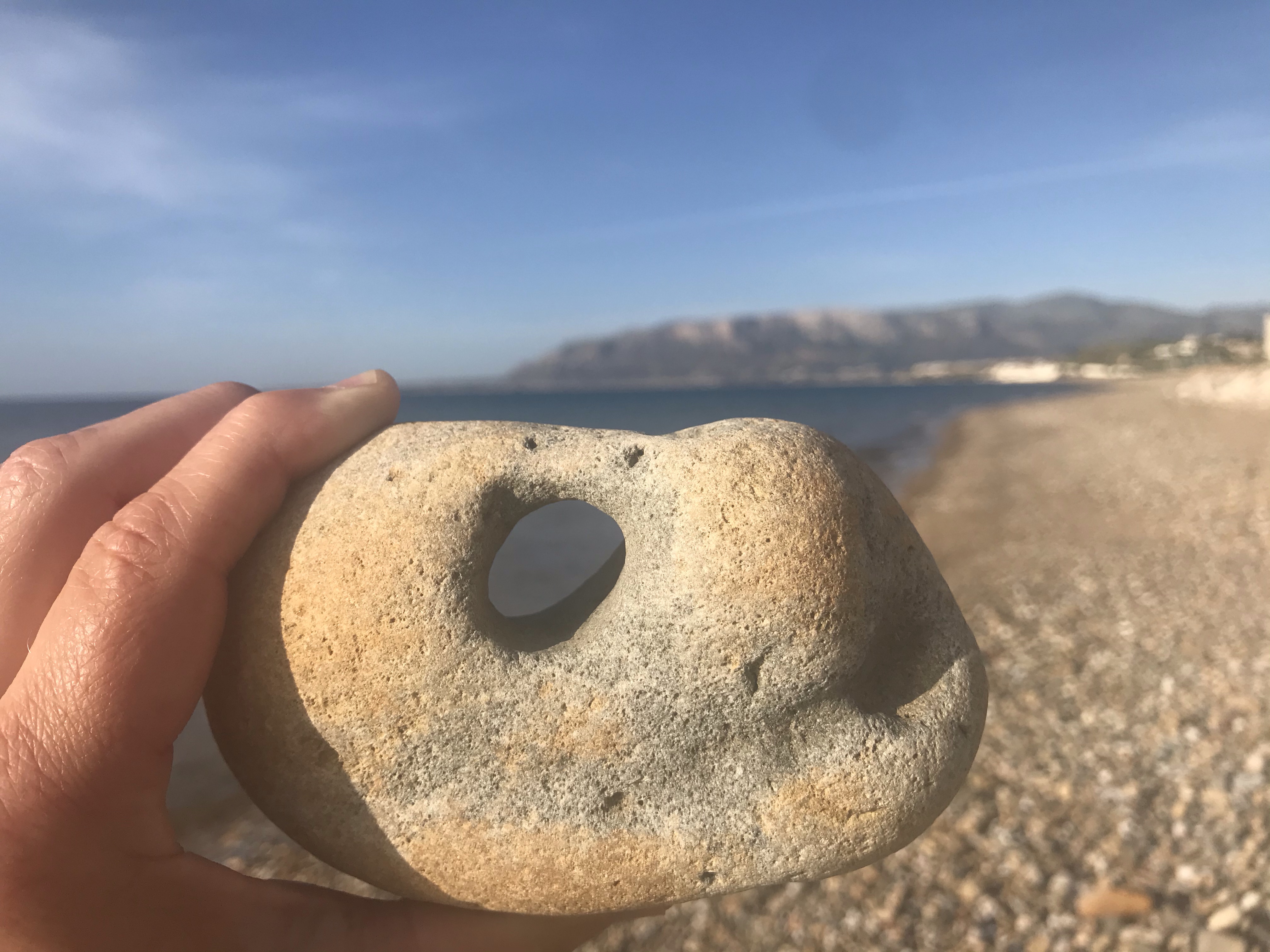
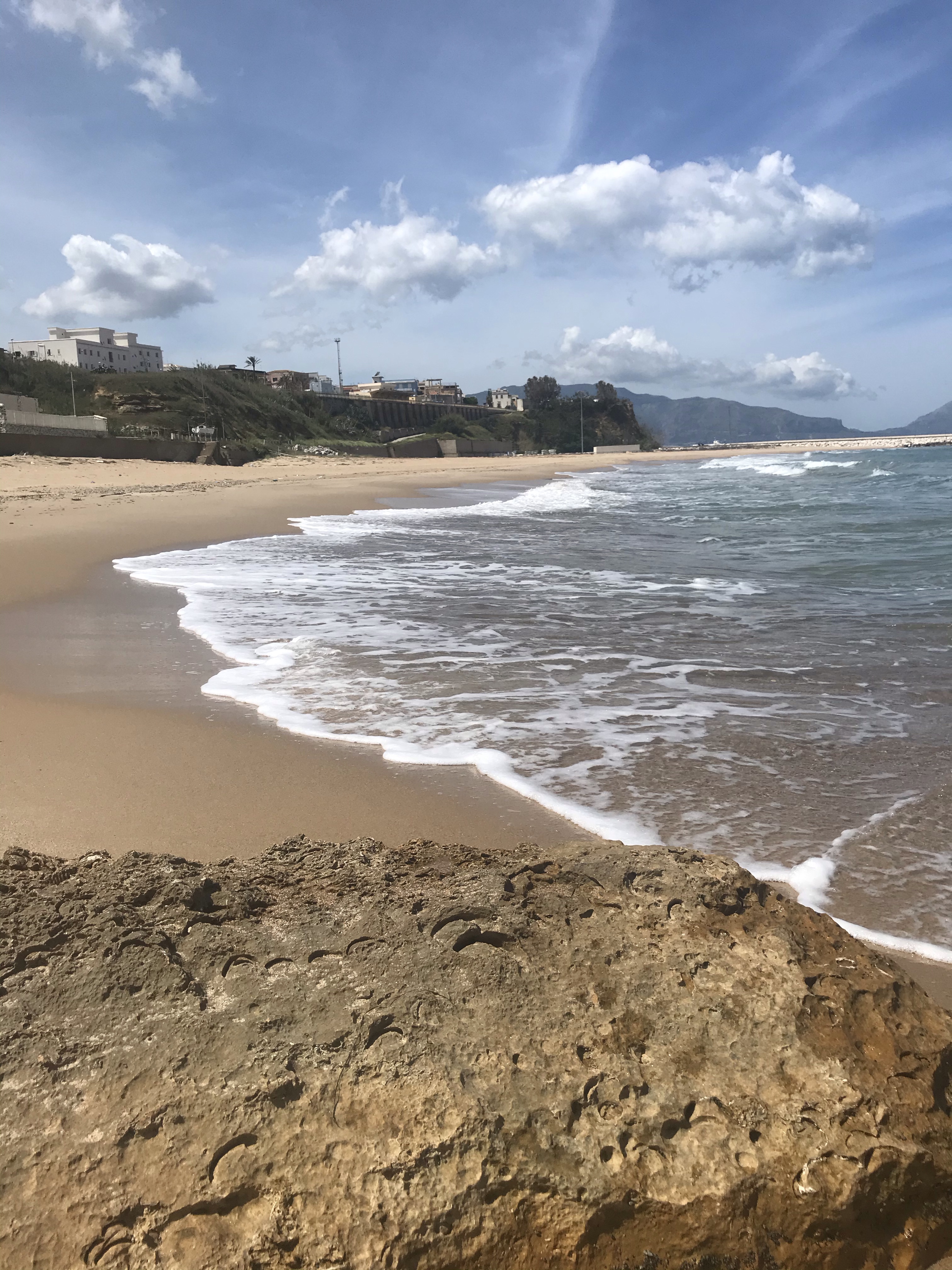
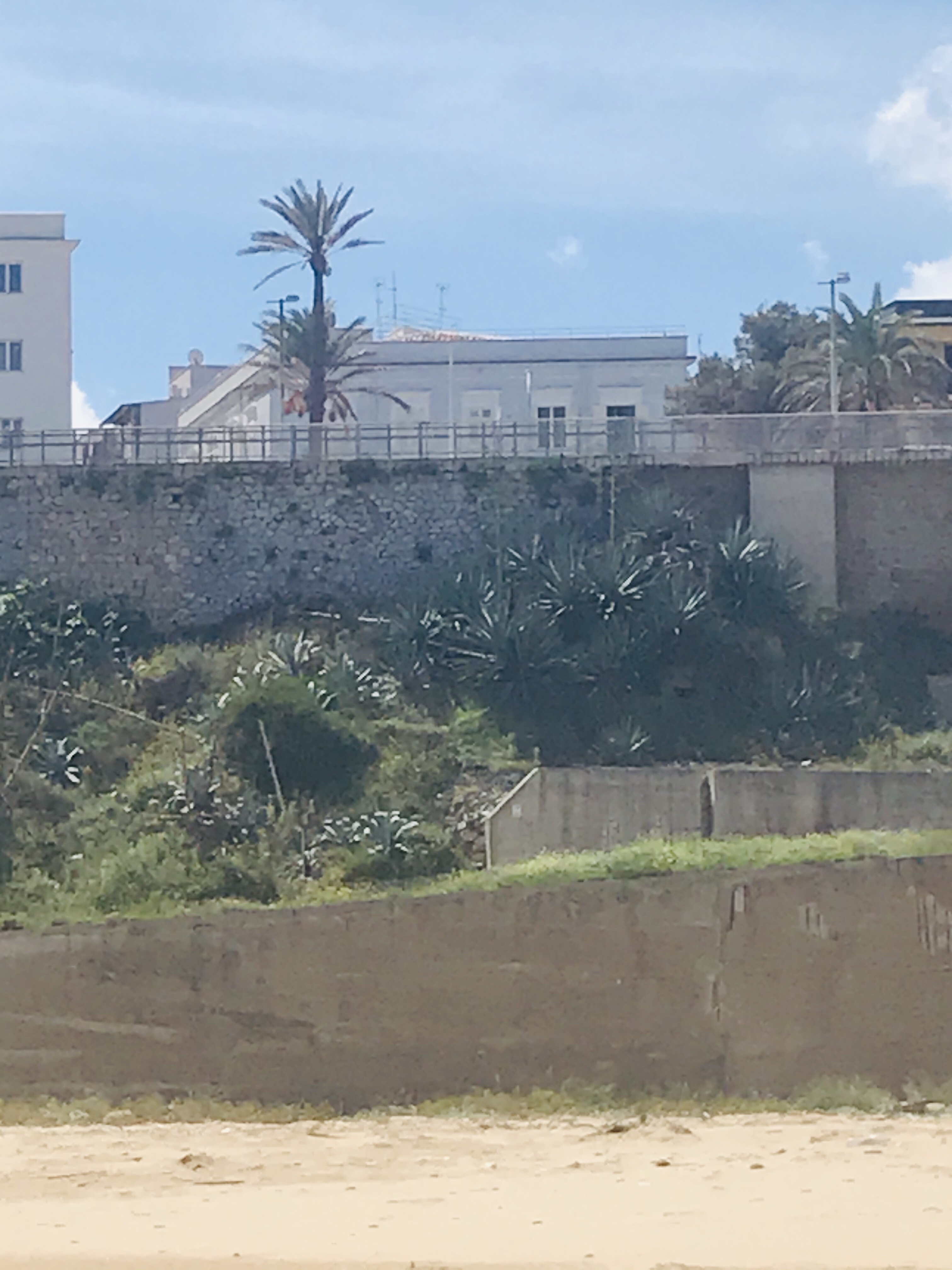
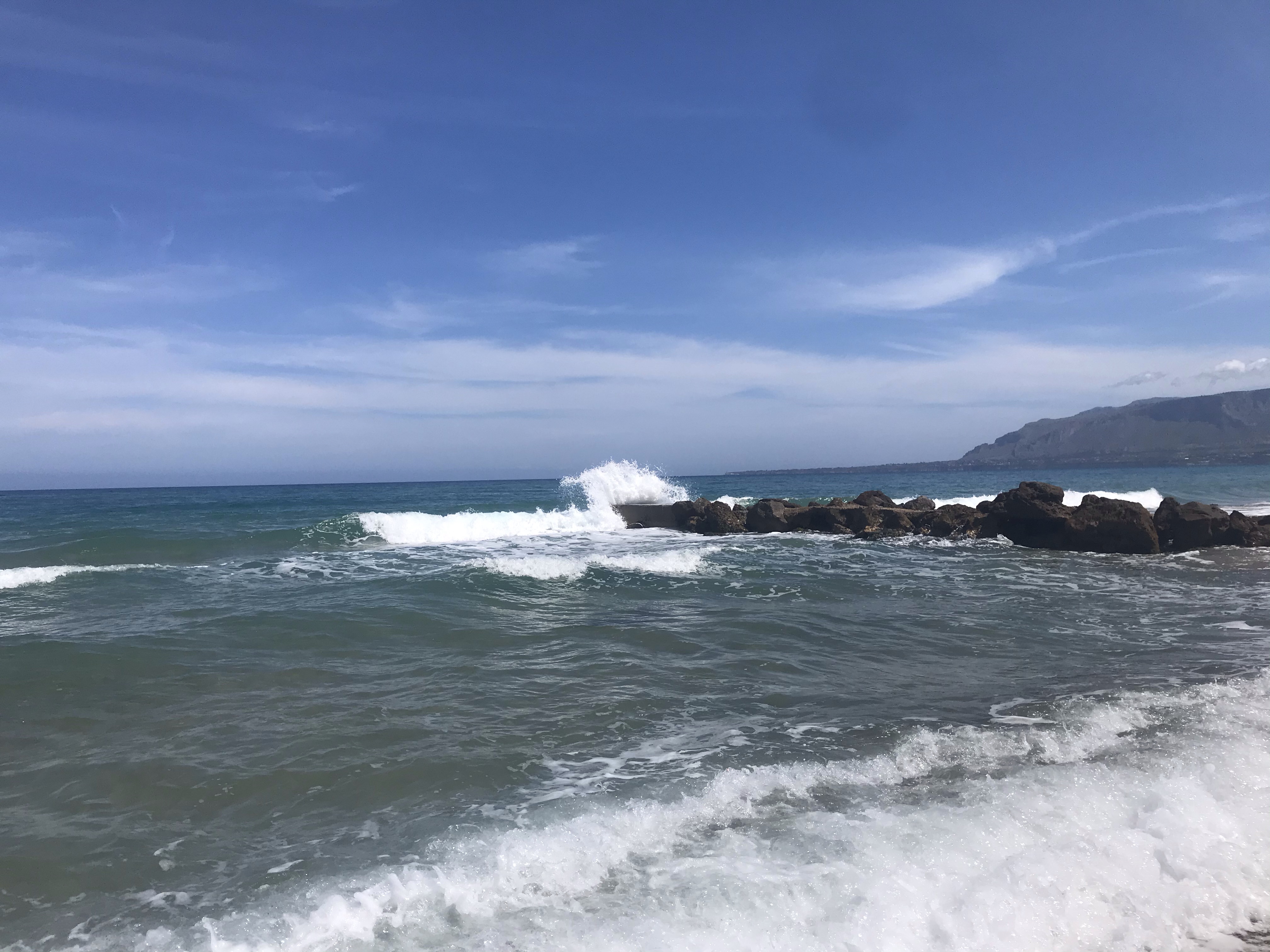
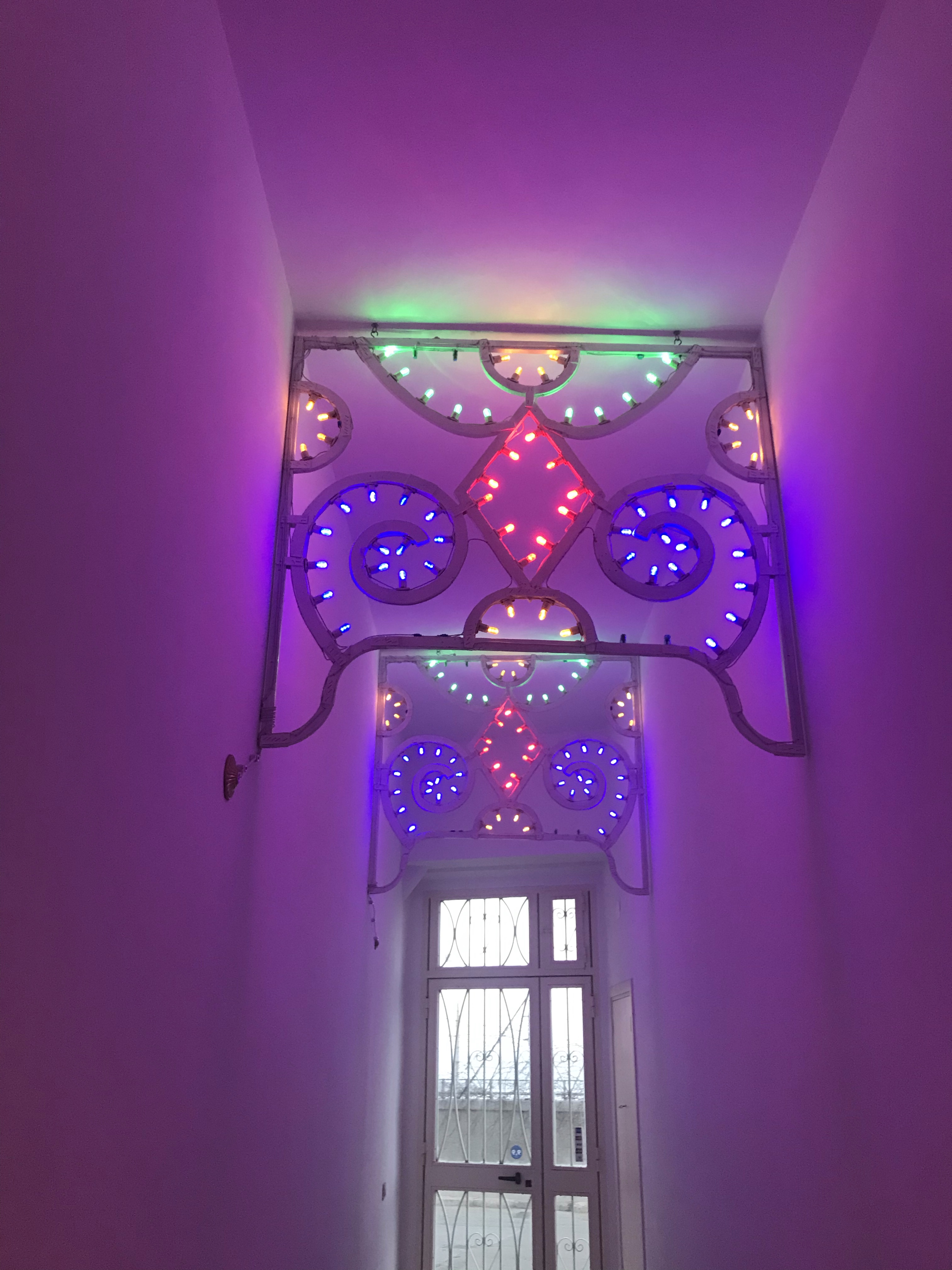
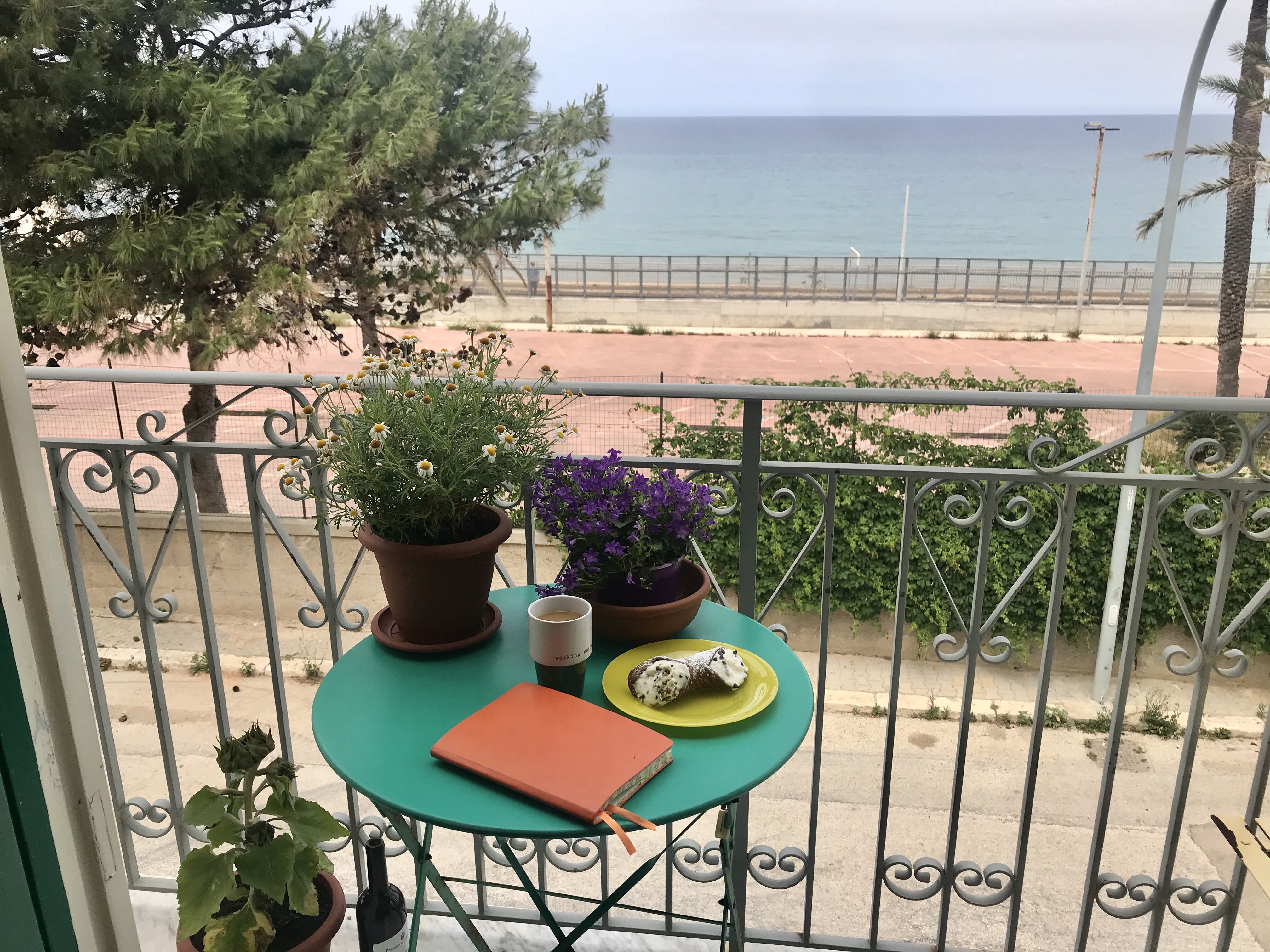
Le Luminarie Residenza Creativa in Balestrate, Sicilia, has been my home for the last 11 weeks, through the most significant time in modern history. A refuge and a sanctuary. A respite and inspiration. My time here will forever be seared in my memory and held in my heart. I will miss this place. Hopefully I will be back – sooner than later! 🔆💛💙




















A Daring Adventure

I am not a fan of driving in Italy. That could change. Or not. Most of my life is magical thinking so, sure, it could happen. I might end up loving the way Italians drive. (But probably not.)
“Live is either a daring adventure or nothing at all.”
With all respect to Helen Keller, I don’t believe this. I appreciate the general premise. That is, if what she meant was to approach every experience as a marvelous new discovery. But a daring adventure? Yeah, no.
Contrary to how my life looks to others, those who really know me know what I’ve really always wanted is a simple life. Not a life of adventure. (In The Lord of the Rings, I want to be Sam not Frodo.) But this is my life. This is the hand I was dealt. Or what I agreed to before I incarnated. Don’t misunderstand: I love my life. I have an amazing life. I am extraordinarily grateful for it – all of it. And, if I’m being honest, I constantly have to push myself to actually live it.
Perhaps this is the origin of my fascination with home. I’ve been compelled to move so many times yet, whenever I am home (wherever that is at that moment), I can be pretty sedentary.
Once I’m home, I have to push myself to leave it. (Or be pushed.)
The Covid-19 pandemic has taken my predisposition to an entirely new level. Sure, it’s sounds exotic that I’m in Sicily, but I’ve really just been in my apartment, looking out at the sea for ten weeks. Perfectly content just sitting on the balcony. The reality of the country beginning to open up caused me some anxiety. The opportunity to explore is mine again – Yay! Only, I wasn’t exactly excited. I’m inclined to stay put. While this could never be my home home, it certainly offers the fundamentals of home: shelter and safety. The lovely view and fabulous apartment, even a new friendship and a small sense of belonging, are the ribbon and the bow. Le Luminerie has been a gift.
But for nearly 40 years, my life has unfolded under the banner of a few wise words from Anais Nin: “Life shrinks or expands in proportion to one’s courage.”
As I said in my last post, I’ve been contracting. So,
I rented a car. This meant I had to drive. And driving was going to take courage.
Driving in Italy is anarchy at its finest. Seriously. It’s absolutely insane, and yet, amazingly, it works. At least for Italians. All the rules here seem to be more of suggestions than actual laws. Lanes? Forget it. Cars straddle lanes, creating three where there should only be two. Speed? Italians love speed. The speed signs are just numbers, the don’t even say “limit” on them. If it’s posted 50, I’m going 70, and I’m passed by others going 90. If it’s posted 100, I’m going 120, and still I’m passed. And how they pass is hair-raising. Like an action adventure film, they are suddenly right behind you and just when you’re sure they’re about to hit you, they swerve to the left at the last minute. They ride your tail. Behavior that would have me cursing in the States (because it’s rude) just has me scared to death in Italy (because it’s the norm). Scooters on streets pass on both the left and right. Like mosquitoes, you don’t see them coming until they’re annoyingly buzzing around you. Right, left, in front, behind. Wait, there’s another one. Shit I’m surrounded!! (No disrespect to my Italian friends. You have to understand, I don’t even drive in Chicago if I can help it!)
Of course, as you’d expect, most roads are narrow. Round-abouts are the norm. And in Sicily, there are tunnels. Lots and lots of tunnels. I never realized how much tunnels make me nervous, until I arrived in Sicily. And to be fair (to myself, of course) driving with prescription sunglasses is a challenge when you come to a tunnel. I’m in the dark with them on but taking them off is another set of problems.
Driving in Italy takes courage. And a constant stream of prayers.
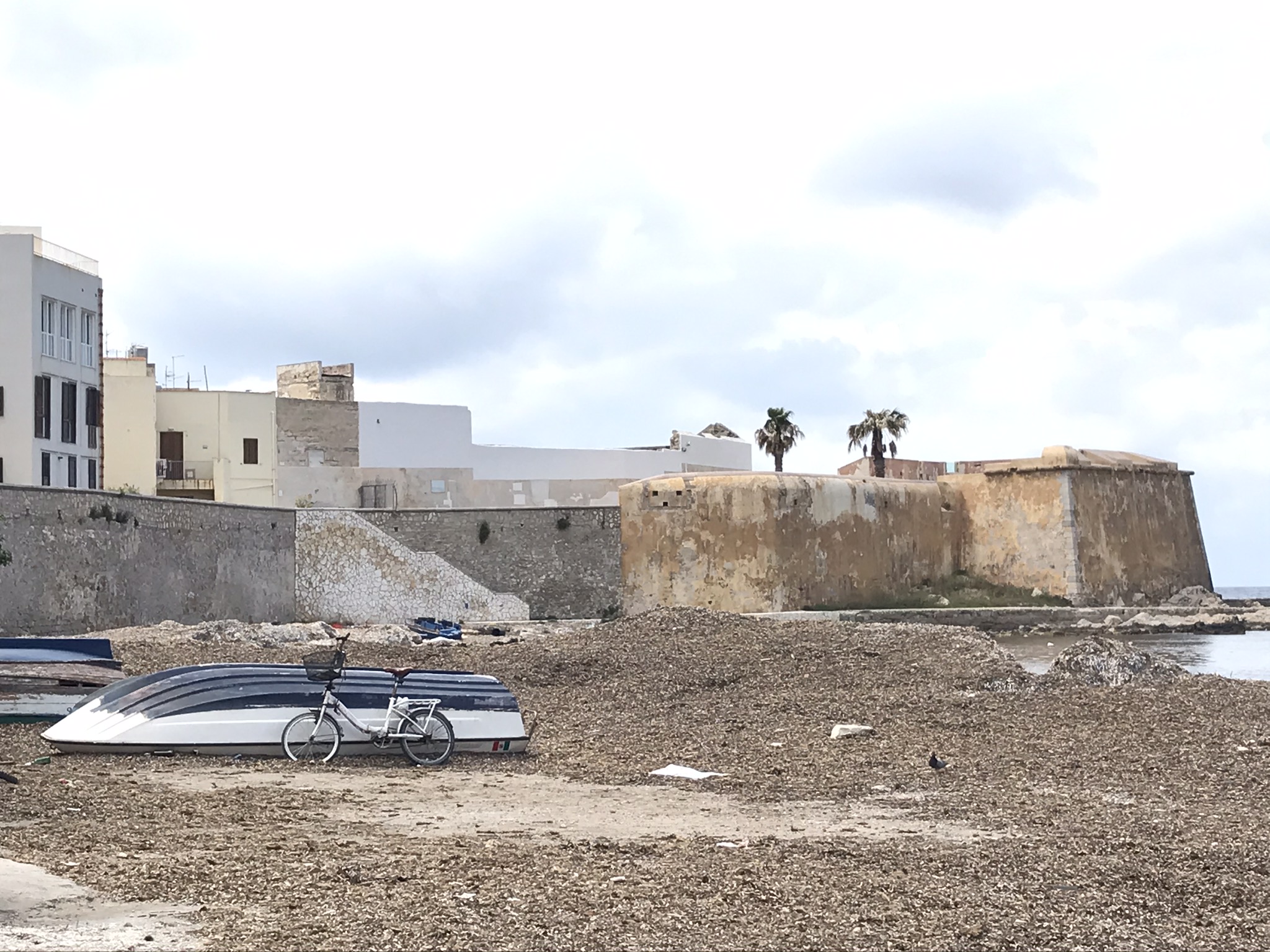
Of course it’s been worth it. Trapani is grand.



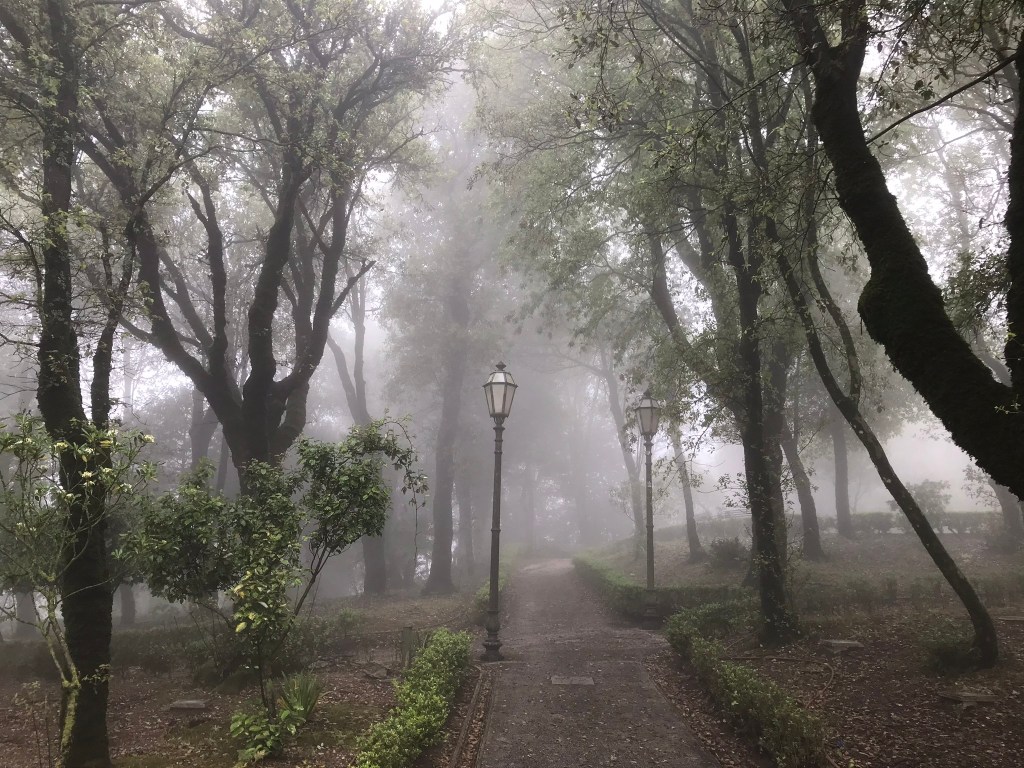
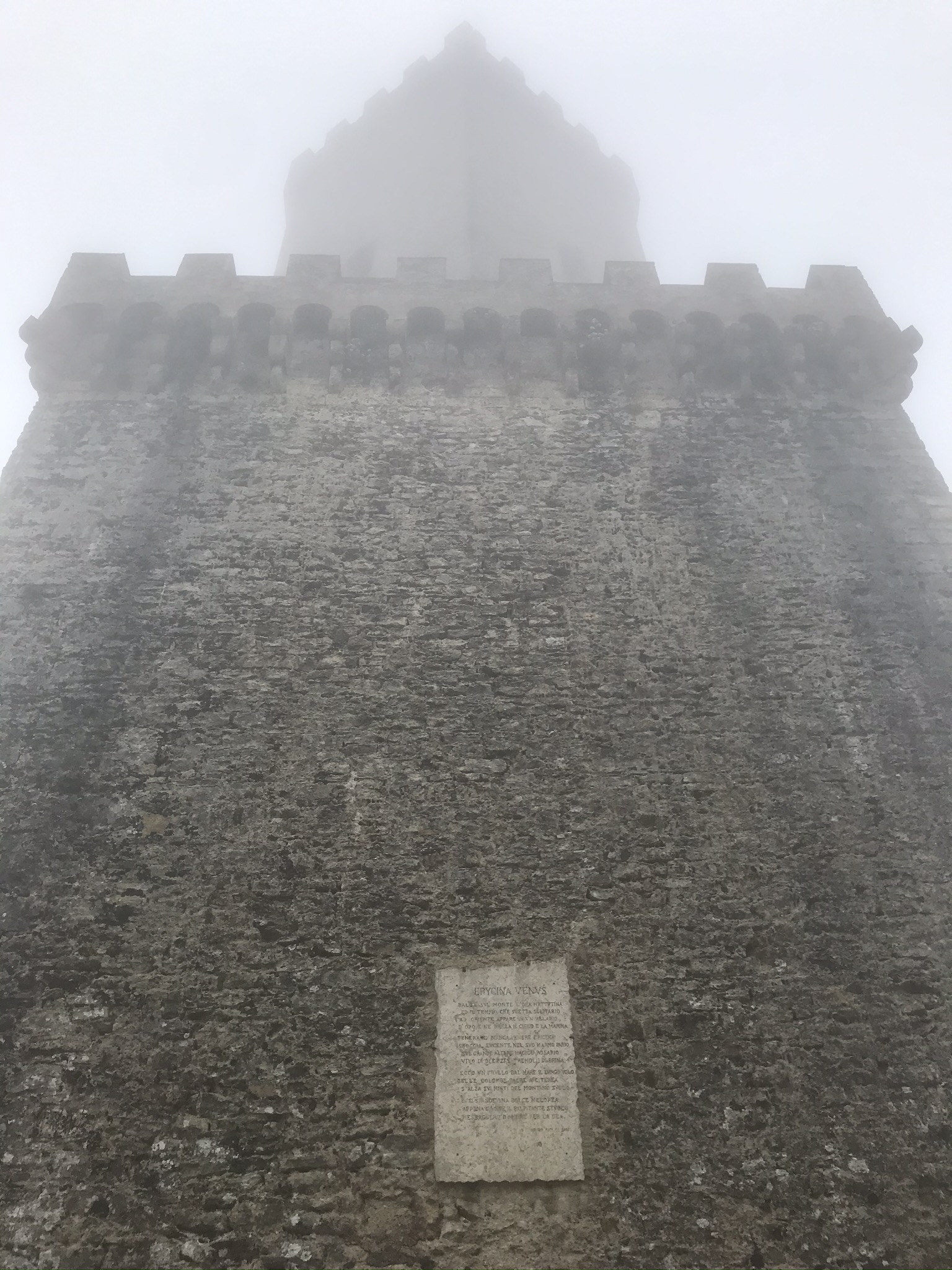
Erice is ethereal.

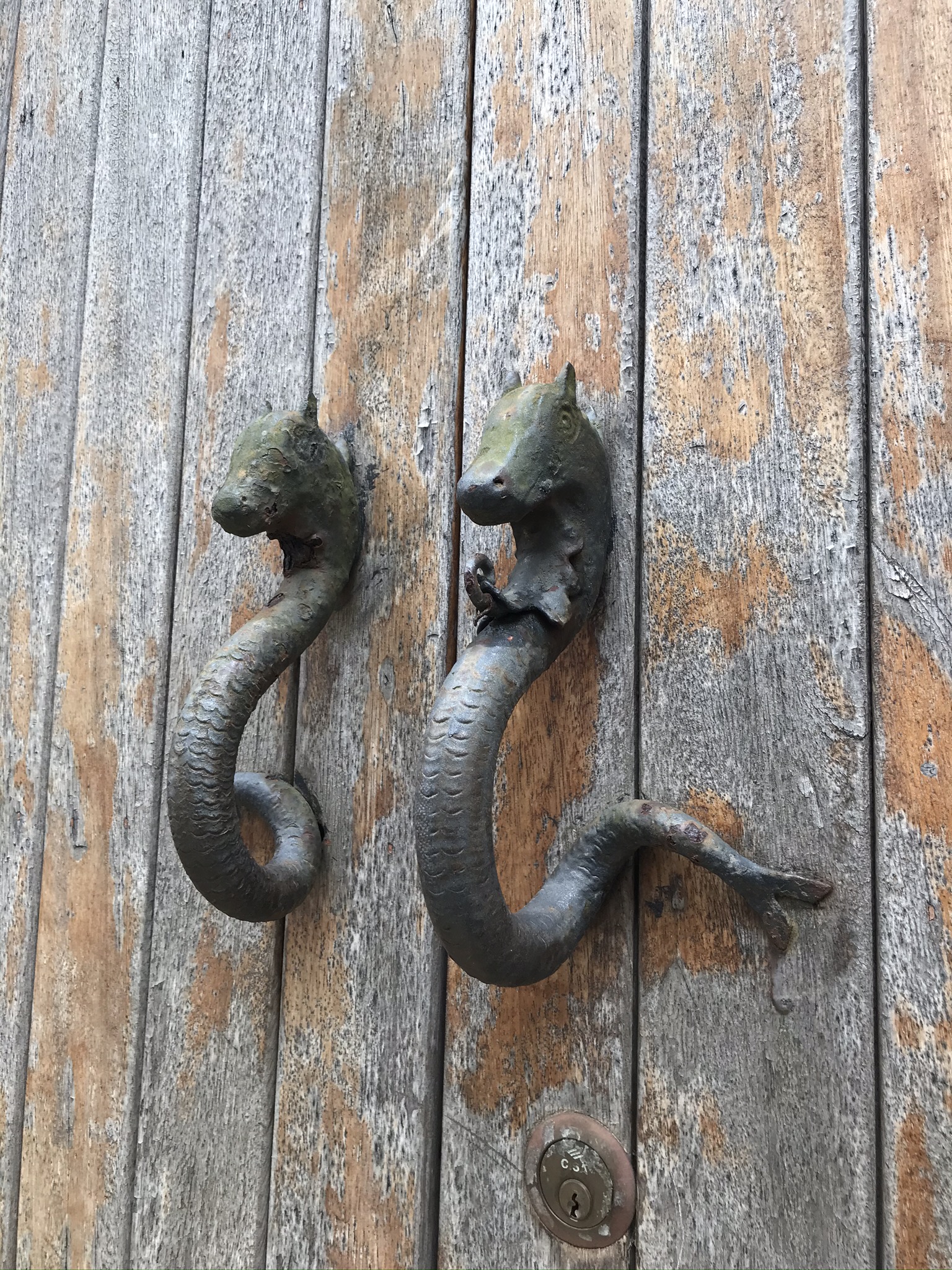

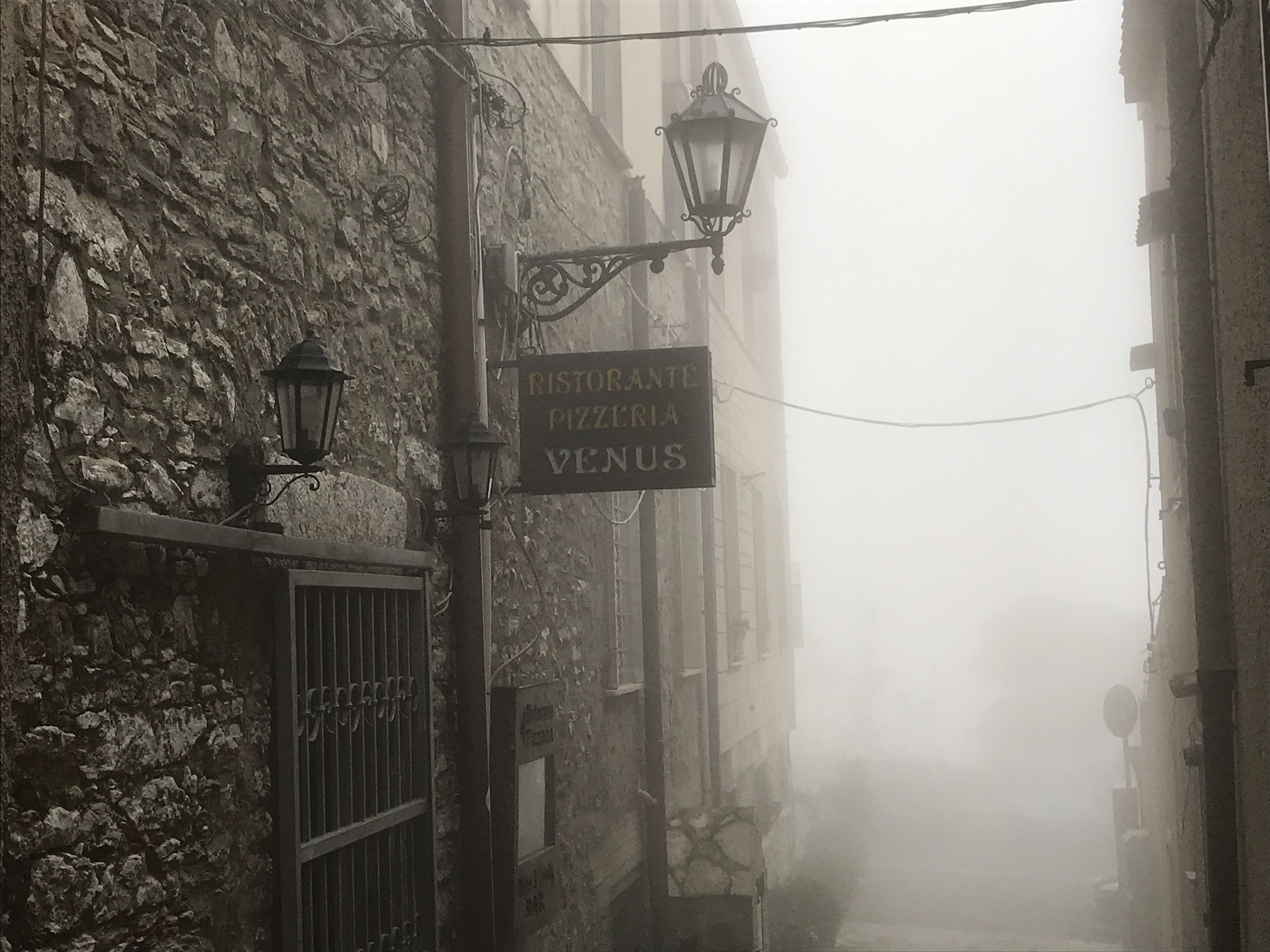
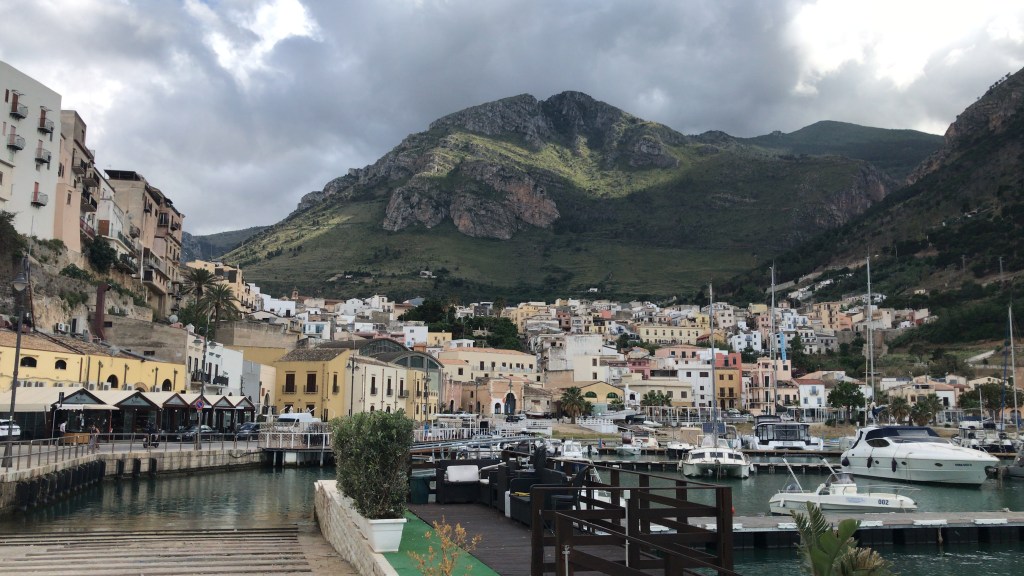
Castellemmare’s coastline is stunning. Postcard beautiful.


And Sambuca di Sicilia…
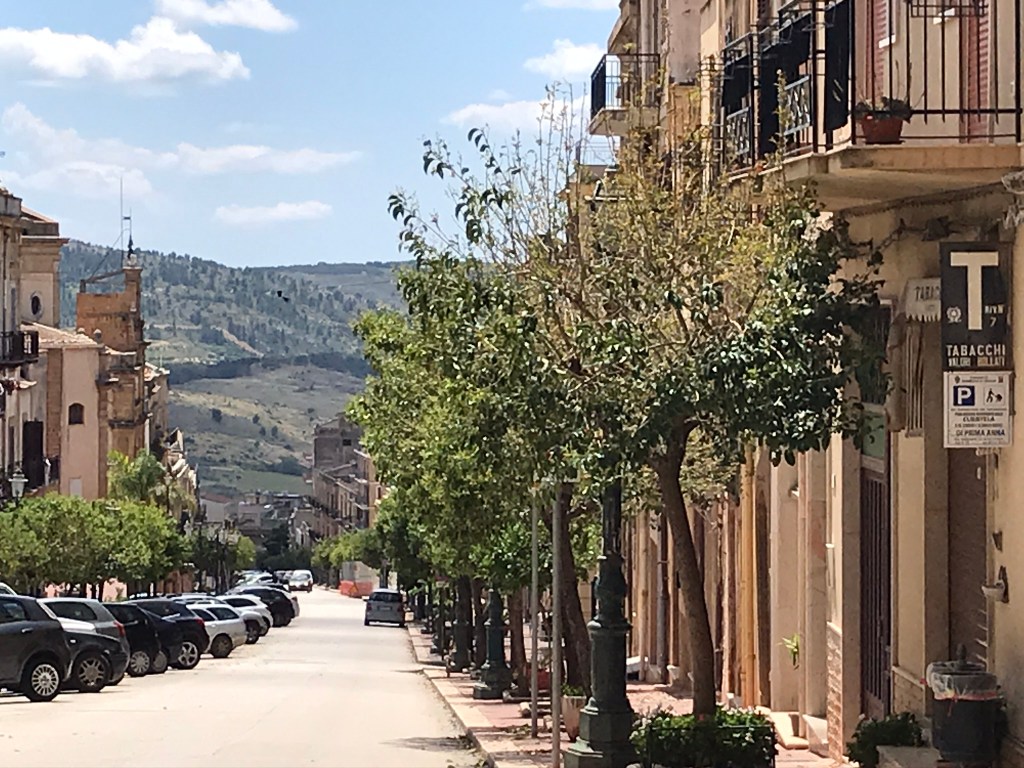

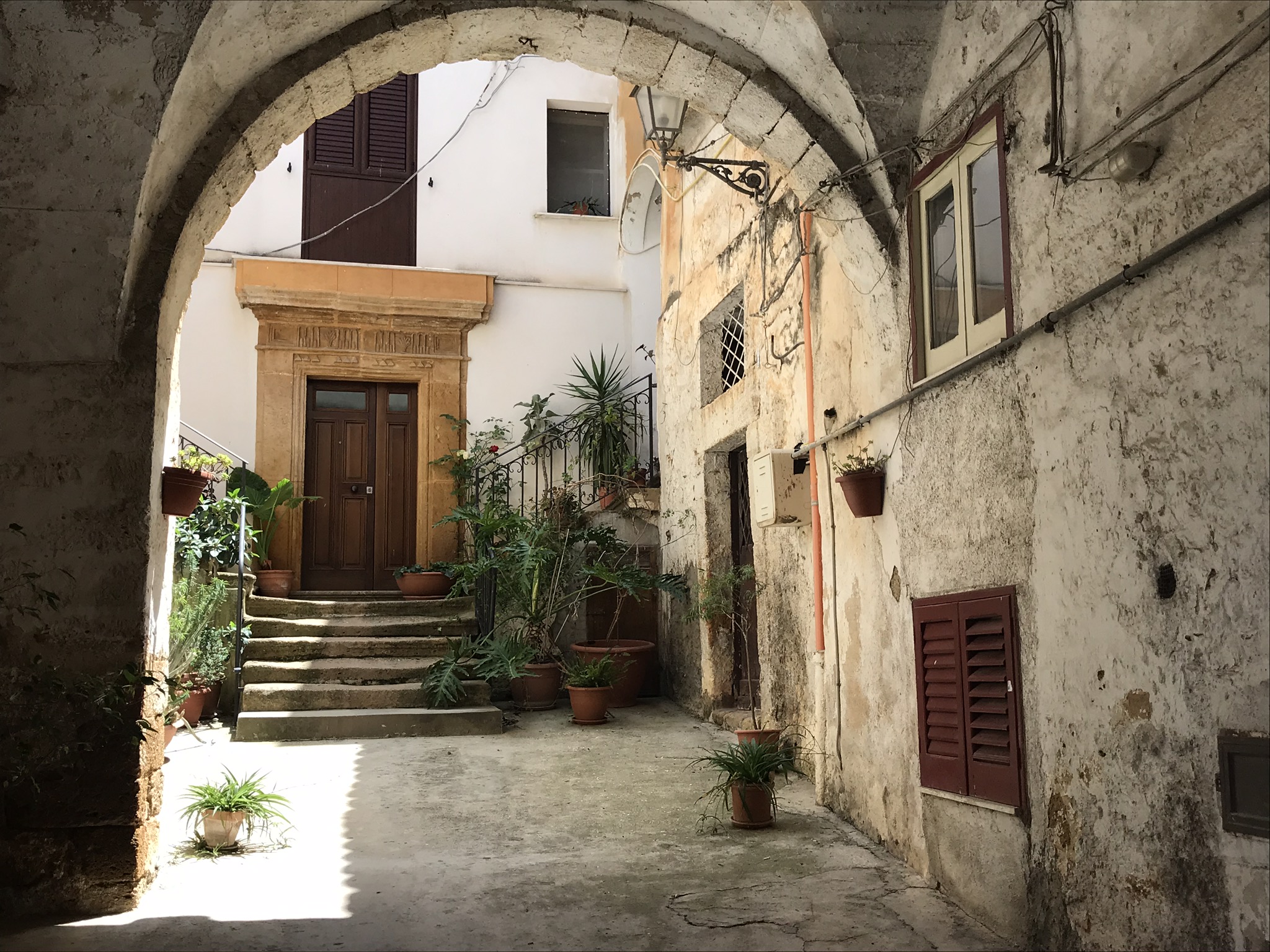


Sambuca made me gasp. Sambuca made me weep. That’s not hyperbole. When I first saw Sambuca from a distance, everything stopped. I had to pull over and take it in. Later, I sat at the top of Terrazzo Belvedere, looking out over the green rolling hills and vineyards, and I cried. And I laughed. I lay down on the stone bench, looking up at the clouds, and I swear a saw a fetus in a womb above me. Yeah, okay, weird. And hugely symbolic. I think I could live in Sambuca.
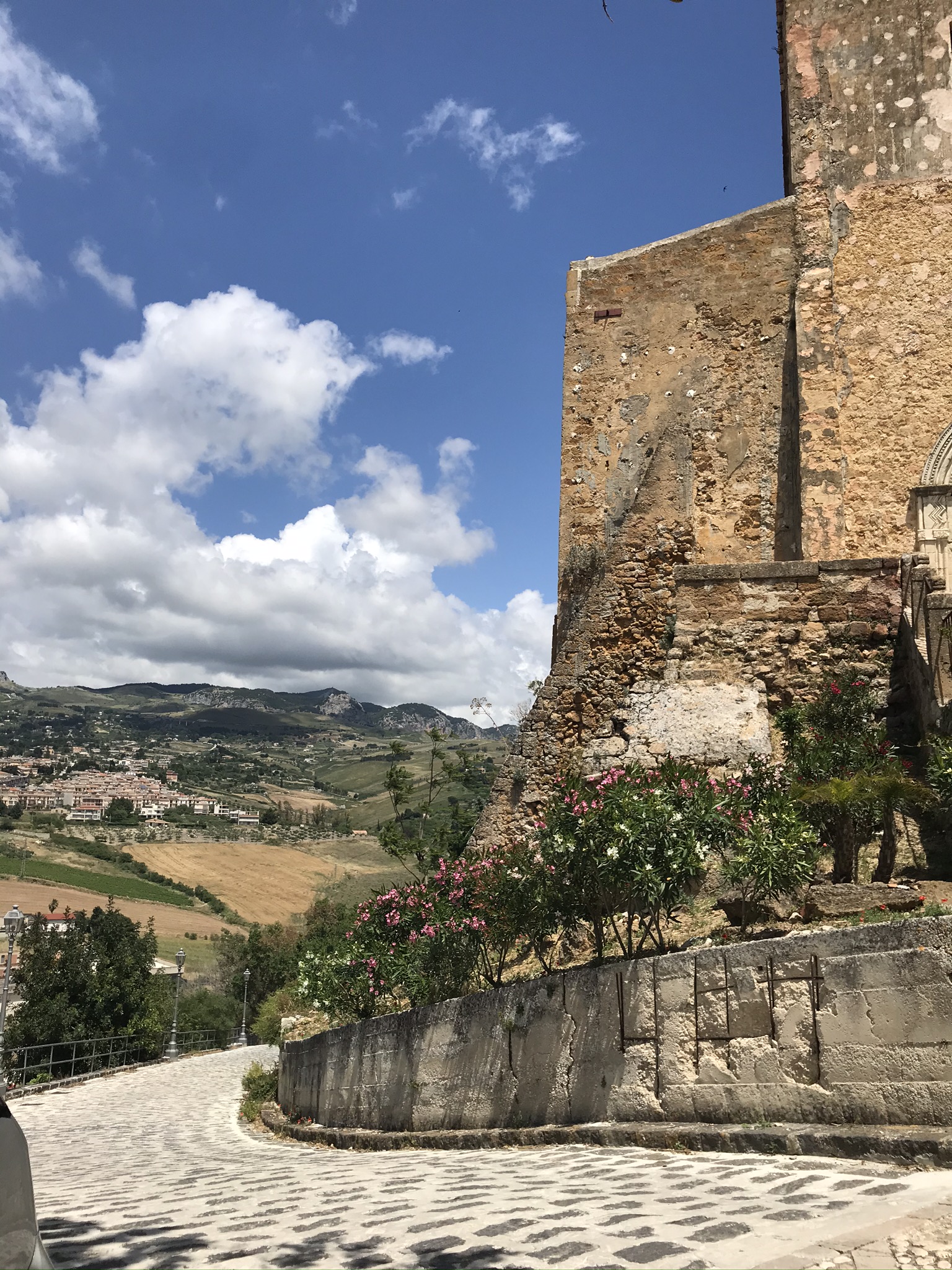
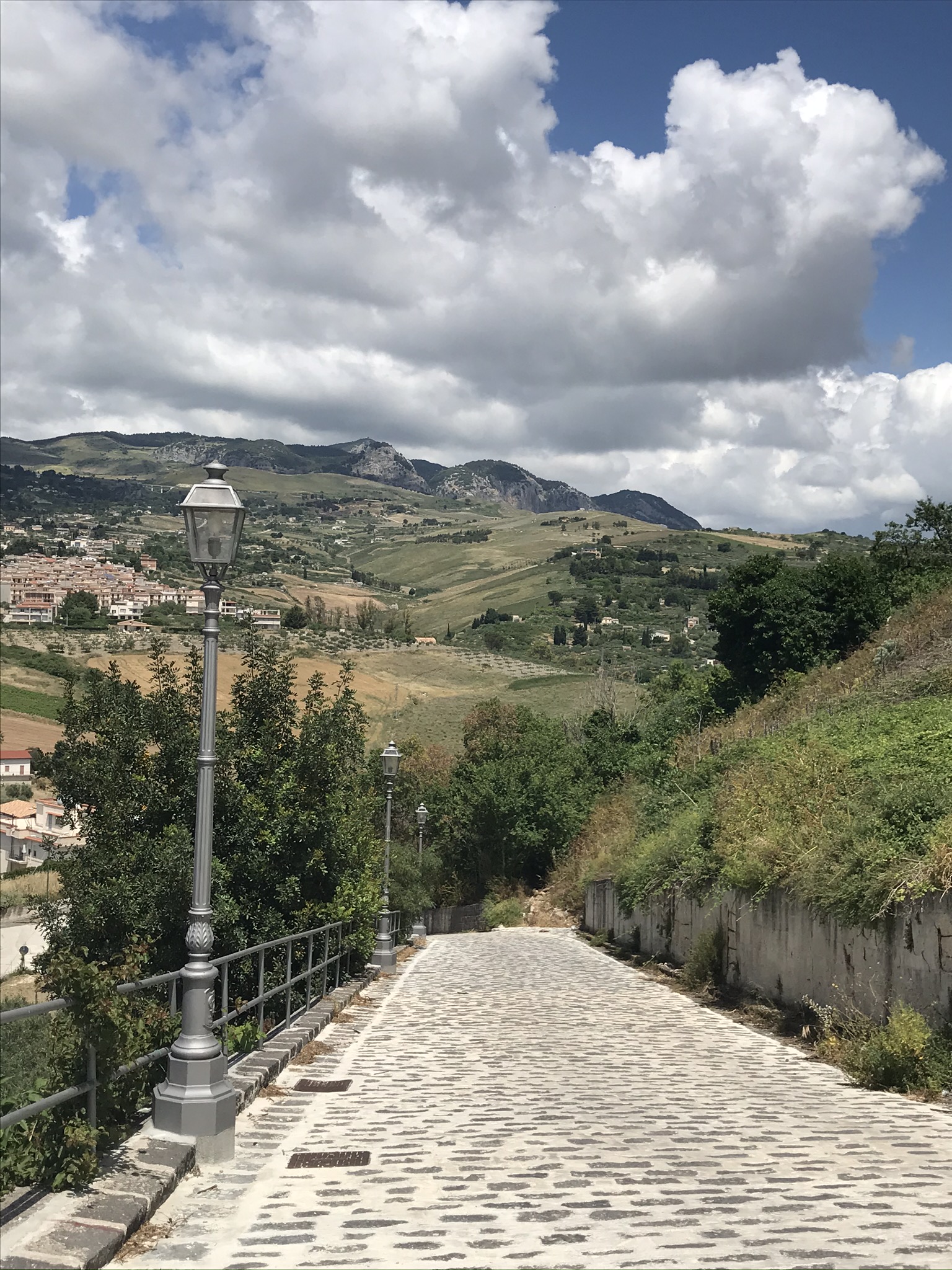



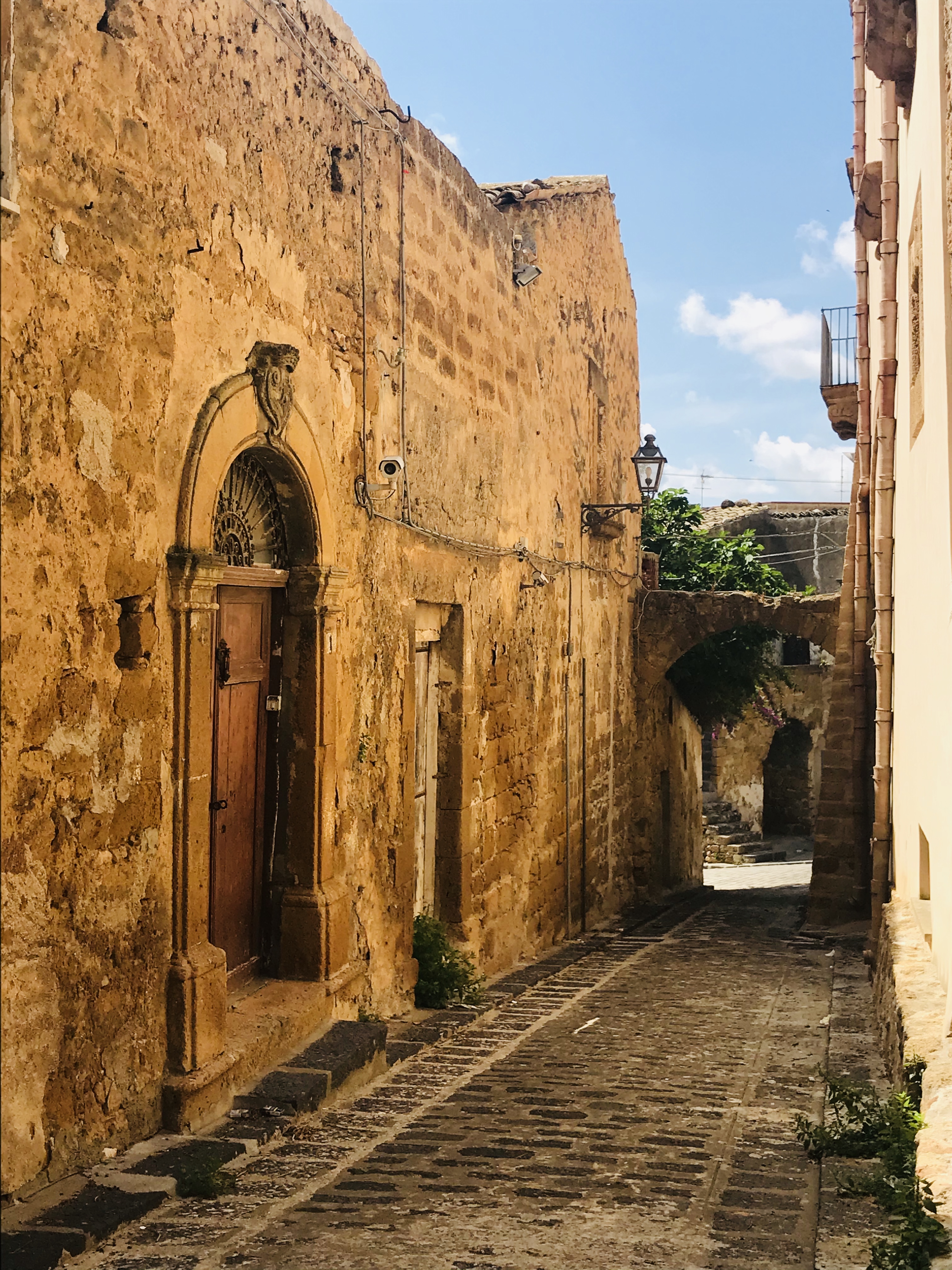
I tend to overthink things. Even renting a car, I researched models to decide which might be the best fit. I always read reviews. I always read instruction manuals. A tendency to over-use my head. Ah, but then there are times when something hits me in the gut and I run with it. And that is almost always a good thing. Still, falling in love is always risky and I’m not quite ready to commit my heart to a town I just met. Especially after being in quarantine for ten weeks. If I stay in Balestrate to wait out this pandemic, I will pine for Sambuca like a lover. In other words, it’s time for me to leave.
This is going to take courage. And a whole lot of prayers.
On Wednesday I will relocate to a small cozy A-frame cabin surrounded by trees. The photos remind me of my favorite retreat in Michigan. This is what I need. Three days of pine-scented cool evening air, and no WiFi.
Then I will spend a week in an old stone cottage adjacent to Parco delle Madronie, home to some of Sicily’s highest peaks. Lush with a forest of beech trees, as well as several varieties of oak and ash, I will enjoy a view of land and not sea. I need green. I need the country.
All together, ten days surrounded by trees after ten+ weeks of sea. My spirit is begging for this.
After that? Non lo so. I really don’t know.
As with every transition, there is trepidation. I’m giving up a really good thing here in Balestrate. A really good thing. I feel safe here. I feel protected. My landlord has become my friend. Coming here took courage. My life expanded richly. But if I stay, my life will shrink.
Is this the same as a daring adventure? Maybe. Whatever it is, as with all journeys, I’m just working my way home.
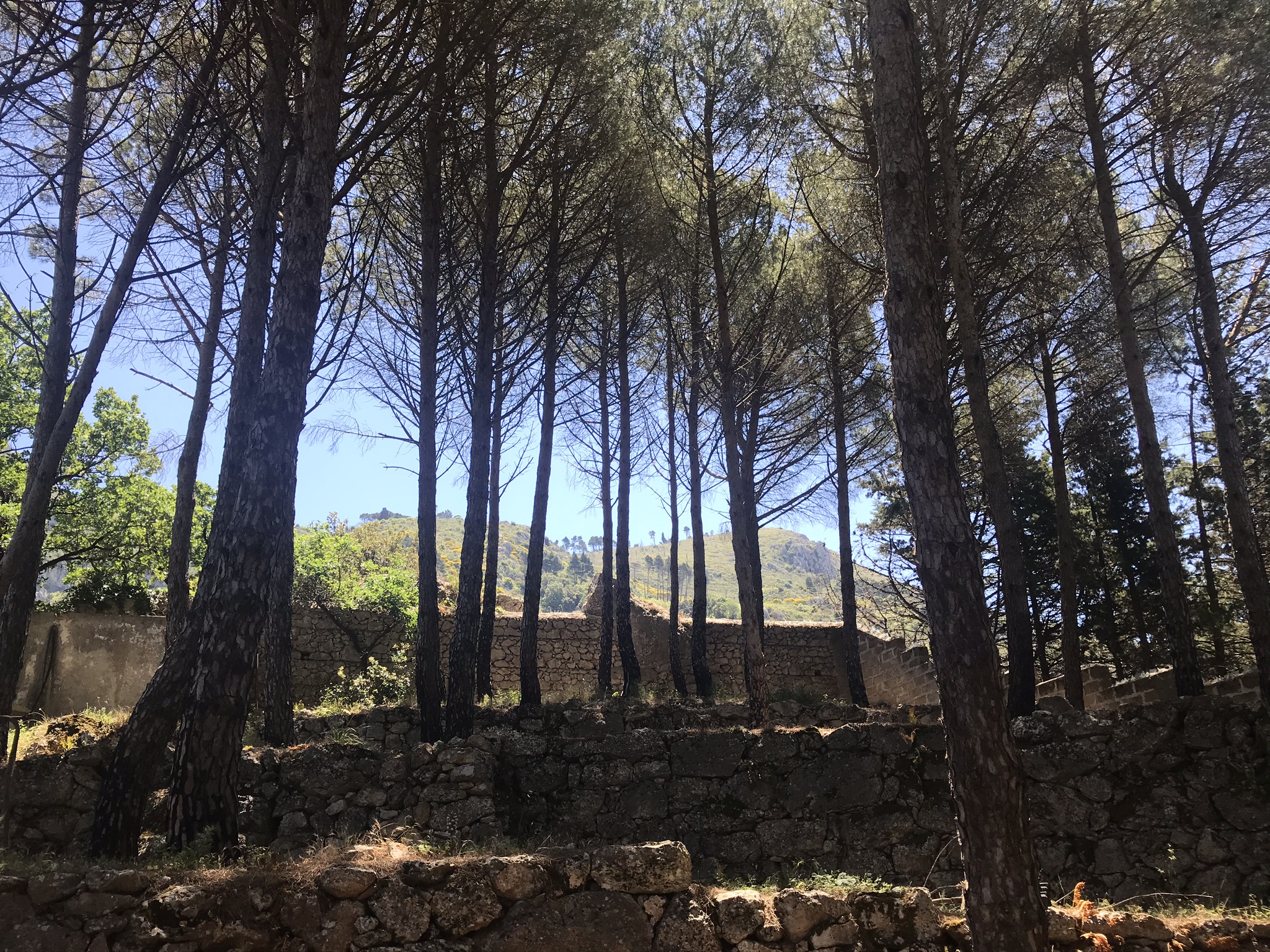


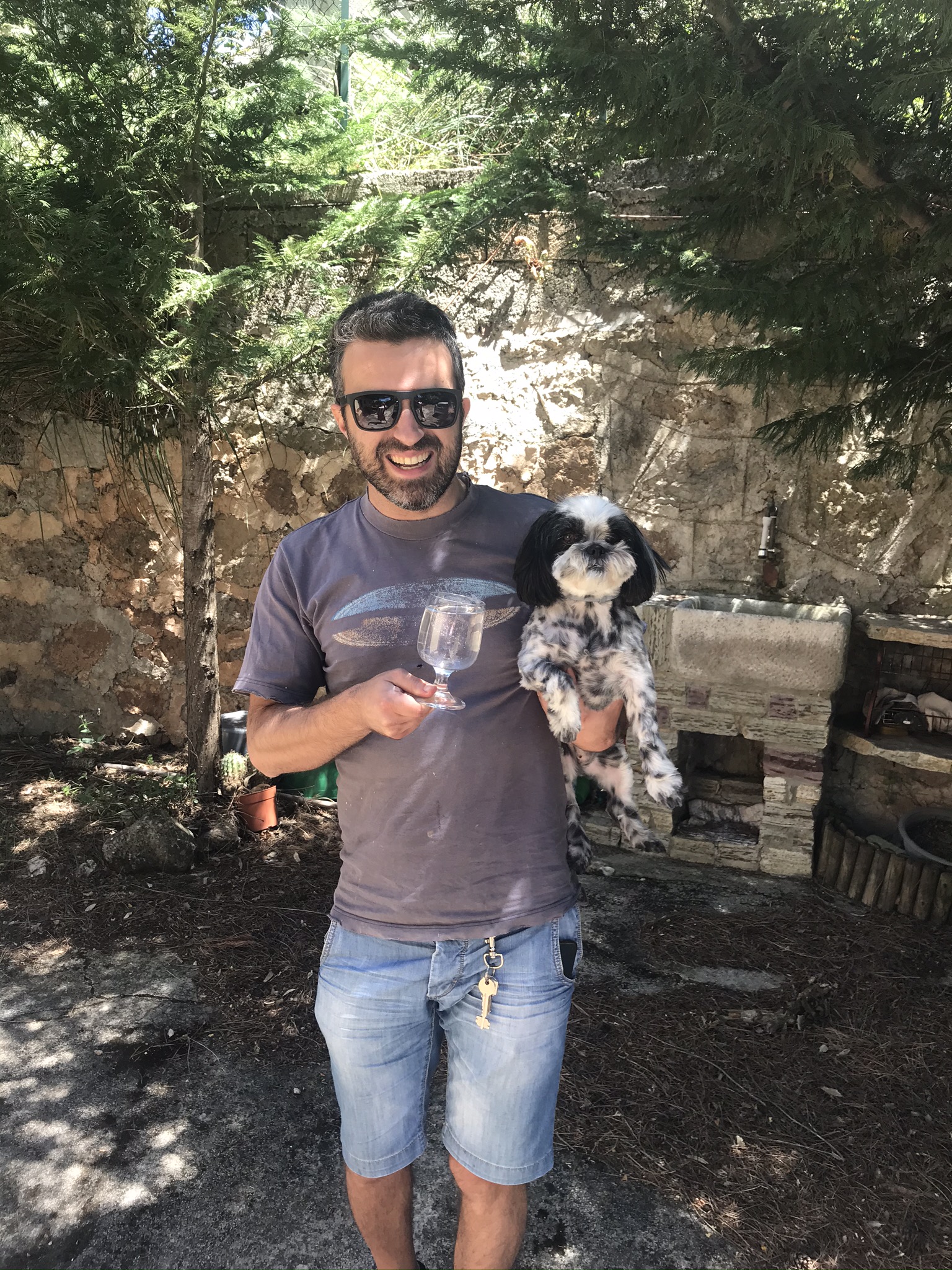
Earlier today, Nino took me up to Borgetto, above Partinico, to his little slice of wooded heaven. This is the landscape I’m craving. Thank you, Nino, for being such a wonderful host during this truly momentous time. And for being a friend.
Waiting Without Hope
I have decided to stay in Sicily for the time being. Not forever, but indefinitely.
Some of you may think this is old news. Actually, it’s not. I may have suggested the possibility, but I honestly wasn’t sure. The decision was agonizing. I was depressed. I wasn’t walking, wasn’t practicing yoga, wasn’t even stretching. I was contracting. Literally and figuratively. I was sleeping a LOT: long nights and daily naps. Eating everything, including, of course, gelato and cannoli. Just so much to consider… bills to pay, struggles with AT&T, job opportunities, health insurance…
My visa technically expires June 1. I thought it was June 15. At the moment, I can’t get an extension. Italy is on track to open up. The trains are running regularly. On Monday, shops will open as well. June 1st, more restaurants will be serving the local delights.
Meanwhile, I went shopping today. People are wearing masks. The lines for groceries are no longer unruly. For the most part, people keep the respected distance. Small children ride their bikes alongside a parent. Dogs run freely and stray cats are multiplying. People seem jaunty. The community is smiling.
Who knows what will happen tomorrow. What will happen next week. The future, more than ever, is a mystery.
I tend to overthink things. At least, BIG things. Deciding to stay in a foreign country during a worldwide pandemic seems like one of those things that deserves extra consideration. What if overstaying meant I wasn’t allowed back? When? Well, … later. Like, next year… The absurdity of that thought finally made me laugh.
Next year? No one knows what is happening next week, let alone next year.
I simply cannot bring myself to purchase a plane ticket right now. I cannot see myself in an airport two weeks from today.
So today I bought bottles of shampoo, conditioner, body gel, and hand soap. A bit of a commitment, moving up from travel size and whatever came with my Airbnb. I’ll probably leave before the bottles are empty. Or maybe not.
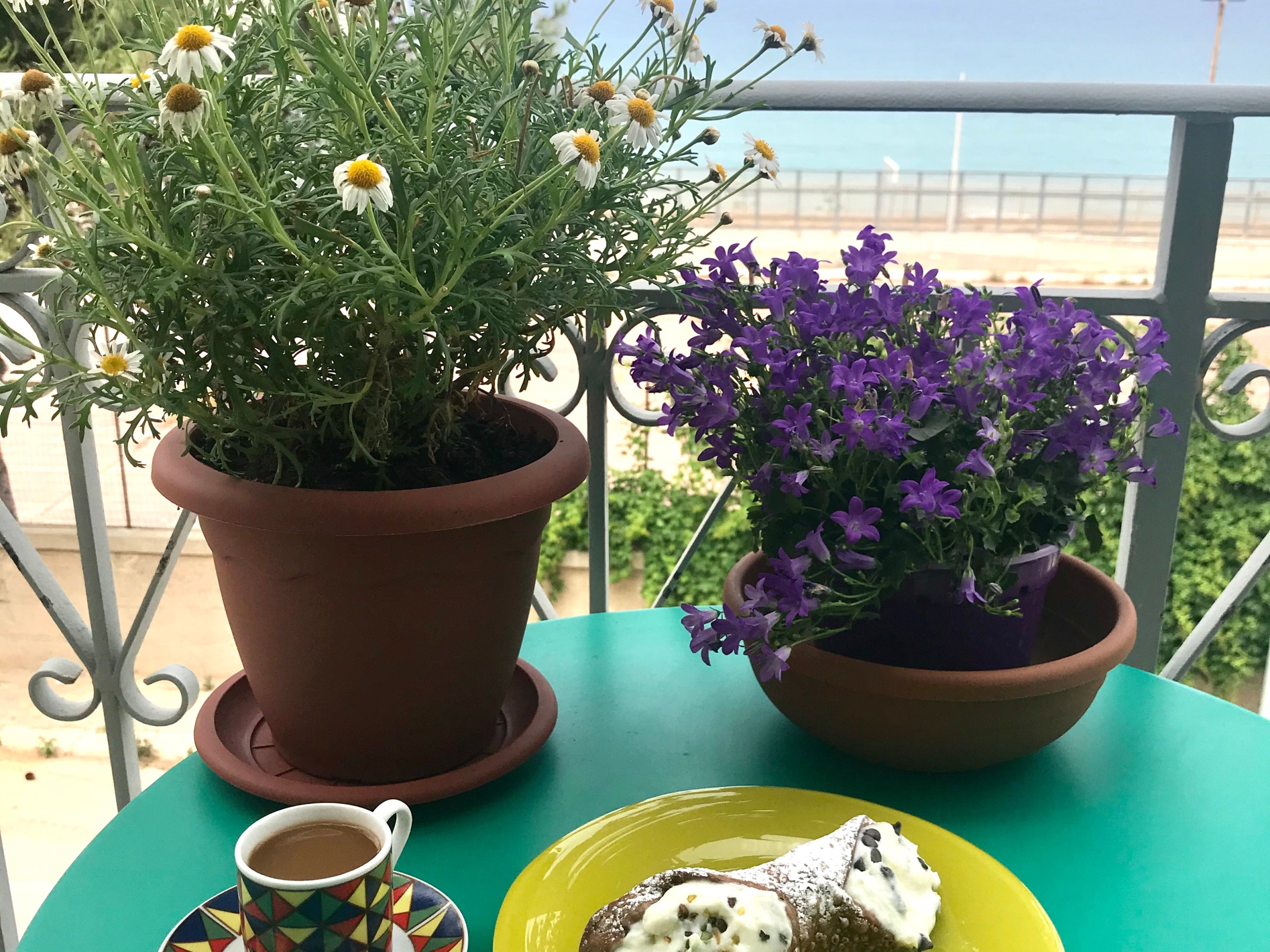
I also bought flowers, another plant of purple blossoms. And feeling amazingly calm and happy, I circled back, laden down with bags hung on my shoulders and occupying my hands, and… I bought myself a single cannolo.
Right now, this is all I need. Me looking out at the sea. Sitting on my balcony in Sicily. Drinking Italian coffee and enjoying sweetened fresh ricotta cheese. Right now, this is everything.
I said to my soul, be still, and wait without hope
For hope would be for the wrong thing; wait without love
For love would be of the wrong thing; there is yet faith
But the faith and the love and the hope are all in the waiting.
Wait without thoughts, for you are not ready for thought:
So the darkness shall be the light, and the stillness the dancing. – T. S. Eliot, East Coker (#2 of the Four Quartets)
Hope and fear is a feeling with two sides. As long as there’s one, there’s always the other. This is the root of our pain.… In a nontheistic state of mind, abandoning hope is an affirmation, the beginning of the beginning. – Pema Chodrin, When Things Fall Apart
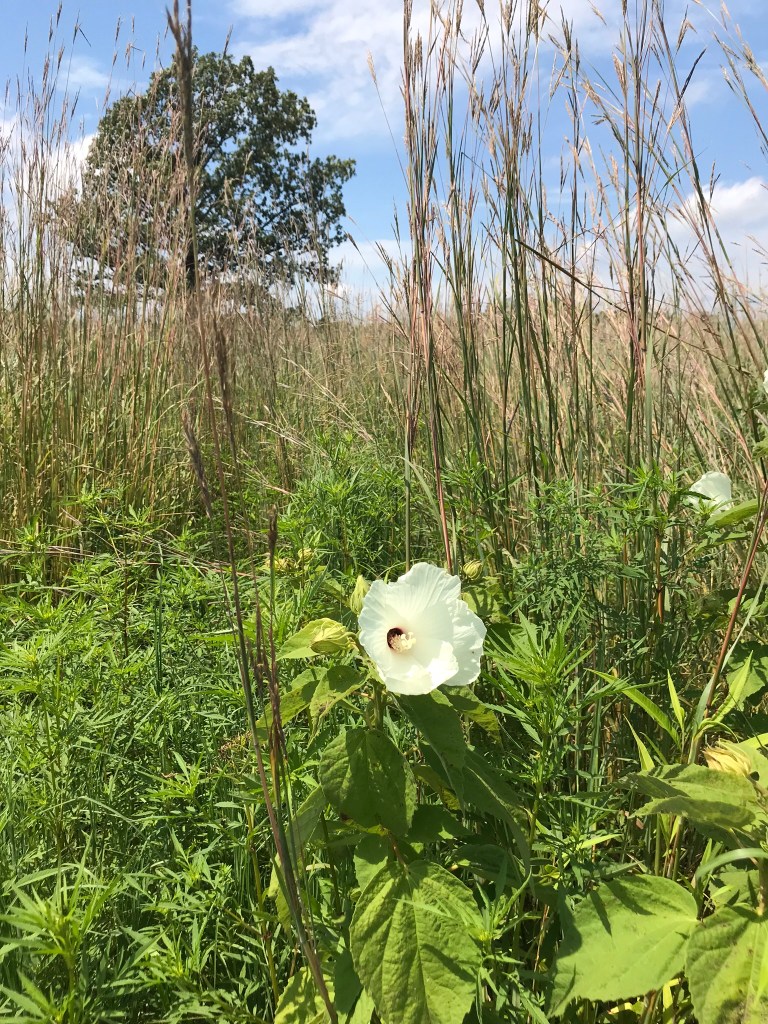
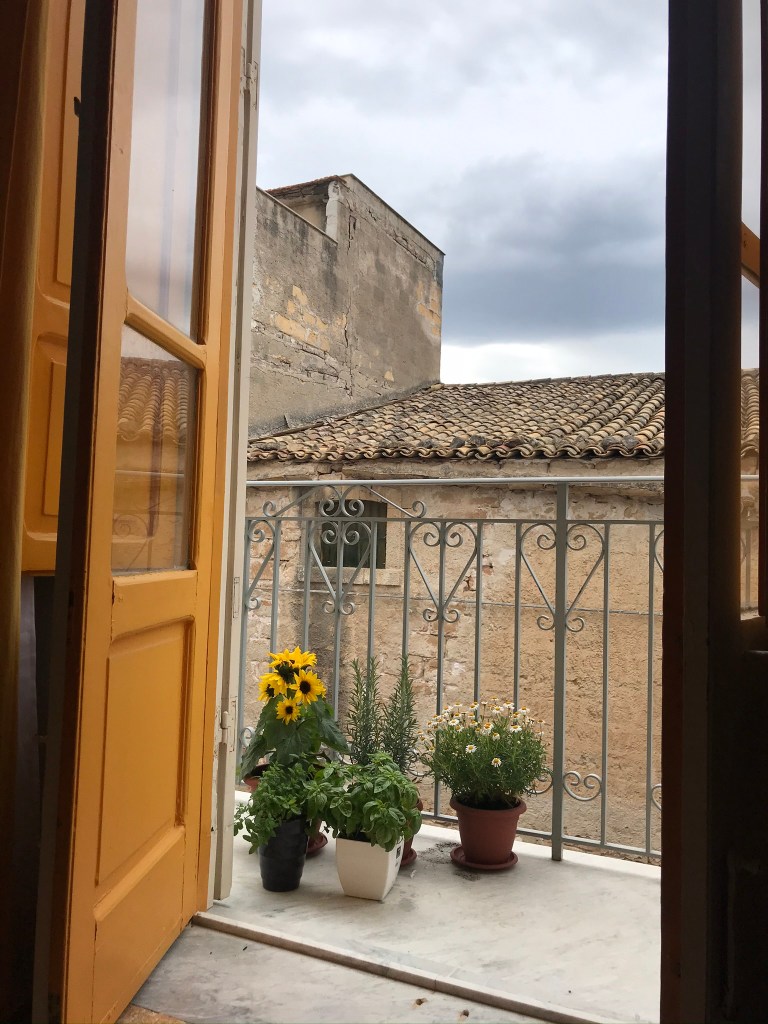
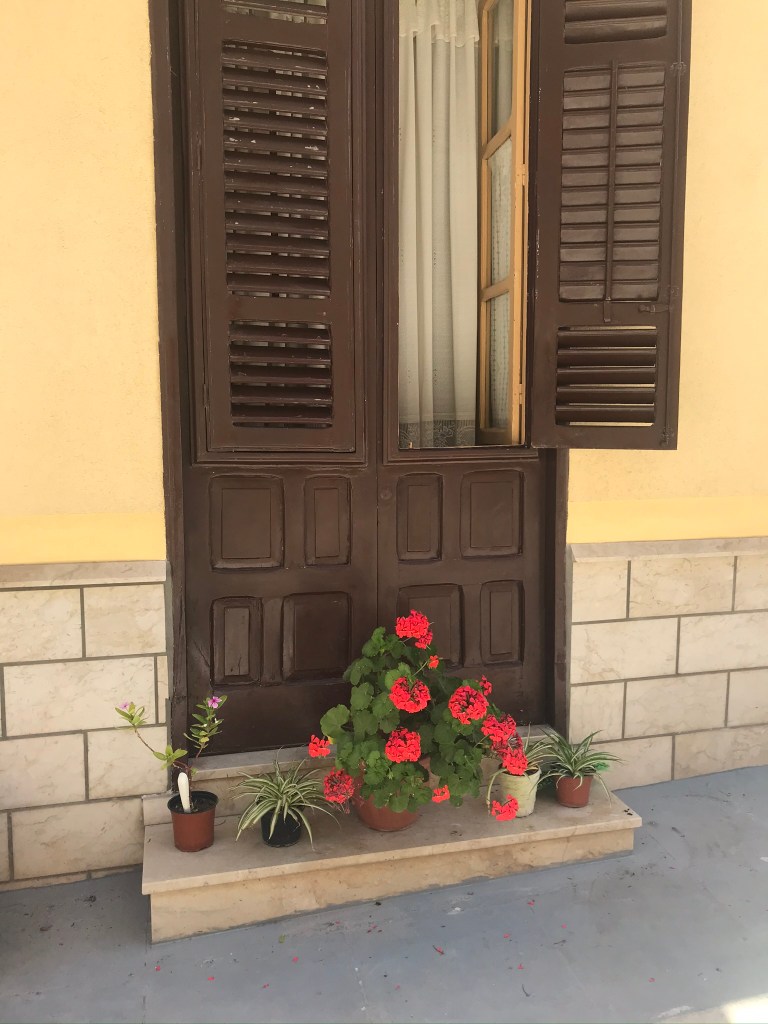
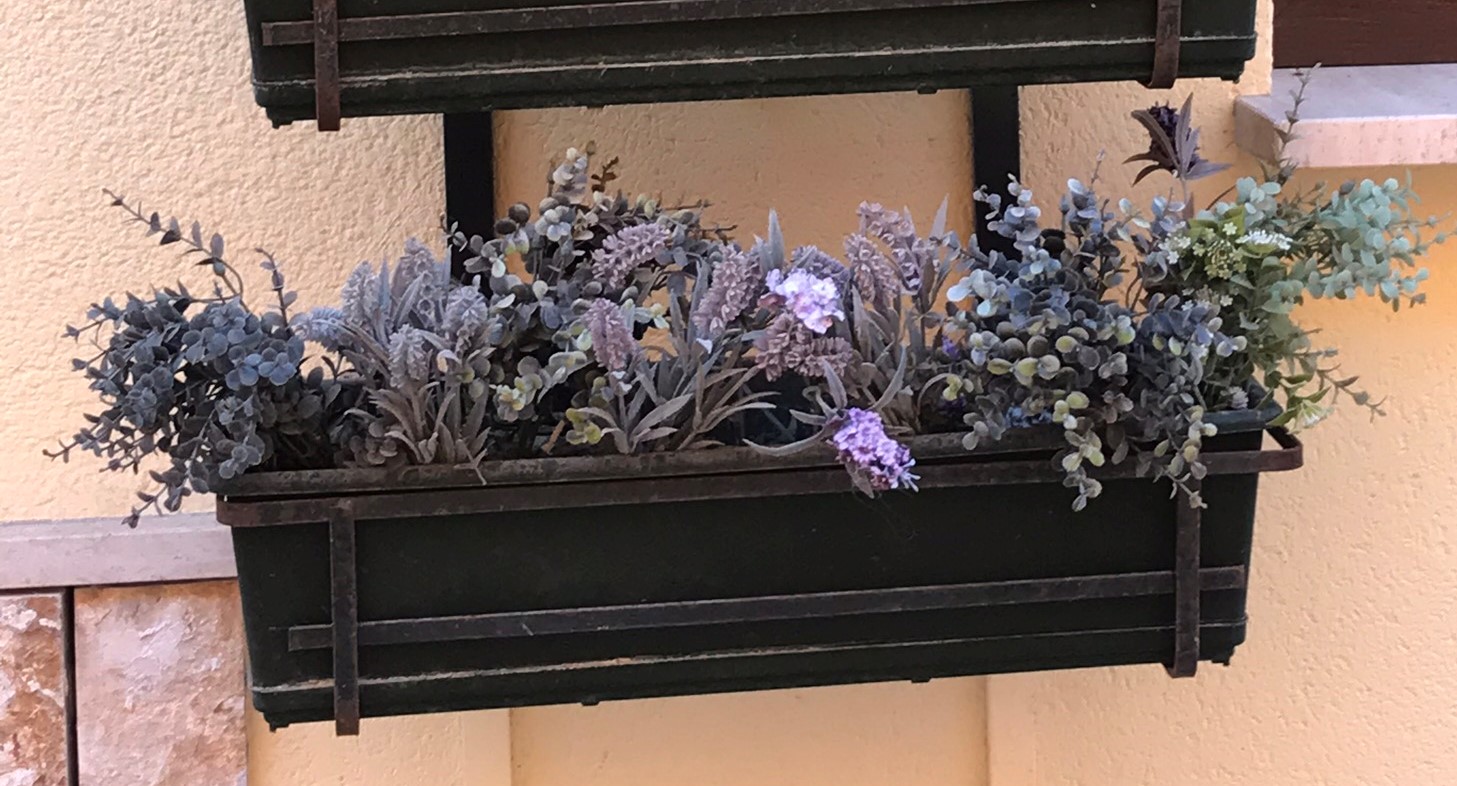
Flowers

“I am in awe of flowers. Not because of their colors, but because even though they have dirt in their roots, they still grow. They still bloom.” – D. Antoinette Foy*
Everywhere in the world, our hearts are lifted by blossoms. Here are a few lifting mine, in Balestrate, Sicily, during Covid-19.
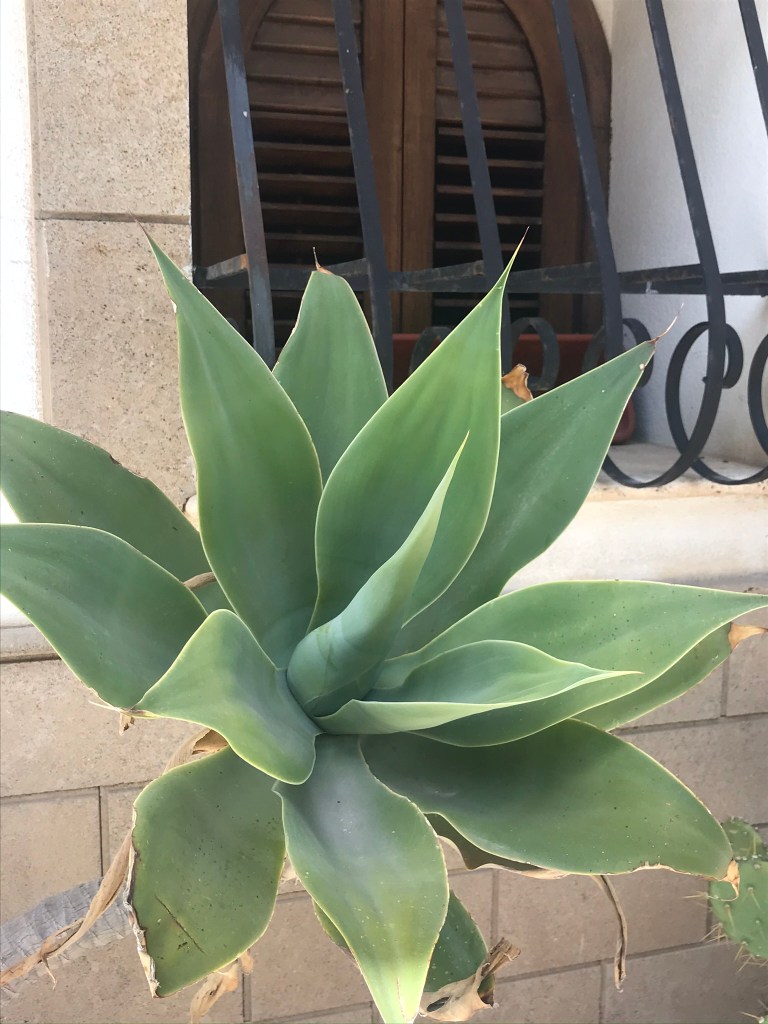

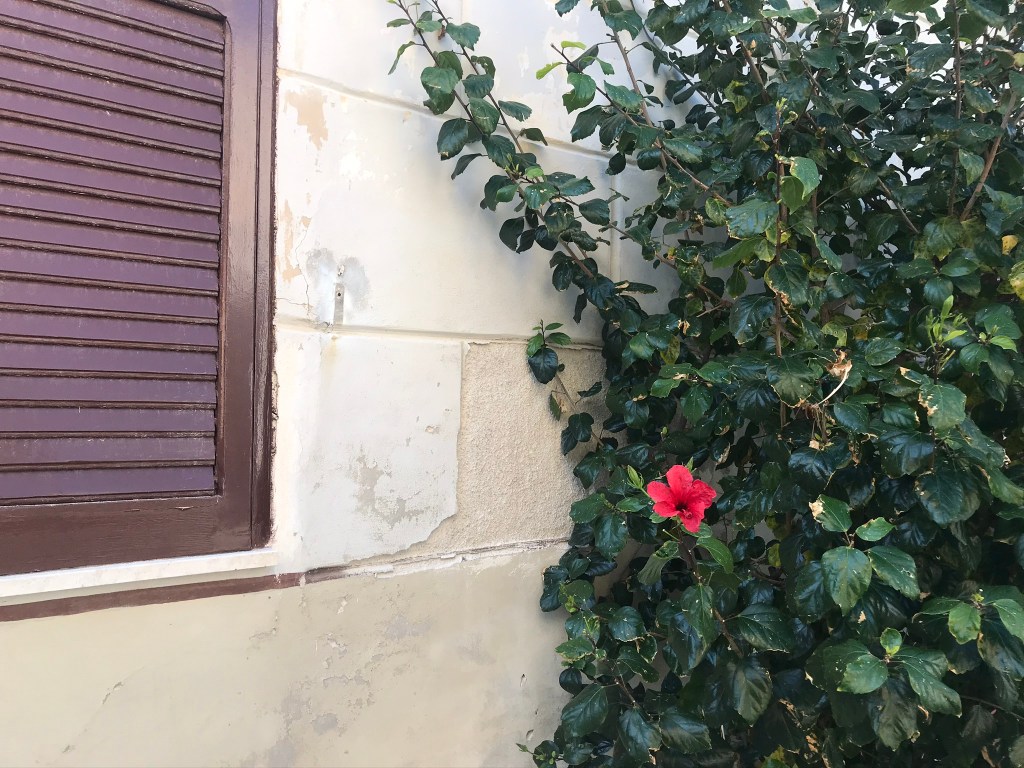


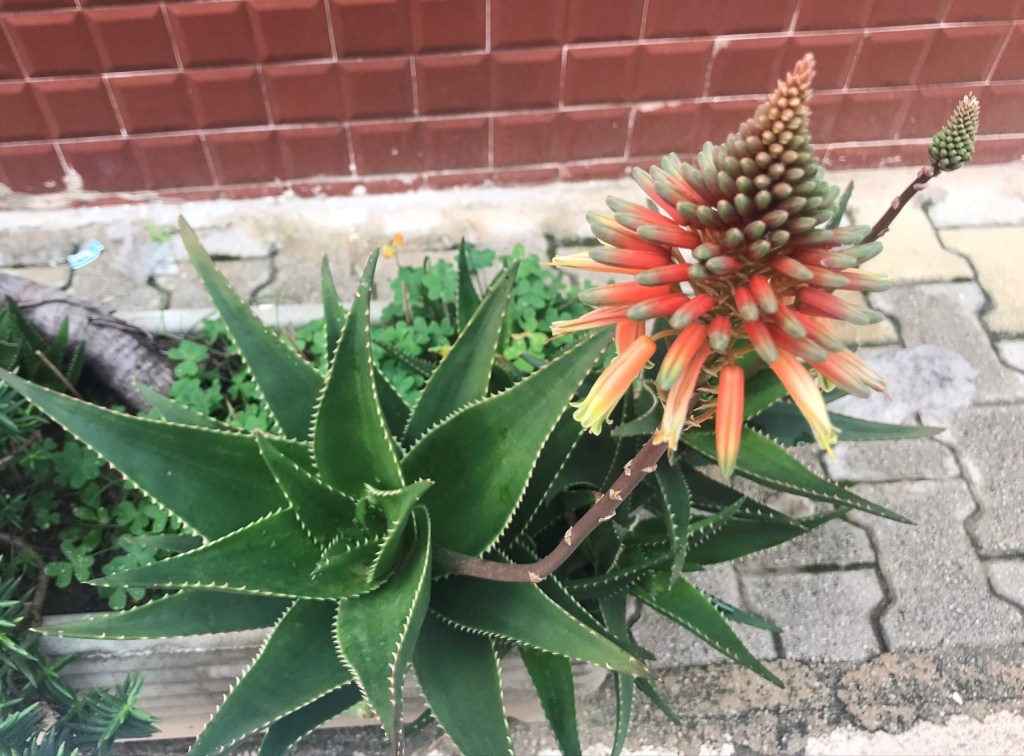


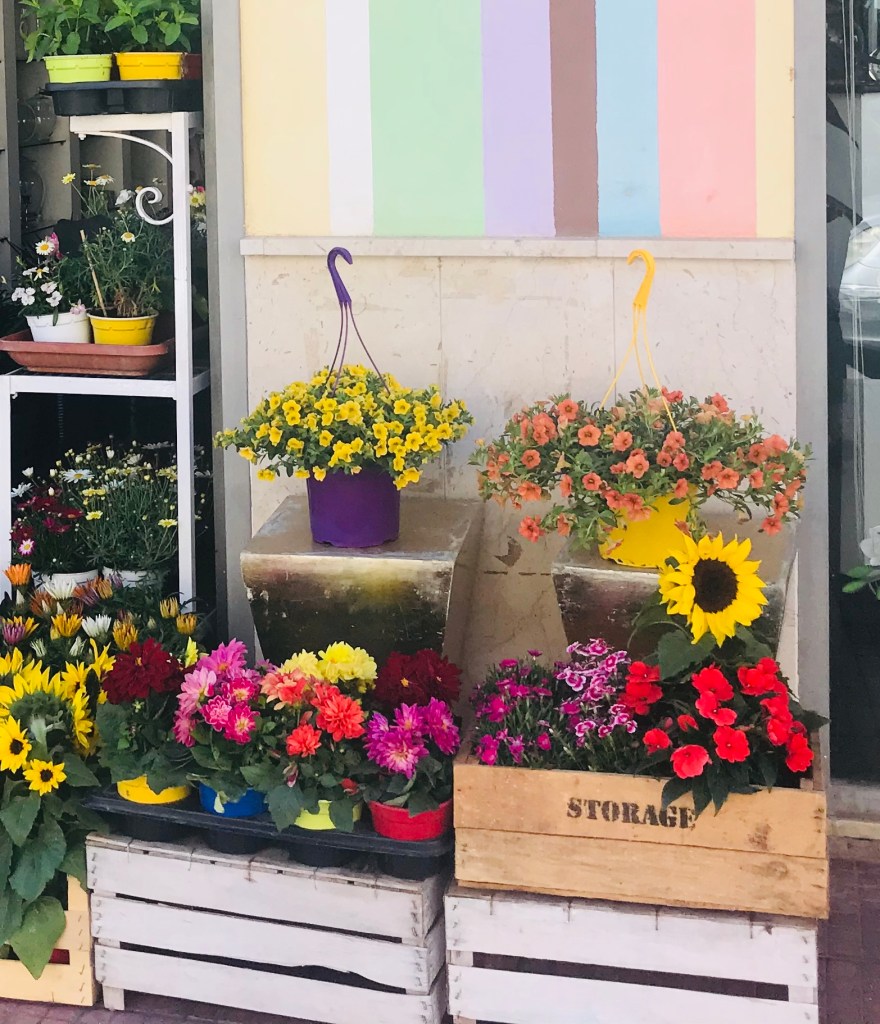






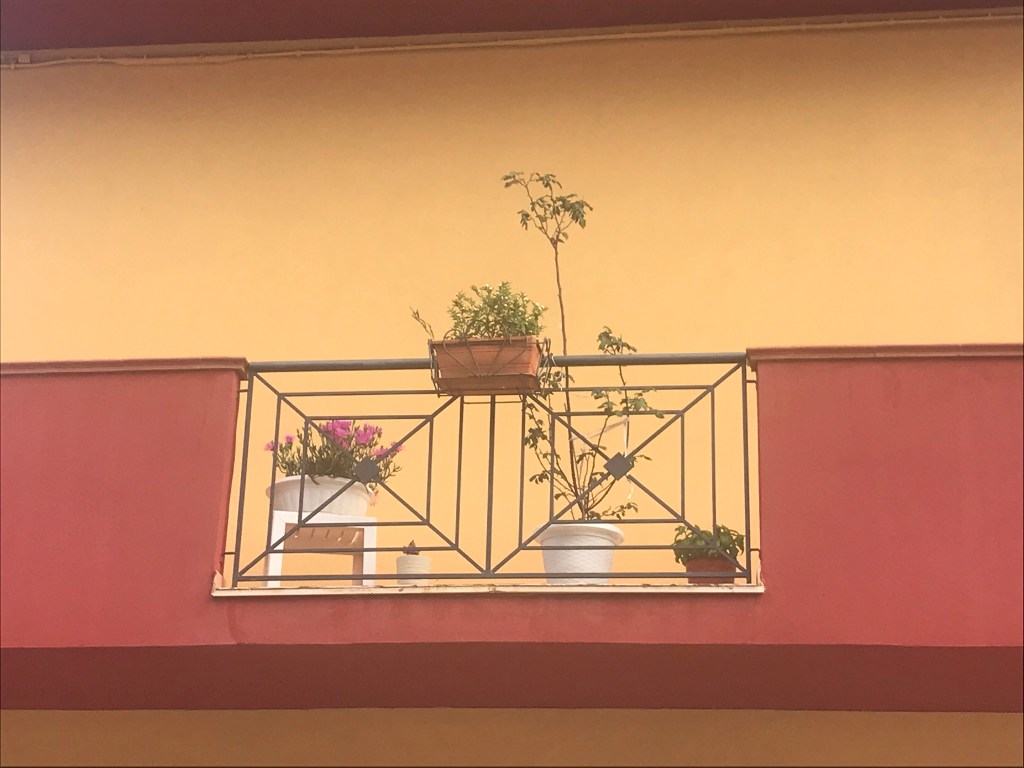

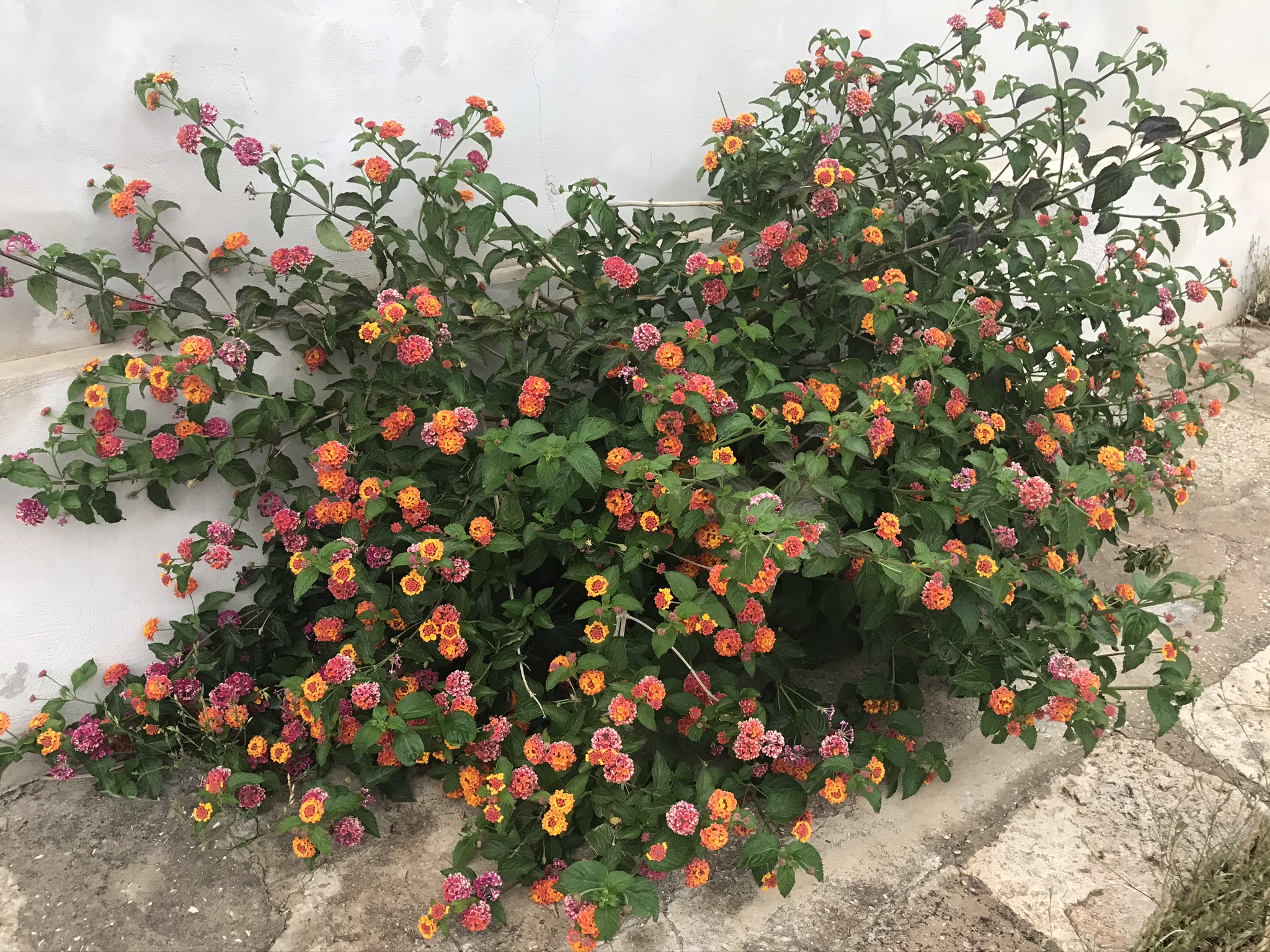

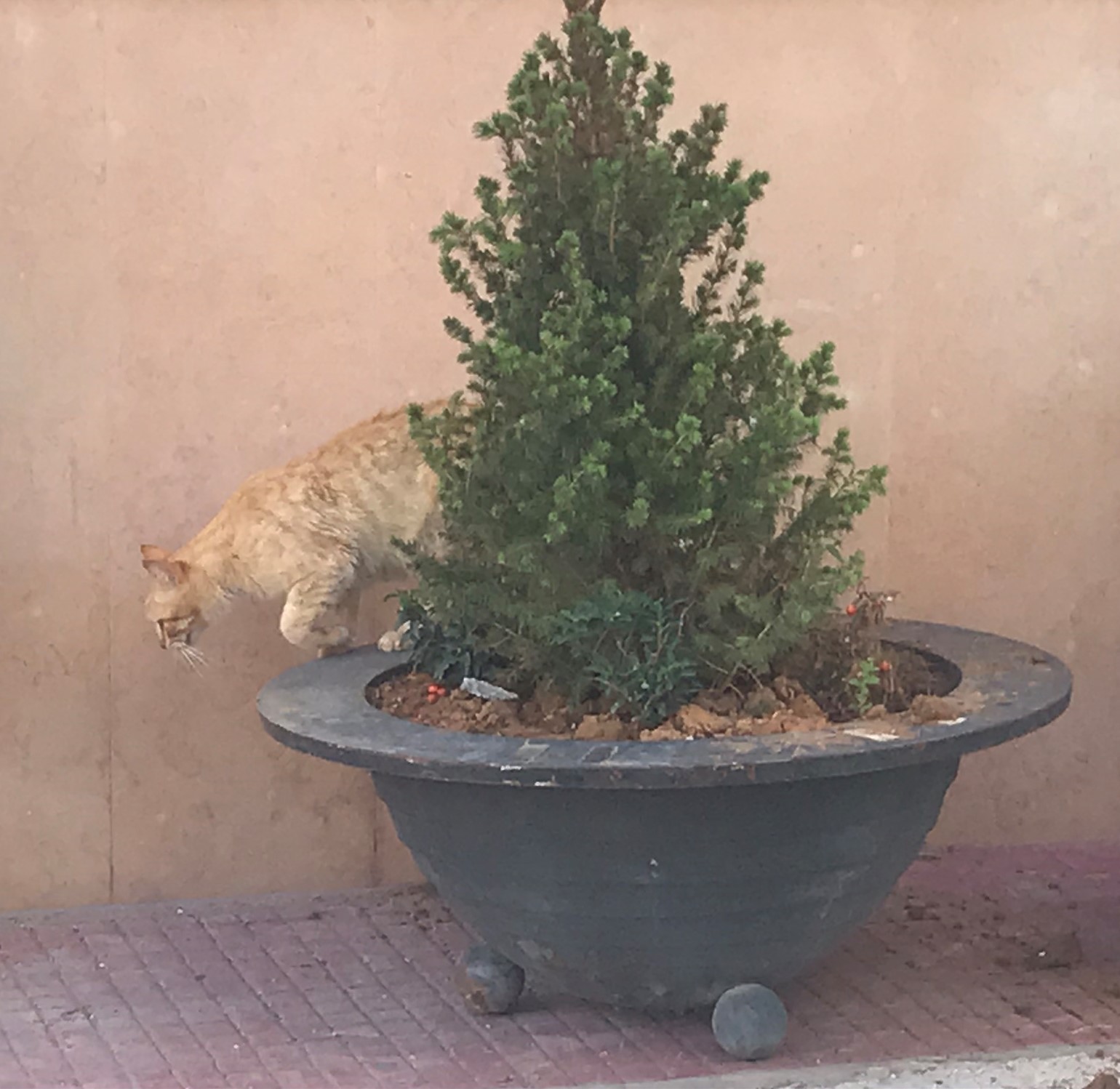
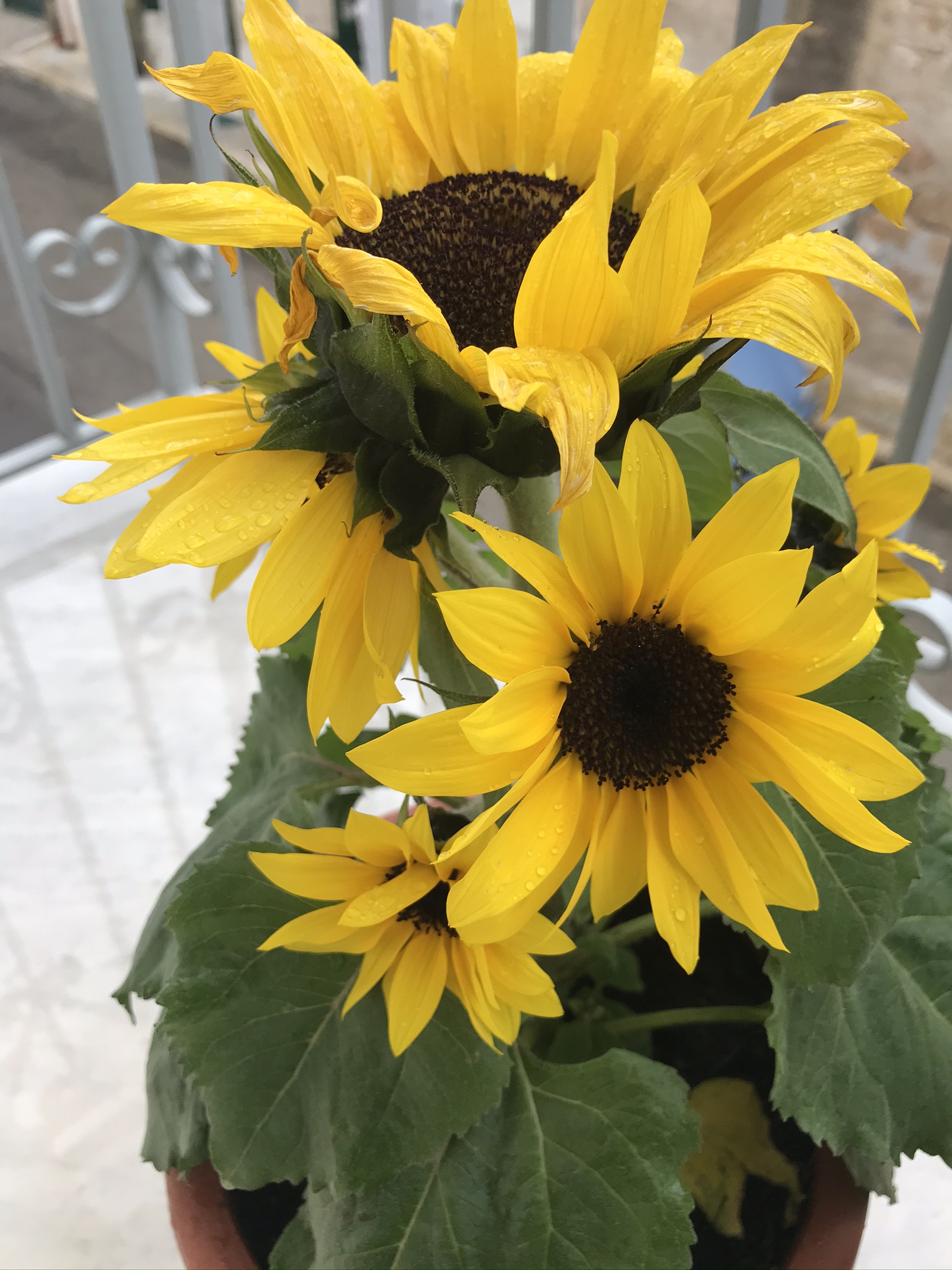
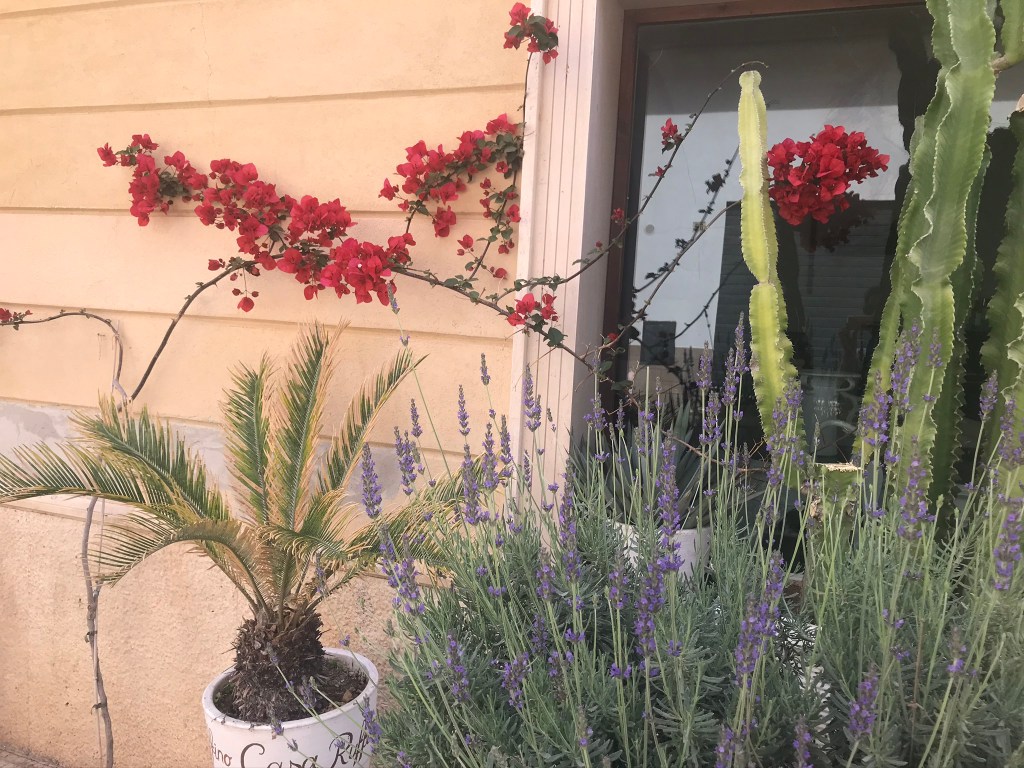

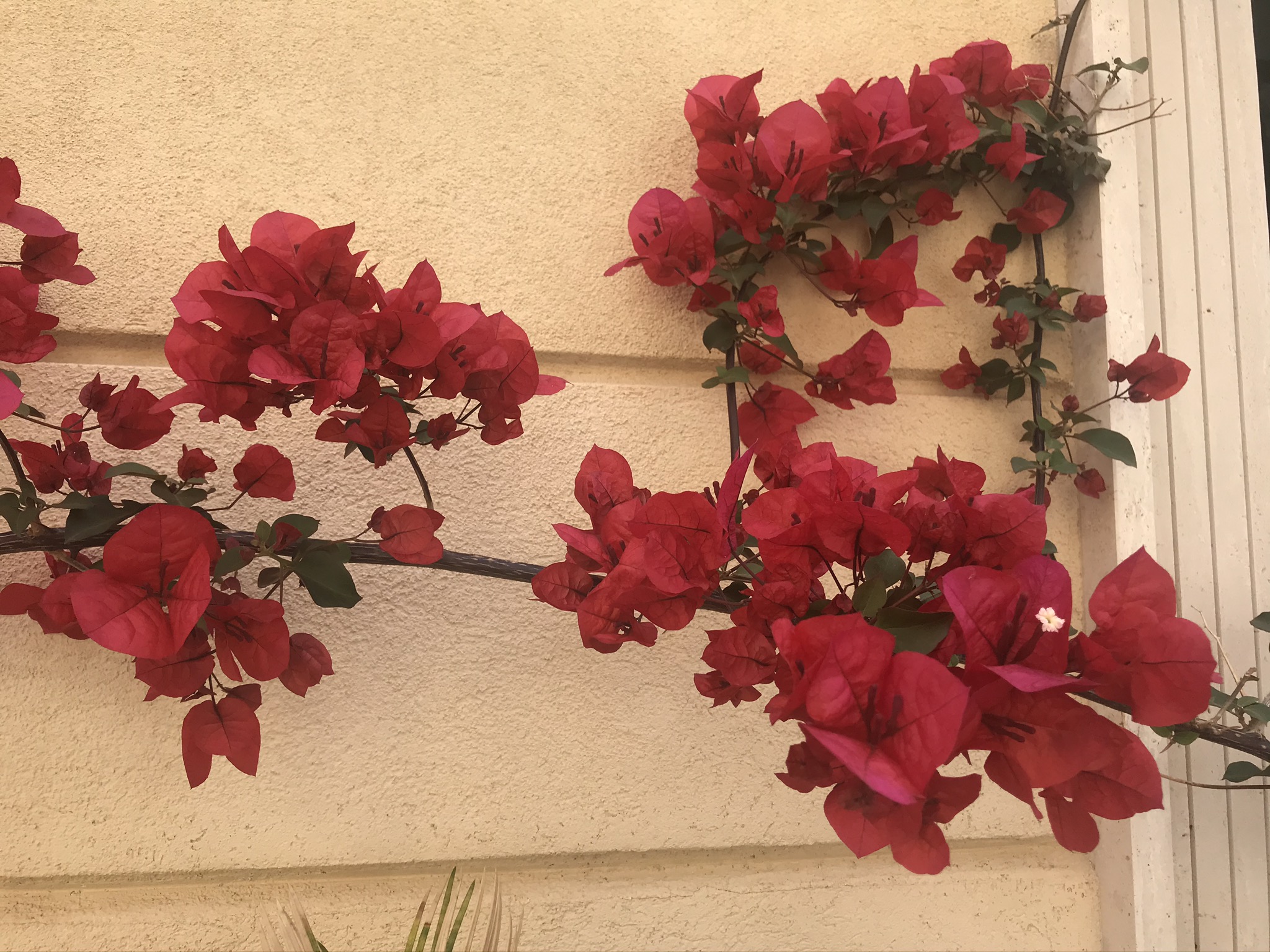


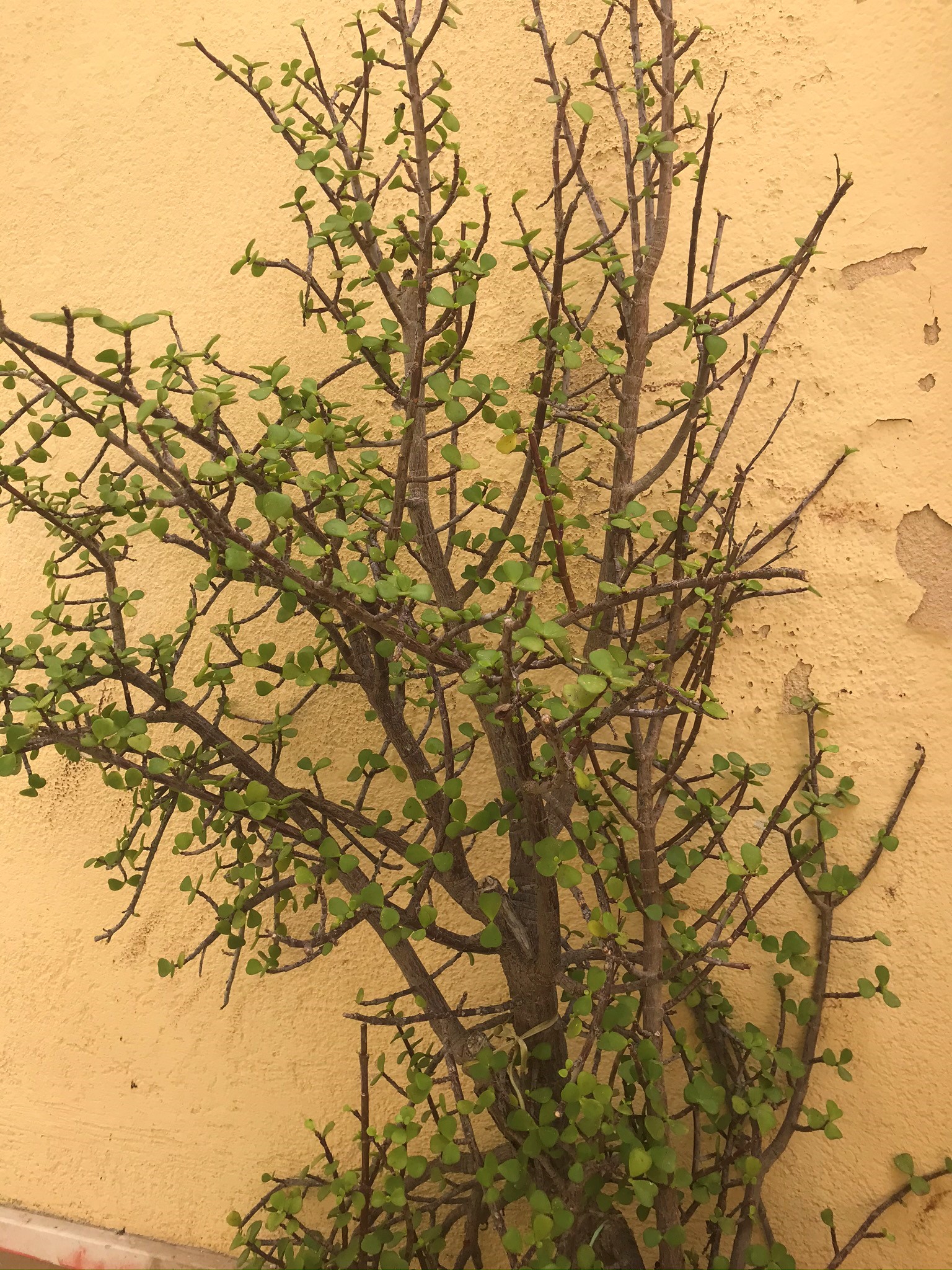

*I have absolutely no idea who D. Antoinette Foy is, or was. Found a Facebook page that is not active. Otherwise only pages and pages and pages of quotes attributed to this name. And maybe that, too, is symbolic. Just a person, like the rest of us, articulating what the rest of us are feeling. Gratitude to her, whomever she may be!
Home is a Human Need. Is it a Right?

The Covid-19 pandemic has everything to do with home. It has struck at the very heart of home, in multiple ways, and Americans are struggling.
Sure, it has forced most of us to stay home, but that’s not really the problem.
The pandemic is attacking our fundamental needs. Possibly our rights, depending on how you look at it, but certainly our needs.
Home, in the most fundamental sense is where our essential needs are met: shelter, food, safety, love, belonging, and a sense of worth.
These same things correspond to Maslow’s hierarchy of needs.[1] Remember that? The pyramid diagramming the most essential needs of all people? Maslow’s pyramid illustrates the most basic needs at the bottom and progresses up to higher needs. As each level of need is met, the next level becomes possible to achieve.
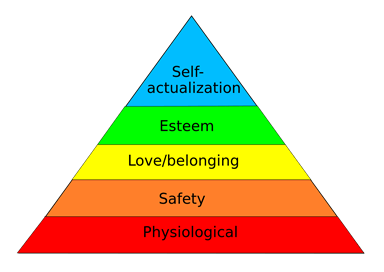
At the very bottom, the most essential of all human needs, are physiological: the need for food, water, and shelter. This is home at its most primary level, devoid of the delightful details we love. Home is the place where we are housed, where we sleep and where we are fed. In the Western world, we expect our own bed, a couch, or even a mattress on the floor to regularly lay our head. We assume home is where we have enough food to fill our bellies, where we will never go hungry, and where we receive proper nutrition that supports our physical growth.
Closely tied to this most basic need for shelter and food is the need for safety. A house, in providing a place to rest and come in from the cold, is meant to protect us from the elements and dangers of the outside world. By all considerations, home should be a place not only where we eat and sleep but also a place that is safe: a shelter protecting us from harm. The idea that home is a safe place, should be safe, is so fundamental that the prospect of it not being safe seems unacceptable.
The Covid-19 pandemic strikes at the very heart of home. Our food supplies are threatened. Flour, and even beans, are in short supply. Meat packing plants are closing. Forget our previous fears about toilet paper, how will we eat? How will we survive?
Our homes are no longer safe. For those who live with domestic violence, home hasn’t been safe for a long time.[2] Others are already deeply afraid of outside threats. 42% of American adults have a gun for protection and two-thirds of those own more than one.[3] Americans are currently spending over $45 billion on home security systems, a market which is expected to grow to over $75 billion by 2023.[4]
But security systems and guns can’t protect us from Covid-19. This virus can enter our home unseen and undetected. Life is scary enough when the danger exists “out there,” but when a simple trip to get groceries or a walk outside for exercise can mean escorting illness or even death into our homes, where we expect to be safe… this can take our emotions over the top. Every single one of us is experiencing this stress.
But for some Americans, that threat is theoretical. Sure, there’s the possibility that the virus could enter their homes and kill them. But for them, their home is already in jeopardy. The threat is much more concrete. And much more immediate.
With no income, how will they pay the rent, or the mortgage (if they’re lucky enough to have one)? They don’t have savings. They don’t have retirement funds. They can’t work from home. If they stay home, there’s no money. No money means no shelter. No money means no food.
Those that are willing to take the risk of reopening are those that can’t afford the risk of not. If they don’t work, they can’t survive. They can’t pay the rent. They can’t pay for food. They can’t take care of their families.
We can’t see the virus, but we can see this. We can see homelessness and hunger. Collectively, as a country, we look away. No wonder these Americans are angry.
America is already a nation of lonely, depressed people.[5] People who don’t feel loved, who don’t feel valued, who are struggling to fit in. Even more so during this pandemic, those who live paycheck to paycheck are the expendables. The people we take for granted. The people who make it possible for the rest of us to indulge in our privilege: our meals out, our trash picked up, our hair cut and our nails done. The luxury of shopping for things we don’t really need. We may say “Thank You,” and we may even call them heroes, but all that means nothing if, as a country, we are willing to let them go hungry. If we are willing to let them lose their homes. If we are unwilling to provide them a safety net. If we unwilling to provide them affordable healthcare.
Home is a safe shelter where we are nurtured and fed. Where everyone matters and is loved. Too many Americans are without that home.
Home is most certainly a basic human need. In America, in the 21st Century, might we agree it deserves to be a basic human right?
America. Land of the free, home of the brave. Personally, I don’t think Americans should have to be “warriors” just to have a home.
[1] Designed by Psychologist Abraham Maslow in 1943
[2] It is estimated that 40 million Americans live with violence inside their homes. Incidents of violence are growing – and becoming more severe – as people are forced to stay inside. See factsheets produced by NCADV, National Coalition Against Domestic Violence
[3] See “7 facts about guns in the U.S.” by John Gramlich and Katherine Schaeffer. Oct 2019.
[4] “Home security system market to grow at 10.40% CAGR from 2018 to 2023.” PRNewswire. New York, Sept 4, 2018
[5] 50% of Americans feel lonely. See Cigna’s study on this: https://www.multivu.com/players/English/8294451-cigna-us-loneliness-survey/
 Jan Peppler HOME