Jan Peppler HOME
Exploring Our Connection to People and Place
Rosa Parks. Almost Home

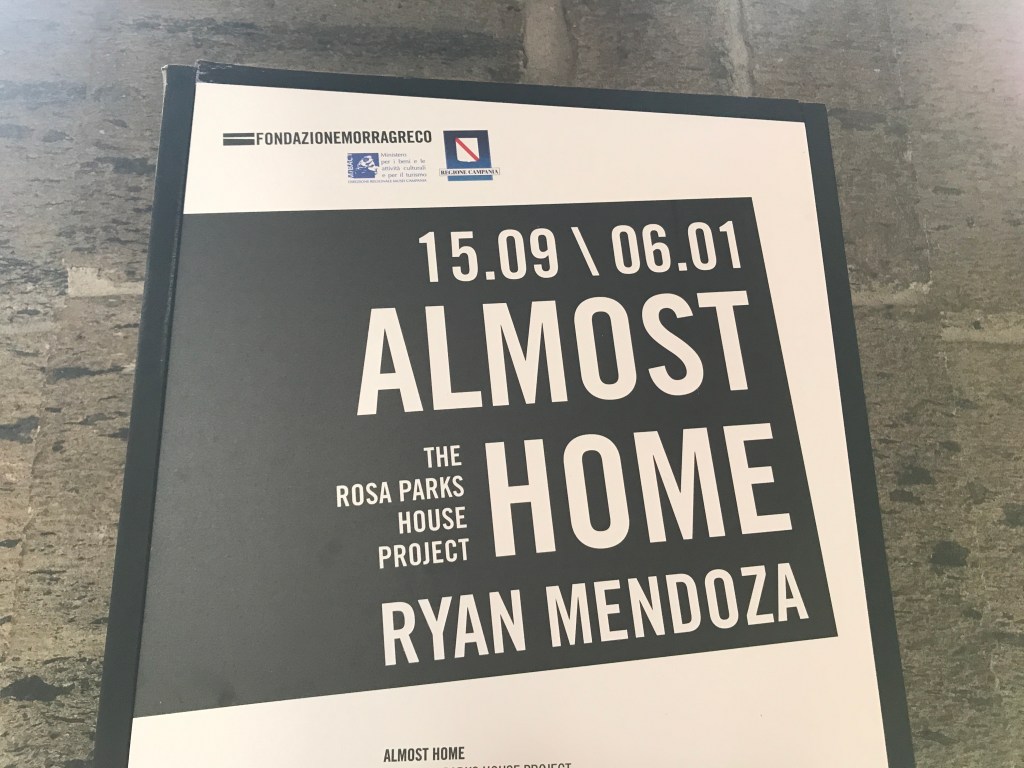
Naples is the last place I would expect to see something related to the struggle for Civil Rights in America. But there I was in the San Ferdinando district, admiring The Royal Palace from the 17th Century when inside the Courtyard of Honour was this:

The home of Rosa Parks. The home in which she lived after she fled death threats following her dramatic refusal to give up her seat on a bus. The Detroit, Michigan home where she lived with her brother and sister-in-law and their thirteen children after she left Montgomery, Alabama. The home where she hoped to find a better life than in the South. Instead, while riding the bus was no problem, she found housing segregation to be just as bad in Detroit as it was in Alabama and, as she said, more obvious.
She was with family which meant she was certainly home, yet she still found herself on the outskirts of home with her country.
It was in this house, in the Virginia Park neighborhood of Detroit, that she focused most of her activism on housing issues. By 1962, urban renewal policies had destroyed 10,000 structures in Detroit, displacing over 30,000 African-Americans (70% of all those who were affected).
As Ms. Park’s health began to decline, she moved from this house to several senior housing facilities, first to care for her ailing mother and then by herself. The rest of her family left this house in 1982 and the home stood empty for decades. Her niece, Rhea McCauley purchased the home but lacked the finances needed to restore it and could not secure funding for that purpose. Consequently, in 2016, the house was scheduled to be demolished.
And that’s when American artist Ryan Mendoza decided to save it. He took it to his home in Berlin and had it reassembled in his garden. And now, as he lives in Naples, Italy, he has brought the Rosa Parks home to Naples.
Each time the home is taken apart, moved, and rebuilt, or re-membered, Mendoza says we are given the opportunity to re-member how we think about American history.
Rosa Parks was not a meek and tired woman who participated in activism for just one day in 1955. Instead, she was a life-long activist for equal rights, civil rights, human rights.
As the United States continues to grapple with who is remembered as a hero and what memorials we will keep and those we will take down, it behooves us to consider the Rosa Park home as a place worth conserving.
This is not the grand home of a general, a president, or a philanthropist. This is not a large home. It is small and decaying. And yet, this home speaks volumes. This home has stories. This is the home of a woman and her family who lived their lives trying to keep their home and trying to make their home country a better place for all.
Almost Home. To be home but not quite fully at home. To be free but not completely free. To be a home not in the home of its origin.
Maybe one day.
What do you think? Can you imagine living in this tiny home with fifteen other people? Do you think this home is worth saving? What do you think of the juxtaposition of this small humble home in the courtyard of the Royal Palace in Naples?


“…now, as he lives in Naples, Italy, he has brought the Rosa Parks home to Naples.”
Fascinating, thank you, Jan, for sharing this.
And, yes, I think that this house is important to share, as your article shows us.
Best Regards,
Shira
LikeLiked by 1 person
Thank you, Shira, for reading and commenting. I hope one day we will see this home back on U.S. soil.
LikeLiked by 1 person
Hmm, likewise, I think. Somehow, though, for now, it seems almost fitting, Jan, that her home is in the European Union: they are a bit closer, I think, to having some of what we have been fighting for, as part of The Double V that she continued/helped lead here. Until we Do Better at dismantling the structures, as Dr. King pointed out, that create these situations, home may not be worthy of the return.
We can really Do Better.
I hope you can find a bit of time to pop over my way and look at Project Do Better, please, Jan.
Take care,
S. Destinie
LikeLike
You’re absolutely correct, we really CAN do better! Just signed up to follow your work. You might also be interested in my post titled “America & Home: The Greenwood Massacre” or a guest post on my FindingHome.substack.com newsletter titled, “How Will Millions of Americans Keep a Roof Over Their Heads?” We still have a long way to go and need to keep moving forward.
Hope we can connect some more here and on other platforms.
Standing with you. Awareness, Action, Change. Educate. Facilitate. Inspire.
– Jan
LikeLike
What a profound and touching post! The story of Rosa Parks’ home, a humble yet immensely significant piece of history, is a stark reminder of the ongoing struggle for civil rights. The fact that this small house, which harbored such a powerful legacy, stood in stark contrast within the grandeur of the Royal Palace’s courtyard in Naples, speaks volumes. It symbolizes the resilience and quiet strength of those who fight for justice and equality, often overshadowed by more ostentatious historical narratives. This house is undoubtedly worth preserving, not just as a memorial to Rosa Parks’ remarkable life and activism, but also as a tangible representation of the challenges and triumphs in the journey towards civil rights. It’s a vivid lesson in history, humility, and the power of one person’s resolve to make a difference. Your reflections on this poignant piece of history are deeply moving and thought-provoking. Thank you for sharing!
LikeLiked by 1 person
Thank you, Mark. I wrote this two years ago and it’s nice to know that it is still being read and striking a chord. I agree wholeheartedly with your assessment.
Interestingly, I am unable to find where the house is now or what has become of it, which is a bit distressing. If you ever hear of its whereabouts, please let me know!
LikeLike