Jan Peppler HOME
Exploring Our Connection to People and Place
Celebrating the Light
I never believed in Santa. Never. Really. He was just a story with ancient origins that my parents would share to illustrate how even one person could make a difference by doing something kind.
But the Christ Child, he was real. Christmas was all about the Christ Child. And it was he who brought us gifts on Christmas Eve.
My memories of Christmas as a child are wonderful. They are everything we want our childhood memories to be: filled with laughter and joy and delight. After weeks of Advent, of preparation and anticipation, Christmas Eve would finally arrive and the Christ Child would come.
Our family always attended church on Christmas Eve and the Sunday School kids would recite the nativity story from the book of Luke. The service was filled with candles, and organ, and hymns. And then we would run home and up to our rooms to change into pajamas. When we came down, we would discover a pile of presents for each child. Unwrapped, of course, because the Christ Child didn’t have elves in a workshop, but he did always have time to deliver our gifts. While we squealed with delight, plunging into our individual trove of treasures, our parents would bring out a tray of cheese and a mug of slush for each of us. Then we would settle in to open all the wrapped presents from family that had been gathering in the living room throughout December. Presents were opened one by one and as we waited patiently for our next turn, we would pound the slush and scoop it into our mouths.
(My mother’s recipe for Slush is made with cranberry juice, lemonade, and a little bourbon – just enough to keep it from freezing entirely and just enough to get us to sleep at a reasonable hour. My mother was no fool. Regrettably, every church woman who deleted the bourbon in the church recipe book was. This treat is still a family tradition, though these days we add a lot more bourbon. The small dose for kids is never enough for adults. 😉
Everything that makes Christmas special for me, is celebrated on Christmas Eve.
But Christmas Day? The truth is, I don’t remember Christmas Day as a kid. I suppose we ate breakfast like any other Saturday and then played with our new gifts. I really don’t know. I have no memories.
As an adult, that changed.
I was twenty-four years old when my father died on Christmas Day, just after 8:00 AM.
Honestly, it was a perfect day for him to leave his body. My stepmother illustrated the bulletin cover for his funeral with the words, “Oh Jesus Christ, thy manger is my paradise.” Like I said, it was fitting. He knew he was dying. And if he couldn’t hold on until Easter, then he would have to die before Lent because, as he said, his funeral included too many hallelujahs. He liked to joke that he would die on Epiphany, so he could travel home with the wisemen. But his body couldn’t hold on that long. When we celebrated his baptismal anniversary on December 23 by anointing his head with oil, he was lucid enough to know he only had two more days to wait until the promise of his faith was fulfilled.
He knew it was Christmas Eve when my stepmother and I left for church. It was only the second time I had left his side in two weeks. And when we returned, he had begun his transition. He was in that in-between space, wiggling free from his body and leaning towards the light. I got into his bed and spooned him until 2am when it was time for my stepmother to sleep. I woke and heard the grandfather clock chime eight times. Then Judy called for me. I held his hand on one side as she held the other and he took his last breath.
The rest of the day, well, I remember it quite clearly. As I do many of the Christmas Days that followed. For years, I would spend it with my sister. We would watch old movies while eating a spinach rice mushroom and cheese concoction we now call Christmas casserole. I still eat that casserole every December 25th.
So you see, my traditions of Christmas haven’t really changed. Christmas Eve is still special to me and Christmas Day, well, if anything, my father’s death made that day holy too.
What I celebrated as a child is still what I celebrate today: the birth of the light, the light of the world. With the return of the light, the darkness wanes. The prophesy is fulfilled. Sunnier days are ahead.
For me, the most anticipated holiday of the year is Winter Solstice.
Christmas is just one of the many holy days during this winter season which share the same theme: the return of the Light and the renewal of life. At Hanukkah, we are reminded that there is always enough fuel in the lamp to keep burning, even when that seems impossible, even when the days seem darkest. And then Solstice arrives and the earth seems to stand still for a moment, for a few days, until the course is corrected, the nights get shorter and the days longer. The Christian celebration of God arriving in human form was deliberately set for December 25 to coincide with the Solstice (which was originally that date). It fits perfectly with our ancient human need for good news when everything seems bleak.
When God answers our prayers, we rarely see the results immediately. Instant miracles, well, that’s the stuff of legends and stories. Our daily truth is much slower. We are sick, the fever breaks, the infection is beaten, but it still takes time to restore our strength. The Sun is *born* again but it takes days until we see the fullness of it. The twelve days of Christmas begin on December 25 because traditionally it took twelve days for the yule fire to burn. Twelve days before we see the sun lengthen. Twelve days to Epiphany. A sudden knowing, a light. While the miracle has already happened, it is twelve days (or really two years) until the wisemen arrive with gifts.
Today I celebrate the Solstice. The beginning of a promise fulfilled.
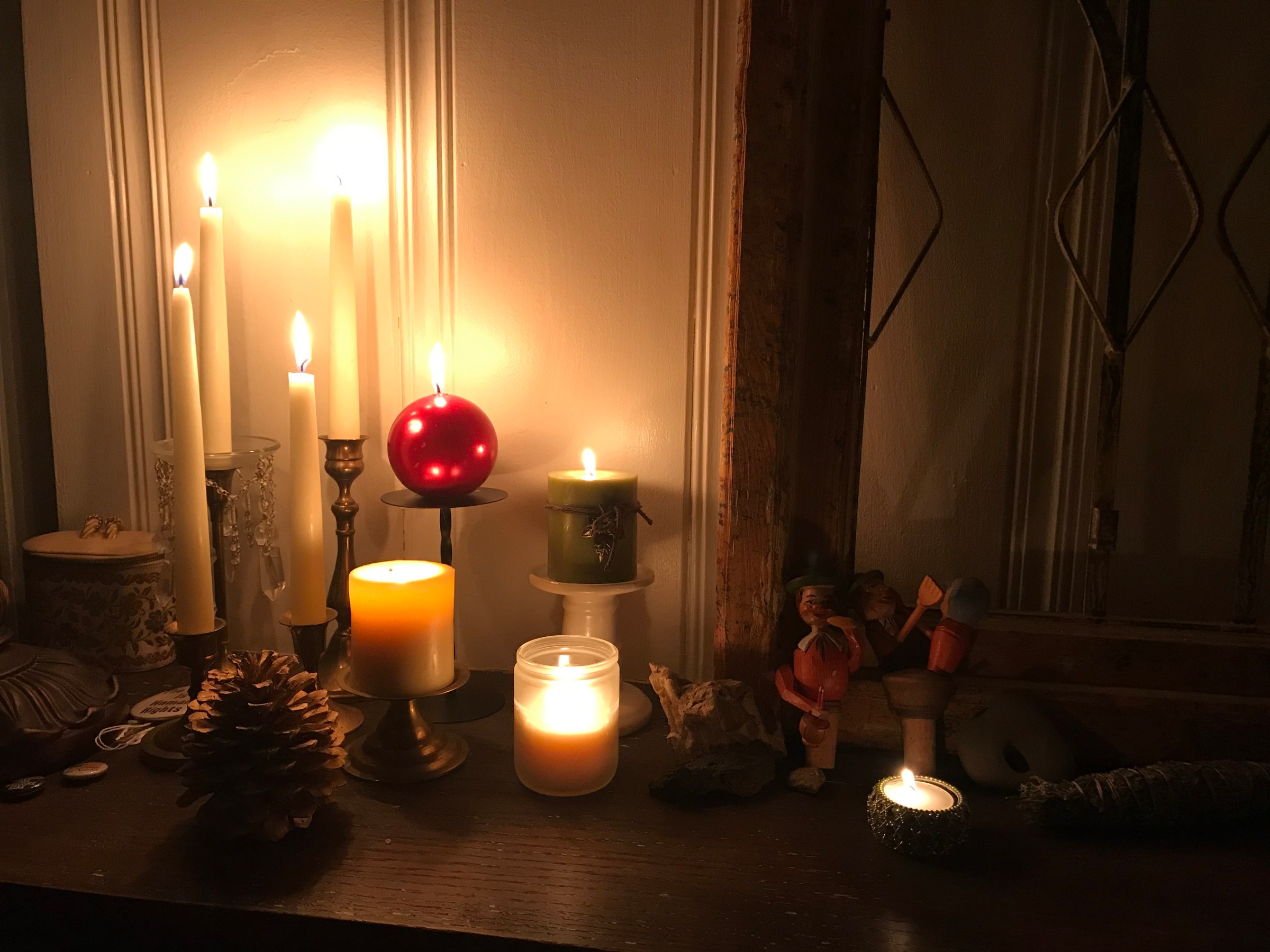
Tonight, I will light candles in every room of my house and my home will be ablaze in a warm glow. I will read stories from multiple traditions and will sing one of my favorite hymns, Thy Strong Word Did Cleave the Darkness. I will meditate on light on dark, awash in metaphor. And I will keep celebrating through Christmas, all the way to Epiphany.
I hope you will too. May you, too, celebrate the eternal light that is in us and around us. Always. Even when we can’t see it. Even when we forget. Our prayers are answered. The promise is fulfilled.
Happy Solstice.
The Paradoxical Present
A few days ago, a man yelled at me in the post office. I came home and made myself a drink.
My response was not cause and effect per se. My response was simply my present. A mixture of Covid19 and a country unhinged. Exposed and unbridled injustice. Climate change and mass extinctions. So much loss. Existential angst. This is Winter 2020. This is now.
Most days are hard. Challenging. Difficult. Up and down, in and out, moment by moment. Yet the moments string together into days and nights, tumbling over themselves so rapidly that I am always amazed another week has already passed. Eat, sleep, do dishes, eat again, do more dishes. Tackle one problem a day. Insurance. Billings. Website. Groceries. Work.
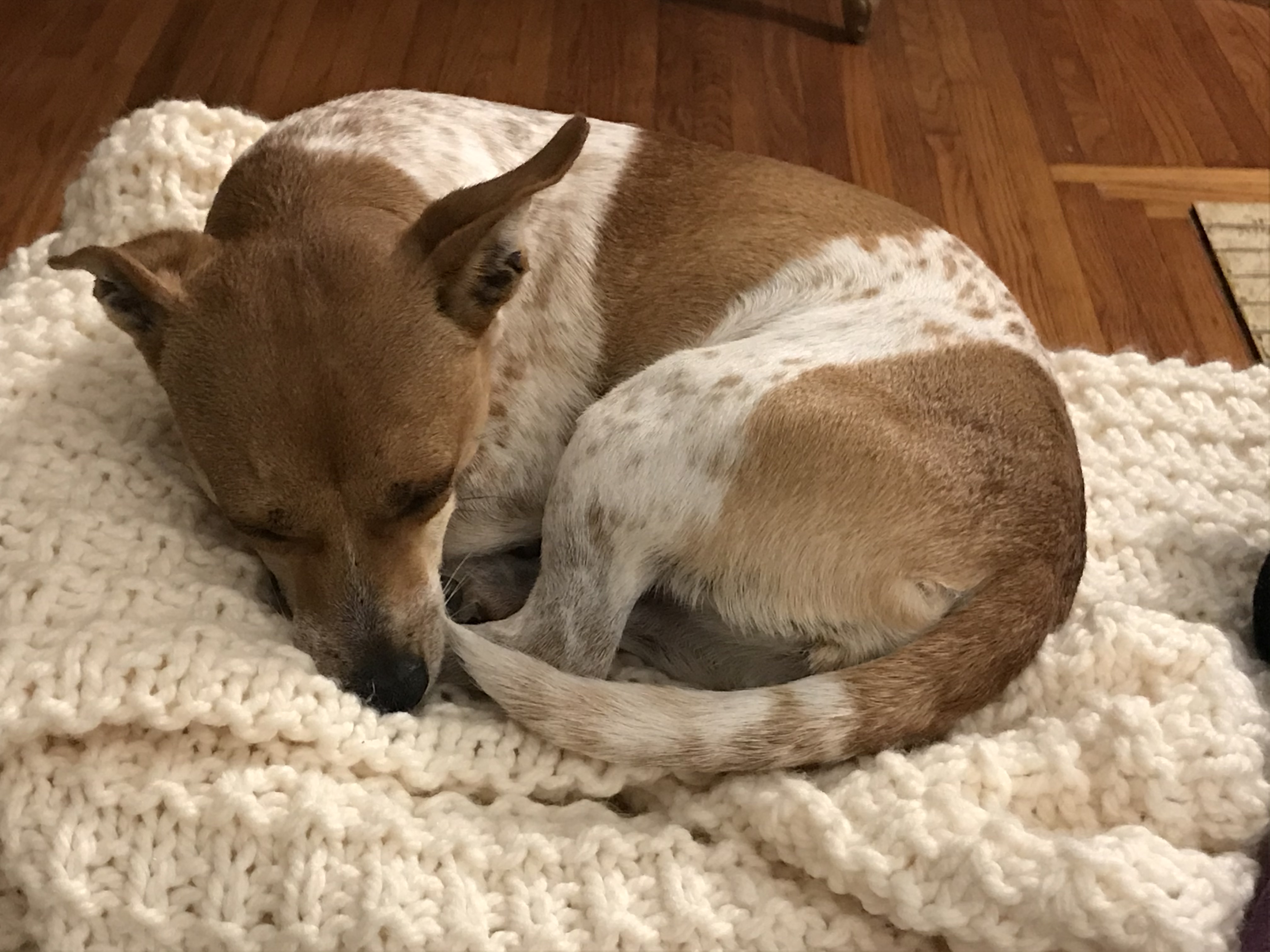
Every day, I walk my dog. Other than that, I rarely leave home.
I write but I don’t publish. I pray but not on my knees. I meditate but not on my mat. I stretch and contract, stretch and contract. I feel like May in the Secret Life of Bees. I feel it all. I need my own wailing wall.
I live in gratitude and wonder and pain. My soul is a kaleidoscope of sand and broken glass, endlessly beautiful, always turning, catching the light. The profundity of seemingly the most banal and certainly the most painful moments makes me cry. My tears are as spontaneous as my laughter, truer than any words I’ve ever spoken and more proficient. Grief-stricken by the loss of life, lights that were extinguished too early. Overwhelmed by love. Hungover from crying.
Quite literally there are days when I don’t trust myself to drive. When tears wash over me like nausea. My ears are ringing. Grief makes me queasy. I need to sit down. Catch my breath. Inhale. Exhale. Get back on the mat. Wipe the stinging water from my face. Do nothing. Be horizontal. Snuggle my dog.
My pain is my meditation, as much as my silence and my conversations. My memories are my prayers. My phone pings and I am roused, and the cycle begins again. I address some pressing need. I play with my dog. Eat. Do dishes. Watch a little something, read a short bit. Respond to a text.
The good news is that I’m not an alcoholic. A glass of wine with dinner that I sometimes don’t finish before switching to tea. Endless pitchers of water. Even my Italian addiction to coffee is waning. Last week I broke down and for the first time since the pandemic, I bought myself liquor: good bourbon, vermouth, and aged cherries. A Manhattan never tasted better. But only one, maybe two, and then I’m back to water and tea. Of course, there’s chocolate. Lots and lots of chocolate and sweets.
I know I’m not alone. I’m not the only one feeling this way. There is a chart circulating on Facebook for identifying if you’re thriving or in crisis, with surviving and struggling in-between. If only it was that simple and exact, that linear, that clean. I can run the full gamut in a day. And please, I don’t want your sympathy and I don’t want you to worry. I suspect that even those who post perpetually good thoughts and positive thinking, those who are holding jobs and “functioning well”, are also experiencing the same range. We are each hurting, struggling, and grieving in our own ways. We cope. We function. We connect. We laugh, we cry, we worry, we rest.
It is good to know that we are not alone. And still, the experience is singular. It is not enough to say we are all going through this. The shared experience is not comforting. Instead, it is necessary – truly – and terribly important – to acknowledge that we are each in our own unique, singular pain. We need to honor the individual experience, as well as the collective.
The man at the post office cut in front of me while I was socially distancing. When I pointed out that I was in line, he raised his voice and verbally insulted me. I was startled. The screws holding me together began to tremble loose. Tears ran down my face. I finally turned to him and said his words were unfair, untrue, and unkind. He responded, “I hope you have a good day.” Again, startled, I turned away. A good day does not negate the unjustness of his behavior. A good day is not without pain.
Every day is a good day. Every day I have my dog snuggled warm beside my body rolling in the leaves walking on her leash perched on the couch like Snoopy reaching up with her paws on my knees and tossing her toys in play is a good day. Every day that I eat can afford to buy groceries cook healthy meals and taste flavors and smell and breathe and poop is a good day. Every day I stretch on my mat and practice yoga and light the candles on my alter and say my prayers and chant is a good day. Every day with a roof over my head and a car than runs and credit with a balance below my limit and a phone and a computer that are working is a good day. Every day I talk with a friend or my siblings or even a stranger and smile and connect, these are good days. These are great days. Every day is a gift.
And most days are hard.
This is a messy and vulnerable and intensely human admission. We are together and we are alone. I haven’t shared this before because if we’re all feeling similar things then… why would you want to read this? My own experience isn’t important. But today I am posting, because, maybe it is.


Pooh and Finding the Way Home
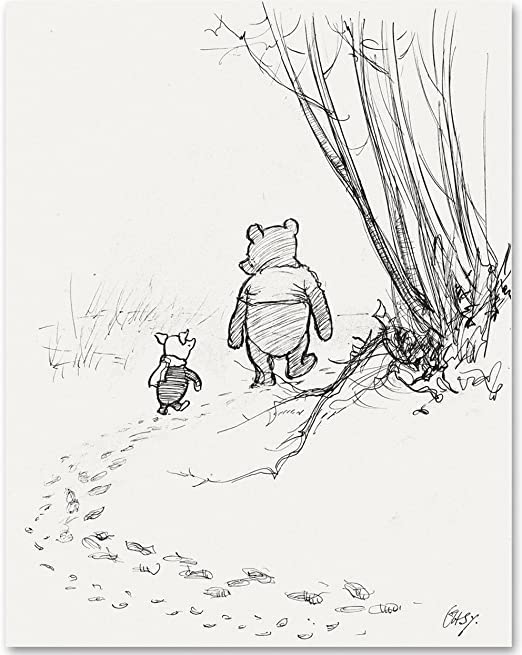
As a diversion from current events, I’ve been rereading The Tao of Pooh by Benjamin Hoff (ã 1982). I think we could all use a dose of Pooh these days. As well as a spoonful of honey. And a Daoist perspective on living in the present – especially these present times. This book is all that. A good, simple, and delightful reminder of so many things.
Today, one allegory in particular strikes me: the story of Piglet, Pooh, and Rabbit being lost in the woods and trying to find the way home. Round and round they go, always returning to the same place: a pit. Rabbit won’t stop talking and finally Pooh says, well, read for yourself:
“Well,” said Pooh, “we keep looking for Home and not finding it, so I thought that if we looked for this Pit, we’d be sure not to find it, which would be a Good Thing, because then we might find something that we weren’t looking for, which might be just what we were looking for, really.”
“I don’t see much sense in that,” said Rabbit. . . “If I walked away from this Pit, and then walked back to it, of course I should find it.”
“Well, I thought perhaps you wouldn’t,” said Pooh. “I just thought.”
“Try,” said Piglet suddenly. “We’ll wait here for you.”
Rabbit gave a laugh to show how silly Piglet was, and walked into the mist. After he had gone a hundred yards, he turned and walked back again . . . and after Pooh and Piglet had waited twenty minutes for him, Pooh got up.
“I just thought,” said Pooh. “Now then, Piglet, let’s go home.”
“But, Pooh,” cried Piglet, all excited, “do you know the way?”
“No,” said Pooh. “But there are twelve pots of honey in my cupboard, and they’ve been calling to me for hours. I couldn’t hear them properly before, because Rabbit would talk, but if nobody says anything except those twelve pots, I think, Piglet, I shall know where they’re calling from. Come on.”
They walked off together; and for a long time Piglet said nothing, so as not to interrupt the pots; and then suddenly he made a squeaky noise . . . and an oo-noise . . . because now he began to know where he was; but he still didn’t dare to say so out loud, in case he wasn’t. And just when he was getting so sure of himself that it didn’t matter whether the posts went on calling or not, there was a shout in front of them, and out of the mist came Christopher Robin. (p. 14 (original story from The House at Pooh Corner)
Home is always calling us. When we are still, when we stop talking, stop filling the air with distractions, we can hear it. The trick is to be quiet and keep moving. Ever so slowly. Feeling our way through the fog. Relying on deeper senses to guide us. Move gently. Embody stillness in action. Breathe. Breathe deeply. Listen. The cupboard is full.
Home emerges out of the mist when we are able to do this. Slowly and simultaneously quite suddenly. We find ourselves exactly where we want to be.
And therein lies the honey.
Let’s Talk About Beds
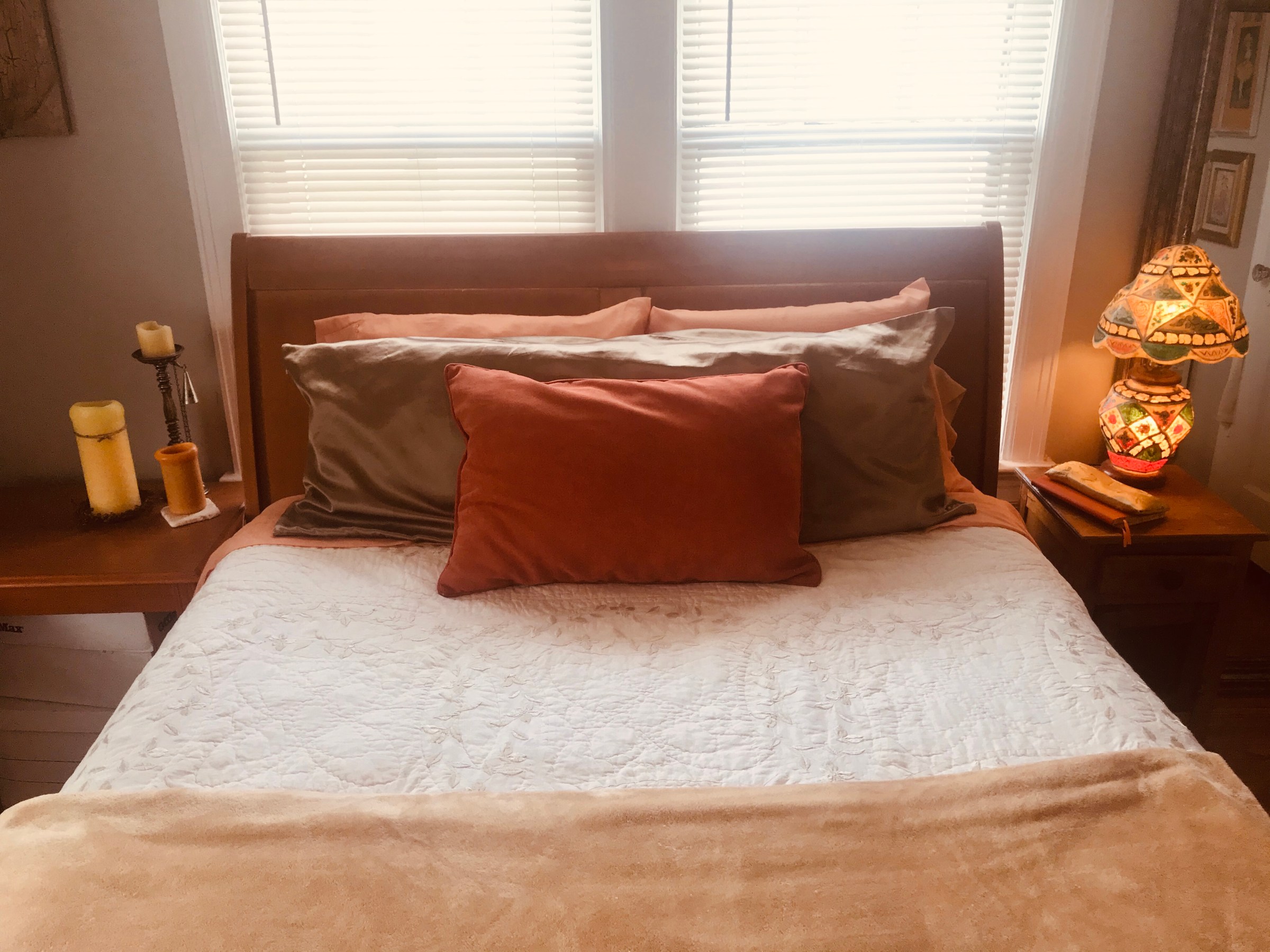
I love my bed. I love being in bed. I still have a button that a girlfriend gave me in 1987 which says, “I have no idea what I’m doing out of bed.” I can no longer remember if that had amorous undertones or was just a commentary on my preference to be resting under soft cotton sheets, but the sentiment is still funny and true.
Bed is the ultimate sanctuary for me. My safe place. My retreat. Actually, the entire bedroom feels that way, but it starts with, centers on, the bed itself.
The wrong mattress can ruin your life. That’s not a joke. And good linens can be transformative. The right pillows, too, are essential.
I spent most of my sleeping adult life on a metal frame. The kind that comes free with a mattress purchase. Easy set-up and lightweight. Perfect for the person who moves a lot. It wasn’t until I bought my home that I finally committed to a wooden sleigh bed. It’s not the highest quality, but it feels incredibly grounding. It is, undeniably, the center piece of the room.
I think our beds and our toilets are the most intimate places of our homes. Our most vulnerable and purely human places. The places where our masks come off. Where the good and the bad, drool, farts, and radiance are intertwined. There is something incredibly profound, even holy, about that.
I spent a lot of time in bed as a kid. Under the age of 10, I was sick a lot. Of course, we all spend time in bed when we are sick. Bed rest is the only way we heal.
We have this ridiculous notion that resting is doing nothing. That we need to constantly consciously be doing something. We completely forget that the body is always at work. It is incredibly active even when we’re not paying attention. Blood is pumping. Cells are regenerating. Toxins are being purified. Life is happening. Our psyche, too, is integrating information and change. In other words, resting is not a passive act.
A friend recently said beds are great because you can do almost anything in them. You can read, talk on the phone, watch TV, eat, play, and yes, sleep, all from the comfort of your bed. She said being a writer is the one occupation you can do from the comfort of a good mattress and firm pillows. Well, certainly another occupation comes to mind, but as a writer herself, I think she was channeling Edith Wharton.
Except that I don’t want to do those things in my bed. In a hotel room, certainly, but not at home. Watching TV, eating or working while in my bed doesn’t feel right to me. In fact, it feels very wrong. Like wearing flip-flops and a t-shirt to church on Sunday. Yes, people do that these days. But I don’t. I can’t.
My bed is a sacred place. Where I say my prayers. Where I record my dreams. If I’m in a relationship, it’s where I make love. None of these activities distract from the bed’s true purpose: to support me. To reconnect me. To restore me. It’s where the splintering of my daily life is healed. Where my broken, cracked, and bruised parts are mended. Where I am strengthened. Where I am made whole.
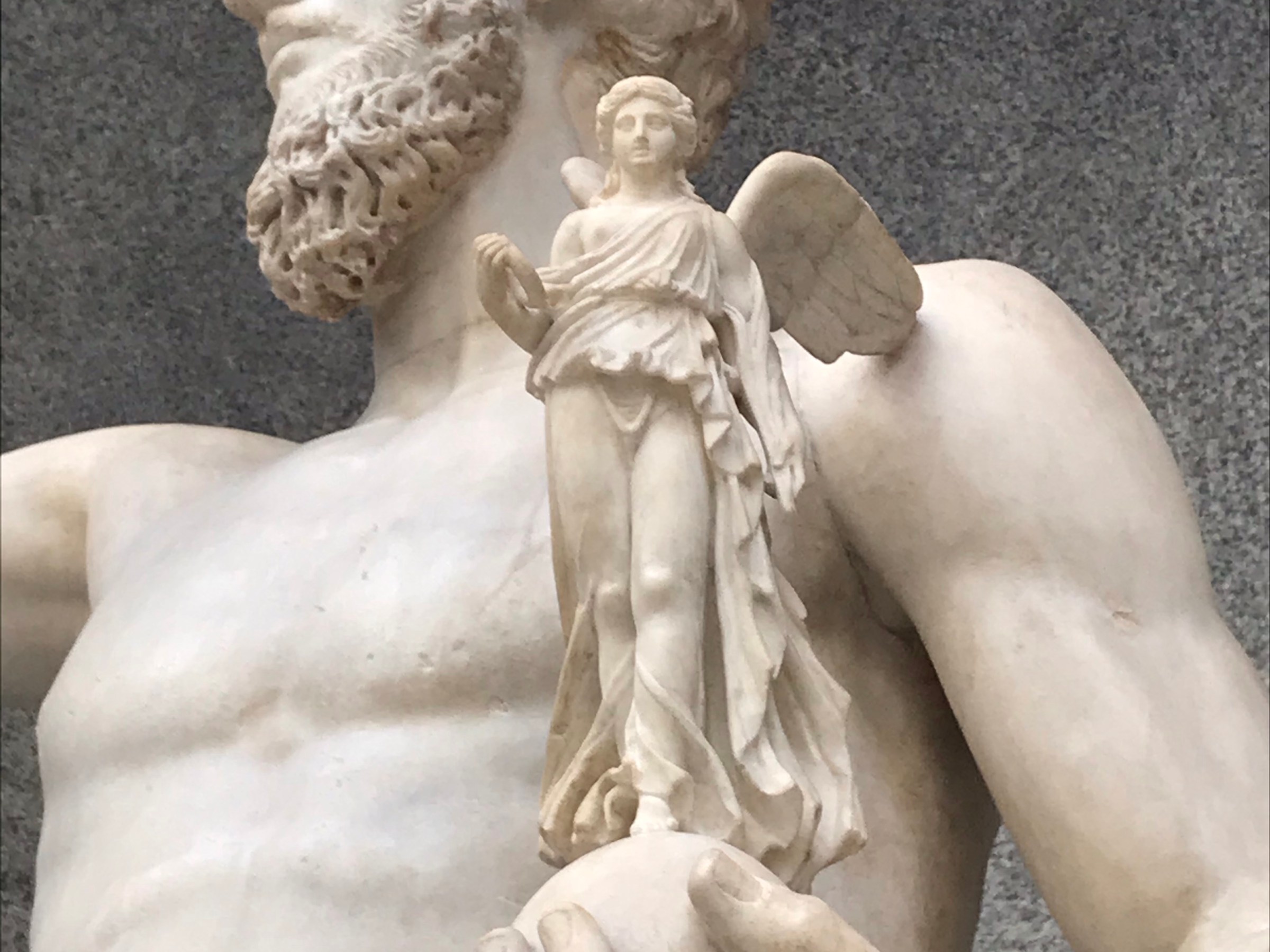
One of my favorite parts of The Odyssey by Homer is when we learn that the palace in Ithica was literally built around the king and queen’s bed. In Book XXIII, Odysseus tells us that on their land was an olive tree and around that tree he designed their entire home. From that tree, he carved their bed. The bed can never be moved. To remove their bed would be akin to cutting out their hearts – completely destroying their lives.
Trees, with their roots deep in the ground and their branches reaching to the sky, are an axis mundi – the place where heaven and earth meet. They are a conduit, allowing movement, communication, and nourishment between above and below. They are an intersection between the worlds. Where the ordinary, the mundane, reaches and connects with the divine. The world turns and this axis remains. It is constant.
Consider this meaning from The Odyssey: the heart of the home is their bed, built from an olive tree, the most sacred of trees in their world. Their bed is infused with the power and energy of this tree, the most stable and solid trunk. Everything they do in that bed is rooted to the earth and reaches to the heavens.
I like to think of my bed this way. As an axis mundi. As the place that grounds me and lifts me. A constant in the storms of life. An ordinary place, a basic necessity, that is transformed—and transforms me—when I surrender to it. The bedroom is a holy place. The bed, a container for communion.
While the kitchen is symbolically the hearth of the home, where the fire literally burns and our bellies are fed, the kitchen nourishes our mortal selves. The bedroom nourishes our souls. It is the beating heart. The purification of our blood. The regeneration of our spirits.
I spend a lot of time in bed. Since Covid, more than usual. Long naps are a daily routine. Previously, a short power nap would restore my energy. Not now. These days I need more. Big change is happening. Like a caterpillar that retreats to a chrysalis, I am transforming my life. And that takes energy. And lots and lots of rest. I still struggle with not doing “more” – things that allow me to see immediate results. And then I remind myself, resting is not a passive act.
Maybe this is what most of us need right now. More time in our beds. Less conscious doing. More resting. We are all going to need our energy for the changes to come.
Doggie Dad: The Archetypal Father
My rescue dog gave birth to 5 puppies one week ago and the congratulations poured in. “You’re a grandma!” was the most frequent. Very sweet sentiment. But it doesn’t feel right. The puppies won’t be staying with me. And I won’t be spoiling them. If anything, I feel like a dad.
My heroic save of the firstborn aside, there’s not much I can do right now. Momma does all the work. And, at least for the first few nights, she wanted me by her side.
I spent 10 hours on the floor watching the puppies after they were born. Really. I had a blanket and a pile of pillows, but mostly I propped myself up on one arm and watched. Finally, I decided it would be best to sleep in my bed. Twelve feet down the hall. Door open, I can hear every mew from the whelping pool.
But Momma had other ideas. Barely two hours after closing my eyes, Momma woke me. She had left her pups to come find me. I walked her back to the puppies, hung out for twenty minutes or so, then went back to bed. Two hours later, Momma was pawing at me again. Again, I got up and went back to the whelping pool. All the puppies were good.
What did Momma want? For me to look and admire? Each time she did this, she would crawl into my lap for a moment and together we would view the sleeping offspring. Then she’d jump back in and gather the pups around her. Licking them as each one came near, their rumps in the air as Momma cleaned them.
Momma knows what she’s doing. And she’s doing it well. I just can’t help feeling that what she wants is constant assurance that she’s not alone.
Archetypally, home is the realm of Mom, not of Dad. Mom nurtures those inside this safe place while Dad straddles the worlds and exists mostly outside of the home. To put it another way, Mom is responsible for providing home while Dad is the bridge to leaving home.
In myth, the archetypal Father often lives in the sky, not on the earth. Earth is the realm of Mother. Father moves between the earth and the heavens.
In Greek mythology the Father is Zeus. He sires dozens of children with multiple consorts while playing on earth but always returns to Olympus. In Judaism, God the Father is creator of all living things, sitting on a throne in the sky. This same Father is the first aspect of God in the Christian trinity. Similarly, in the Hindu trinity, Brahma sires the universe and then is basically never seen or heard from again. In the Navajo tradition, the great sun god Jóhonaa’éí, is father to Monster Slayer, the son who will rid the earth of destructive monsters. All of these fathers are at a distance, far away. Responsible for creation but not involved in daily life.
Movies echo this archetype of the distant Sky Father. In the 2014 blockbuster, Guardians of the Galaxy, the father of the protagonist, Peter Quill, was “an angel”, from another galaxy who left earth before his son was born. Interstellar, also from 2014, features a father who leaves his children to save the world and spends the rest of their lifetimes in space. Yet his distance is what motivates his daughter to study science and ultimately save the world. Thirty years prior in the film The Terminator, John Connor—the boy who will lead humans to victory over machines—was sired by a man from the future. He comes from another time to create a son who will be a modern monster slayer.
Then there is George Bailey in It’s a Wonderful Life. While very much a loving father, George is not grounded in the home. Every time he touches the knob on the staircase it comes off in his hands. George belongs in the office. When he comes home, he is distracted. When he tries to take care of family issues that his wife already has under control, he makes matters worse. George Bailey is a father who lives in his work. His actual job is, in fact, to assist others in finding new homes!
The role of the Father—at least archetypally—is to encourage the child to leave home, to have an adventure and discover a new world for themselves. He prepares the child to become an adult and find or create a home separate from Mom.
When the actual father is deceased, a substitute may step into this archetypal role.
In the Harry Potter series, Harry’s father dies when he is a baby. The great wizard, Albus Dumbledore, headmaster of Hogwarts, is Harry’s Father figure. While Hogwarts is Harry’s home, Dumbledore does not concern himself with many of the internal details of the school. Instead, he is active in the wizarding world and often away on business. He allows Harry freedom for his adventures and provides sage council as he needed. His influence eventually convinces Harry to leave Hogwarts and to embrace the power of who he is.
In some cases, when there is no Father to inspire the child to leave, the child will remain at home. Again, a surrogate Father is necessary.
In Ben Stiller’s 2013 film adaptation of The Secret Life of Walter Mitty, Walter’s father dies when he is sixteen, leaving him to take care of his mother and younger sister. For the next twenty years, even though he does manage to move out of his mother’s house and into his own apartment, he is so bound to home that he only leaves in his imagination. Every day, multiple times a day, Walter “zones out” as he imagines himself being a hero, being bold and doing extraordinary things. Despite being incredibly responsible, has never really grown up, he has not come into his own. His father gave him a backpack, encouraging him to travel the world, but didn’t live long enough to push him out of the nest.
Eventually, the world-renowned and mysterious photographer Sean O’Connell steps into the Father archetype. While O’Connell and Walter have never met, O’Connell chose Walter as the only person he trusts with his photographs. As Life Magazine prepares to shutter its doors, O’Connell sends Walter what he believes is the best photo he has ever taken, one that he hopes will be on the final cover. Along with the photo negative, he sends Walter a gift: a leather wallet with a personal dedication and Life’s motto embossed inside. “To see the world, things dangerous to come to, to see behind walls, to draw closer, to find each other and to feel. That is the Purpose of LIFE.“
This gesture is a classic father’s gift. What every young adult will need in order to leave home. A place to hold their currency (not only money, but metaphorically their personal power), along with the urging – the push – to go out into the world.
Because O’Connell hid the negative, Walter is forced to leave home in search of it. He must find his archetypal Father and discover his gift. This quintessential hero journey transforms him. He returns home a man.
The critically acclaimed film, Good Will Hunting, is another powerful example of the need for a Father to push a child out into the world. Will is an orphan who suffered severe abuse in foster care. At twenty years old, he lives alone in a run-down apartment, works as a janitor, and hangs out with three best friends doing much of nothing. He is also a genius who refuses to embrace his extraordinary intellectual abilities. Instead, he intends to be a labor worker his entire life and never leave South Boston, the only home he has ever known. Eventually Will bonds with Sean Maguire, a therapist that the court orders Will to meet with regularly. Sean steps into the Father archetype for Will. The rules which he makes Sean follow are not arbitrary; rather, these rules are for Sean’s own good and assist in helping Sean take responsibility for his life. At the end of their last court-appointed therapy session, Sean hugs Will and tells him “Good luck, son.” After this, Will is able to move past his fears and leave on an adventure to become the man he was meant to be.
The Father archetype can appear in anyone.
In the novel (and subsequent movie of 2015), Brooklyn, Eilis’s sister, Rose, embodies the Father archetype when their father dies. Rose continues to live with their mother, but she is also an independent woman who plays golf and works as a bookkeeper in an office. It is Rose who arranges for Eilis to go to America, buys her new clothes, and provides her with money to survive until she is earning her own way.
In the hit musical Mamma Mia!, daughter Sophie is getting married but intends to keep living with her mother, helping her run the bed and breakfast. But, not knowing who her father is, she has always felt like a part of her is missing. When she sends wedding invites to the three men who slept with her mother, they all attend, and each pledges to share her as their daughter. Now the archetypal Father is finally present in her life and Sophie decides not to marry. Instead she insists that she and her fiancé should explore the world. The presence of Father has released her bondage to home: she is now free to leave.
Mother is home. Our first home and our connection to home. She is the comfortable womb, the place where we are taken care of and where we can just be. Father disturbs that comfort. Father calls us out of this safe place and requires us to think, to become conscious, to become.
My role these days is the archetypal Father. Mazie will always stay with me, but the puppies will not. At eight to ten weeks old, they will each leave the nest and find new homes. My role is to prepare them for life away from the comfort of Mom. Every day I agitate them with low doses of stress by performing neurological stimulation exercises. All of this is to help them adjust. To build their strength and immunity to be successful in the world, in their lives. Maybe a bit irritating in the moment yet done with love for a greater purpose.
LOL! Definitely not puppy grandma. I am a Doggie Dad!

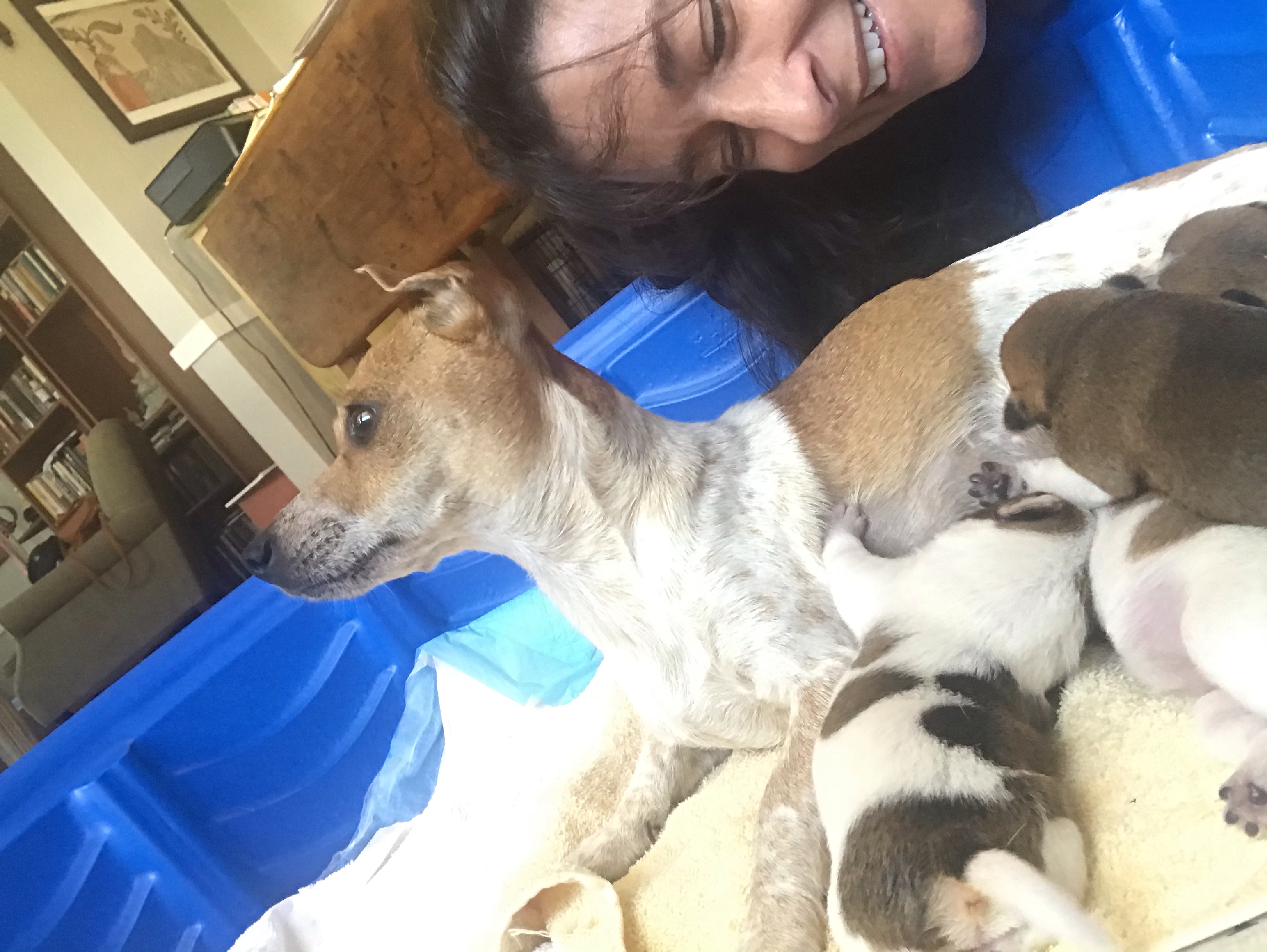
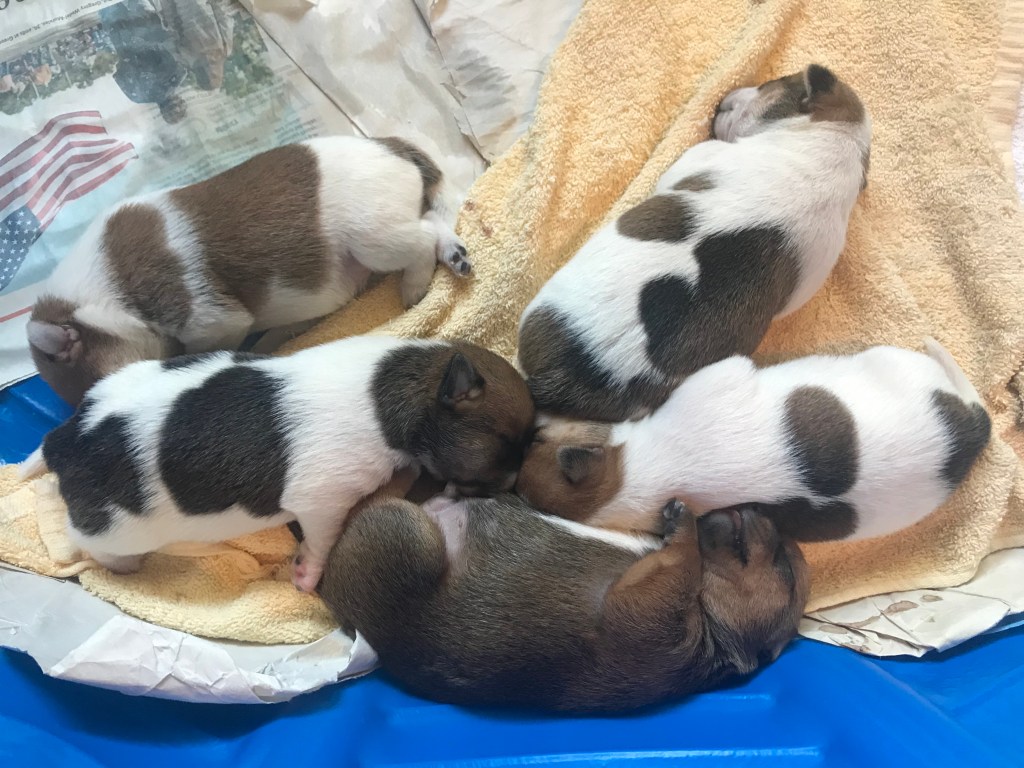
Bobbie and Billie: The Twins

The puppies are growing! Only six days old and I’m amazed every day by how big they are getting.
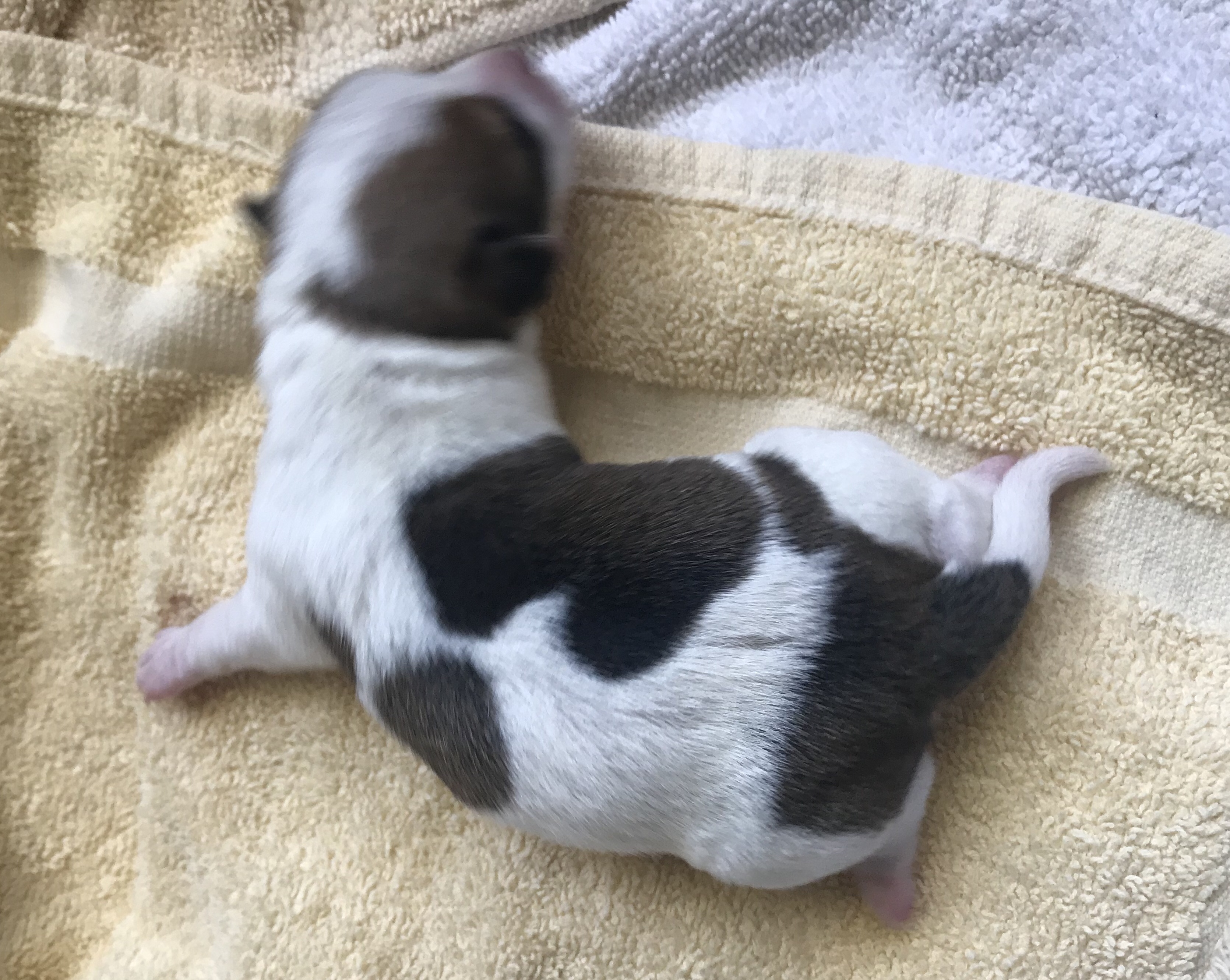
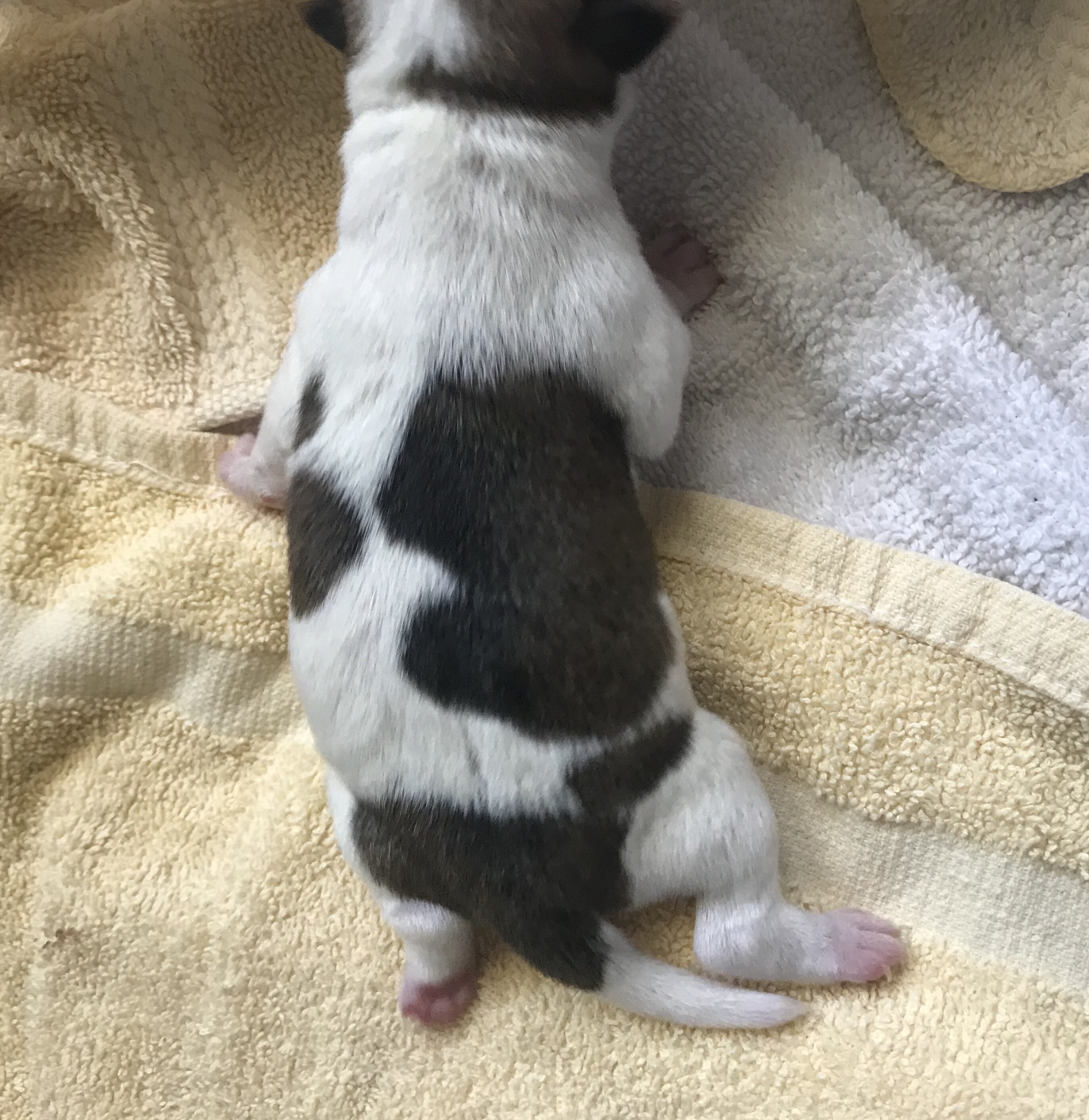
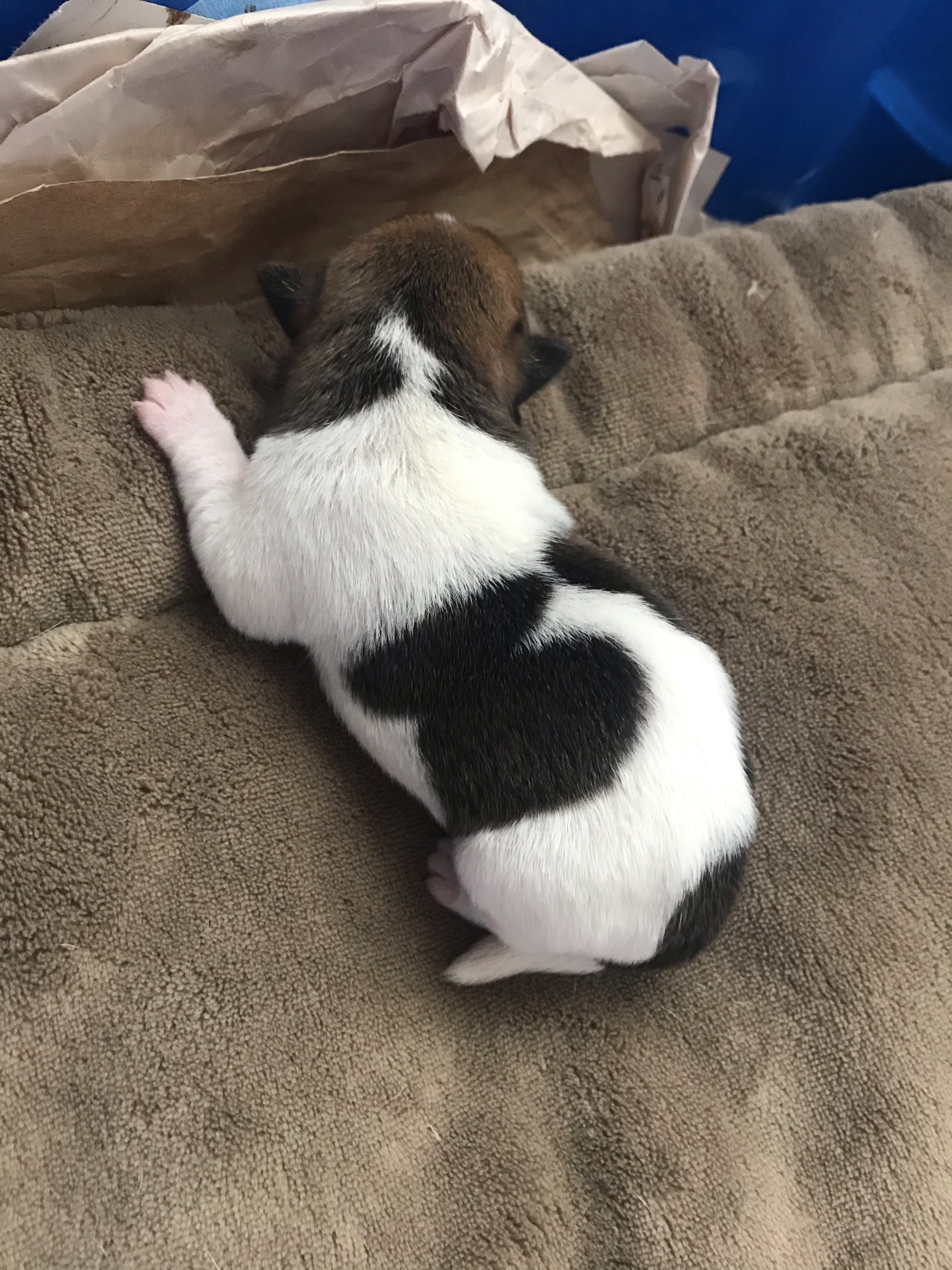
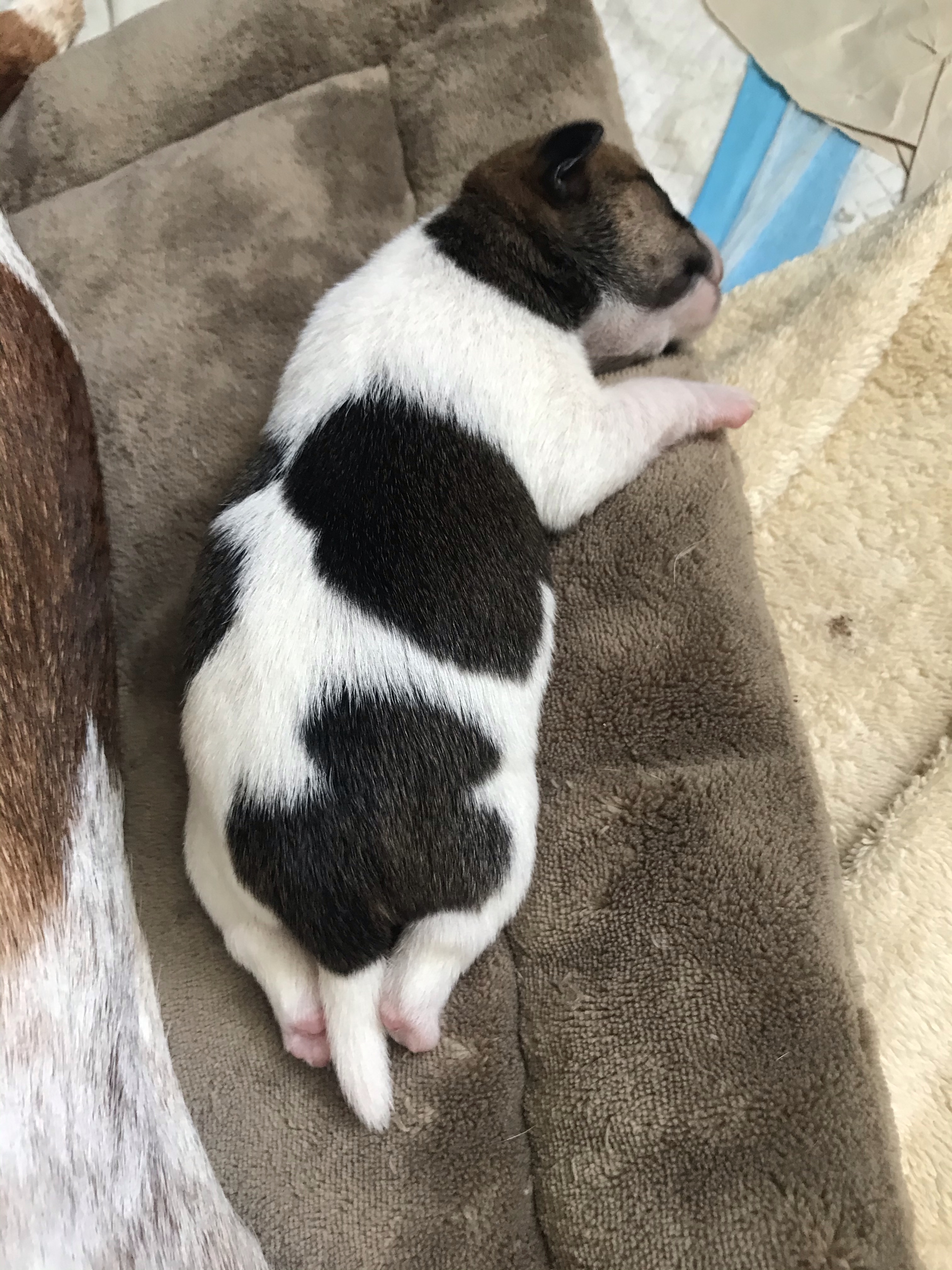
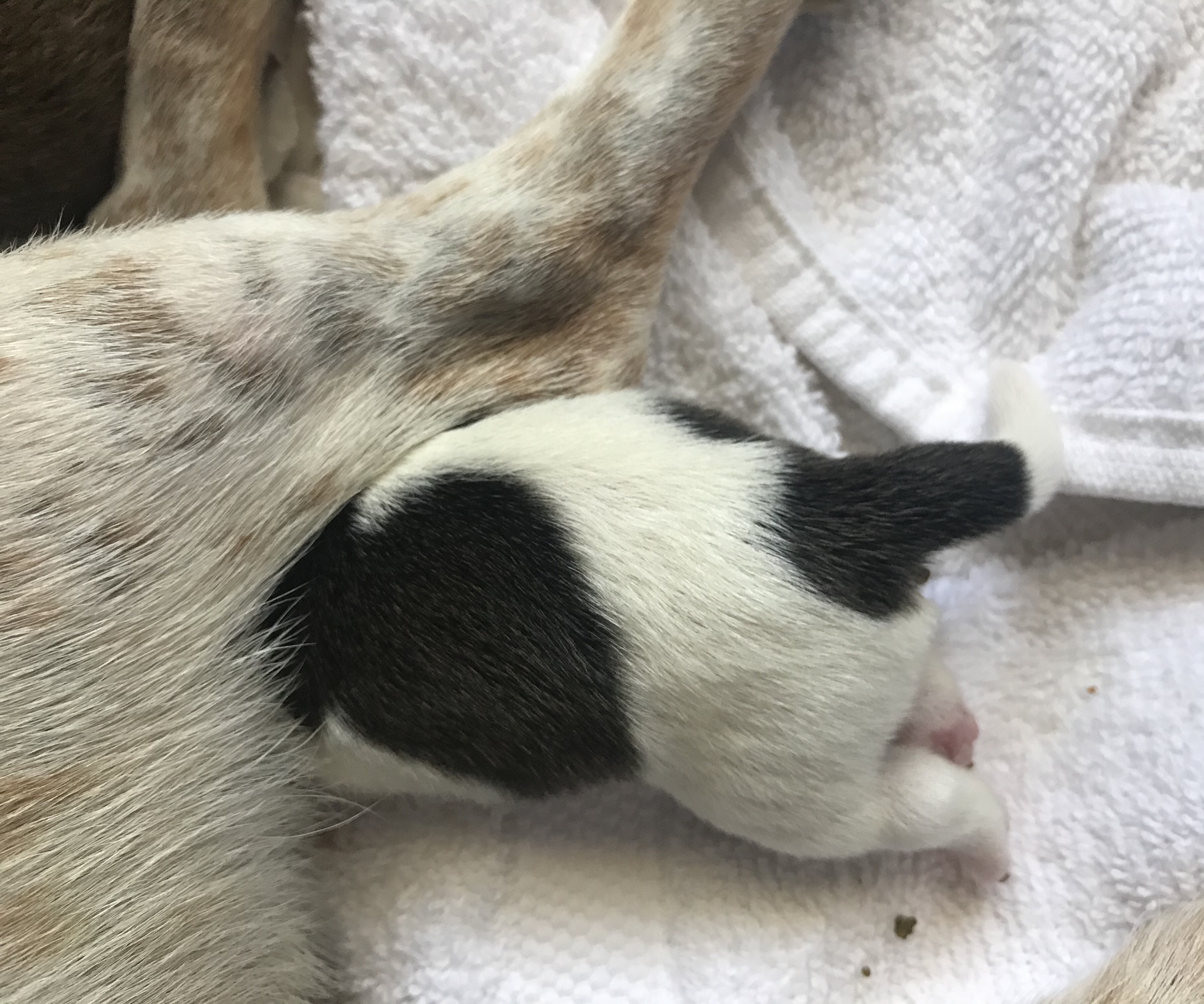
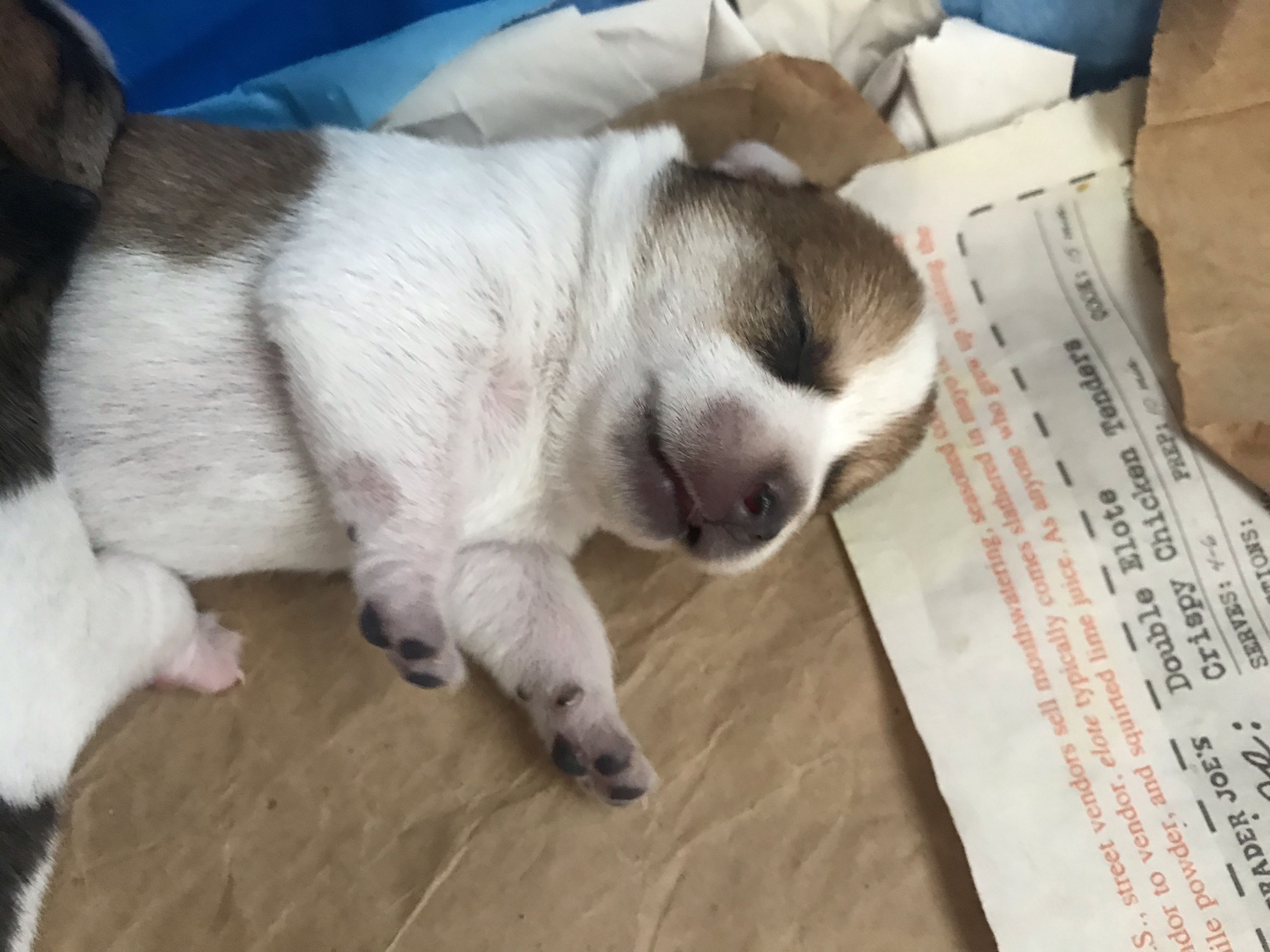
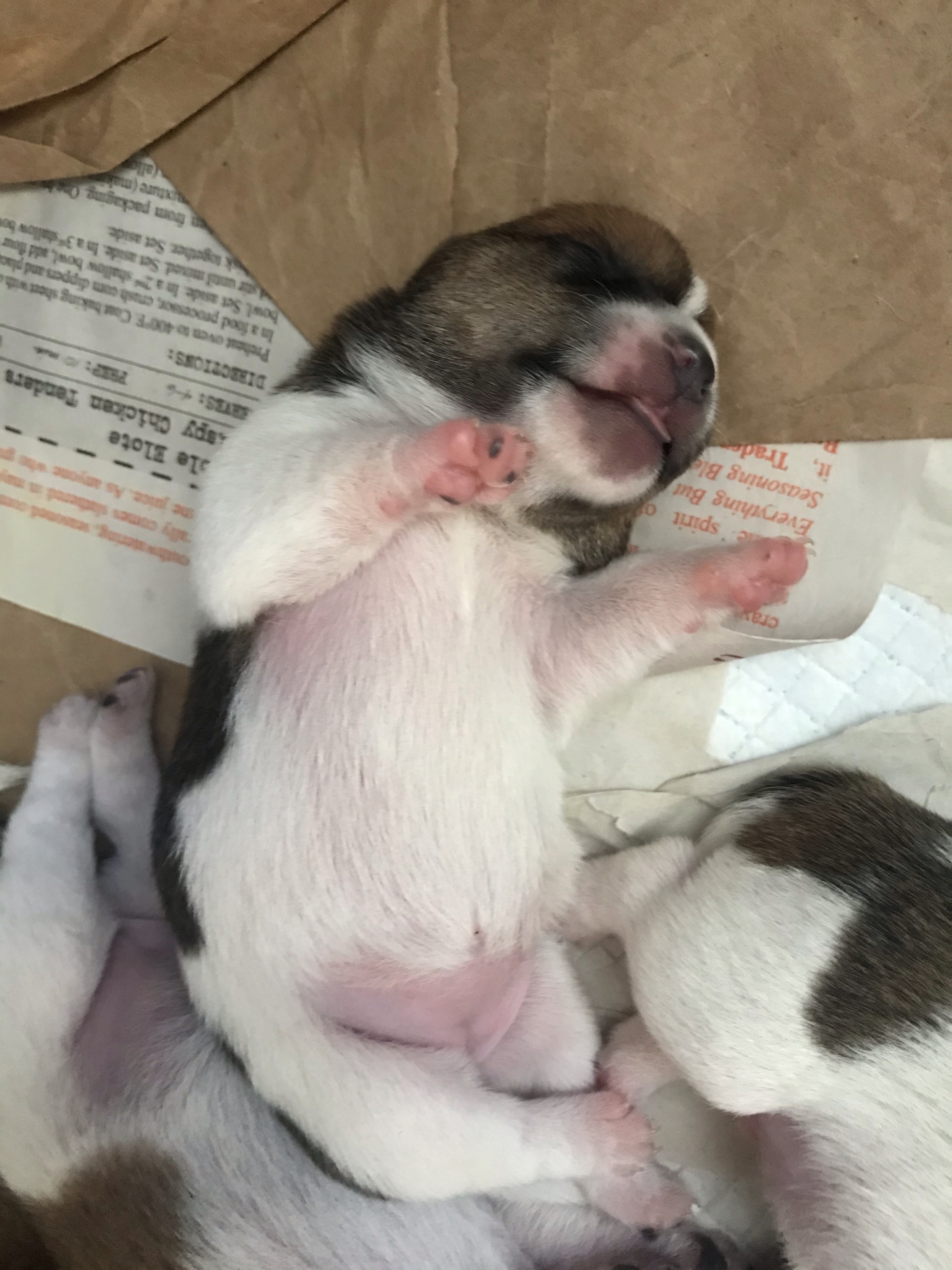
Blessing, as you know, was born first. As I was still attending to her and making sure she could breathe, the next two arrived in short order. For that reason, I’m calling them the twins: Bobbie and Billie.
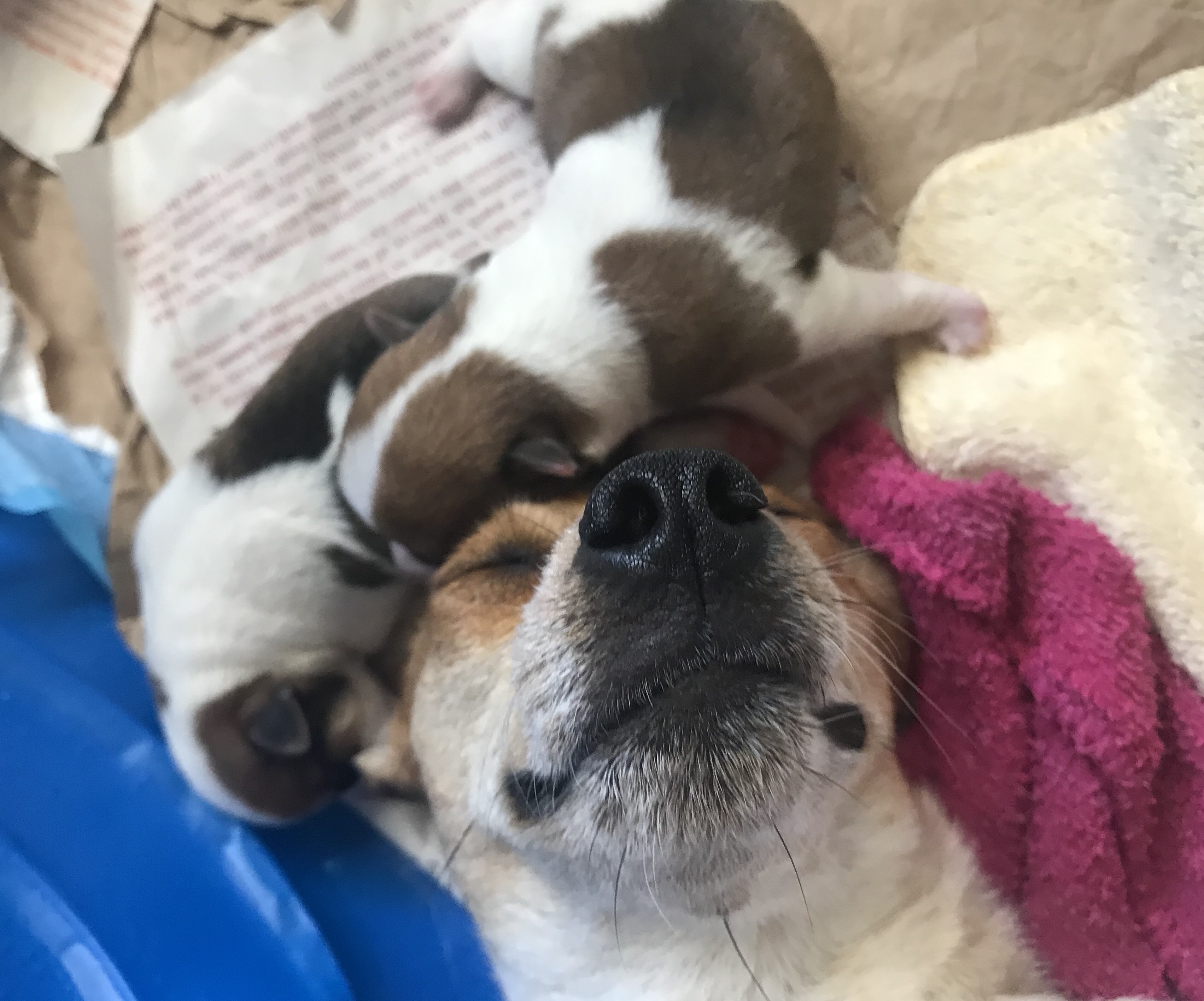
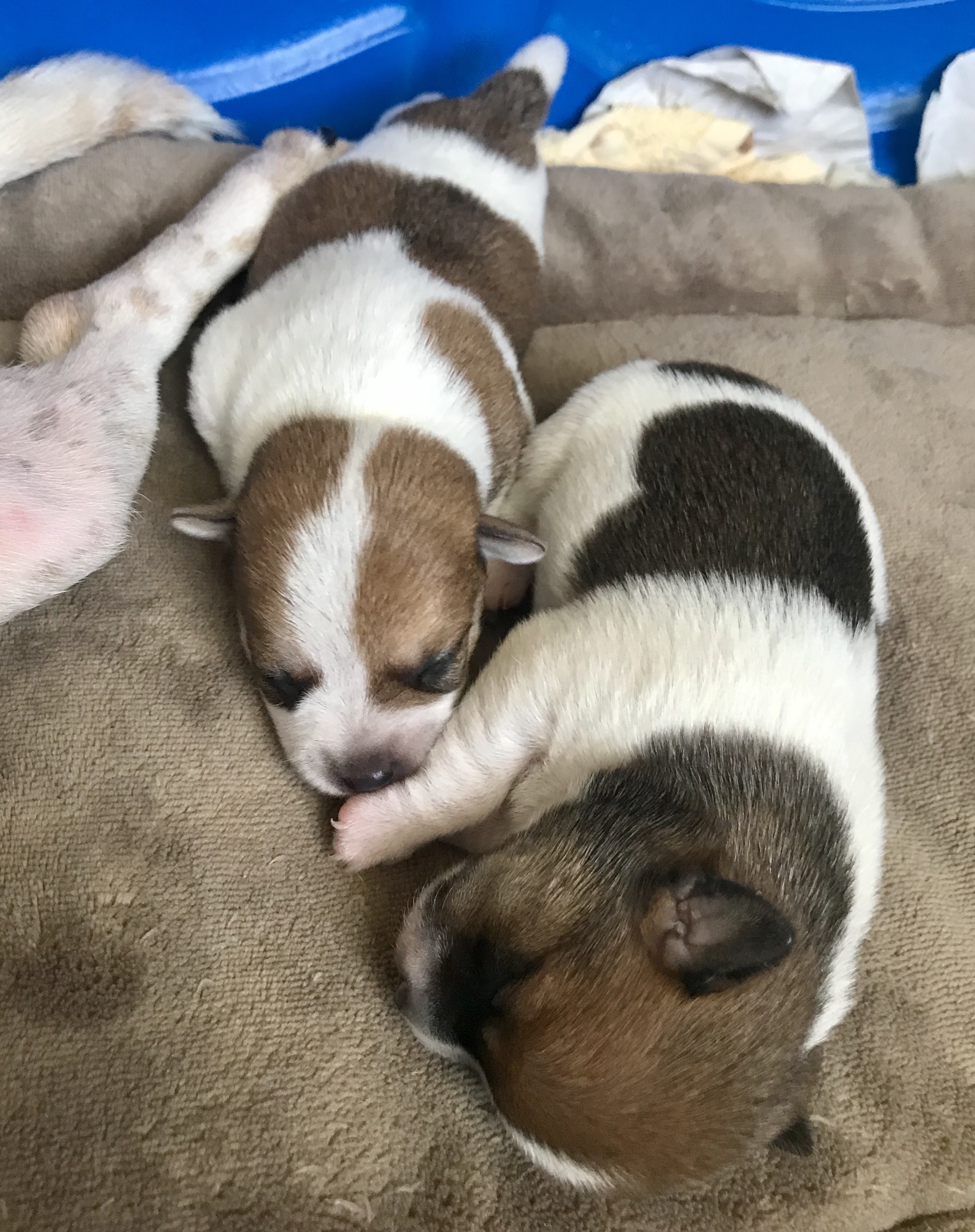
They have similar markings as Blessing and Baxter. Bobbie’s markings are darker, closer to black, while Billie’s are brown. Auburn. More commonly called “red,” though I’ll never understand that.
Here’s Bobbie




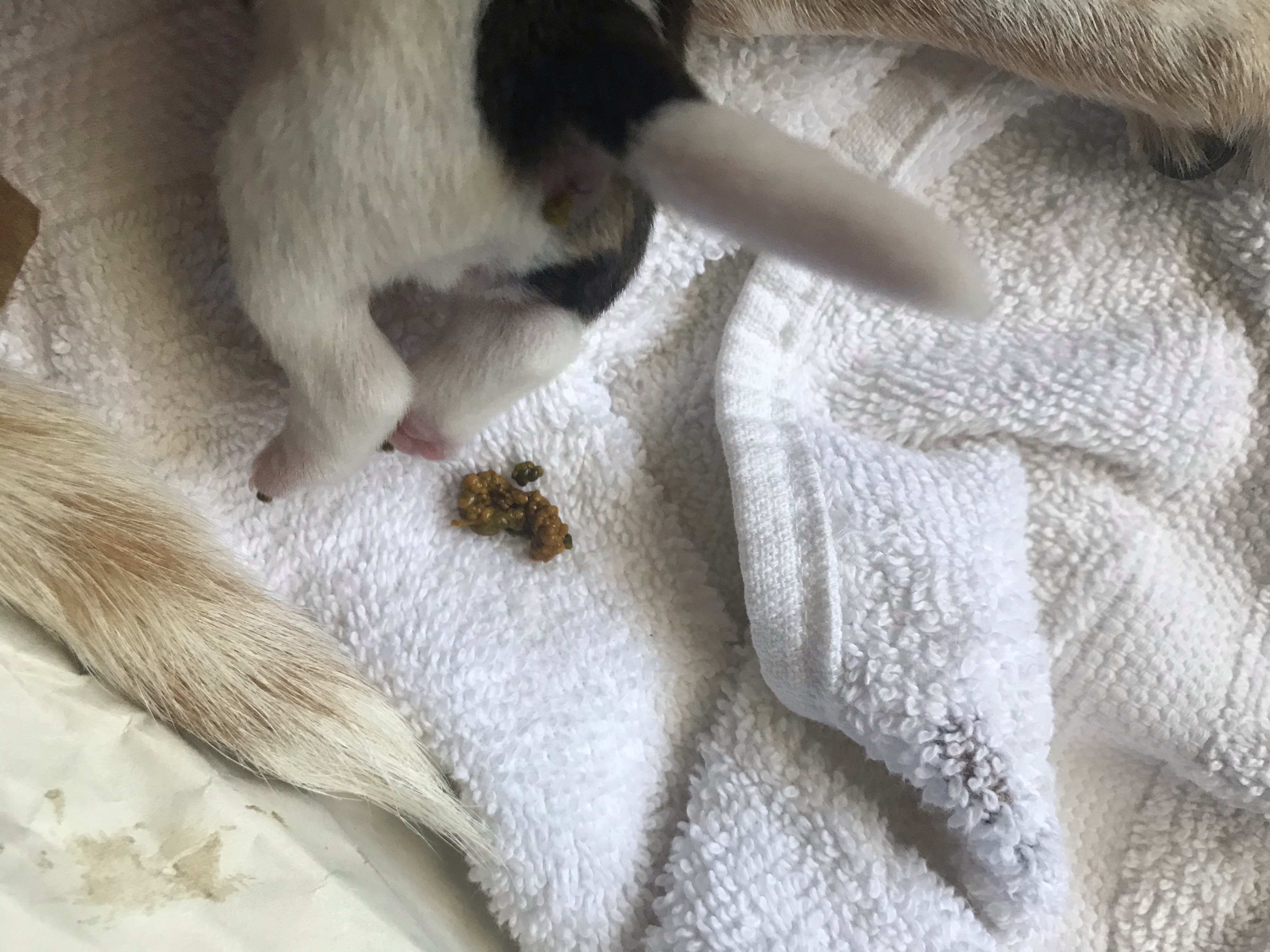
Puppy poop!
And this is Billie




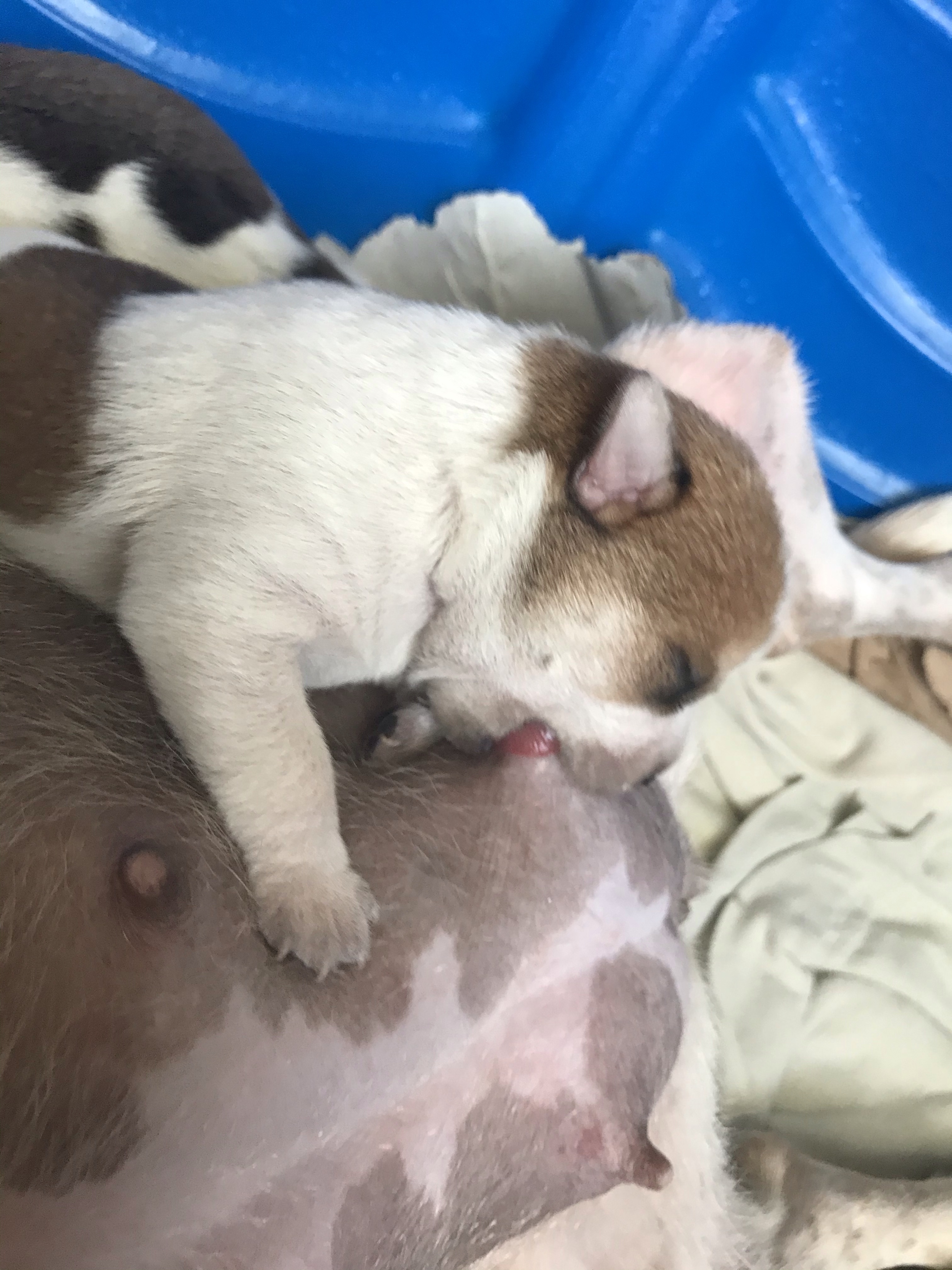
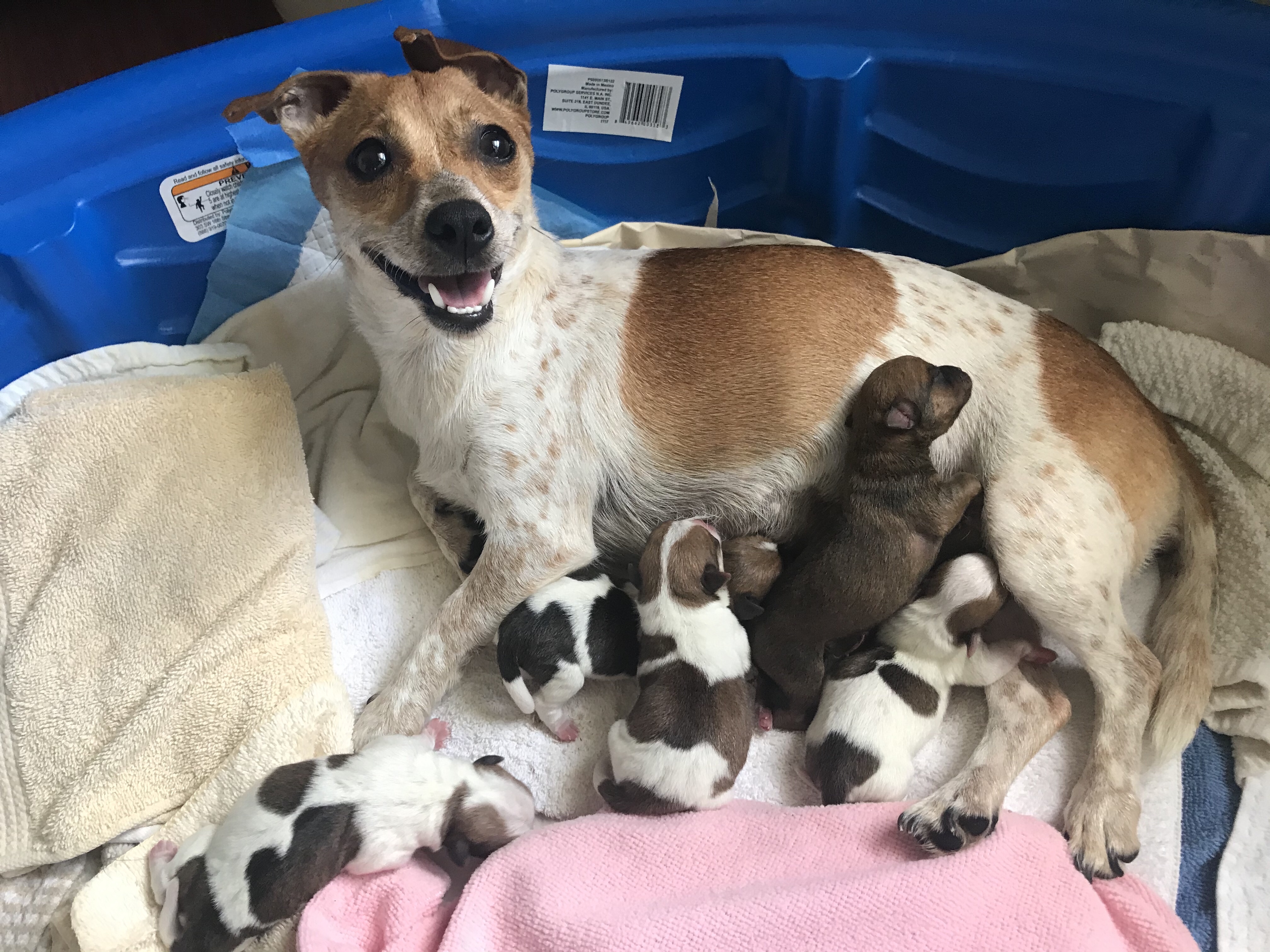
Momma Mazie is continuing to do great. She’s eating a lot, which is good, cuz her pups are too!

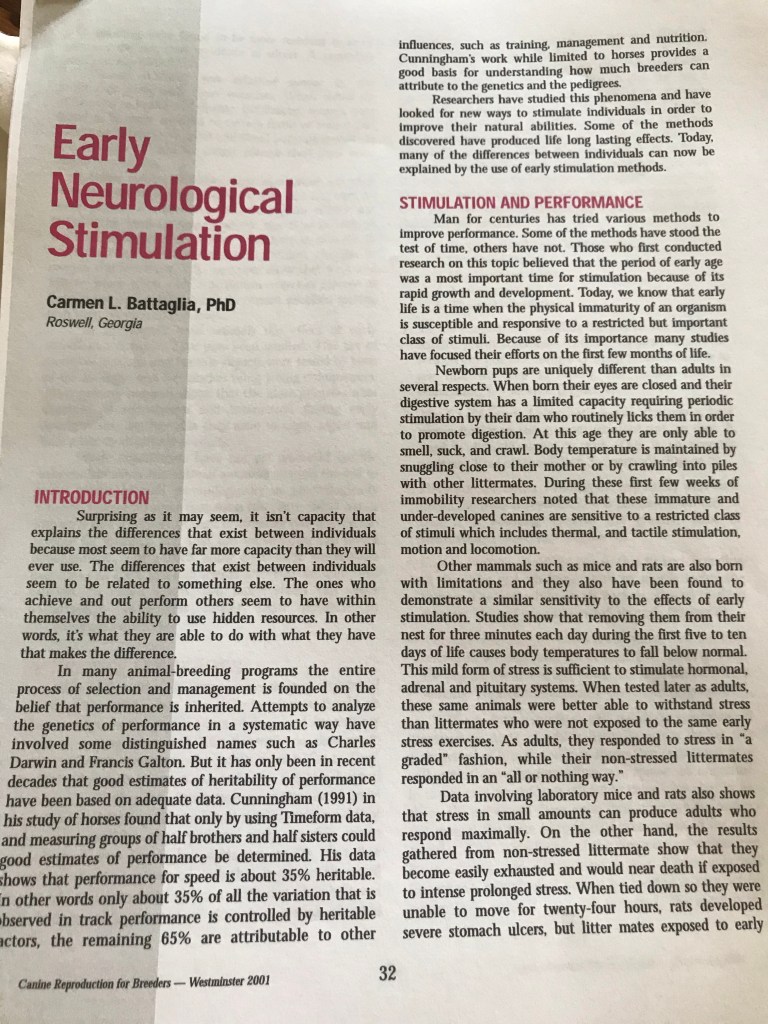
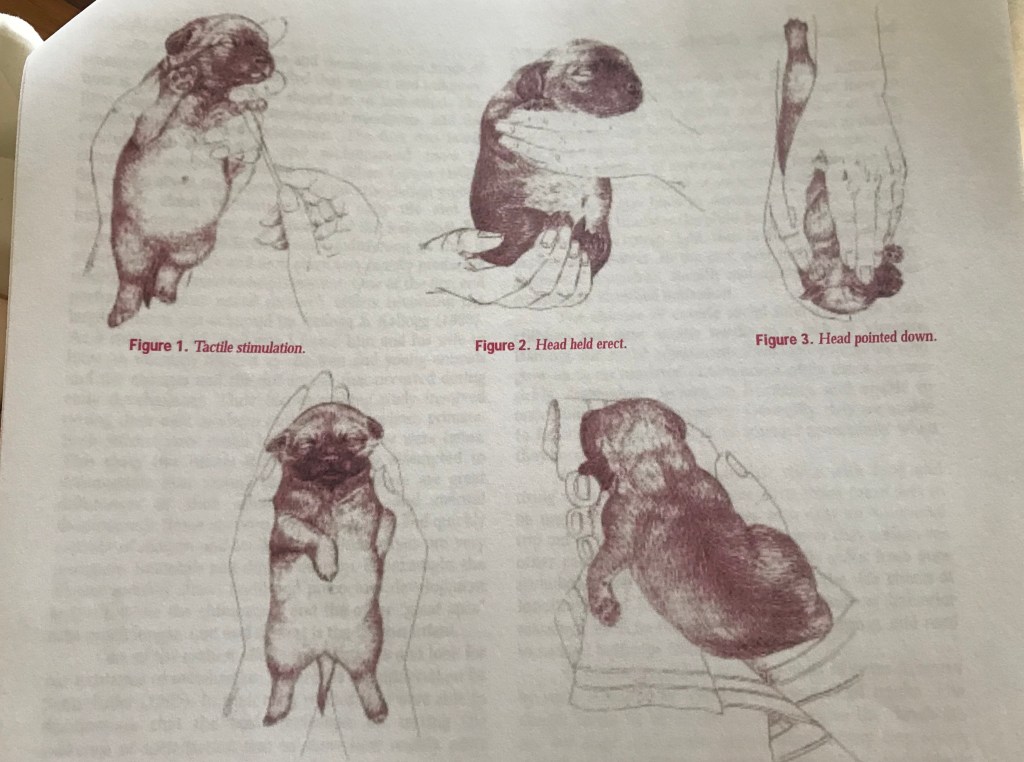
Meanwhile, I’ve started “early neurological stimulation” on all of the pups: five daily exercises that studies show benefit in multiple ways, including 1) improved cardio vascular performance, 2) stronger heart beats, 3) stronger adrenal glands, 4) more tolerance to stress, and 5) greater resistance to disease. I have a professional dog trainer with tons of experience advising me. (Including years of experience raising therapy dogs.) These are going to be very healthy and well-adjusted pups!
I’ve you’re interested in adopting, let me know! All pups will be adopted through Animal Rescue Foundation (ARF) Tulsa. Great organization. You can read more about them by clicking on the link above (click on ARF).
The pups will not be ready until 8-10 weeks, so the very earliest you can pick one up would be October 7th. Two of my cousins have already laid claim to Blessing. But the boys, Bruno and Baxter, and the twins, Bobbie and Billie, are still looking for good homes! 😊
Bruno and Baxter: The Boys
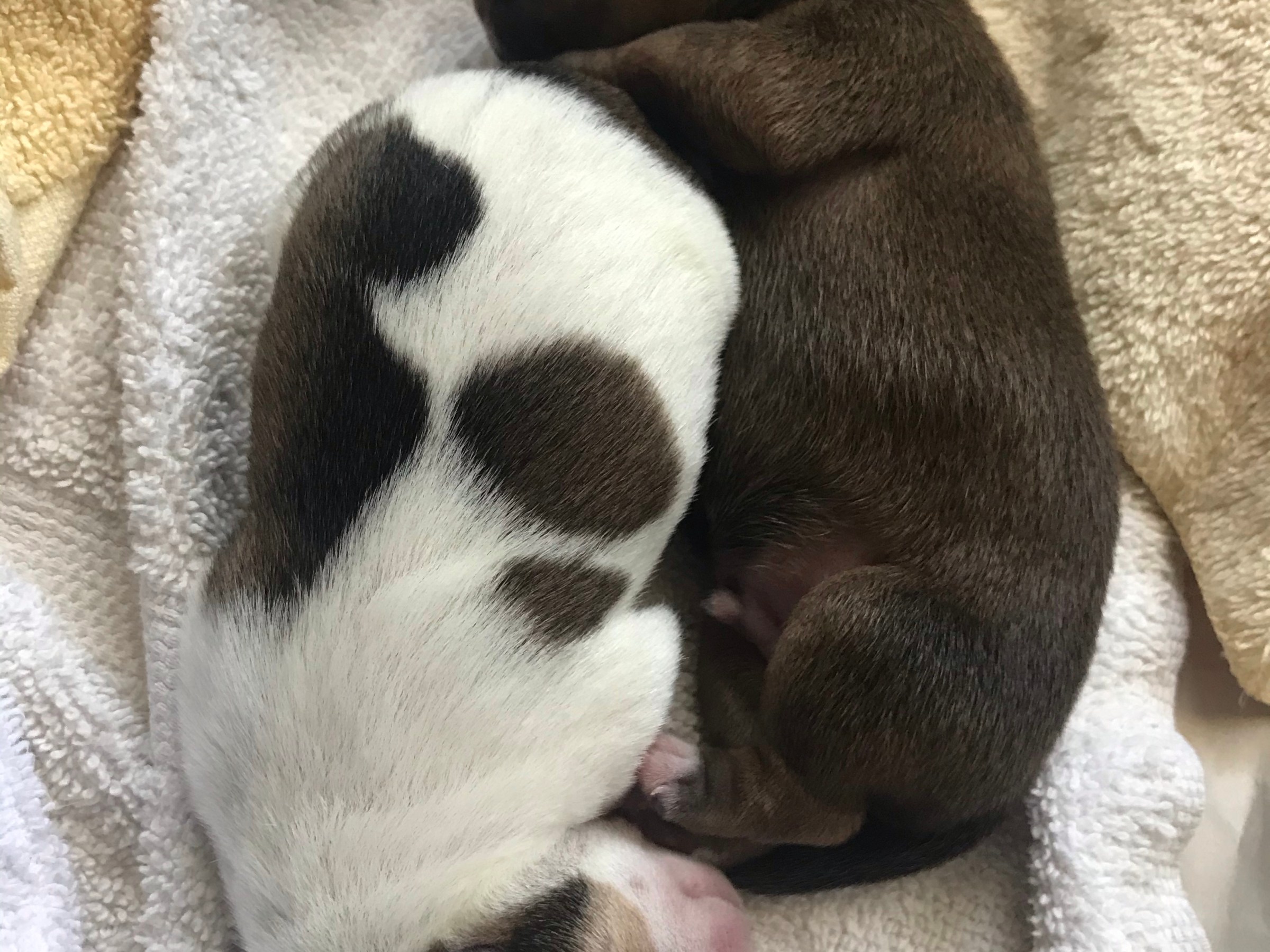
My new dog, Mazie, gave birth on Tuesday. Rescued from a hoarder with 91 other dogs, there was no telling who the father was or what they might look like. The only good news was that all the other dogs had been small, like her, so at least there wouldn’t be a crazy combination of breeds.
The first three puppies were born quite quickly. One after the other. A little space after the first, which was good considering that birth was rough (see Doggie Doula), but then the next two popped out easily. All three in about 25 minutes. All five in under an hour.
For the sake of this story (because everything is ultimately a story), I’m going to say the first three were girls. I know the first one was because I spent a lot of time saving her and held her up close. The next two came as I was still attending to Blessing (instinctively named in the moment when she finally caught her breath and started mewing) so I didn’t have time to check their gender. (Plus, the umbilical cords are distracting, let’s be honest!) Momma was still cleaning up these “twins” and attending to Blessing when the fourth started coming. After all my time with the first, I didn’t want to intervene. Just let Momma do her thing.
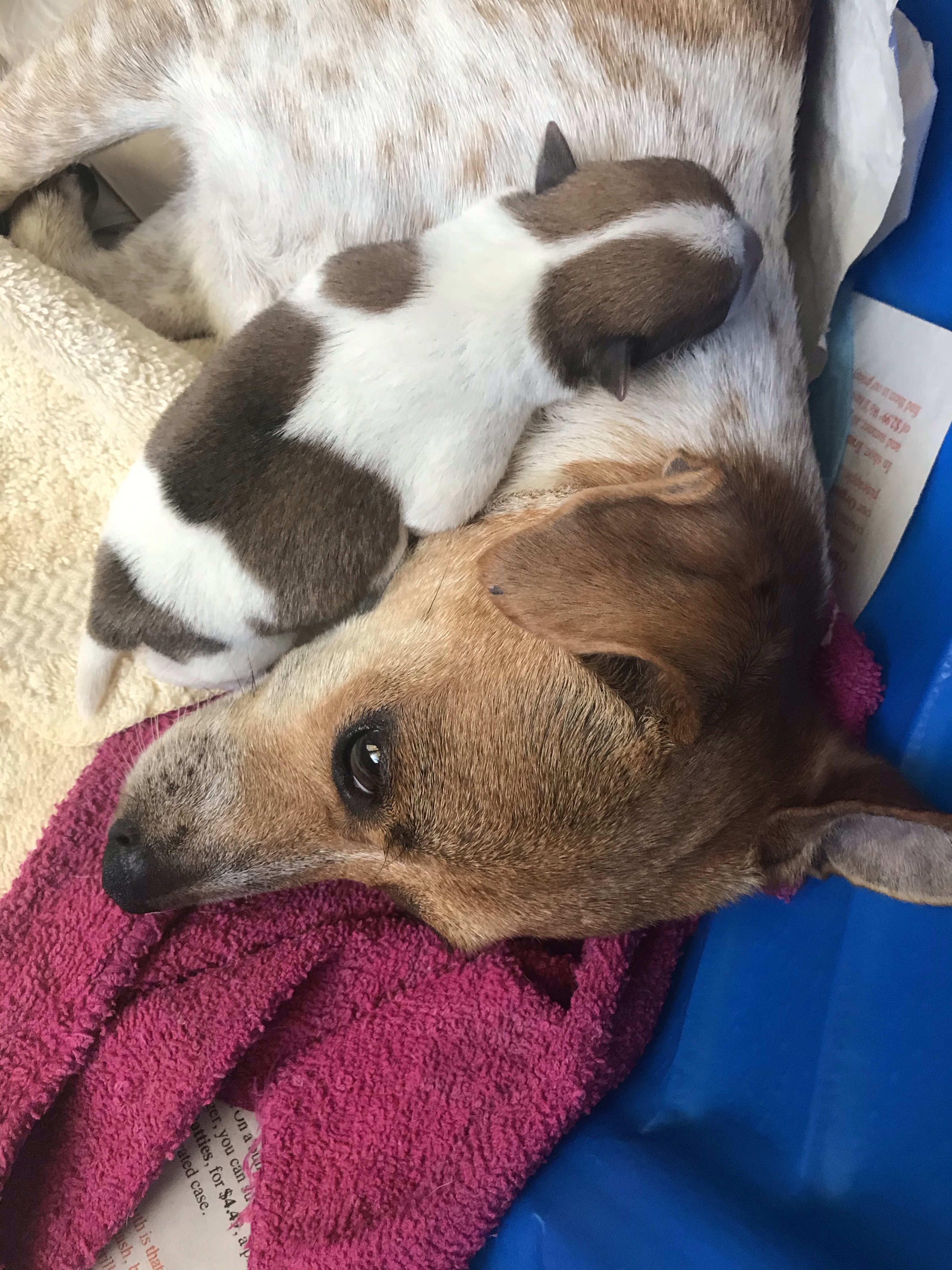
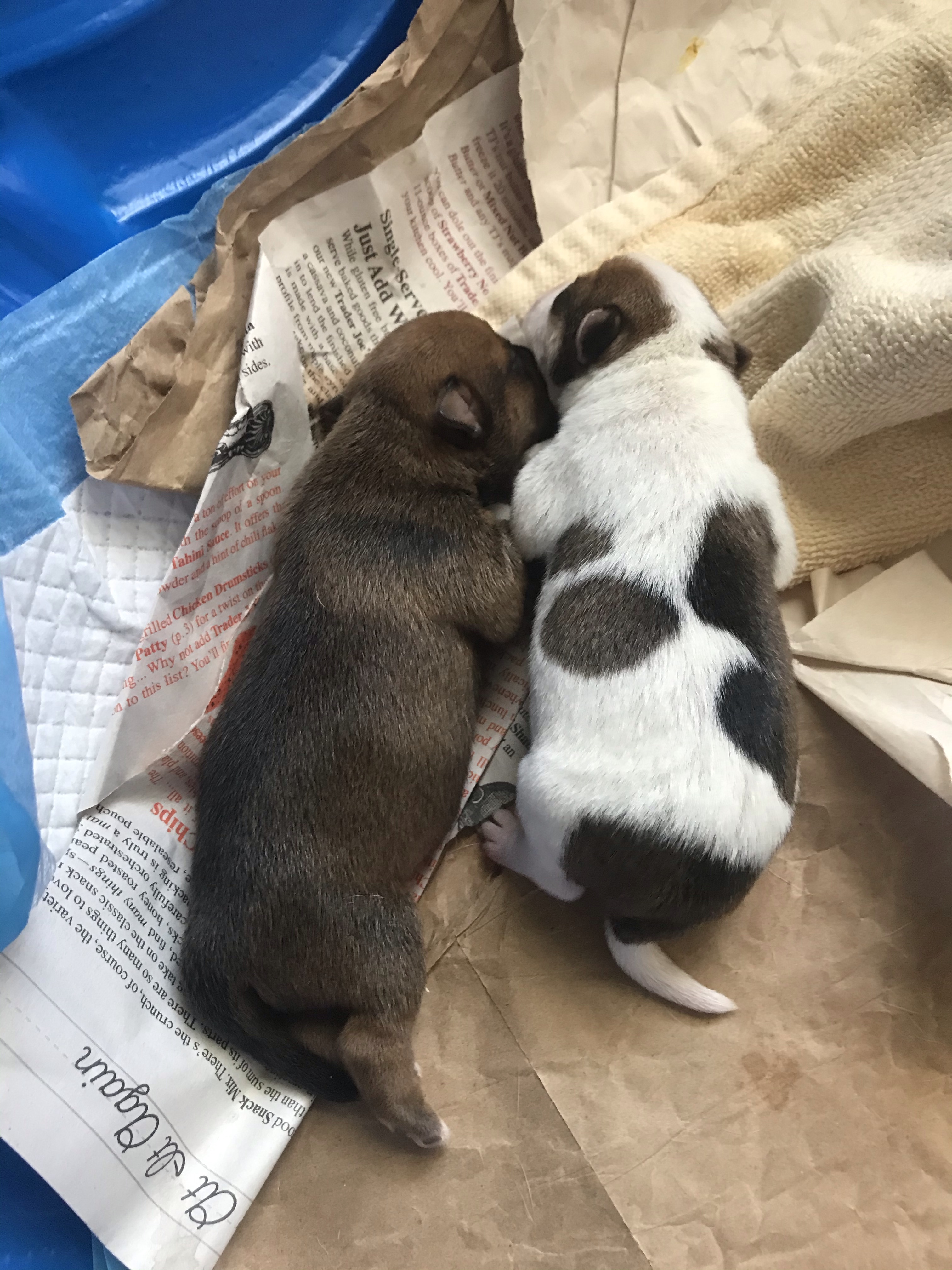
The fourth was different. Bigger. No wonder it took him a little longer to emerge. All chocolate brown, with a small patch of white on his chest. From the very beginning I could tell he was a bruiser. He scrambled to Momma’s teat with gusto. The others, mind you, were still acclimating to being born. Too stunned to be hungry. But this brown one went for Momma’s teat immediately. Impulsively I called him Bruno. Later I waivered. Maybe the association was unfair. Was naming the biggest and most assertive of the bunch such a masculine—even macho—name too sexist? But you know, it feels right. And Bruno is actually an old German word meaning brown. In the English folk tradition, it’s bruin meaning brown bear. So yes, it’s appropriate.
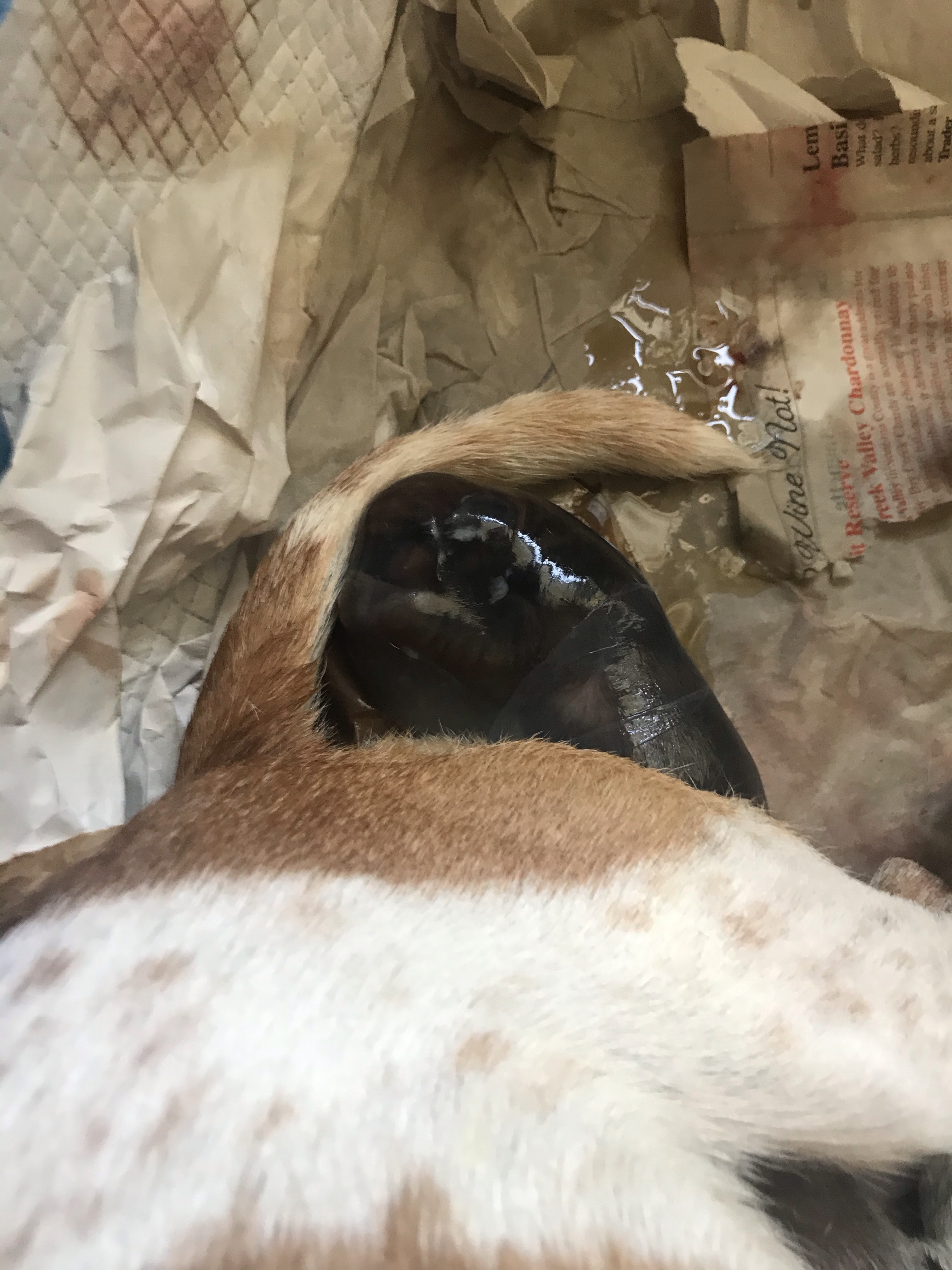
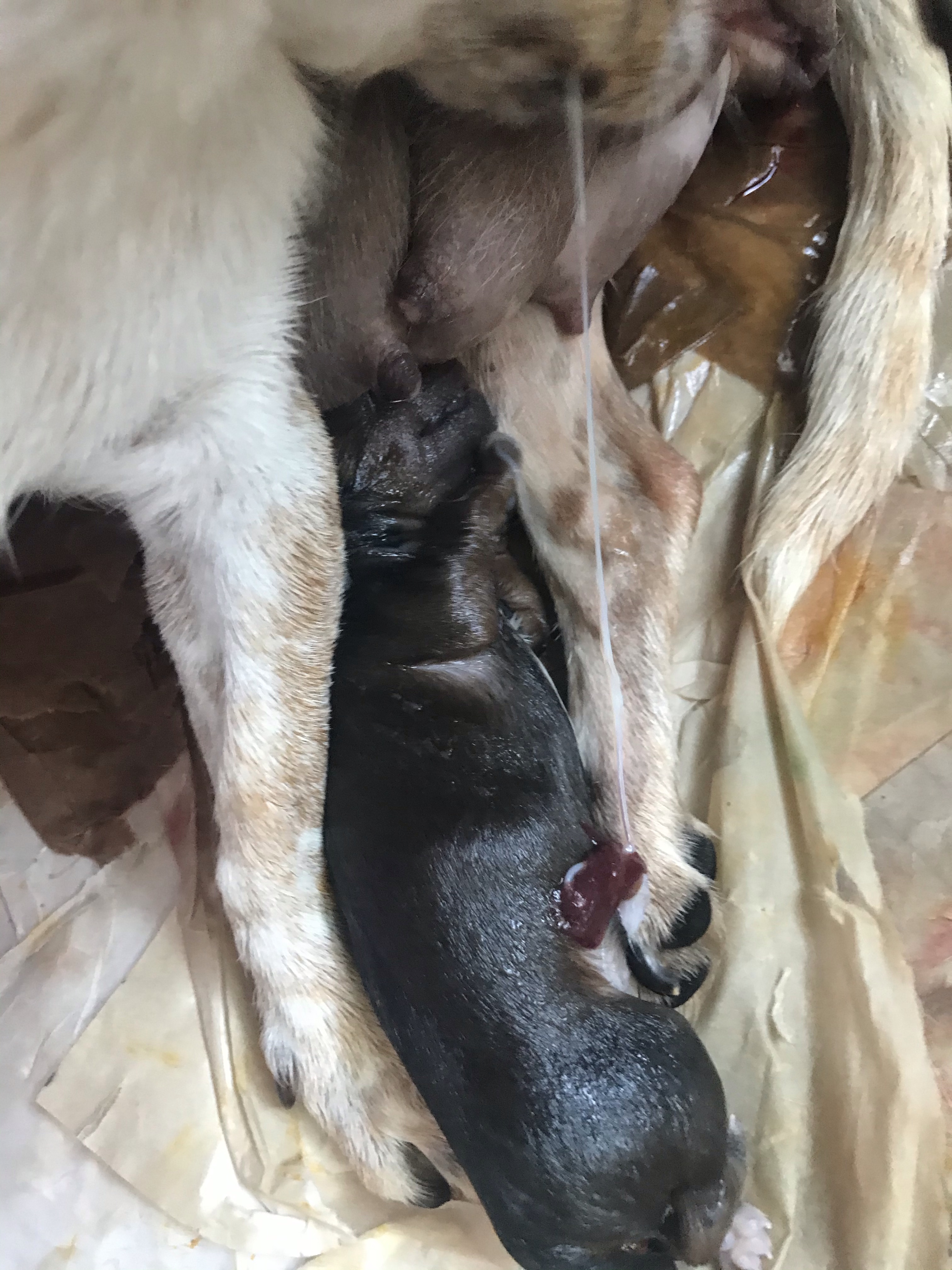


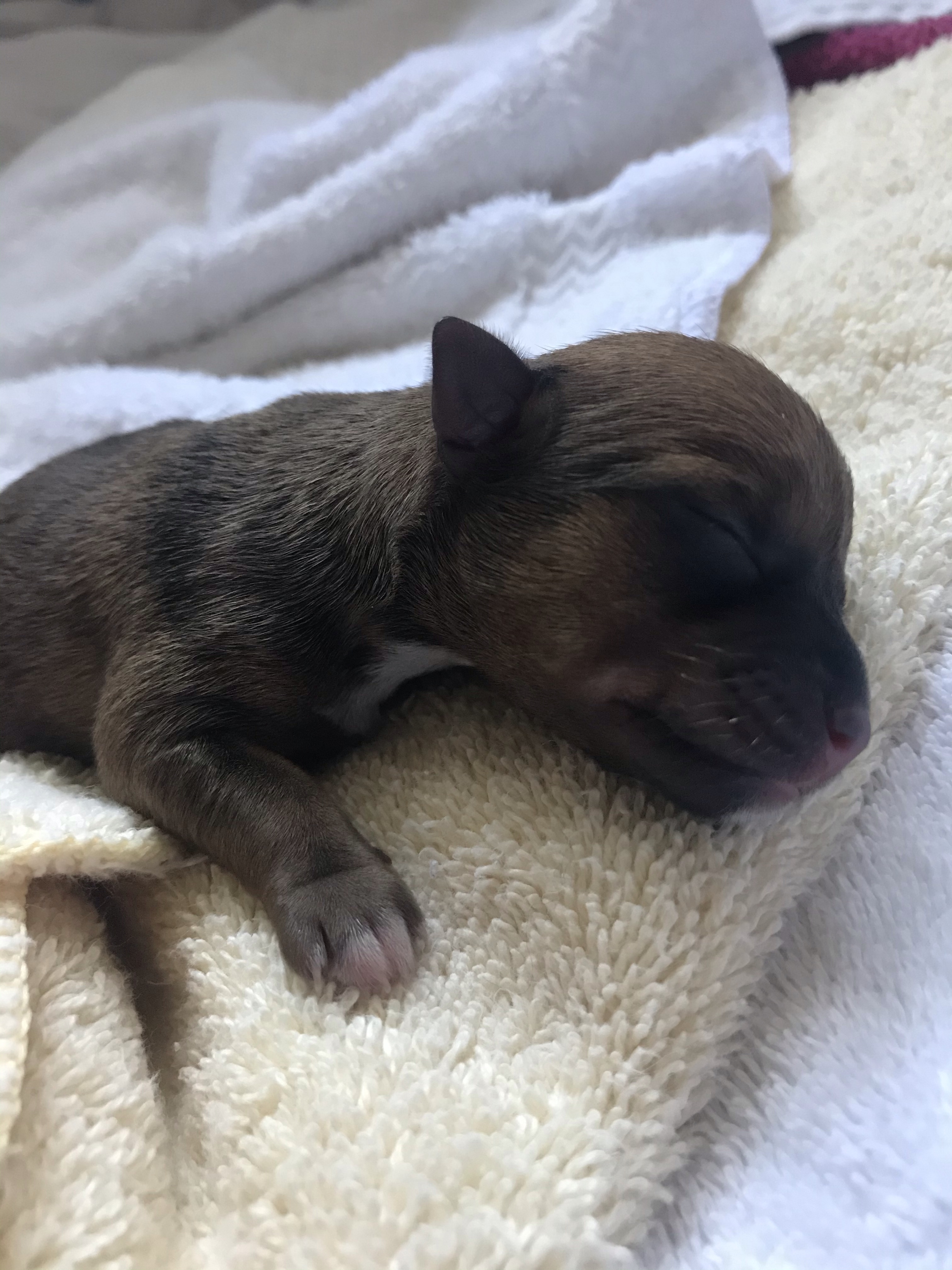


Baxter came next. The last of the litter. Also a boy. Also big. It’s fun to see them together. He has the markings of his sisters. I like that. Baxter is a Scottish-English name meaning “baker.” I like that too. I like to think he might turn out like Rolly, the always hungry plump pup in 101 Dalmations. 😊
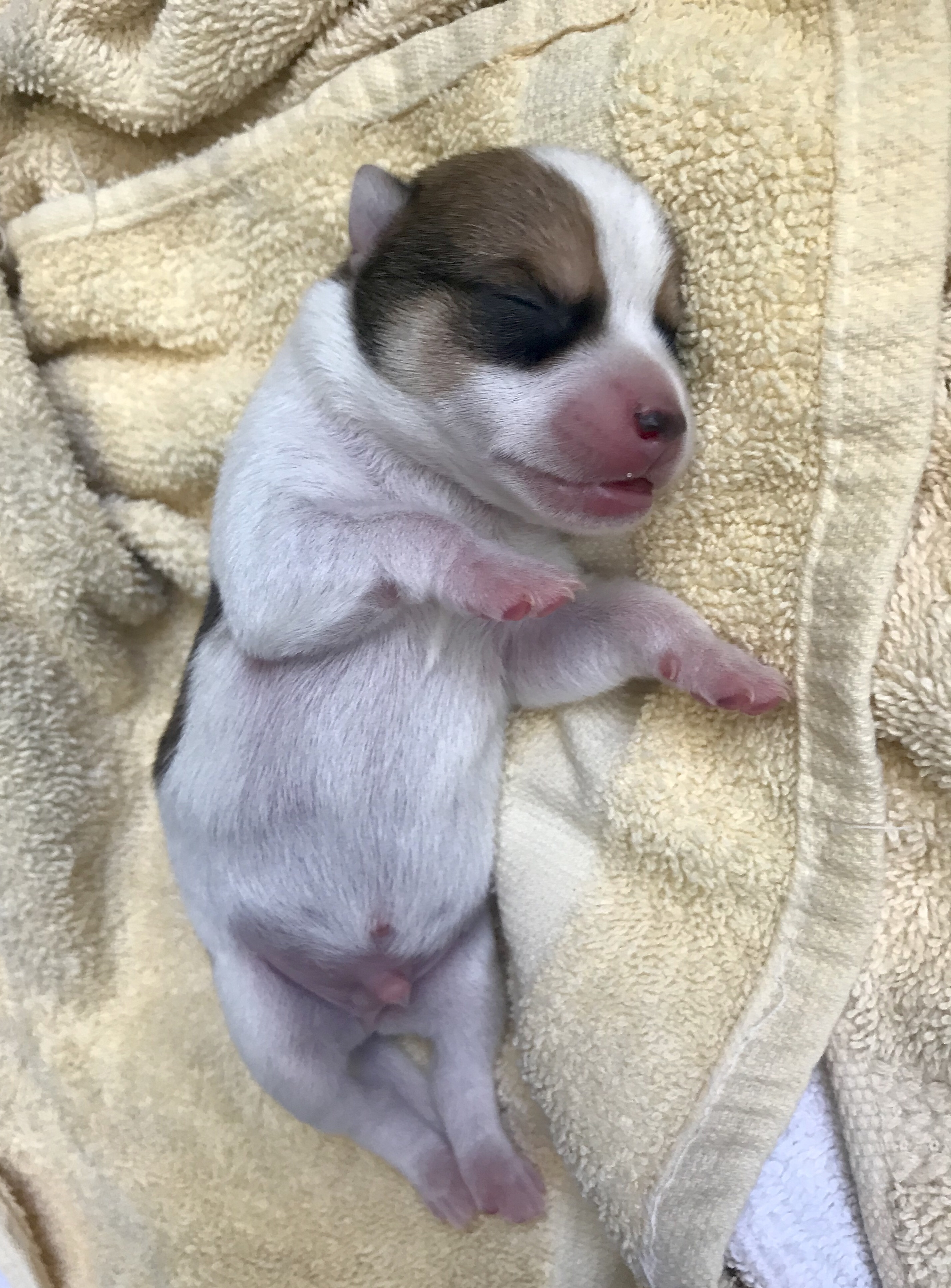
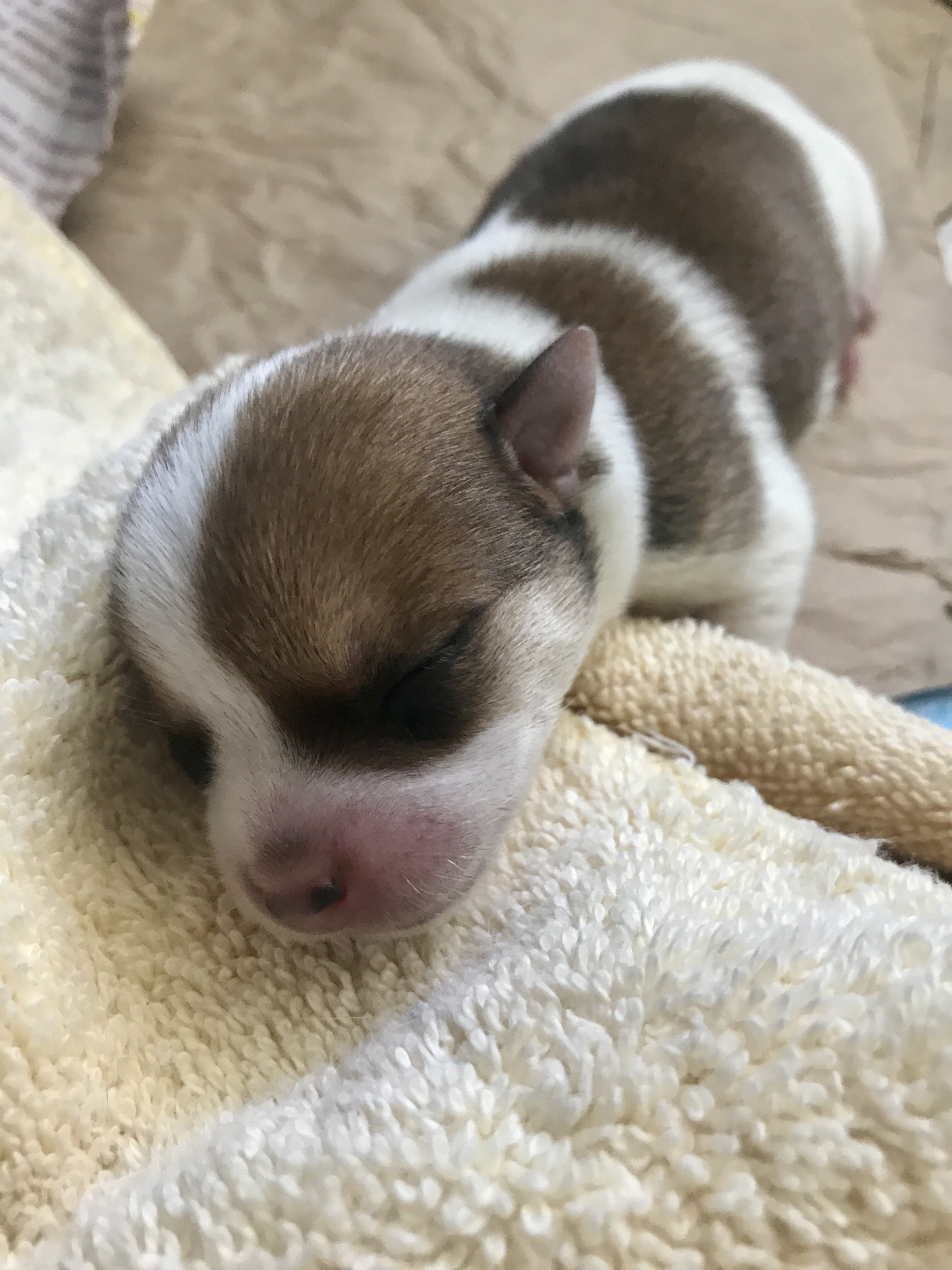


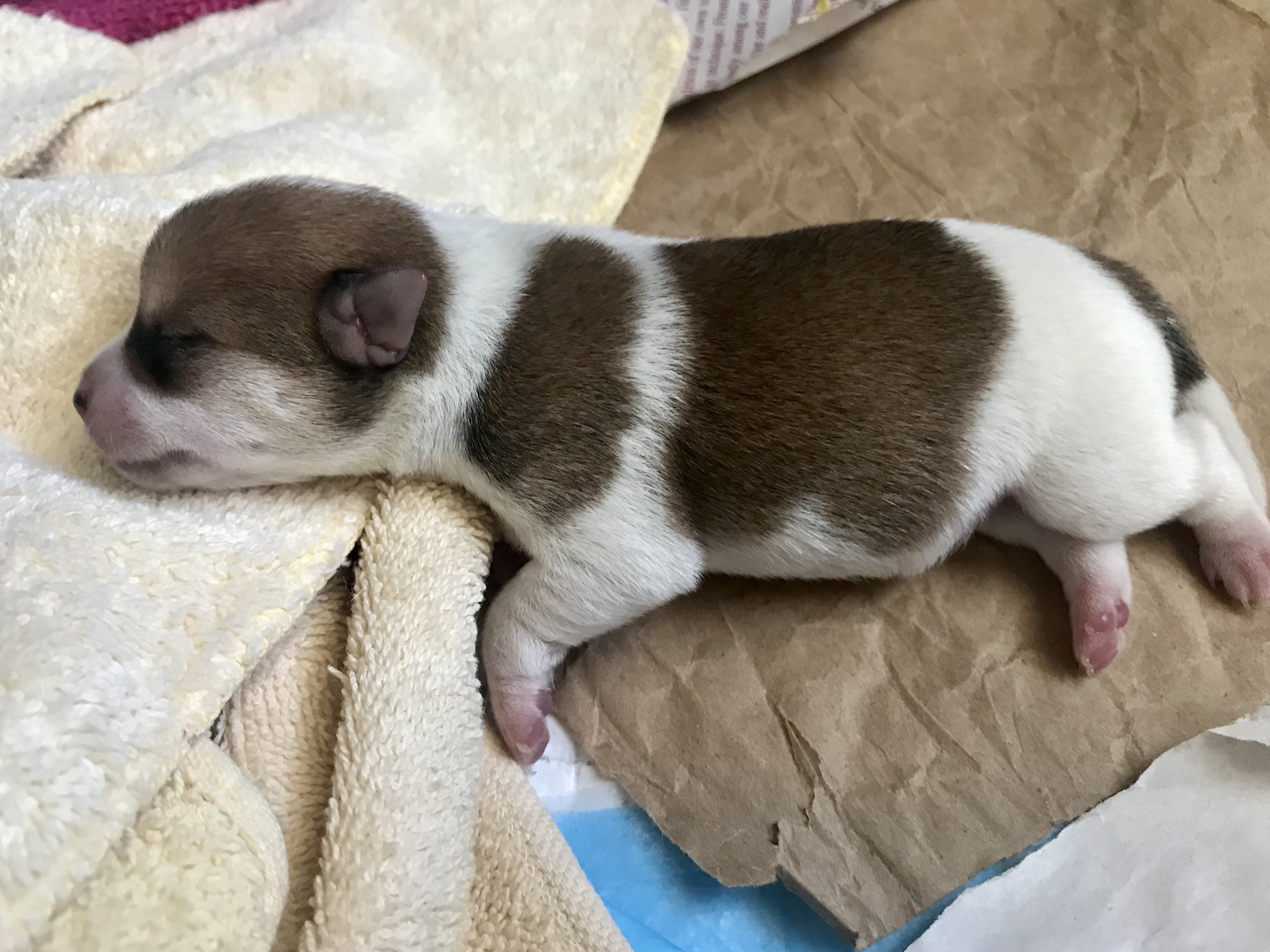
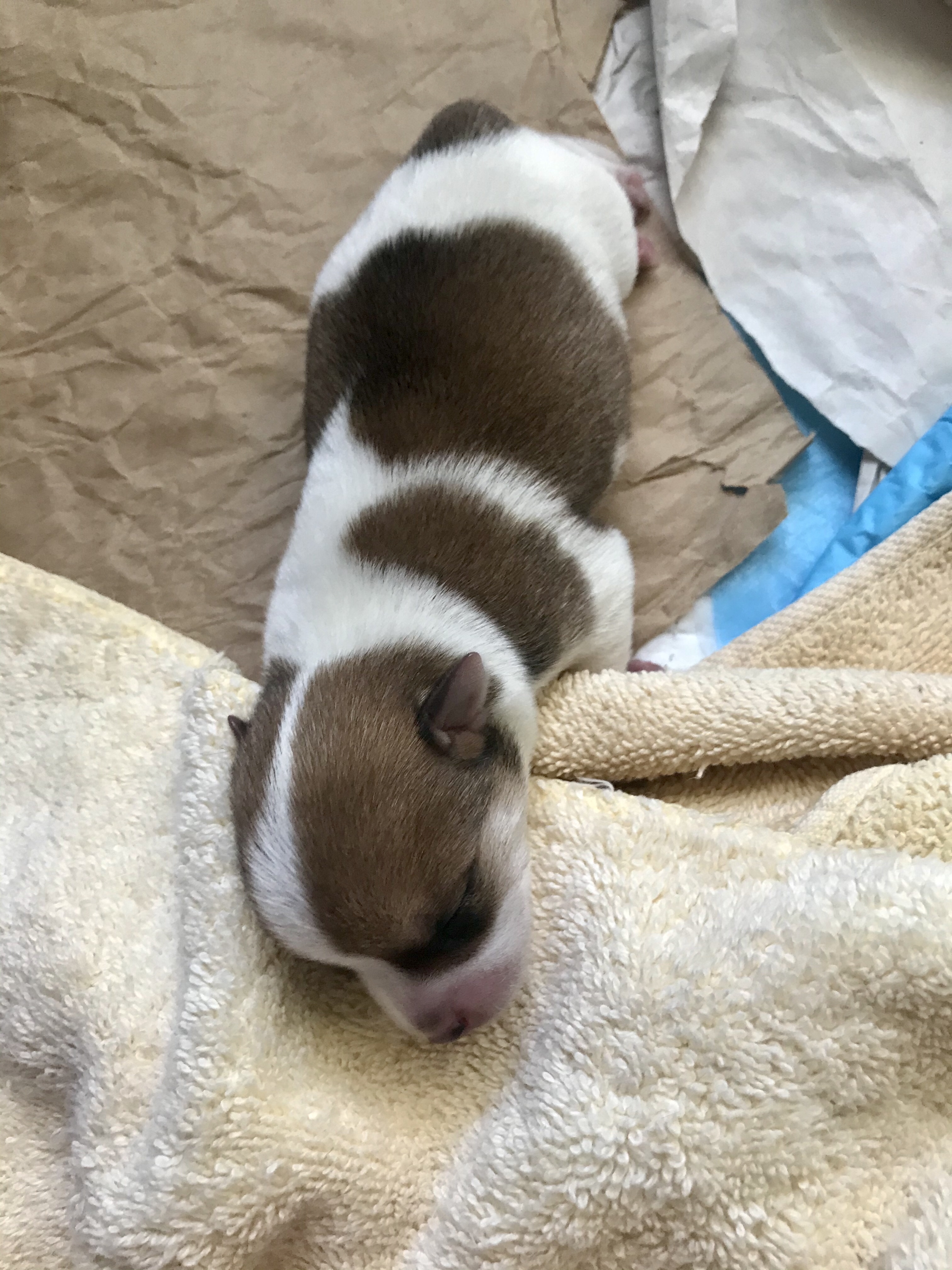
The two brothers hang out a lot together. Pretty cute.


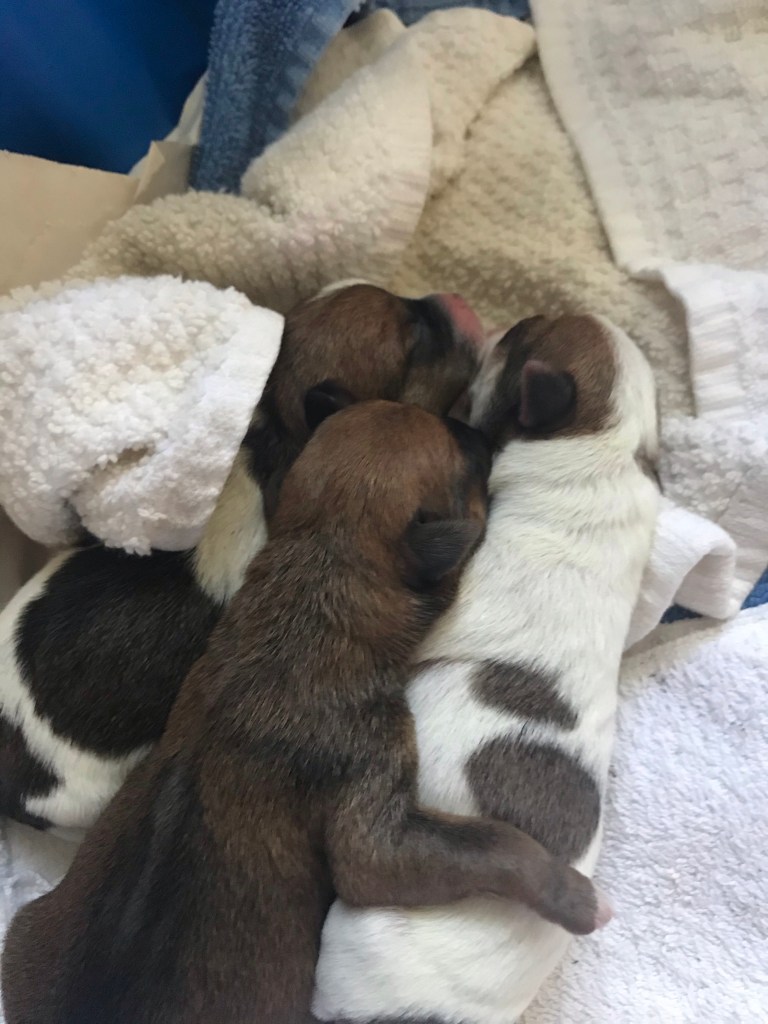
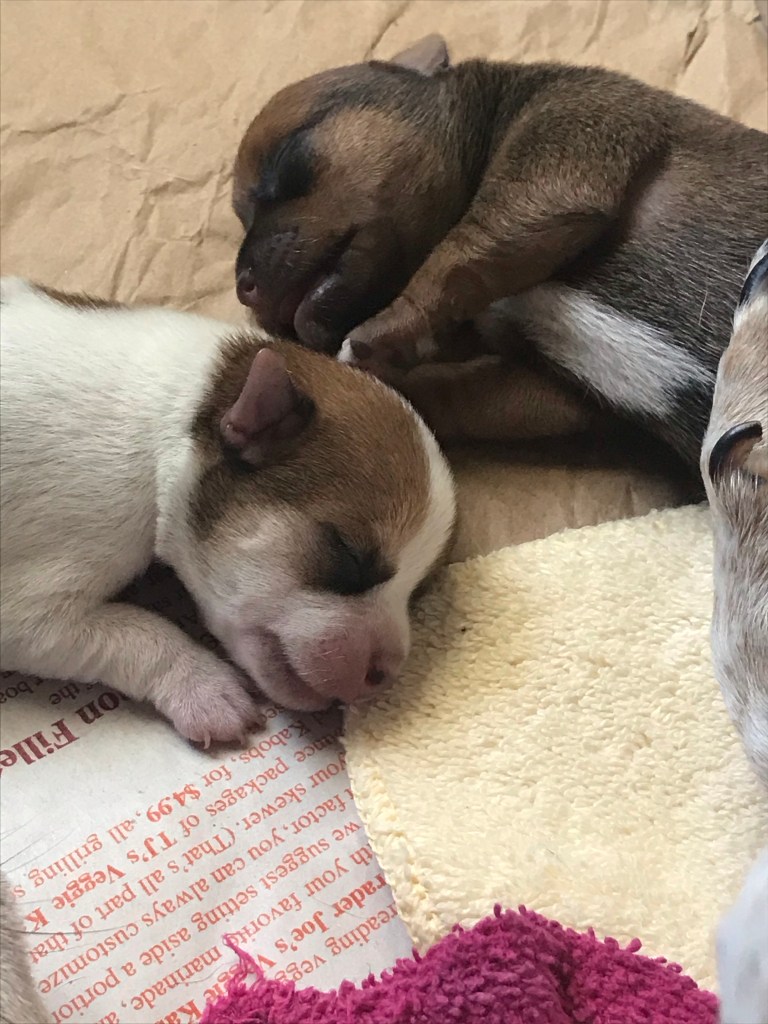



There’s Bruno again at the teat while the others are off resting!
Yes, the entire brood has B names. Why not? I come from a family of J’s. 😉
Photos of the sister “twins” to come soon.
Doggie Doula
I took Mazie home knowing she was pregnant. In fact, I knew before I met her. The idea was to check each other out and if we were a match, I’d wait for her. I think. I mean, maybe. One date and a three month wait? I’m not sure I’m that kind of romantic. But her eyes were compelling. So I drove south, breaking my Covid19 quarantine to see if I might be her human and she might be my new companion.
She appeared so traumatized. Her eyes were big and sad and wide and her tiny body shook violently when they brought her to me. So when the vet assumed I would take her, when after being corrected she suggested I could take her, when I waivered and she told me the arranged foster mom worked 8 hours a day, when she called the rescue foundation and told them she felt good about me and she had convinced them I should take her, and when, by this time, Mazie has stopped quivering and her body softened in my arms, well, yes, I said yes. Without any preparation, without any supplies, without even a leash, I carried her to my car and took her home. Pregnant belly and all.
I’ve never had puppies before. I’ve never given birth. I had zero experience to draw on. So I read a bunch of websites. I talked to a bunch of friends. I watched a bunch of videos. I did my research. I made my list. I worried about things like hemostats and lubricant, thermometer, teat bottles, and dental floss. When her due date approached, I had a pot of water on the stove for warming the towels stacked in a bucket next to the whelping pool. I had my blue latex gloves. I paid careful attention to all her behaviors and everything she ate.
Still, over and over again, I was told not to worry. Momma knows what to do. Even if she’s never done it before (and I had a hunch that she had), her instinct will kick in. Don’t worry, everyone said. She does all the work. Sit back and watch. I shouldn’t have to do a thing.
Except that I did. Right from the start. The first pup to emerge couldn’t get out. Feet first, then body, but her head was stuck. Momma cleaned her up, licked off the sac, but the head was still stuck. I knew from the videos to pull. But still the head wouldn’t come. I pulled again. Still the head remained inside her mom. Frantic, I found my phone and called the woman at the rescue foundation. Pull harder, she said. I did.
Pup #1 emerged with the membrane covering her face and not breathing. Momma cleaned her off and still no sound. Her mouth opened and nothing came out. Her paws were purple not pink.
“I’m sorry to tell you this, but she looks like a preemie and she doesn’t look good. You’re probably going to lose this one.”
Momma licked, doing all that she could, but already a second pup was emerging. Momma needed to attend to that one while I did what I could with the first. Stick my pinky in her mouth and check for obstruction. Turn her over and pat her back. Rub her belly. Breath into her mouth and nose. Again, the rescue foundation told me, “It’s not your fault. You’re doing a great job. But 5 puppies is a lot for such a small dog. You’re probably going to lose this one.”
No! No! No! No! No! My heart was screaming! Not the first one out!! Not the one I almost missed because I finally took a break from my vigilant watching and ran an errand. Not that one. Please God, no.
Truth be told, I struggled to stay calm. I almost burst into tears but that was a luxury and there was no time. I needed to focus. I didn’t have enough hands. Still on FaceTime but I couldn’t hold the phone. I was watching Momma with the second born, cleaning her up, eating her sac, and preparing for the third. (They came out fast, y’all!) Meanwhile, I needed something to warm the first. Not willing to move, to leave Momma’s side, I was panicked. I placed her on my chest, between my breasts against my skin, patting her back with my finger and every 30 seconds or so bringing her back up and breathing into her mouth and nose. I had no idea if I was doing it correctly. How do you give mouth to mouth to something so small?
The third puppy was emerging before the first made a noise. Now Momma was back involved with the first as the little one began to squeal. Checked her paws. The purple was fading. More squealing. “It looks like you saved her” said the rescue foundation. Meanwhile, she warned me, there could be development problems. She might need a bottle, she might not take a teat. She might be slow. There was a chance she still might not make it.
But she did.
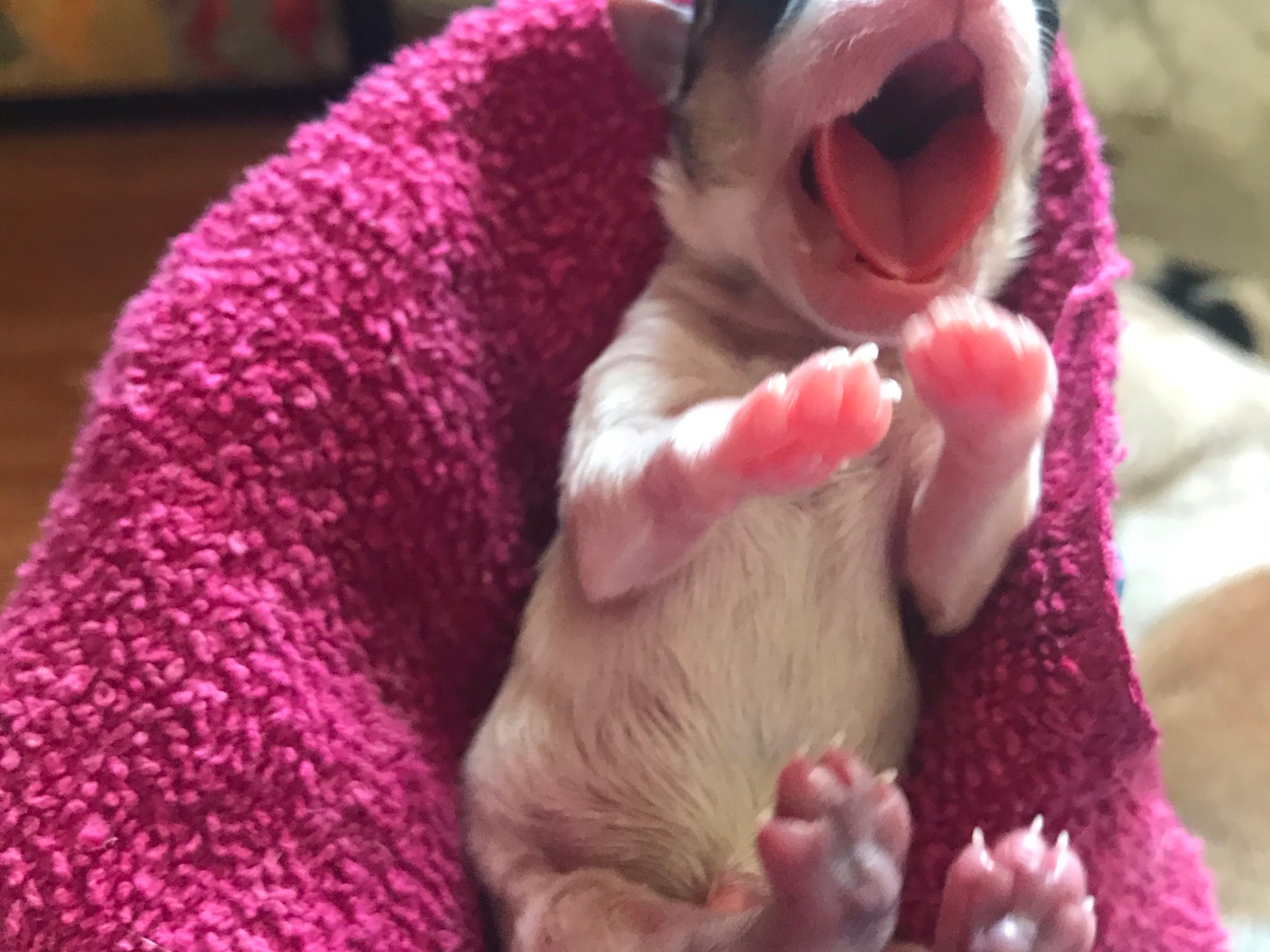
Everyone, meet Blessing. Puppy #1. My first little miracle.

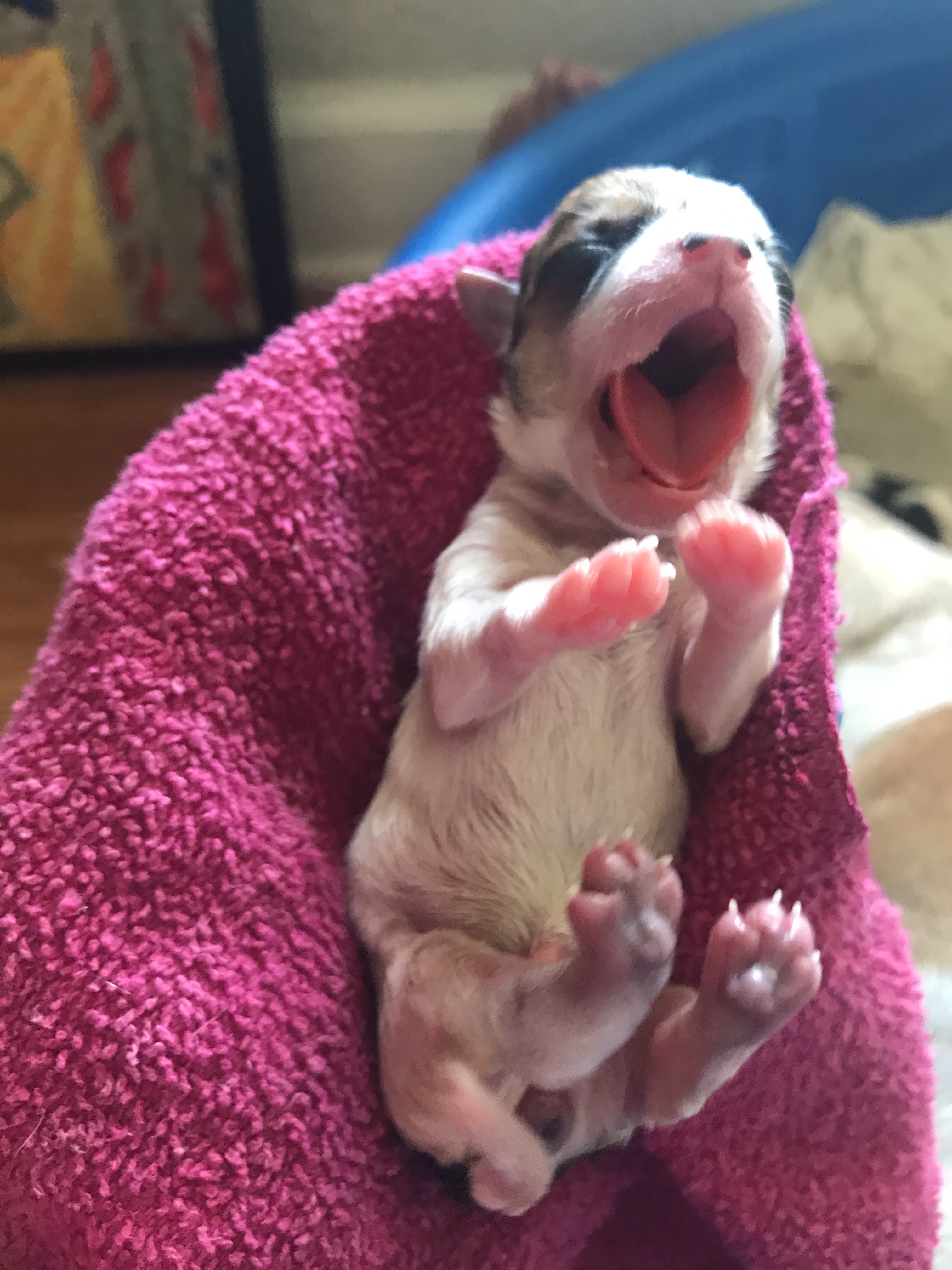
Within an hour of being born, after all five pups had arrived, Blessing was at her momma’s teat sucking like a champ. And her paws were bright pink.


Yes, she’s slightly smaller than the rest. But not by much. She’s tough. She’s experienced. She’s a survivor. And, like her momma and me, she’s gonna be just fine.

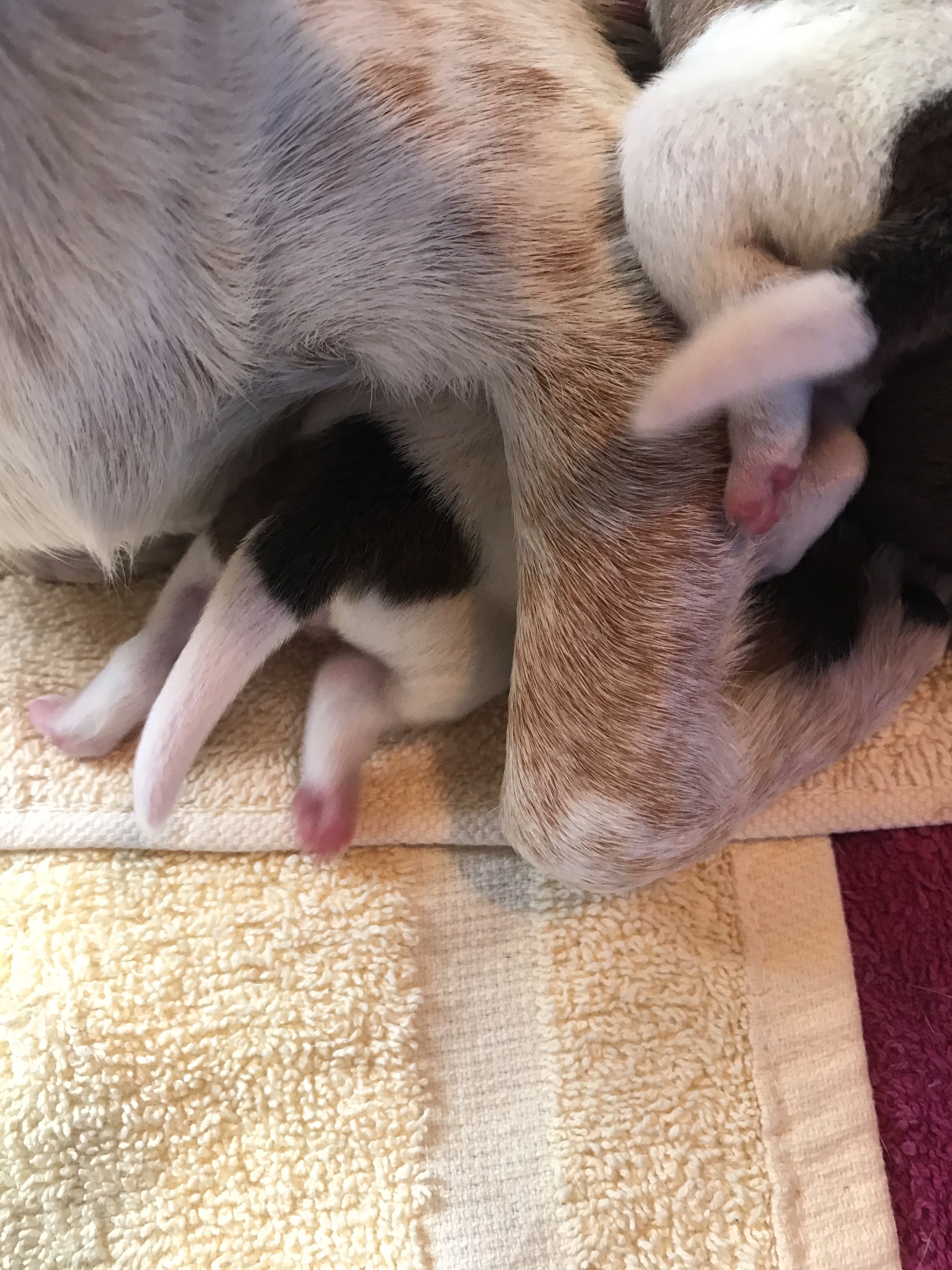
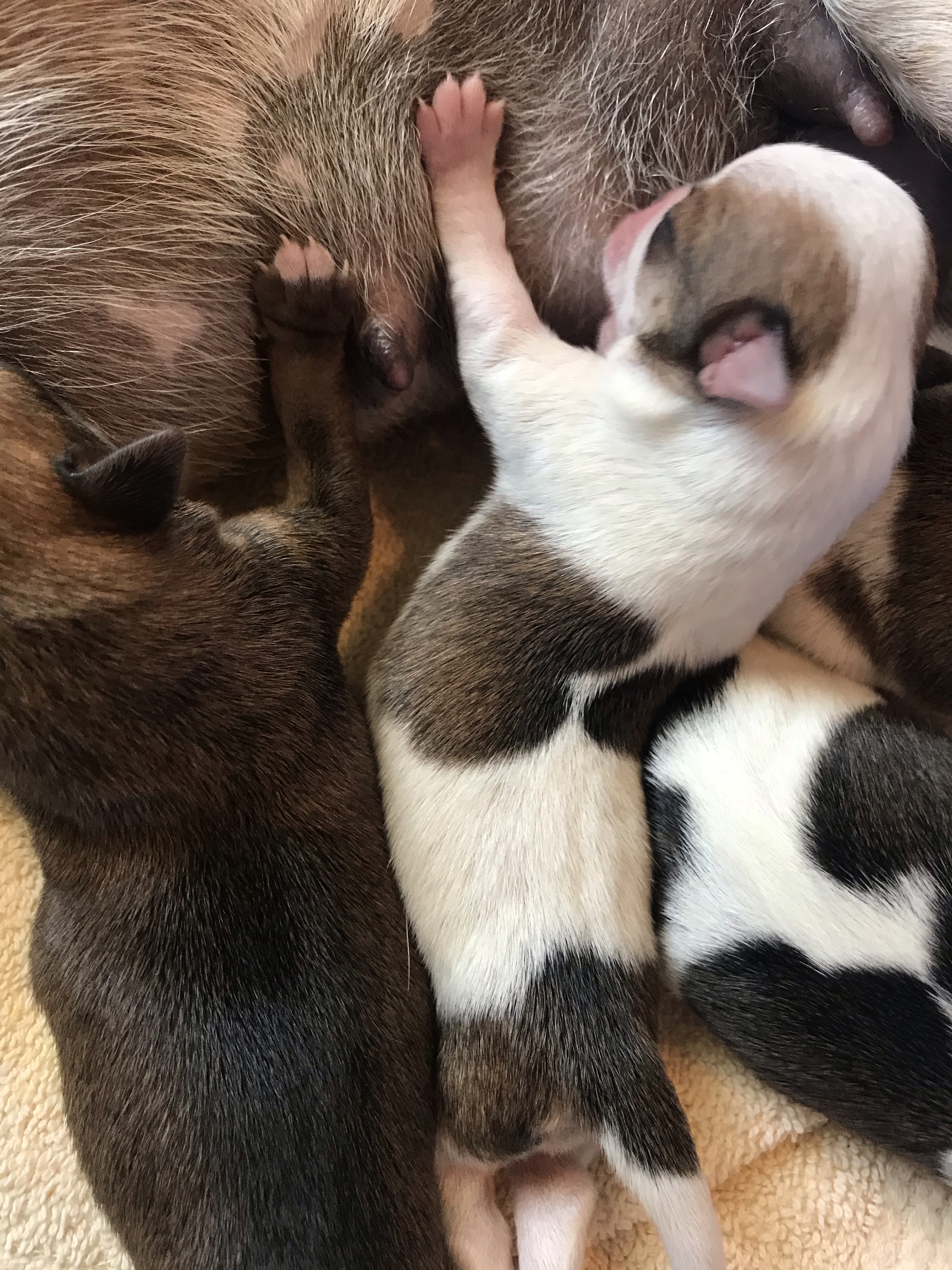


my foot for size perspective
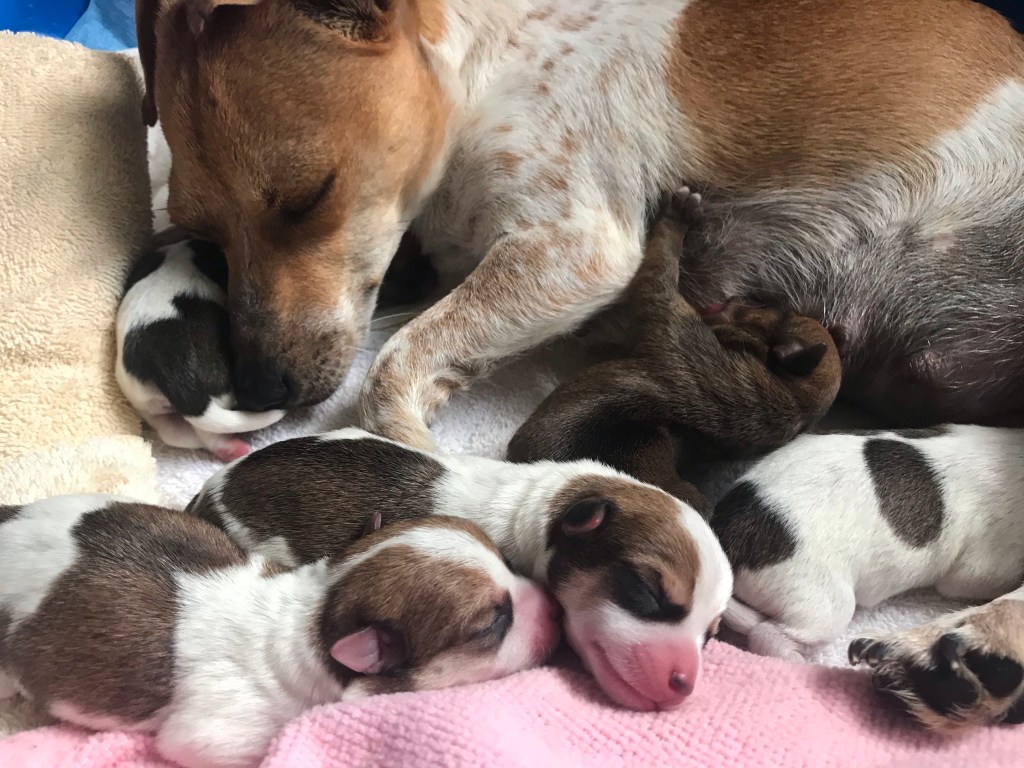
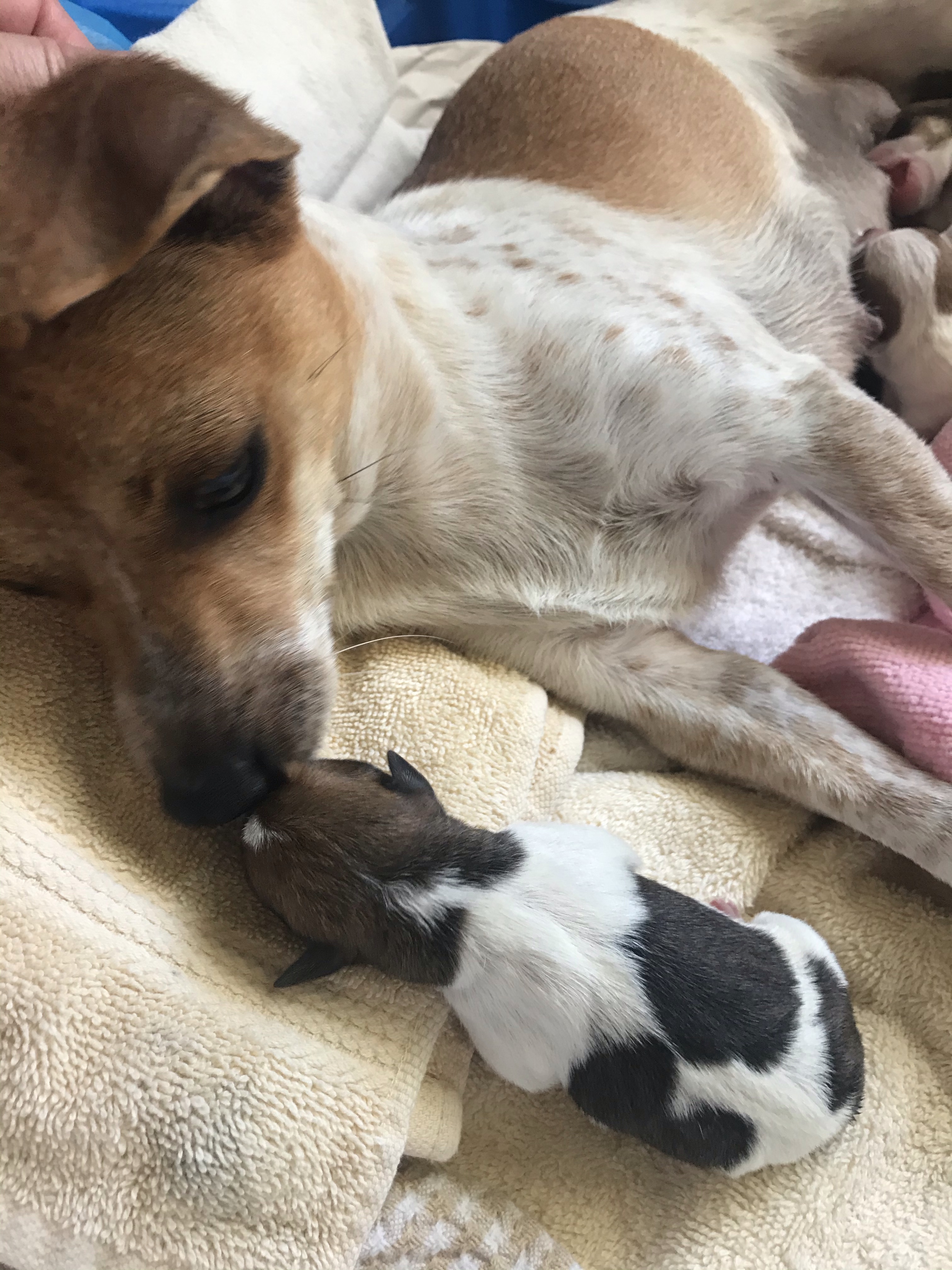
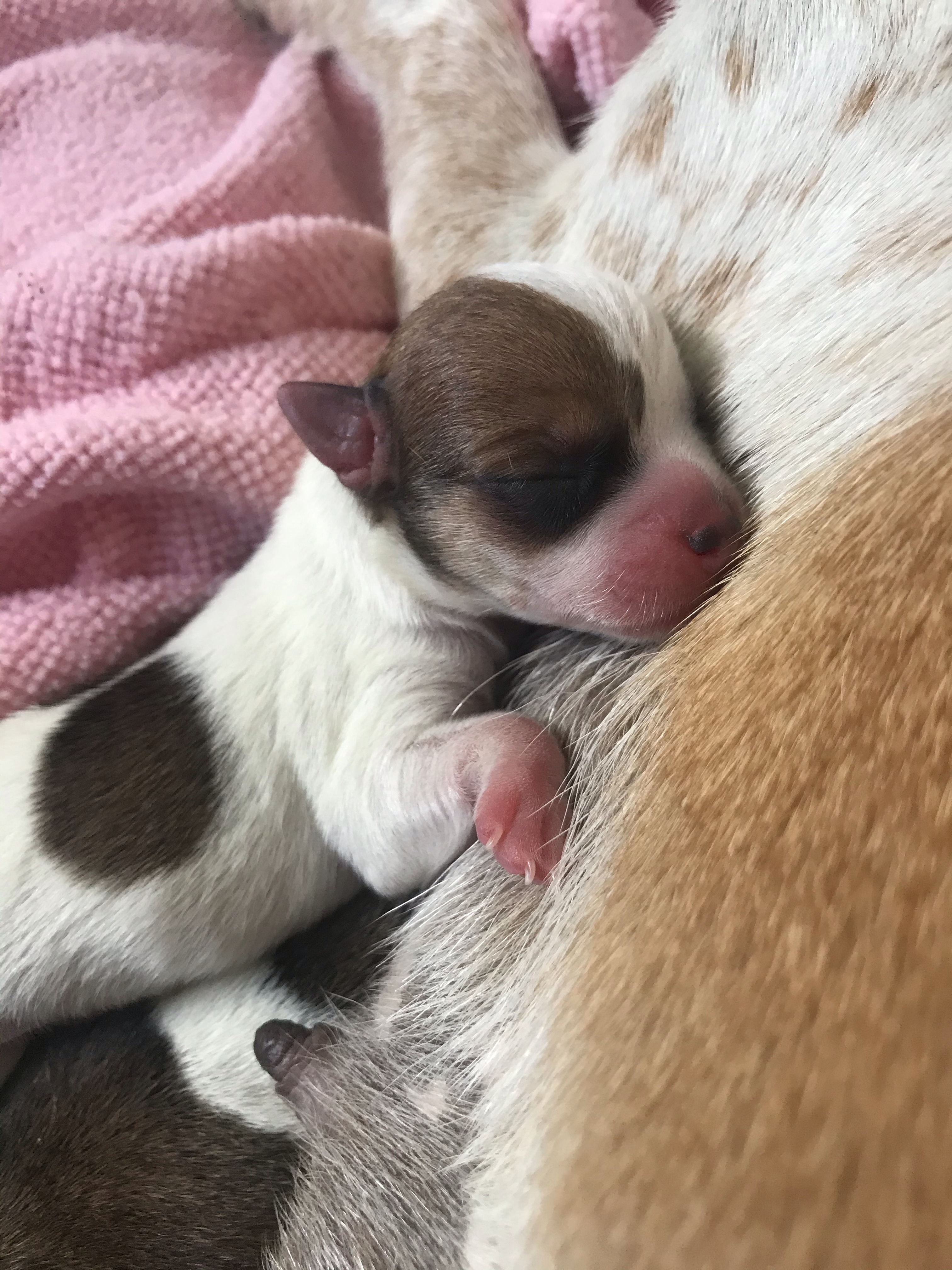

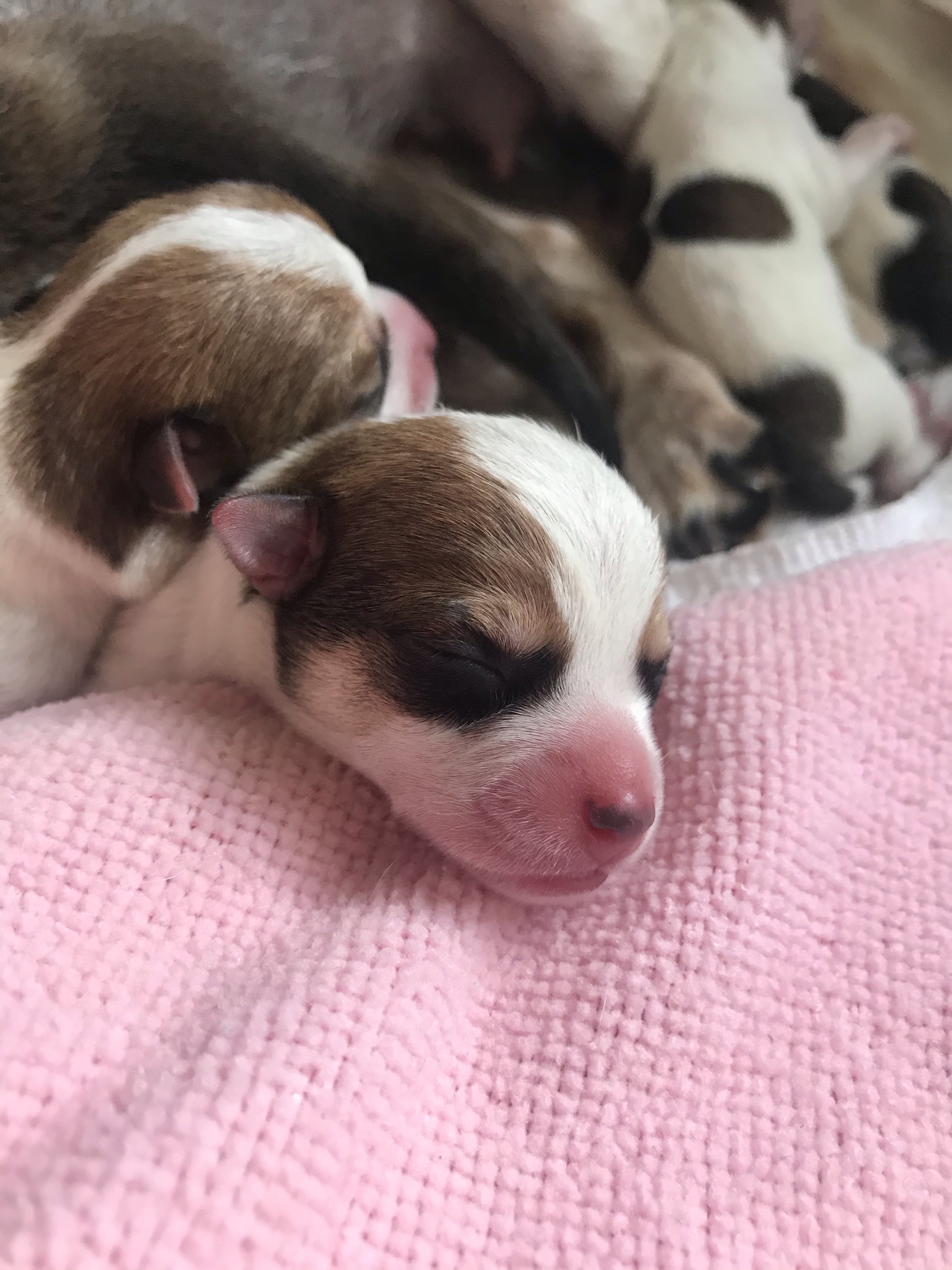

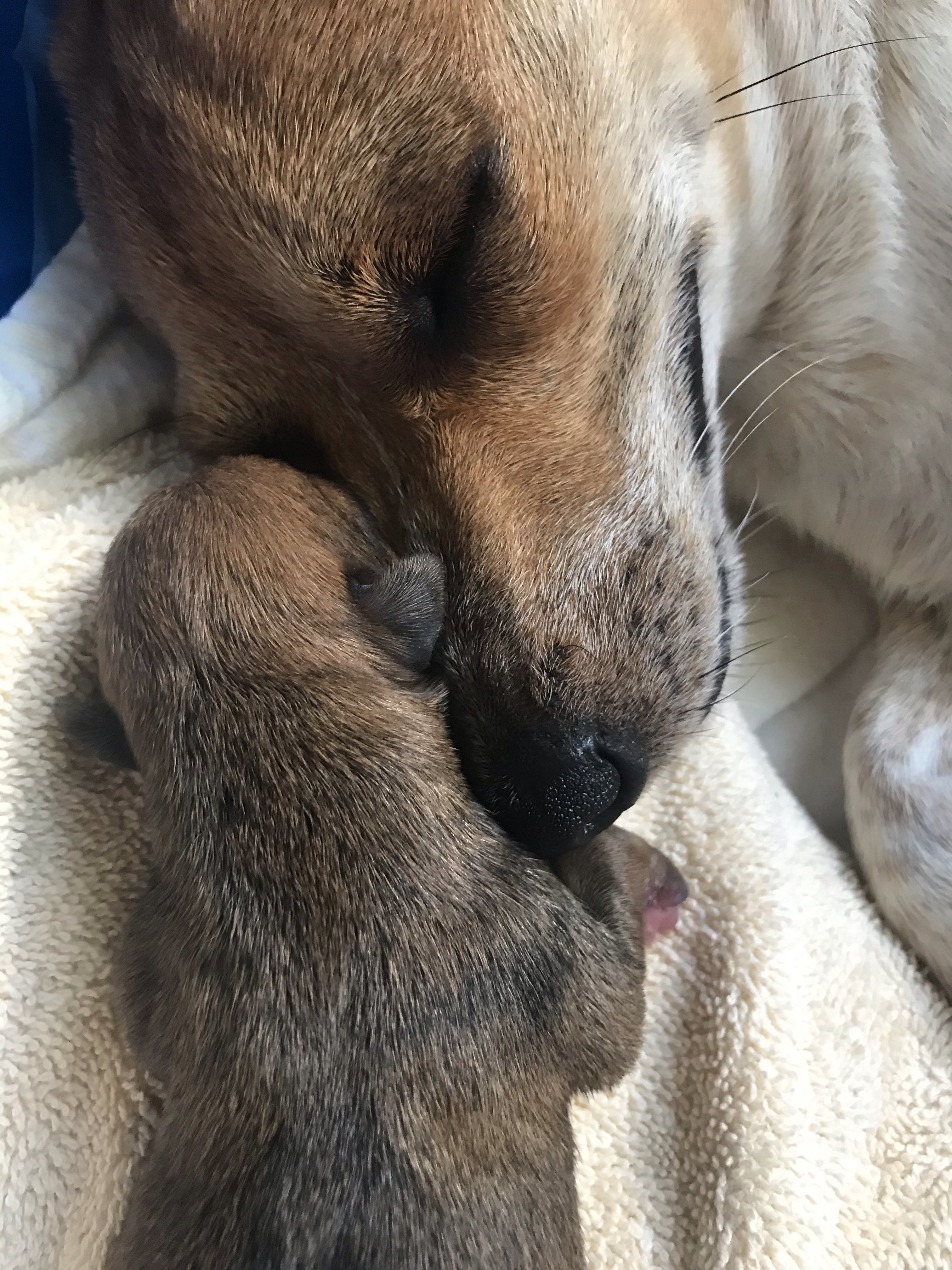
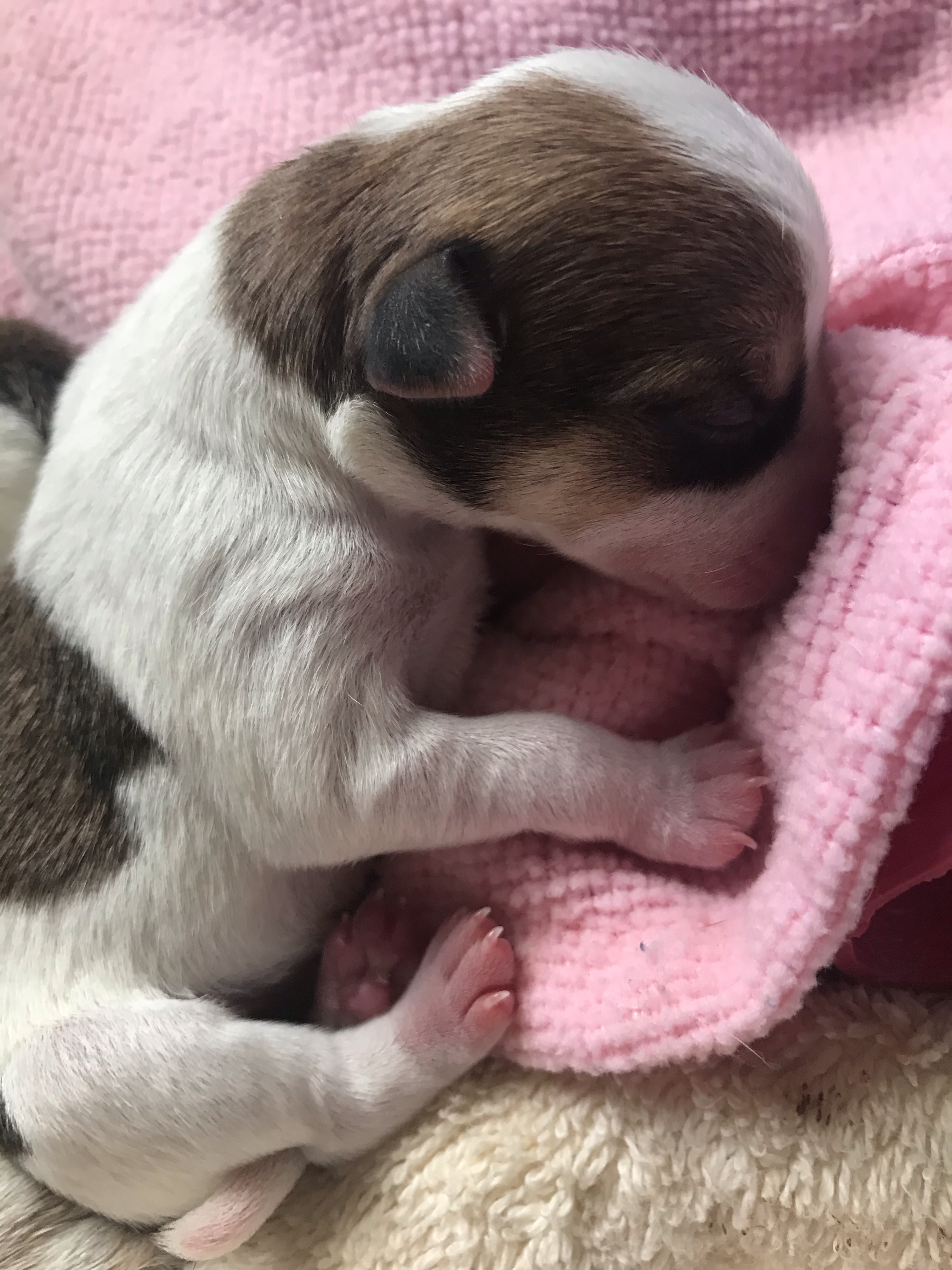
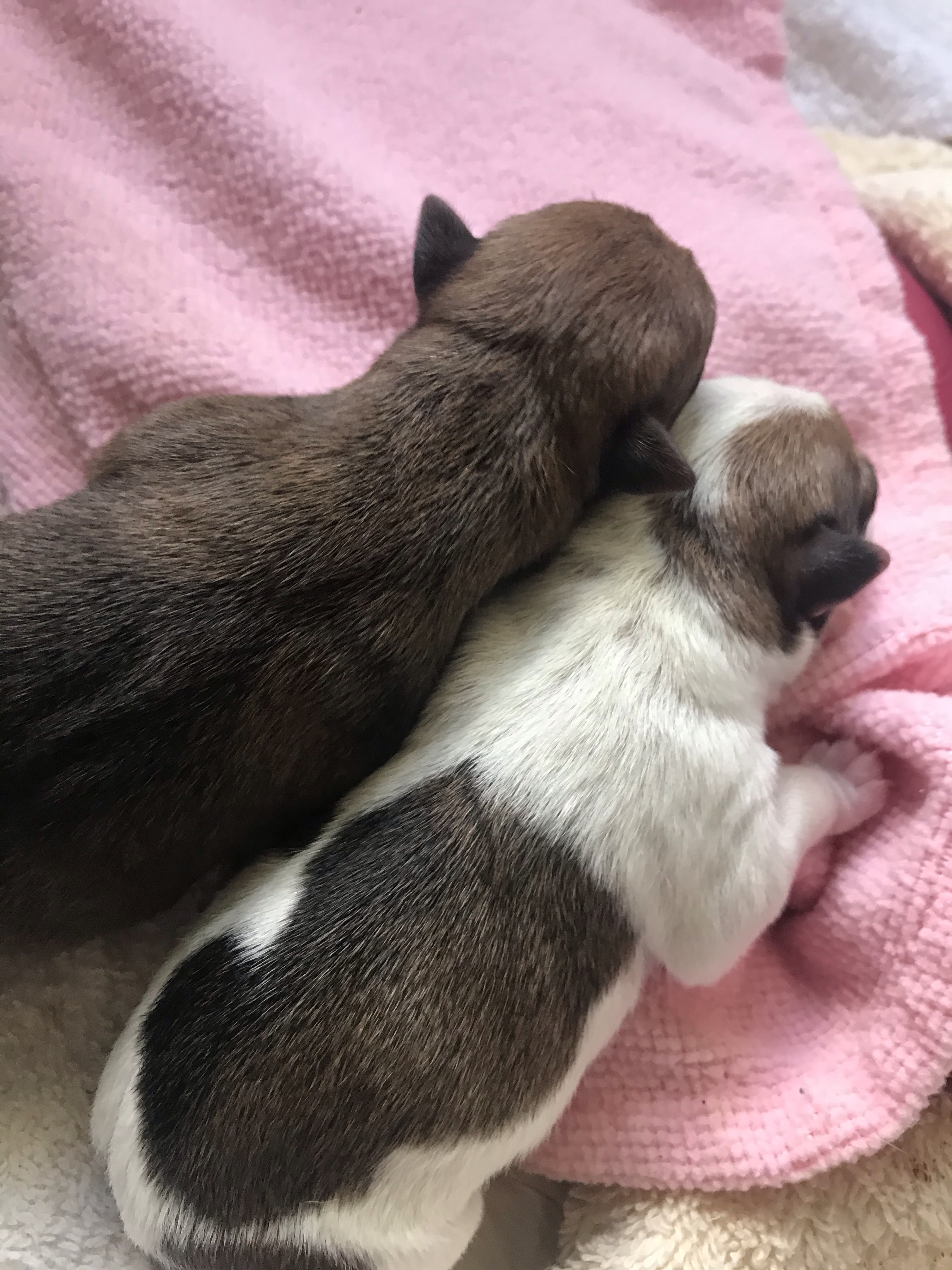

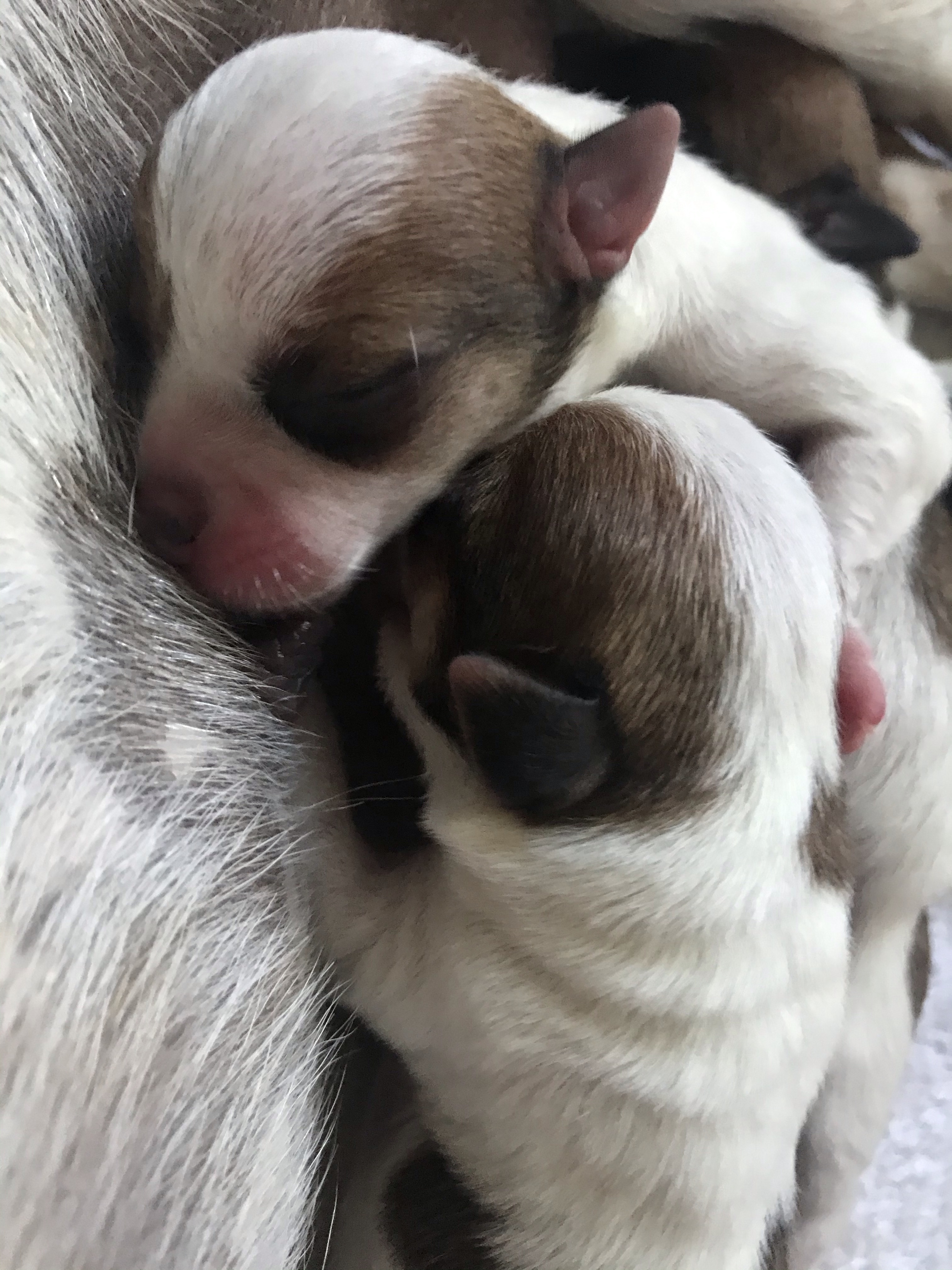


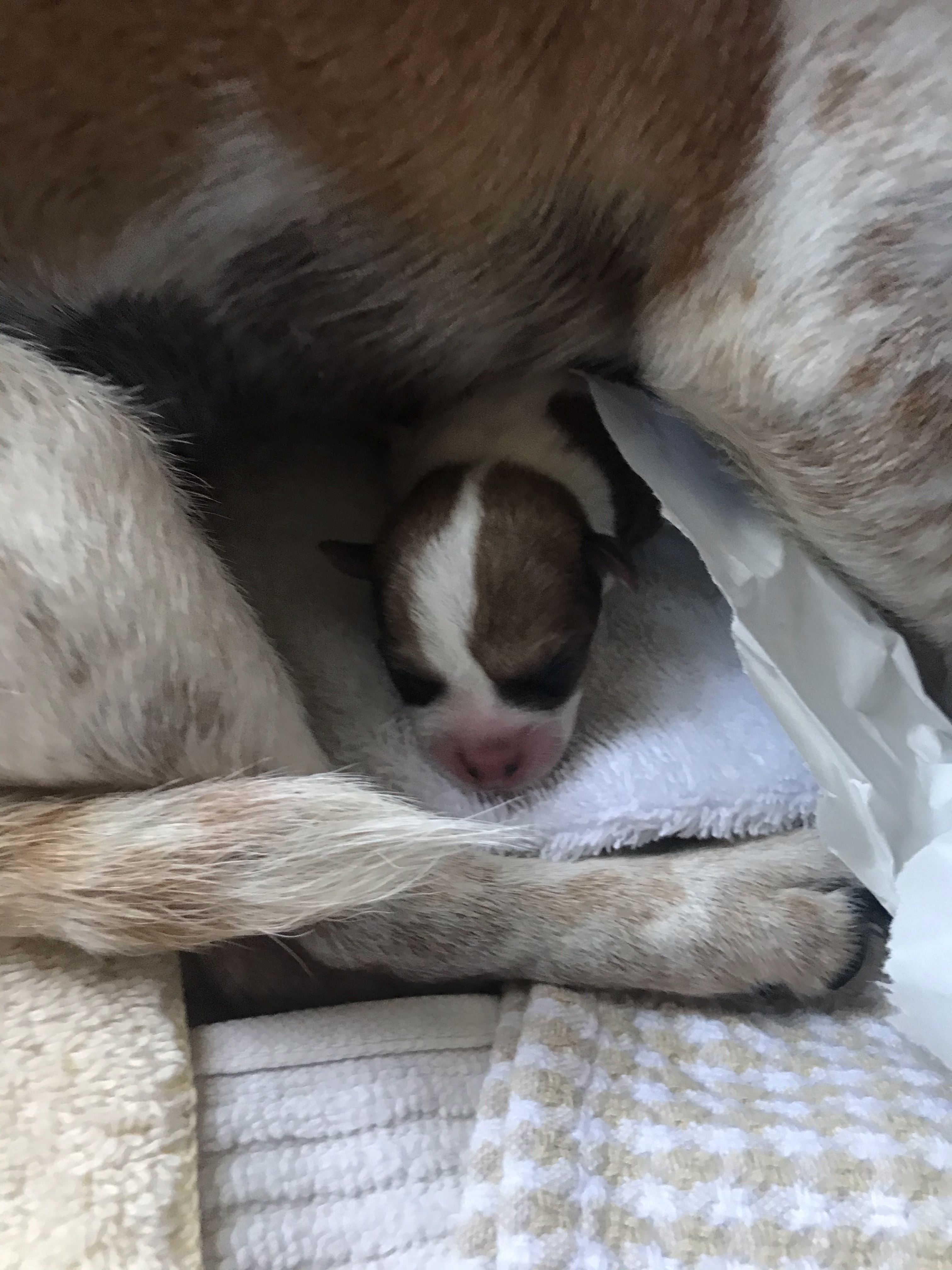
more photos with the rest of the litter to come!
Me and Mazie (Dog as a Reflection of Oneself)

Mazie is not the cutest dog I’ve ever seen. I mean, she’s adorable, absolutely. But not the cutest. Her proportions aren’t quite right. Obviously, she’s not a show dog. She’s a mutt. She has a long neck and a long nose (like me) and small ears. And beautiful big black eyes with prominent brows that she sometimes furrows, making her look pensive or sad. Other times, she curls her mouth. A kind of Mona Lisa secret and quirky smile.
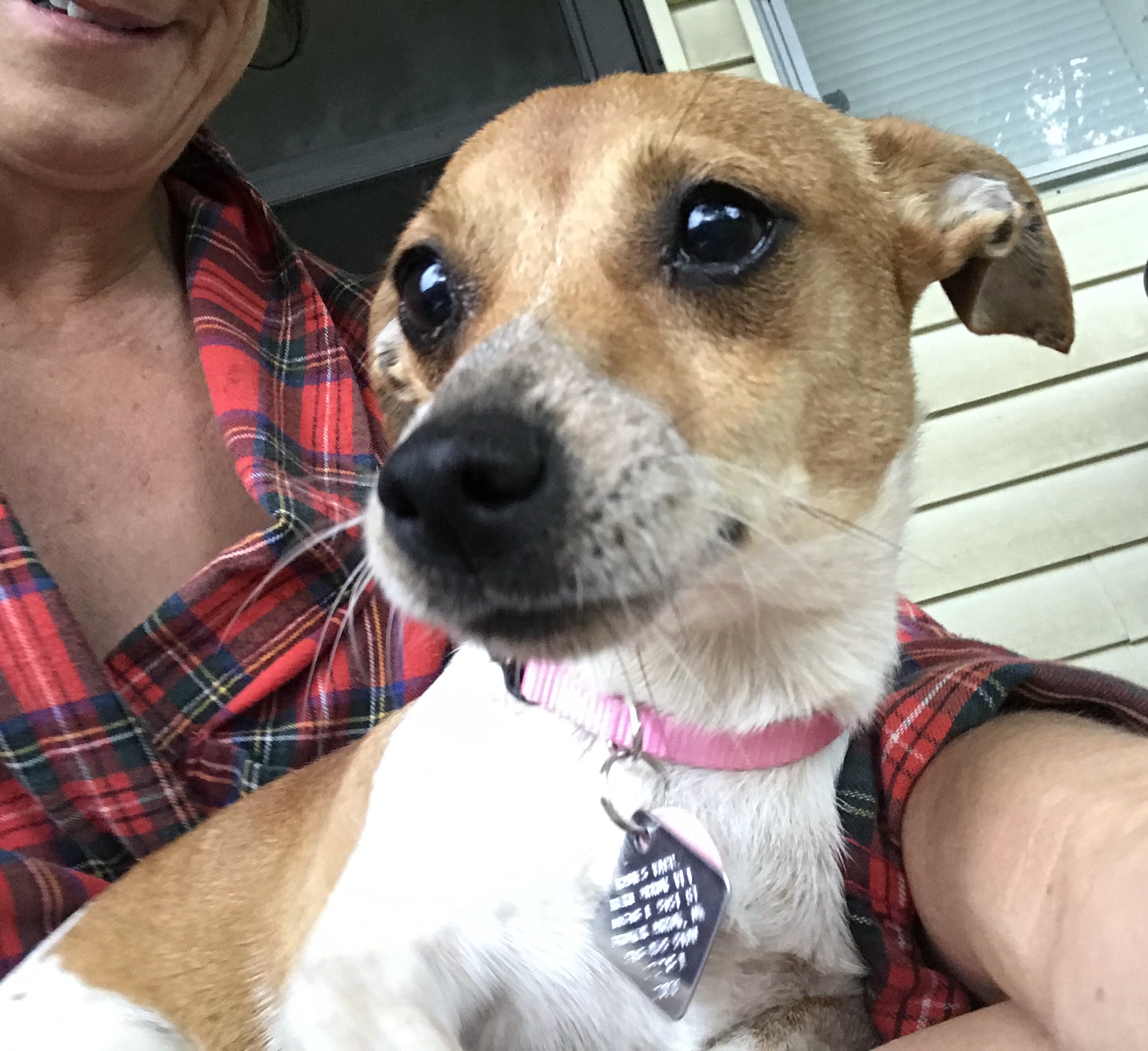


When I stopped by the rescue foundation last week, there was an insanely cute 5-month old puppy scampering about. OMG! I was smitten. She was perfect! I dropped to my knees and wanted to scoop her up. But only for a moment. I definitely admired her. I was happy just seeing her exist. But she wasn’t my Mazie. Cute as that dog was, she wasn’t the dog for me. I still want my Mazie.
Research shows that people do tend to choose dogs that, at some level, resemble themselves. We’ve all seen this. Dogs and their humans who look hysterically similar. But did you know that researchers also discovered that the front view of cars tend to resemble their owner? And the cars even resembled the owner’s dogs when they were purebreds. Bet you never expected that!
Ultimately though, I think it’s more about matching personalities. You know those dogs that love to run? The ones that have endless energy and can be seen next to their humans on the trail, seemingly never getting tired? Yeah, that’s not my dog. That’s not me.
The first dog I adopted on my own was Dixie. Dixie was rescued in New Orleans after Hurricane Katrina. She was only ten months old when the storm hit. Thrown out into the big scary world, separated from her family, forced to survive on her own. And she was exactly what I was looking for. A mid-sized dog, about 45 pounds, a husky-chow-lab mix, white with caramel tipped ears and a tail that curled. She was social and playful with other dogs but had zero interest in sharing her home with another furry friend. She could entertain herself for hours. Sit on a snow bank and toss her toy in the air or sit under the tree and watch the world. Perfectly content. We were living in Idaho then. In the Wood River Valley. Famous for skiing and hiking and mountain biking, fishing and hunting. Anything you can do outside, people do it. And they do it with their dogs. That’s why folks live there. Except me. I lived there because it was beautiful. It was peaceful. It was enough for me to walk in nature and hike just a bit. Nothing too taxing. Dixie was happy with that too.

The real give-away that she was my dog, however, was at bedtime. Dixie liked sleeping in the front room, on the floor by the couch. This was when I was so happy to be sleeping alone again that I even bought a full-sized bed, downgrading from a queen, because I had no intention of anyone sleeping next to me. And when someone did, I wasn’t inclined to cuddle. Dixie was the same. In the morning, she would come when I called and allow me to say hello and scratch behind her ears. And then she’d leave. Not sentimental one bit. I loved that about her. And I was devastated when she died suddenly.


I always say it took two dogs to replace Dixie: Athena and Leo. Athena is a heeler-boxer mix. A sleek redhead with a white chest and white paws and a crooked tail. Leo is a crème-colored lap-sized mutt. Looked like a miniature Golden Retriever until he got groomed. And always looks like a puppy, no matter how many years go by. As a Pisces, I like to think they represent two aspects of my personality, swimming in different directions yet intimately connected and balanced.


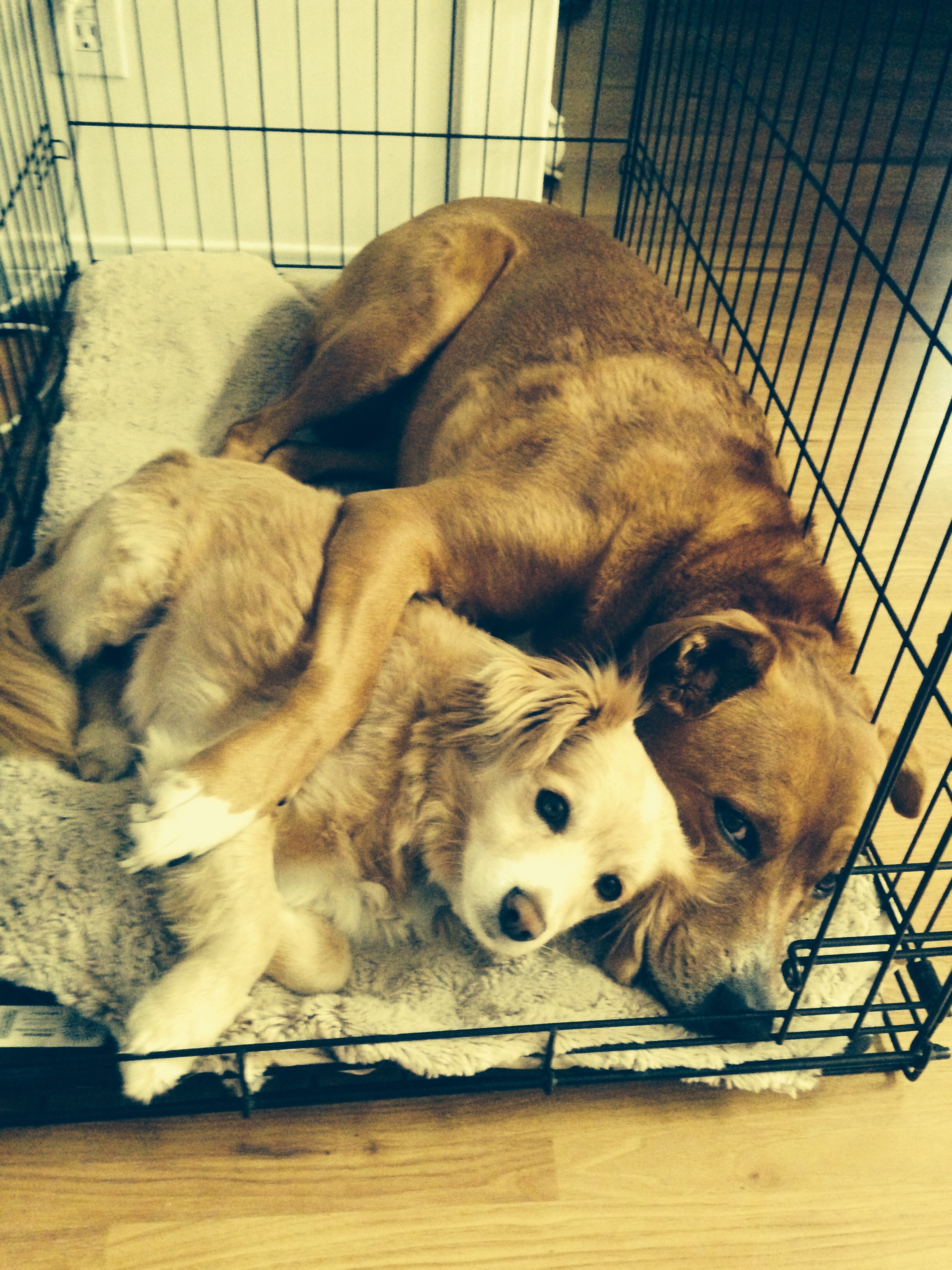


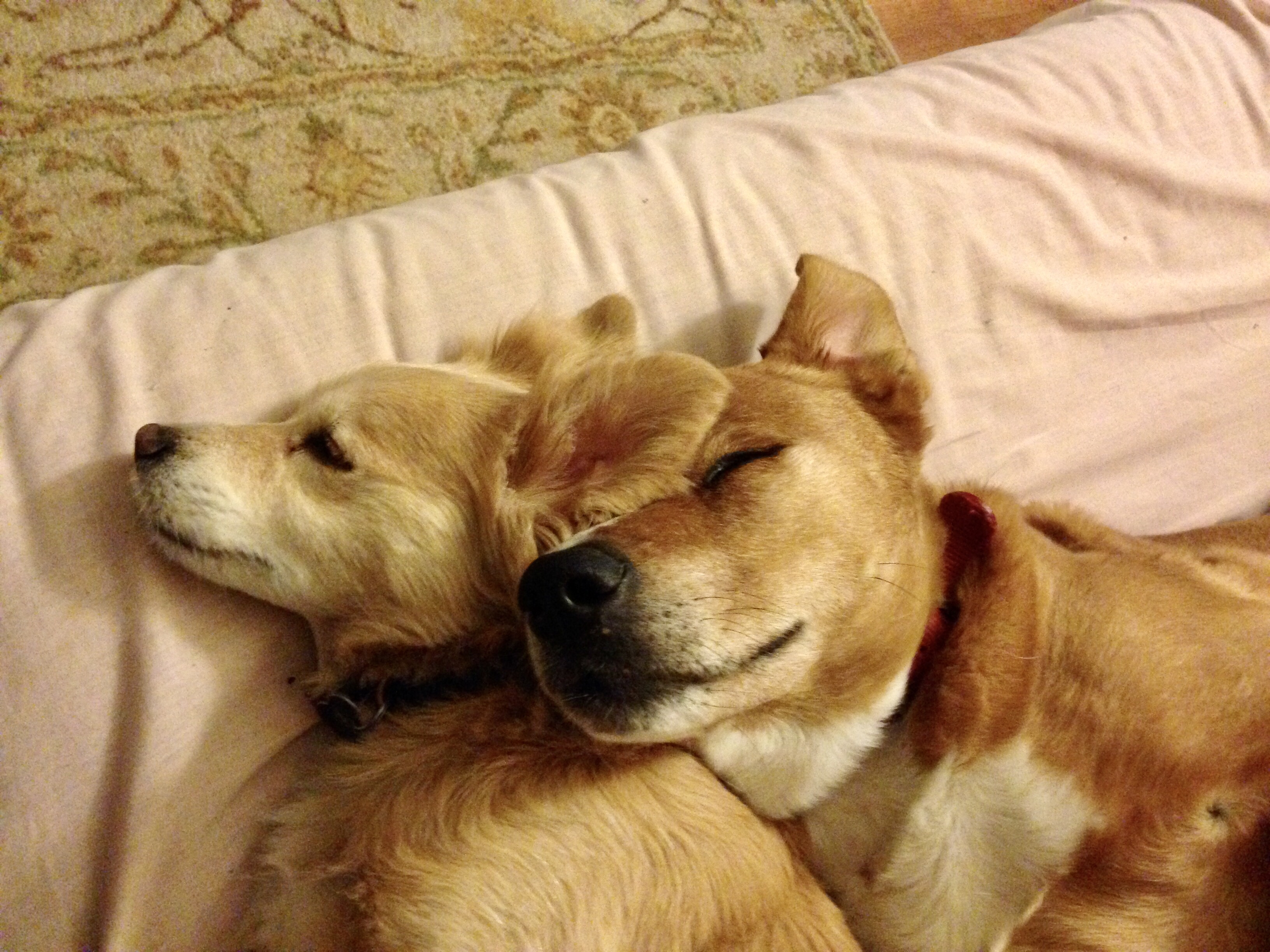
Athena is the homebody, preferring to stay in her crate while Leo explores. Leo is Hermes, always on the move, always into mischief. He’s the charmer. Athena is the protector. Leo is curious. Athena is cautious. Leo is quick to take off, quick to wander. Never worried. Countless adventures and a lot of close calls, but it always works out, he never comes to harm. Athena is reticent. She’s interested, but not enough to take risks. She stays close and never wanders. She’s loyal. And fierce if she needs to be. They’re both over 12 years old now and still live in Idaho with their dad. Leaving them was one of the hardest things I’ve ever done. But they’re happy there. Taking them with me when I moved would have been selfish. Instead, I visit. I get regular photo updates. And I grieve. I miss them terribly.


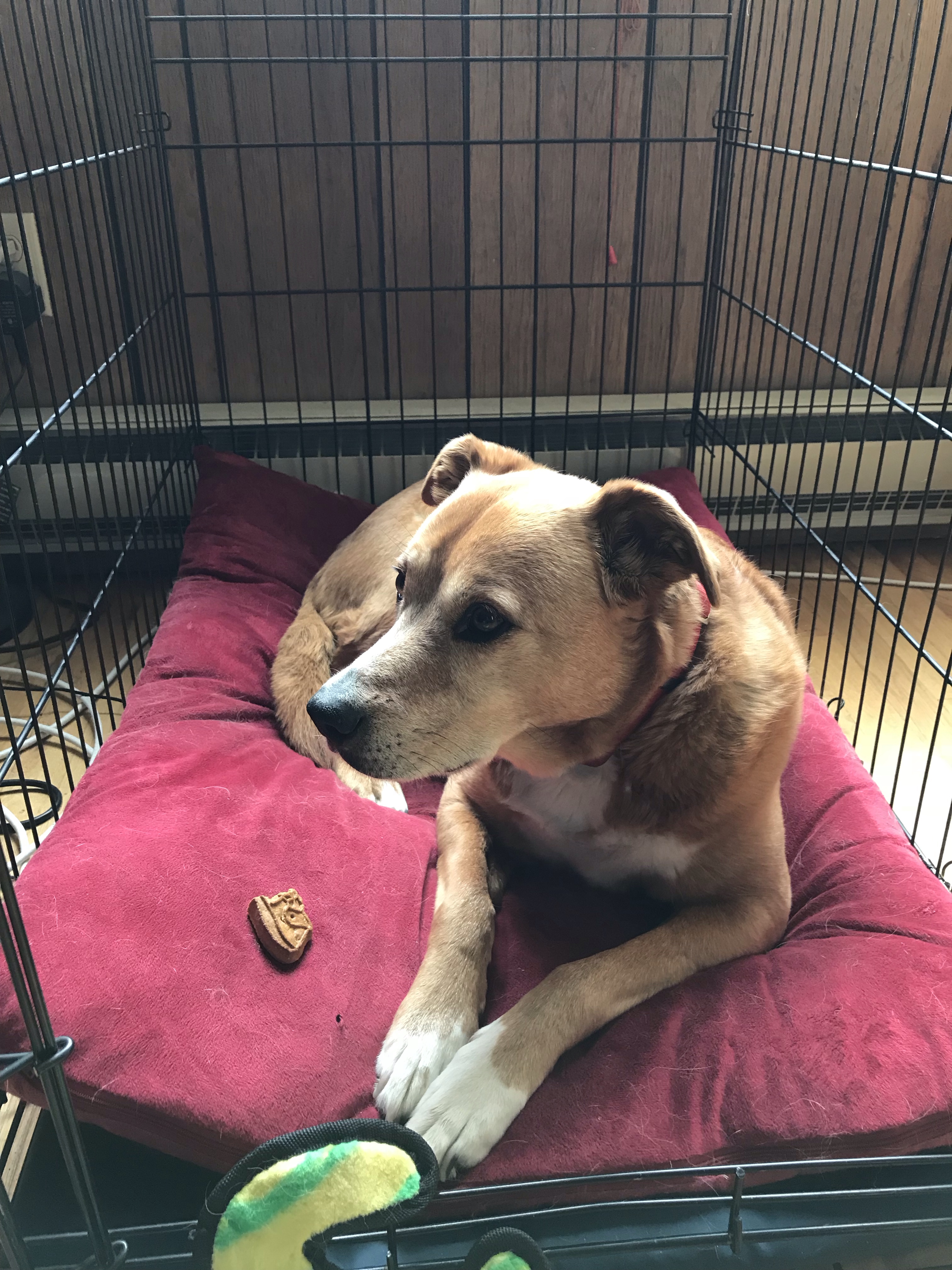
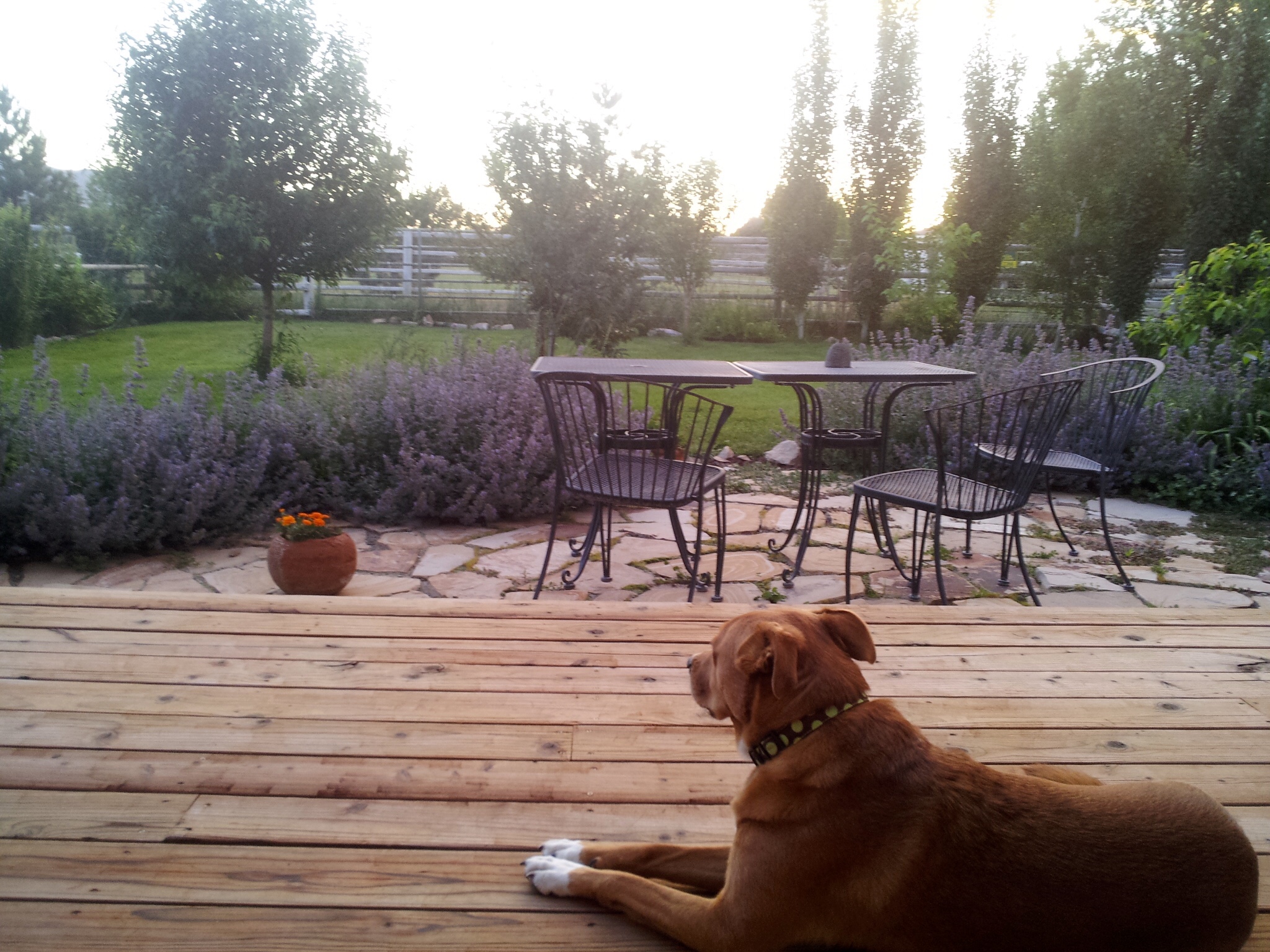




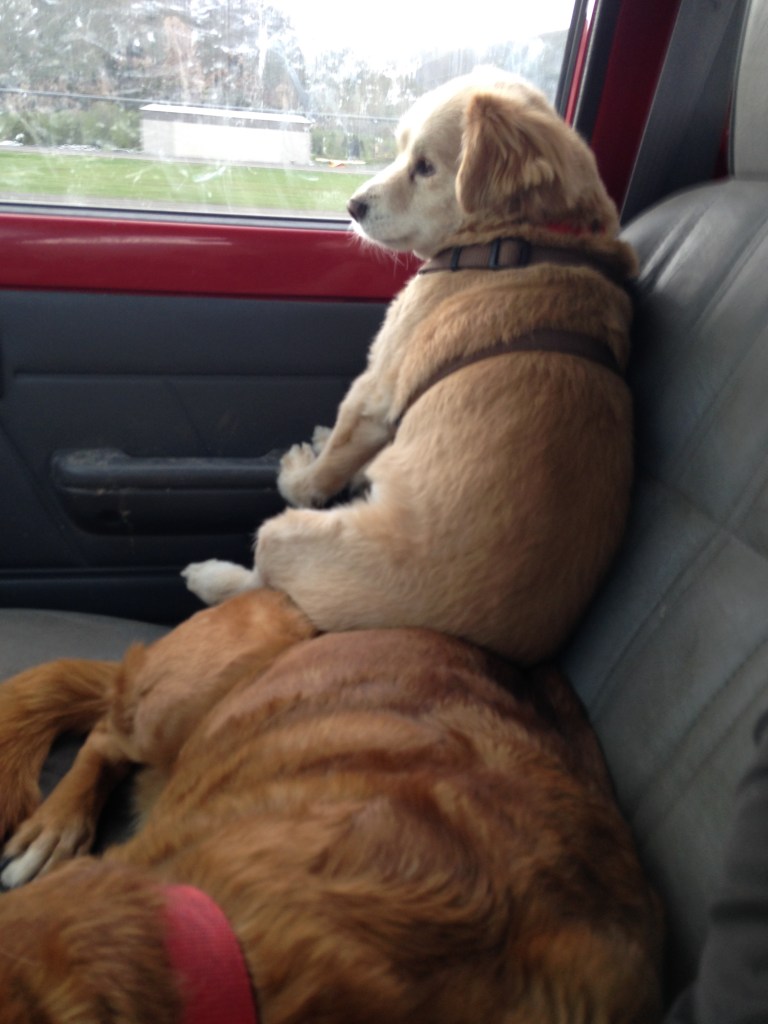
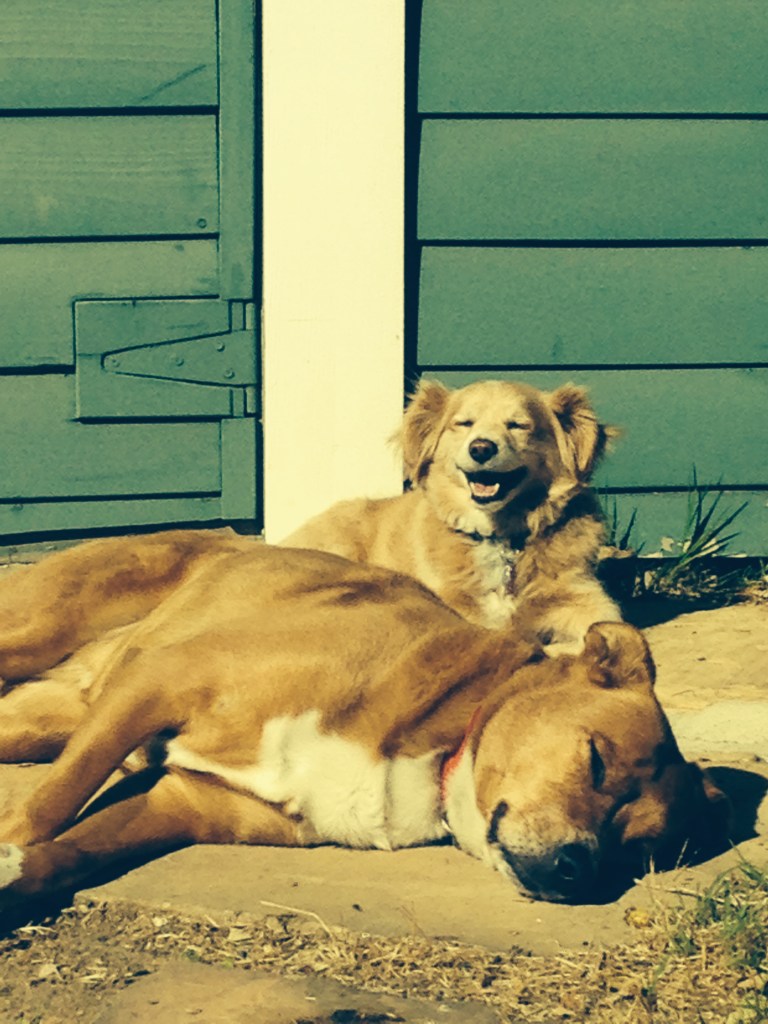
I swore my next dog would be non-allergenic. And portable. Small enough to carry on a plane. Maybe a toy poodle. Smart and cute, with curly hair. But choosing a pup is a bit of a misnomer and a mystery. There’s some magic at play when a dog comes into your life. And I’m not sure how much we actually “choose.”
Mazie’s eyes looked back at me on Petfinder and, well… it’s almost cliché… She needed me as much as I needed her. Yes, she is small. But she’s not hypoallergenic. Of course, I think she’s smart, but she’s not revealing much these days. She’s still recovering from her rescue. From being one of so many. She’s still finding her voice. Learning to trust. Disinclined to socialize. But I have a feeling that will change with time. She doesn’t mind her harness, but she hates the leash. (I can relate.) It took over three weeks of sitting on the porch, sniffing the air, and taking in the view before she ventured down the stairs for a brisk walk. Just like me in Covid19 quarantine. Now she’ll walk daily, but she’s not inclined to go far. She prefers to sit and observe. To roll her back in the grass. To pant in the sun. She growls but doesn’t really bark. She’s a hybrid of sorts: a mixture of my last two furbabies. The size of Leo and the face of Athena. But more than that, more symbolically, I think the different aspects of myself are finally coming together.

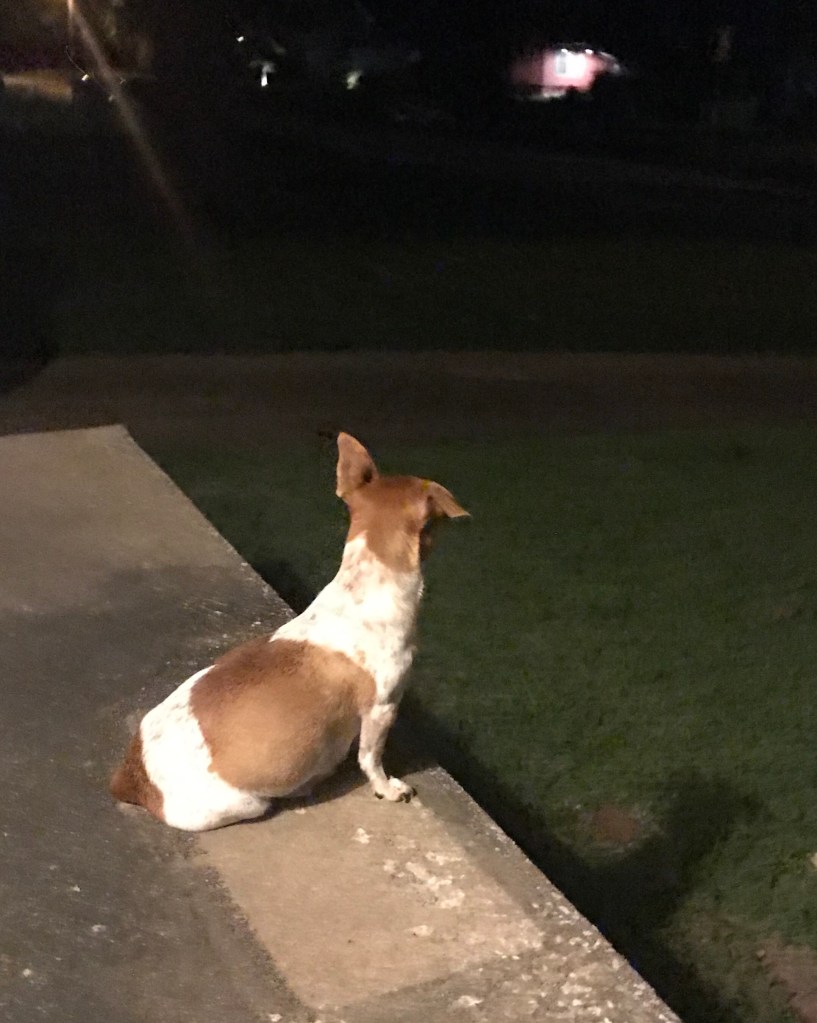
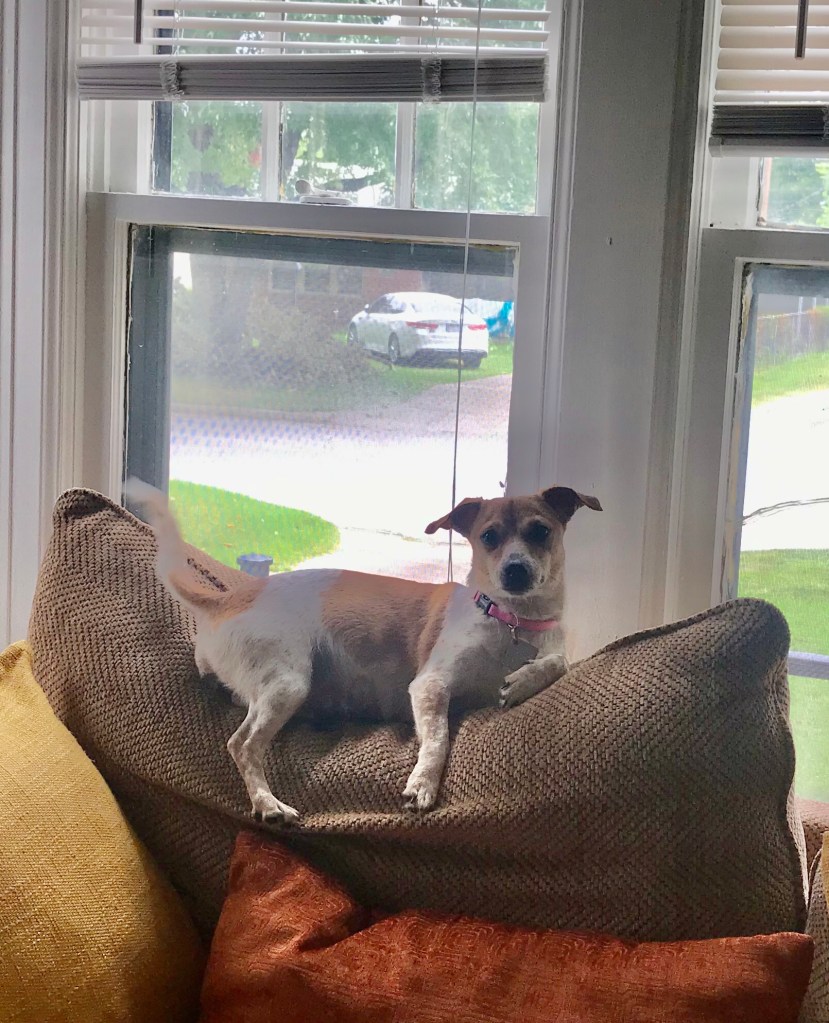
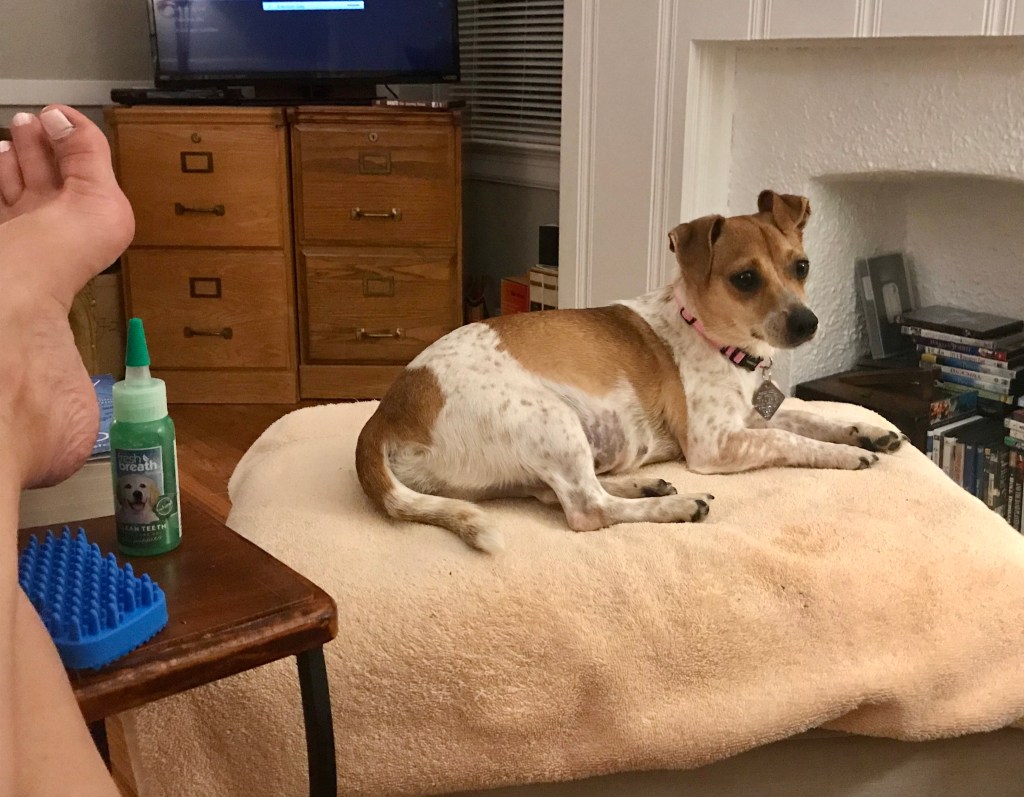

Mazie is pregnant. I knew that when I got her, but you couldn’t really tell. Now her belly is big and you can see the puppies moving. Any day now, any hour, she’s about to give birth. She’s creating something new. There’s a metaphor there for me too. Magic is afoot. New life beginning. At the moment, still mostly in hiding. But it’s coming. So we’re preparing, as best as we can, and we’re napping. Napping a lot. Birthing is hard work. Whatever comes will be demanding. Exhausting. And exhilarating.
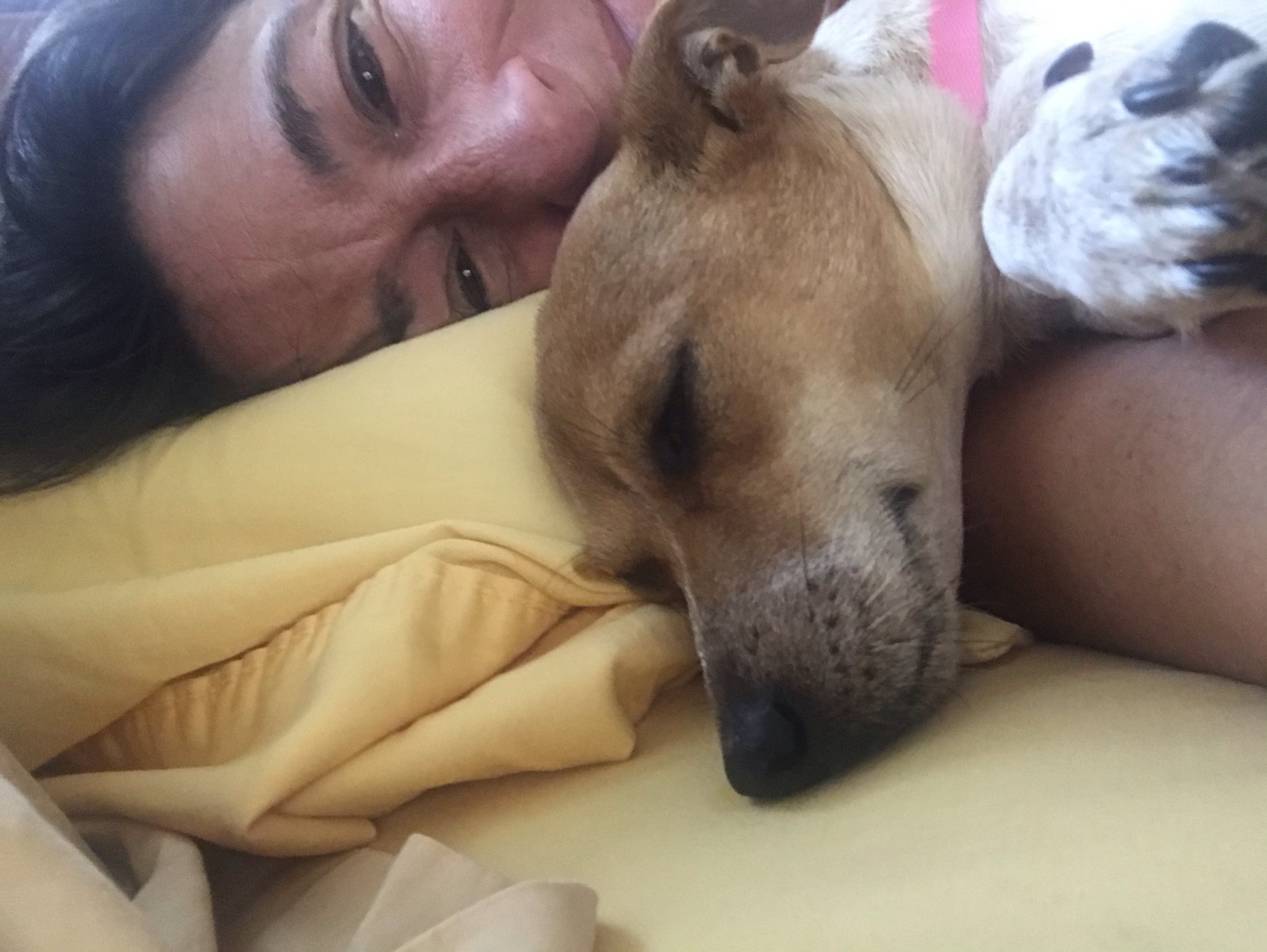
Me and Mazie. Reflections of each other. Just like every fur-friend I’ve ever had. Together on this journey called life.

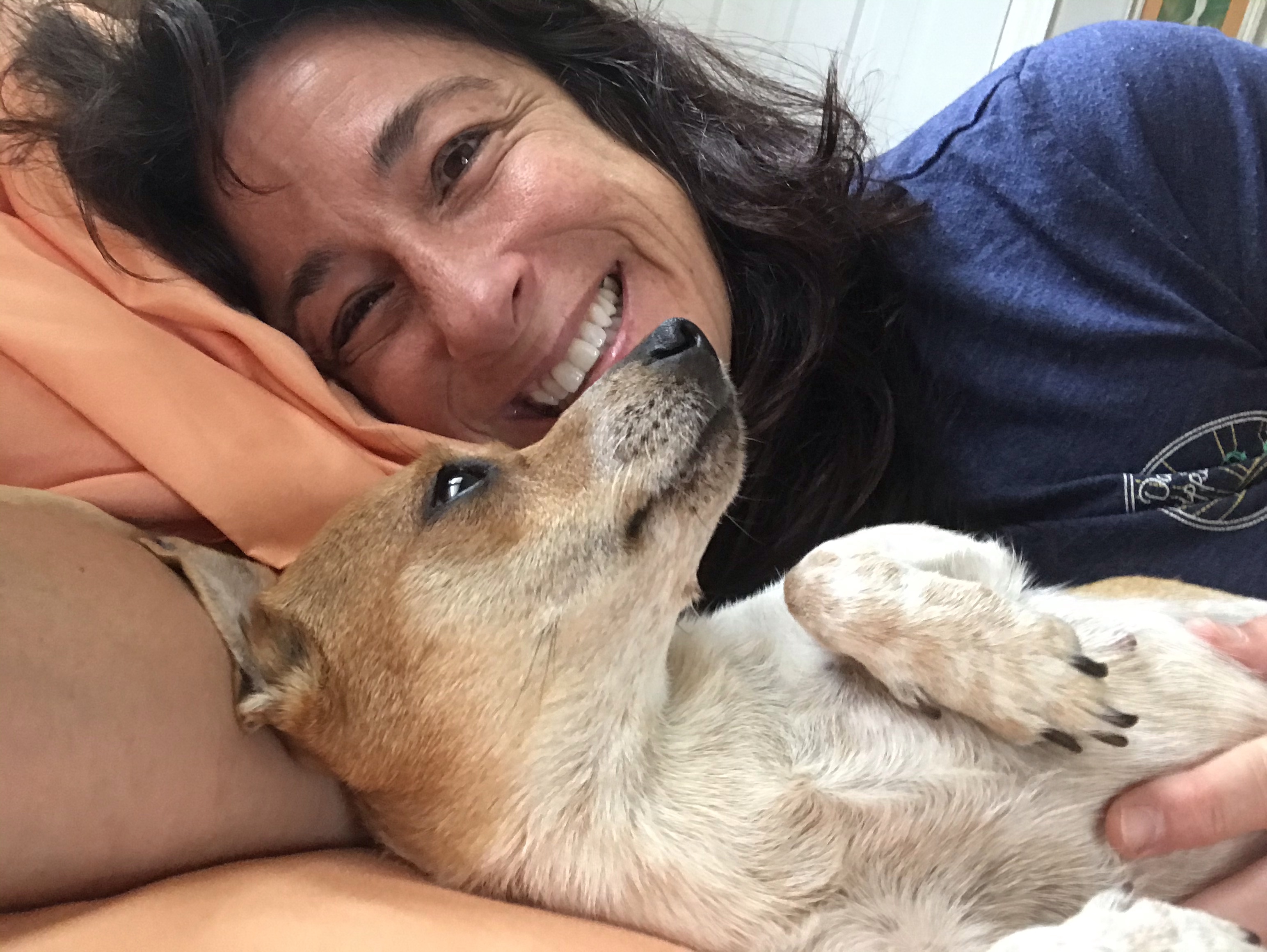

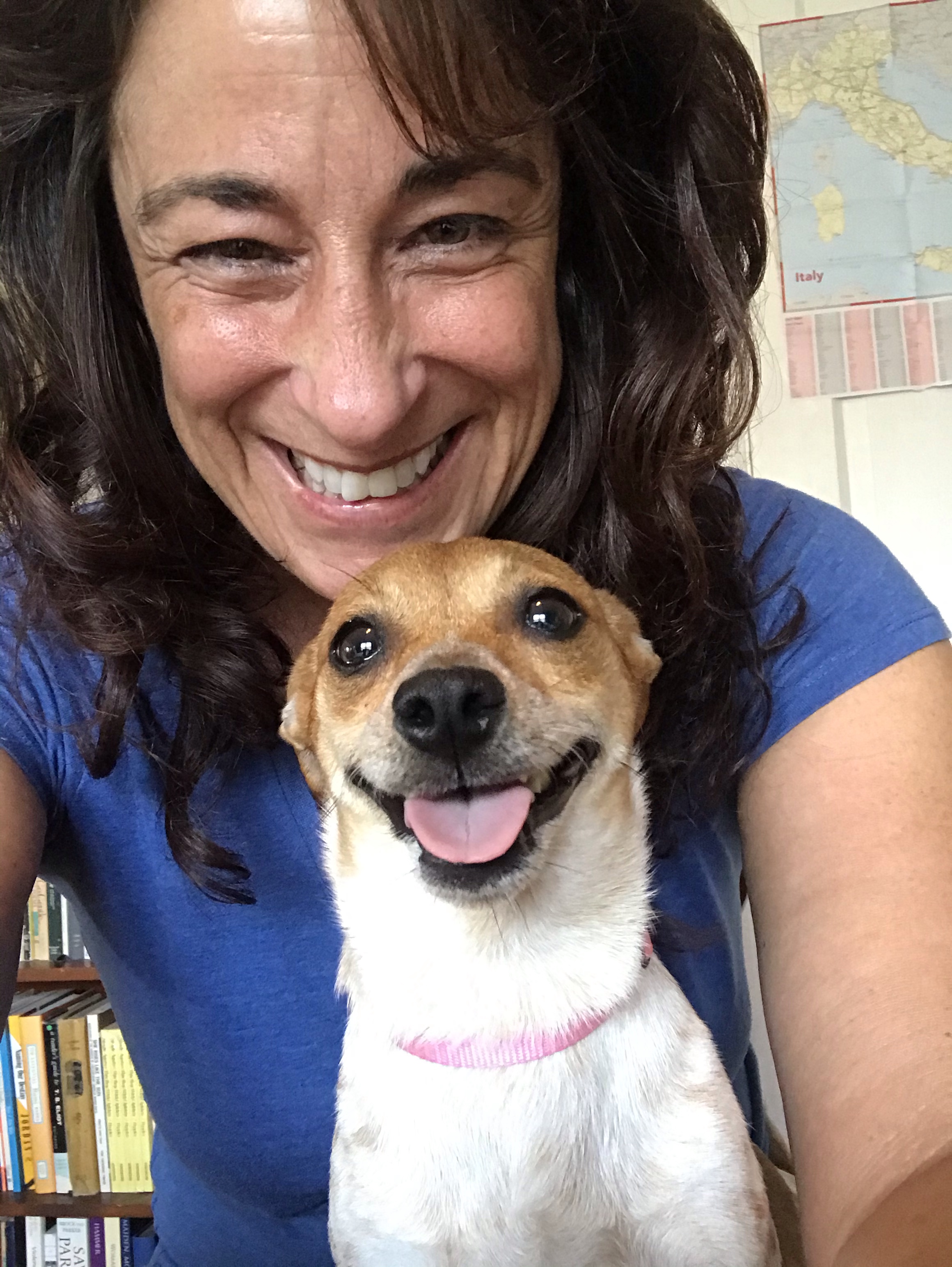
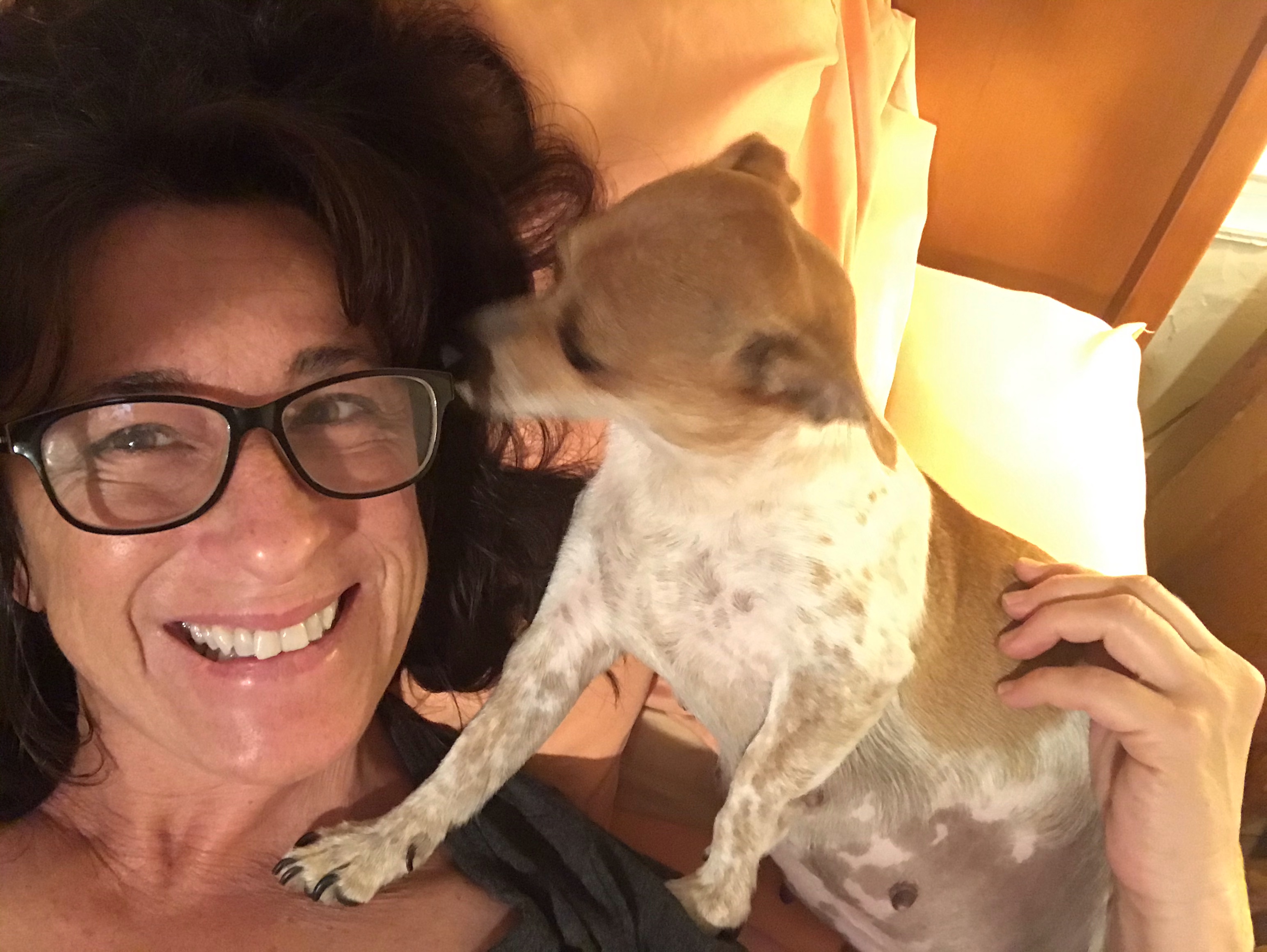
Home Infestation

Bugs. We all have issues with bugs. As in, I’ve never met a person who encountered bugs in their home and thought COOL!! The few who do think this are scientists. Or kids that will become scientists. If there’s anyone else out there who is not a scientist and greets bugs—particularly in their home—as a delightful encounter, well, I’m not too keen on meeting them. And I definitely don’t want to sit next to them at dinner.
Hey, if you live outside, like in a tent in the woods, you have to expect some amount of bugs. This of course, is the reason that some folks don’t like to camp. Years ago, when I backpacked in Venezuela and stayed in a small community along the Brazilian border, every abode was open to the elements. Most only had three walls. Others, three and a half. No windows with glass, just open or non-existent walls. Yes, they had intentionally built their homes that way. And yes, I got bit on the butt by a spider while going to the bathroom one day. But overall, I adapted. Because I had to. It was the norm.
Those of us in the Western World who live in houses and apartments expect bugs to stay outside. It’s part of the idea that our homes are safe and secure. Spiders? Nope, not welcome. Even if they do eat flies. Rollie pollies? Weird. Like where do they actually come from? Silverfish? Gross. Ants? A nuisance. An awful nuisance. And cockroaches – sorry, I can’t even go there. And, at least we can see these things. We can vacuum them up. We can catch them and escort them back outside. Or we can squash them. Depends on your personality and temperament. Or your religion.
Someone in my family had to deal with bedbugs a few years back. OMG!! That would have traumatized me for life. I was traumatized just hearing about them. Eradicating them was exhausting, expensive, and intense. And lice? Yes, that too is perhaps the worse thing ever. Luckily, I’ve never experienced it. So I’m sure I shouldn’t be complaining.
But fleas. Are you kidding me? FLEAS??!!??!!!
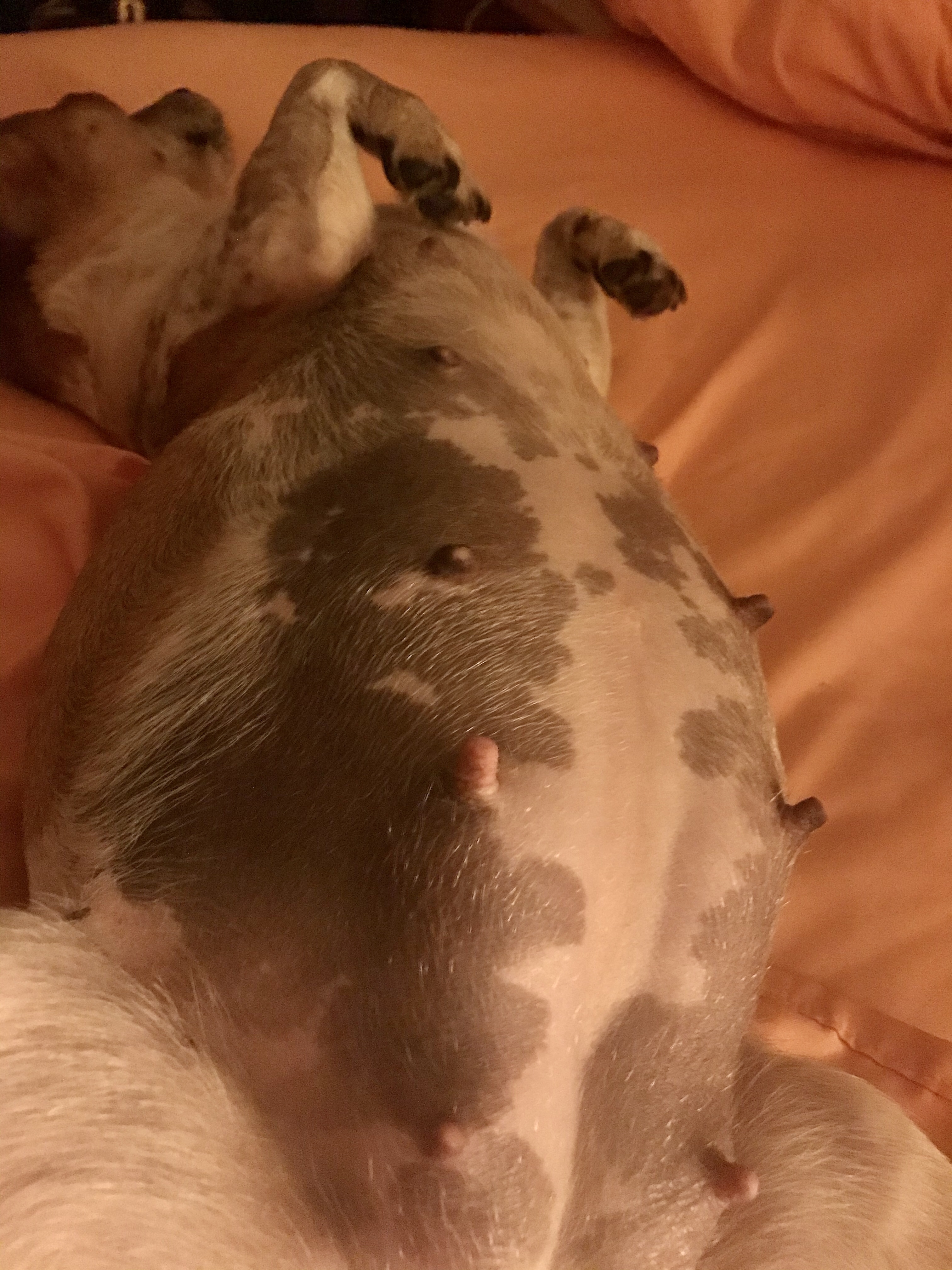
Last week my vet told me that my new dog has fleas. She also determined that she has 5 puppies that will be born in a few days. So the need to eradicate them was urgent. The vet gave her a treatment and told me no problem. Really. She actually said that. No problem. They’d be gone in a day.
Not quite.
Within hours, those little buggers were everywhere. Crawling on her belly, jumping on the couch. Crawling and jumping, crawling and jumping.
Bowls of dish soap and endless scraping with a flea comb. Everything laundered in hot water. Linens, pillows, beds, toys. Anything that could be washed in a machine, was. Other things were taken to an outside laundromat. I vacuumed floors and vacuumed furniture. More laundry. More vacuuming. Wiping down everything in sudsy water to suffocate and kill them. (Remember, she’s having puppies – I can’t use toxins that might hurt her or the pups!) Lawn treatments in the front and back yards. More laundry. Baths together, both of us fully soaked, drenched in dish soap, and sudsed up. Yesterday I even spent hours on my butt scrubbing my hard wood floors – ALL my floors! I was drenched in sweat, soaked in soapy water, scrubbing floors and furniture. Followed by more laundry in hot water. And a very cold shower.
My house is CLEAN!! One full week of cleaning kind of clean. A full container of laundry detergent clean. And I’m exhausted.
Are the fleas gone? Goodness, I hope so! And, I guess, only time will tell.
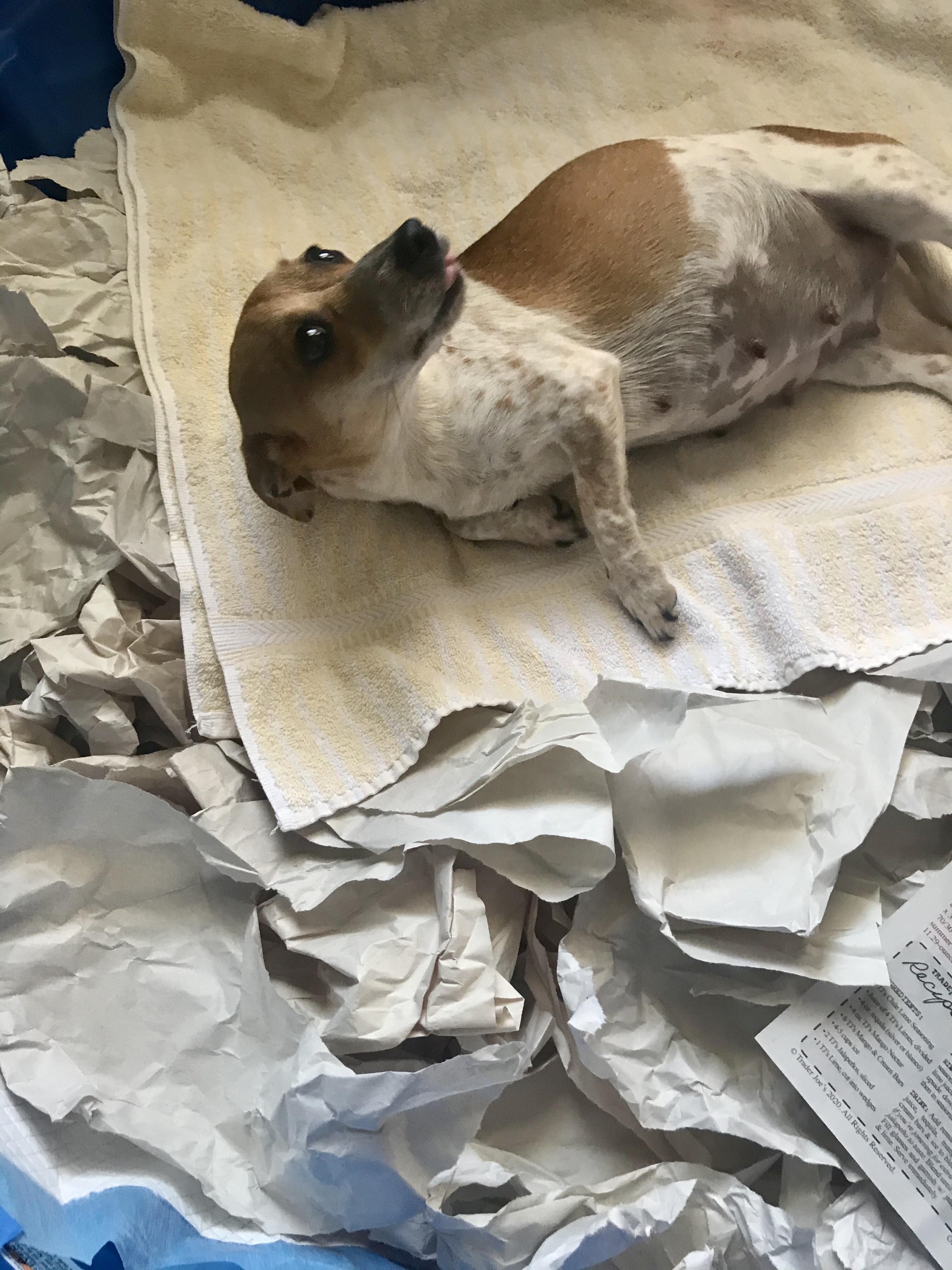
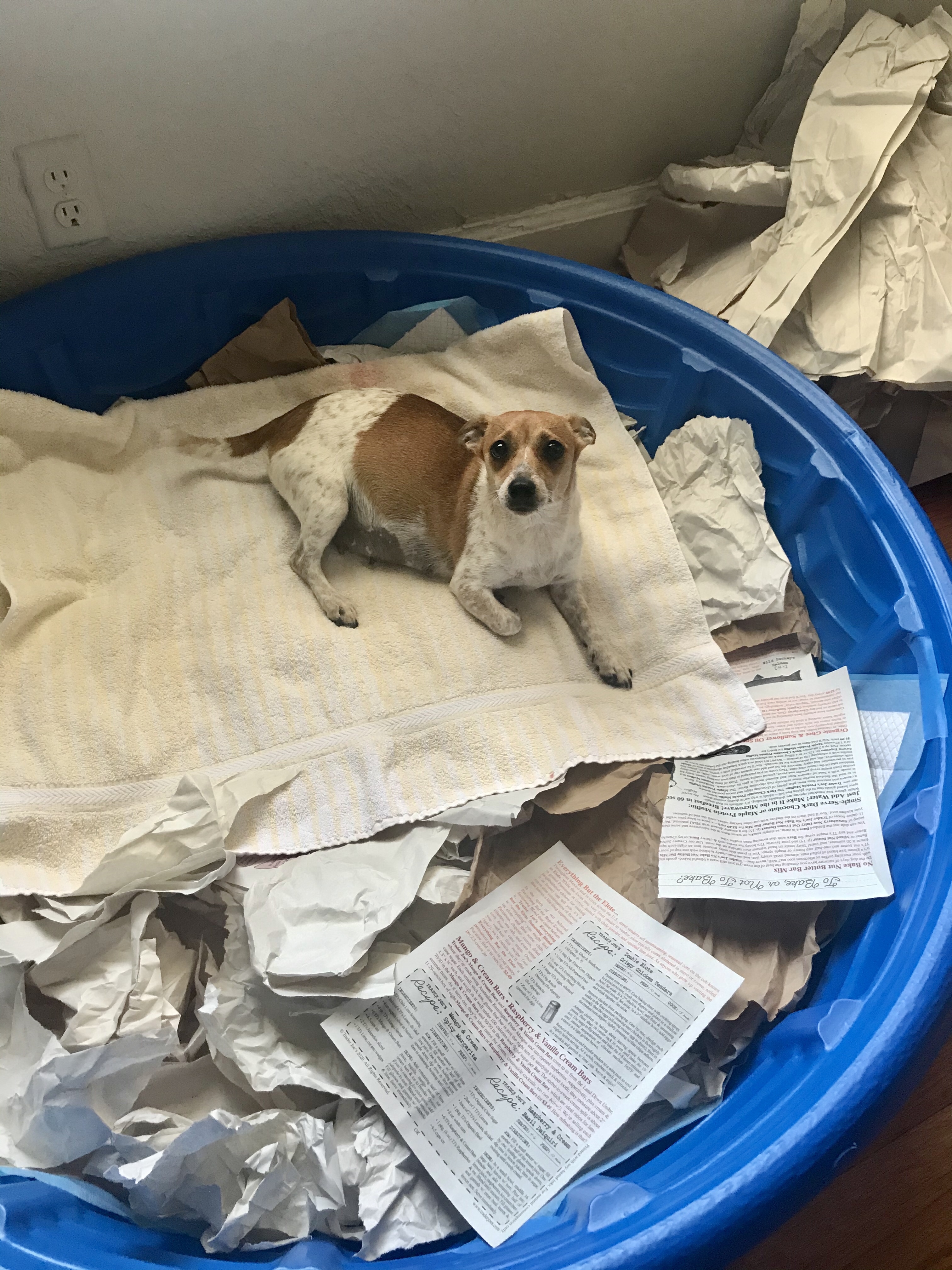
Meanwhile, her whelping area is prepared. And Mazie seems much more comfortable.
Puppies are coming!


Summertime

I LOVE Summer. It’s my favorite season. I’ve always preferred to be miserably hot than even slightly cold. Cold makes me irritable. Heat just makes me lazy. I can live with lazy. Especially in the summer.
My love of summer goes back to Michigan when I was a kid. Long days filled with sunshine. Long nights filled with mosquitoes. Finding ants inside peonies. Chasing fireflies in the evening. Picking raspberries. Eating blue gills fresh from the lake and fried in butter. Spitting watermelon seeds as the juice ran down my chin. Sticky fingers. Sticky skin. Peeling legs off plastic furniture. Humidity. The frequent banging of the screen door. And one thing you just don’t hear anymore: the rattle of big square fans.
I don’t particularly like air conditioning. Of course, I am extremelygrateful for it. I mean, I’m not a sadist. Summers have gotten hotter and A/C is a life-saver. Only, I find it’s often set too low and too cold in most places. And there are so many days when really all you need is a breeze through open windows. If not days, at least nights. A breeze. And a fan.
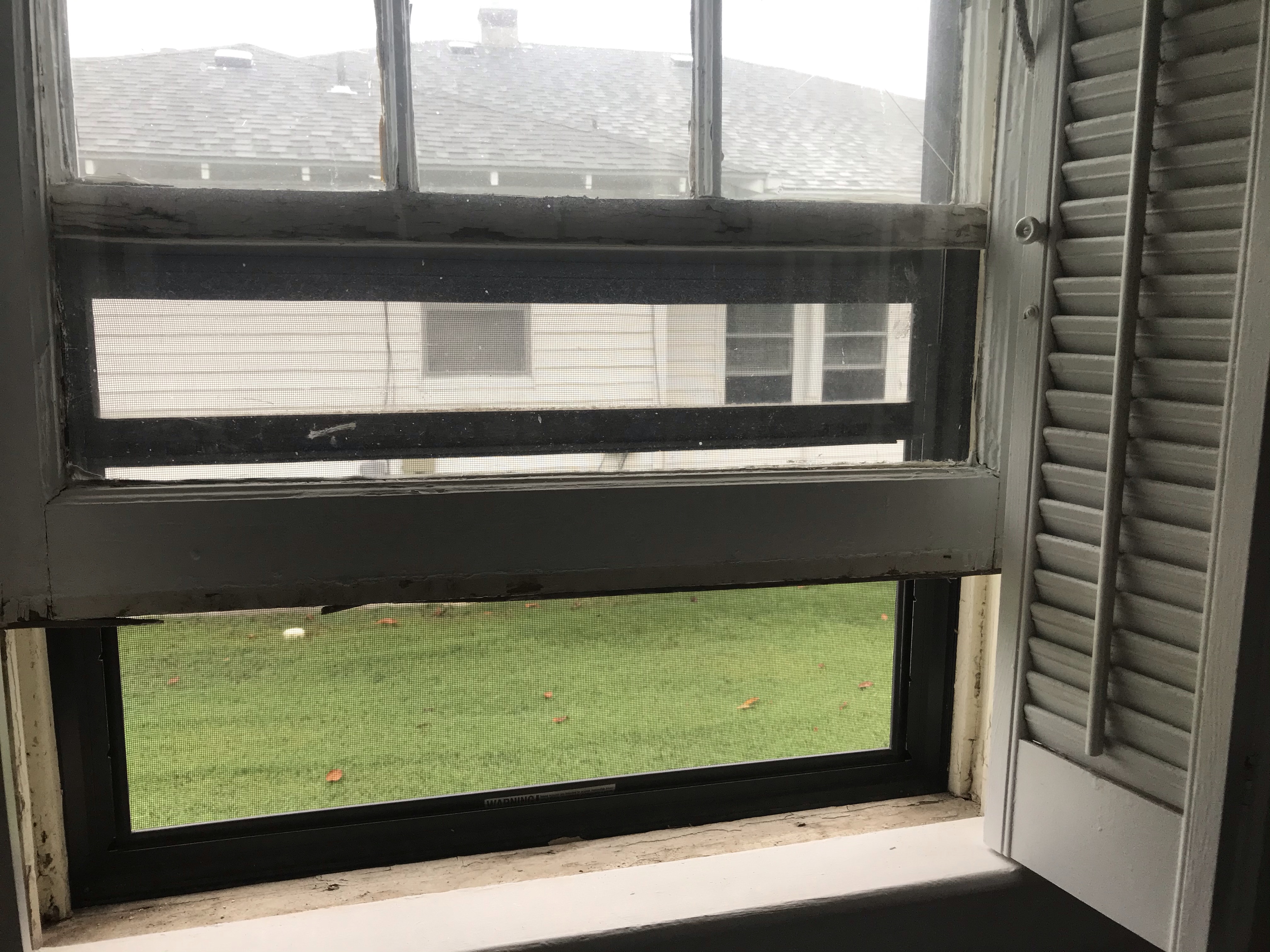
My home in Tulsa is filled with many windows. Only problem is that until yesterday, they had all been painted shut. Endless coats of white seeping into the cracks and onto the glass. Years of warping wood. So, while I get plenty of light, I get no fresh air.
Yesterday a handyman fixed that. He pried open six of my twelve windows. And then came the rain.
Falling rain heard through open windows is a treat. And a soft breeze always seems to come with summer rains.
For the first time in years, I went to sleep last night with my windows open and a ceiling fan twirling above me. Just one thin sheet over my body. Just like I did as a kid. Slightly sticky in the warm evening air. And I slept well. Really well. With my little, warm-bellied, softly snoring dog snuggled against me.
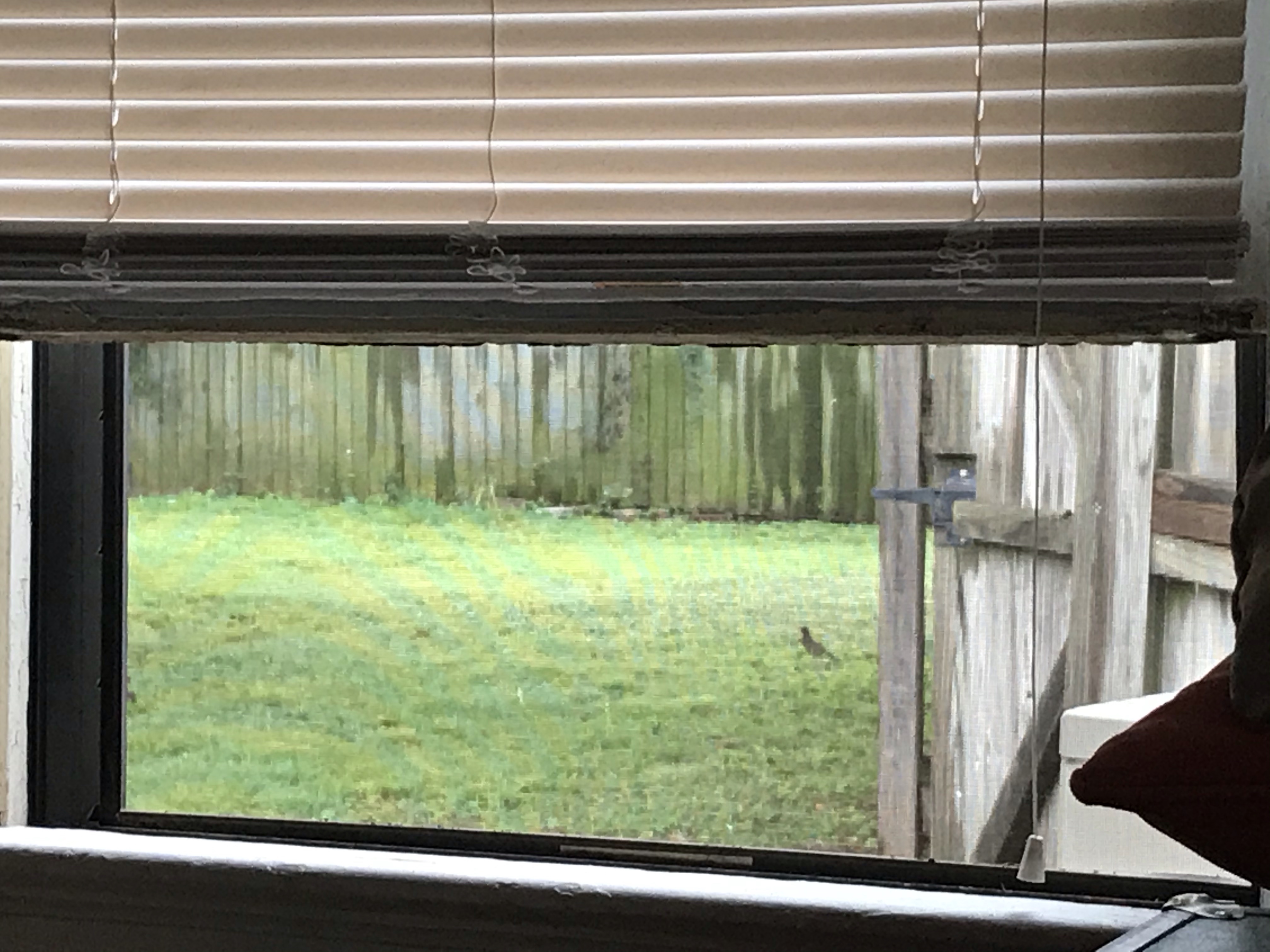
This morning I woke to birds chirping and reached for my phone. The morning song of birds has long been my favorite alarm. Only, I hadn’t set my alarm. The birds weren’t coming from my phone. My windows were open. The birds were outside.
I laughed. Such a delight. I missed this. Summertime. Open windows and fans. And birds announcing morning. It truly is the simple things that make life so good.


 Jan Peppler HOME